
A practical comparison of the Summit Ultramax A/S 2.0 and premium all-season tires, including purchase cost, treadwear warranty, wet-road design, comfort, winter limitations, and the situations where paying more makes sense.
A practical look at how the Summit Trail Climber SUV2 combines a quieter highway ride, stable tread contact, wet-weather traction features, and everyday value for family travel.
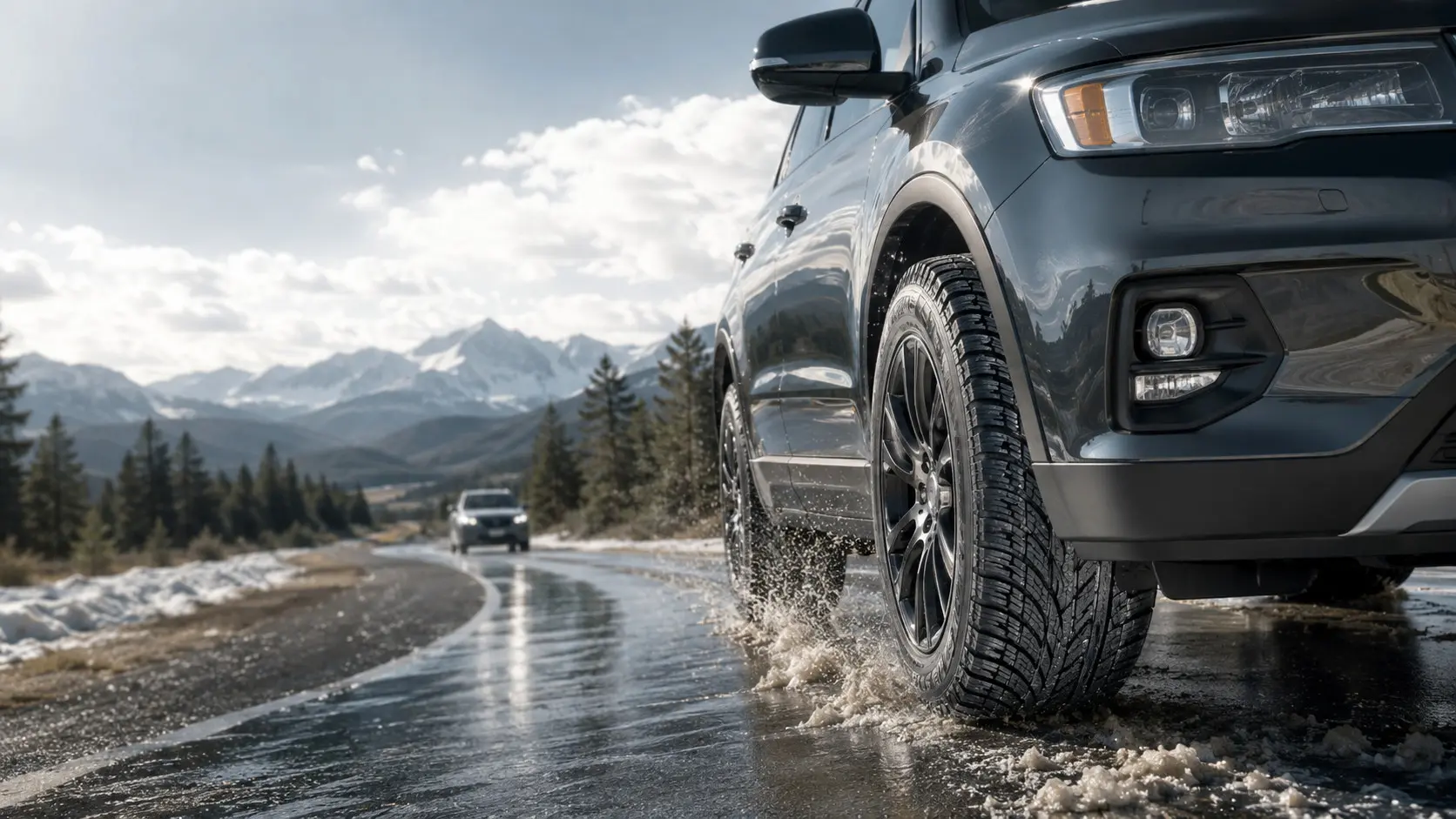
Ultramax A/S 2.0 vs Premium All-Season Tires: Where Summit Wins on Value
The Summit Ultramax A/S 2.0 is a value-focused touring all-season tire designed for drivers who want everyday comfort, stable handling, and wet-road capability without automatically paying a premium-brand price.
That does not mean it outperforms every premium all-season tire in every category. Premium products from manufacturers such as Michelin and Continental may offer longer treadwear warranties, more extensive customer-support programs, specialized compounds, and additional refinement. The more useful question is whether those advantages matter enough for your vehicle, annual mileage, and driving conditions to justify the additional cost.
For many Canadian commuters, families, second-vehicle owners, and drivers who use dedicated winter tires, the Ultramax A/S 2.0 can deliver the features they need at a more accessible point of entry. This comparison explains where Summit offers strong value, where premium all-seasons retain an advantage, and how to make the right decision without paying for benefits you may not use.
The quick verdict: Summit wins when practical performance and purchase affordability matter most
The Ultramax A/S 2.0 makes the strongest value case for drivers seeking a properly sized new set of touring all-season tires for spring, summer, and fall driving without paying for every premium feature.
Summit describes the Ultramax A/S 2.0 as a comfort-and-performance touring tire with four broad circumferential grooves, a wide footprint, a notched centre rib, and speed ratings ranging from T to W across its size offering. Its official product page lists a 60,000-mile limited treadwear warranty, equivalent to approximately 96,500 kilometres.
Premium touring tires can still justify their higher price for drivers who accumulate substantial annual mileage, plan to keep their vehicle for many years, prioritize maximum refinement, or place significant value on longer warranties and additional ownership benefits.
| Comparison Area | Summit Ultramax A/S 2.0 | Premium All-Season Tire | Likely Advantage |
|---|---|---|---|
| Initial purchase budget | Value-focused option intended to cover everyday touring needs | Usually requires a larger initial investment | Summit |
| Treadwear warranty | Official Summit listing: 60,000 miles, approximately 96,500 km | Some premium models offer approximately 128,000 to 130,000 km | Premium |
| Wet-road design | Four broad circumferential grooves and a stability-focused footprint | May include proprietary compounds, indicators, and model-specific technologies | Depends on model and testing |
| Ride comfort | Designed to balance comfort, stability, and everyday performance | May offer additional noise control and refinement, particularly as the tire wears | Premium, in some cases |
| Size and speed-rating coverage | Broad passenger-vehicle range with T through W speed ratings | Broad coverage, although pricing can rise substantially in larger sizes | Summit on value |
| Winter capability | Regular all-season tire; not a substitute for a dedicated winter tire | Regular premium all-season tires have the same fundamental limitation unless 3PMSF-rated | Neither |
| Trial and roadside benefits | Coverage should be confirmed with the Canadian retailer | Some brands include satisfaction trials and roadside assistance | Premium |
Expert perspective: A value tire does not have to match a premium tire in every metric to be a sensible purchase. It needs to meet your vehicle specifications, provide suitable seasonal capability, and deliver dependable performance for the way you actually drive.
The Ultramax A/S 2.0 is a conventional touring all-season tire with practical design priorities
The Summit is designed around the qualities most everyday drivers expect from a touring all-season tire: predictable road manners, water evacuation, stability, comfort, and usable tread life.
Four circumferential grooves support water evacuation
The tire’s four broad circumferential channels are designed to move water through the tread pattern. This matters on rain-soaked urban streets, highway ruts, and wet pavement where standing water can increase the risk of hydroplaning.
No tread design can eliminate hydroplaning at excessive speed or with insufficient tread depth. Drivers should still reduce speed during heavy rain, avoid sudden steering inputs, and leave additional braking distance.
A wide footprint and notched centre rib support stability
Summit highlights a wide footprint and notched centre rib as key elements of the Ultramax A/S 2.0 design. These features are intended to support traction and straight-line stability during commuting, highway travel, and routine lane changes.
That focus makes sense for a touring tire. Most buyers in this category are not searching for track-level steering response. They want a tire that feels composed while merging onto Highway 401, travelling along the Trans-Canada Highway, or navigating patched roads after a Canadian freeze-thaw cycle.
T-to-W speed ratings broaden its potential fitments
The Ultramax A/S 2.0 is offered with speed ratings from T through W, depending on tire size. This allows the product line to serve a wider mix of compact cars, family sedans, crossovers, and vehicles requiring higher-speed-rated fitments.
A higher speed rating does not mean a driver should travel at that speed. It is a construction and performance classification. Always select a tire size, load index, load range, and speed rating that meet the vehicle manufacturer’s requirements.
Summit’s biggest advantage is avoiding unnecessary premium cost
The Ultramax A/S 2.0 offers its best value when a driver needs solid touring capability but does not require the longest available warranty or every premium ownership benefit.
Tire prices vary significantly by diameter, width, load rating, speed rating, inventory, and promotions. A value tire in a common 15- or 16-inch size may create a very different savings opportunity than a low-profile 19-inch fitment. The right comparison must therefore use the exact size required by your vehicle.
Summit may be particularly attractive when the lower purchase cost makes it possible to replace all four tires at the same time rather than delaying replacement or combining tires with substantially different tread patterns and wear levels.
Value matters on older daily drivers
A driver keeping an older sedan for another three or four years may not recover the benefit of an exceptionally long premium treadwear warranty. A properly fitted value tire may align more closely with the remaining ownership period.
The same logic can apply to a second vehicle that travels relatively few kilometres, a student commuter, or a family vehicle used primarily for local errands. Paying for maximum theoretical tread life provides limited value when age, weather exposure, or a future vehicle replacement may retire the tire before its tread is fully consumed.
Value matters when larger wheel sizes inflate the total bill
The price difference between tire tiers often becomes more noticeable as wheel diameter increases. Drivers shopping for H-, V-, or W-rated tires may find that the Summit allows them to retain the correct specification while controlling the total cost of four tires, installation, balancing, valve service, and applicable environmental fees.
Choosing a cheaper tire with the wrong load index or speed rating is not a valid saving. Choosing a value-focused tire that meets the full vehicle specification can be.
Value matters when winter tires already handle the cold season
Drivers who install dedicated winter tires do not need their spring-through-fall set to provide severe-snow capability. In that situation, a regular touring all-season such as the Ultramax A/S 2.0 can focus on dry roads, rain, comfort, highway stability, and treadwear during the warmer portion of the year.
This seasonal approach can be particularly practical in Ontario, Alberta, Manitoba, Quebec, and other regions where winter conditions are too demanding for a conventional all-season tire.
Premium all-seasons usually win on warranty length and ownership benefits
Premium tires may cost more, but the additional price can purchase a longer mileage warranty, satisfaction trial, roadside program, or other manufacturer support.
For example, Michelin lists a 130,000-kilometre treadwear warranty for the Defender2 in Canada, together with benefits under its Promise Plan.
Continental states that selected products may receive mileage coverage up to 128,000 kilometres, while its Canadian TrueContact Tour 54 information highlights roadside assistance and a customer satisfaction trial.
Those figures do not guarantee that every driver will reach the maximum warranted mileage. Tire warranty eligibility normally depends on conditions such as correct inflation, regular rotation, alignment, even wear, eligible vehicle use, original ownership, and documented maintenance.
| Example Product | Published Mileage Warranty | Notable Published Benefits | Important Context |
|---|---|---|---|
| Summit Ultramax A/S 2.0 | 60,000 miles, approximately 96,500 km on Summit’s official product page | Touring design, broad speed-rating coverage, wet-road channels | Confirm Canadian warranty terms for the exact size and retailer |
| Michelin Defender2 | 130,000 km in Canada | Promise Plan, satisfaction guarantee, roadside assistance | Premium purchase price may be offset by long-term ownership benefits |
| Continental TrueContact Tour 54 | Coverage may reach 128,000 km on eligible products | Customer trial, roadside assistance, proprietary touring technologies | Coverage and warranty length can vary by size and product specification |
Summit’s main warranty information also contains market-specific conditions. Canadian shoppers should not assume that a United States warranty automatically applies in Canada. Review the warranty shown for the exact tire in the retailer’s listing and keep the invoice, installation record, rotation history, and alignment documentation.
The true value depends on cost per kilometre, not the sidewall brand alone
A lower purchase price can create strong value, but the complete calculation should include expected service life, installation costs, seasonal use, maintenance, and how long the vehicle will remain in your household.
Use this simple cost-per-kilometre calculation
Installed cost of the tire set ÷ kilometres of usable service = estimated tire cost per kilometre.
The following example is illustrative only. It is not a prediction of actual tire life or current TireWarehouse pricing.
| Illustrative Scenario | Installed Set Cost | Usable Service | Estimated Cost per Kilometre |
|---|---|---|---|
| Value all-season set | $700 | 80,000 km | $0.0088 per km |
| Premium all-season set | $1,000 | 110,000 km | $0.0091 per km |
| Premium set replaced early with vehicle sale | $1,000 | 55,000 km | $0.0182 per km actually used |
This example shows why the longest warranty does not automatically create the lowest ownership cost. The driver must use the additional tread life for it to have financial value.
On the other hand, a premium tire may still be worth the difference even when its mathematical cost per kilometre is slightly higher. A quieter cabin, more refined ride, additional warranty support, or stronger performance in a particular category may be valuable to the owner.
Premium tires may offer more refinement, but comparisons must be model-specific
A premium brand name alone does not guarantee superiority in every test, just as a value brand does not guarantee poor performance. Tires should be compared in the same size, load rating, speed rating, category, and test conditions.
Premium manufacturers often invest heavily in compound development, tread optimization, rolling-resistance technologies, noise control, and performance that remains consistent as tread depth decreases. Continental, for example, promotes EcoPlus+ technology, alignment verification, and tuned performance indicators on the TrueContact Tour 54.
Those features may be meaningful for a high-mileage driver or someone who is sensitive to road noise and steering feel. They may be less important to an owner who drives 8,000 kilometres per year in a secondary vehicle.
Wet braking requires independent evidence
The Summit’s circumferential grooves indicate a clear design focus on water evacuation, but tread appearance alone cannot establish a precise braking-distance ranking against a premium competitor.
A trustworthy head-to-head comparison requires independent testing of the same tire size under controlled conditions, including identical vehicles, tread depths, temperatures, inflation pressures, pavement, and water depth. Without that evidence, it is more accurate to discuss design priorities than to claim that one tire will always stop shorter.
Road noise can change as tires wear
A new tire may feel quiet during an initial drive but become louder after thousands of kilometres if the tread wears unevenly. Alignment, rotation, suspension condition, wheel balance, pavement texture, and vehicle insulation all influence what the driver hears.
Premium tires may have more sophisticated noise-management features, but a correctly maintained value tire can be quieter than a premium tire suffering from cupping, feathering, or incorrect inflation.
Fuel economy is influenced by more than the tire model
Rolling resistance can affect energy consumption, but tire pressure, temperature, wheel alignment, vehicle load, speed, driving style, and tire dimensions also matter. Drivers comparing fuel efficiency should avoid drawing conclusions from a single informal review or a short adjustment period after installation.
The Summit is best suited to moderate three-season Canadian driving
The Ultramax A/S 2.0 is most appropriate for paved-road use during spring, summer, and fall, or in regions where winter conditions are limited and local requirements permit its use.
Strong Summit use cases
- Daily city and suburban commuting
- Regular highway travel in dry and rainy weather
- Family sedans, hatchbacks, and compatible crossovers
- Drivers using a separate winter tire set
- Older vehicles with a limited remaining ownership horizon
- Second vehicles travelling modest annual kilometres
- Drivers who need an H-, V-, or W-rated fitment at a controlled cost
- Buyers prioritizing a new, correctly fitted four-tire set over premium branding
Situations that justify considering a premium tire
- You drive 25,000 kilometres or more per year and expect to use the available tread life.
- You plan to keep the vehicle through the full life of multiple tire sets.
- Long mileage coverage is a major purchase priority.
- You place a high value on manufacturer trial periods and roadside assistance.
- You want the quietest or most refined touring experience available for your vehicle.
- You are selecting tires for a luxury vehicle where ride and cabin noise are particularly noticeable.
- You want a specific tested performance characteristic supported by independent comparisons.
- You are willing to pay more for proprietary wear indicators, compounds, or efficiency technologies.
Neither Summit nor a conventional premium all-season replaces a winter tire
A regular all-season tire should not be confused with a dedicated winter tire or a Three-Peak Mountain Snowflake-rated all-weather tire.
Transport Canada advises that all-season and summer tire compounds begin losing elasticity below 7°C, resulting in reduced traction. Winter tires are designed to remain more flexible at lower temperatures, and the Three-Peak Mountain Snowflake symbol identifies tires meeting a prescribed severe-snow traction standard.
This limitation applies to premium conventional all-season tires as well as value models. A higher price does not transform a non-winter tire into a severe-weather tire.
Quebec drivers must follow the provincial winter-tire period
Most road vehicles registered in Quebec must be equipped with compliant winter tires from December 1 through March 15. A conventional all-season Ultramax A/S 2.0 should not be treated as a replacement for a legally compliant winter tire during that period.
Drivers facing frequent snow should compare other categories
Consider a dedicated winter tire when your routes regularly involve packed snow, black ice, deep cold, slush, steep grades, or poorly cleared roads.
A 3PMSF-rated all-weather tire may be an alternative for drivers who prioritize year-round convenience and face moderate winter conditions, although it still involves compromises compared with a dedicated seasonal setup. Explore the differences before deciding between all-season tires, all-weather tires, and dedicated winter tires.
Correct fitment matters more than moving up one price tier
A premium tire in the wrong specification is not a better choice than a value tire that correctly meets the vehicle manufacturer’s requirements.
Before ordering the Ultramax A/S 2.0 or any competing tire, verify the following:
- Tire size: Confirm the width, aspect ratio, construction, and wheel diameter shown on the driver’s door placard or in the owner’s manual.
- Load index: Select a tire capable of carrying at least the load required by the vehicle manufacturer.
- Speed rating: Meet the required rating unless an approved seasonal exception has been confirmed by a qualified professional.
- Load range: Do not replace an XL tire with a standard-load tire without confirming suitability.
- Vehicle type: Make sure the product is approved for your passenger car or crossover application.
- Seasonal plan: Decide whether the tires will be removed when temperatures consistently approach 7°C.
- Rotation compatibility: Check whether the vehicle uses a staggered setup that limits normal tire rotation.
Use TireWarehouse’s guide to reading tire size codes when checking your current sidewall and vehicle placard.
Fitment reminder: Never choose a tire based only on diameter. Two tires designed for the same wheel diameter may have different load capacities, widths, overall diameters, and speed ratings.
Maintenance will determine how much value either tire delivers
Correct maintenance can narrow the real-world ownership-cost difference between value and premium tires by reducing irregular wear and helping the complete tread surface work as intended.
Check cold tire pressure monthly
Use the pressure shown on the vehicle placard rather than the maximum pressure moulded into the tire sidewall. Pressure should be checked when the tires are cold—generally after the vehicle has remained parked for at least three hours or has travelled no more than approximately two kilometres.
Temperature swings are especially relevant in Canada. A tire set correctly inflated during a warm afternoon may show lower pressure after a sharp overnight temperature drop. Read more about how cold weather affects tire pressure.
Rotate the tires on schedule
Regular rotation helps distribute wear among the vehicle’s driven, steering, and trailing positions. Follow the vehicle manufacturer’s schedule and the warranty requirements for the tire. Keep dated invoices or service records when mileage-warranty eligibility matters.
Inspect tread across the full width
Do not check only the outer shoulder. Inspect the inner edge, centre, and outer edge for:
- One-sided alignment wear
- Centre wear associated with excess inflation
- Shoulder wear associated with insufficient inflation or cornering load
- Feathering that may indicate alignment problems
- Cupping associated with balance, suspension, or mechanical issues
- Cracking, cuts, bulges, punctures, or exposed cords
Correct alignment problems early
An alignment issue can consume the anticipated savings of a value tire or the longer warranty of a premium tire. Have the alignment inspected after a significant pothole impact, when installing new tires, or when the steering wheel sits off-centre and uneven wear becomes visible.
A simple buyer checklist makes the decision clearer
Choose the Summit or a premium alternative according to your actual priorities rather than the reputation attached to the sidewall.
| Your Priority | Better Starting Point | Reason |
|---|---|---|
| Lowest manageable cost for a correct four-tire replacement | Summit Ultramax A/S 2.0 | Focuses spending on practical touring capability and fitment |
| Longest published treadwear coverage | Premium touring all-season | Selected models advertise substantially longer mileage warranties |
| Second vehicle with low annual mileage | Summit Ultramax A/S 2.0 | The vehicle may not use enough kilometres to recover the premium |
| High-mileage business or highway commuting | Compare premium and Summit cost per kilometre | Longer warranty and wear potential may have greater financial value |
| Dedicated winter tires already owned | Summit is a strong candidate | Severe-snow performance is handled by the seasonal winter set |
| One set for meaningful Canadian winter conditions | Neither conventional option | Compare 3PMSF all-weather or dedicated winter tires |
| Maximum ride refinement and manufacturer support | Premium touring all-season | Additional technologies and ownership programs may justify the price |
| Older vehicle that may be replaced soon | Summit Ultramax A/S 2.0 | Reduces the risk of paying for tread life the owner may never use |
The final recommendation: buy Summit for sensible value, not as a claim of premium equivalence
The Summit Ultramax A/S 2.0 is a compelling option for Canadian drivers who want a straightforward touring all-season tire with wet-road channels, a stability-focused tread design, broad speed-rating availability, and an official treadwear listing of approximately 96,500 kilometres.
Its strongest argument is not that it automatically matches a Michelin Defender2, Continental TrueContact Tour 54, or every other premium tire in wet braking, tread life, noise, or refinement. Without independent same-size testing, that conclusion would be too broad.
Summit wins on value when its correct fitment, seasonal suitability, practical features, and lower total quote satisfy the driver’s requirements without forcing them to pay for longer warranties or premium programs they are unlikely to use.
Choose a premium all-season when you expect to use its longer tread life, value additional warranty support, drive enough kilometres to spread out the initial cost, or prioritize a specific refinement or performance characteristic. Choose the Ultramax A/S 2.0 when your priority is a properly fitted, comfortable, everyday tire at a financially sensible point—and pair it with appropriate winter tires when Canadian conditions demand them.
Frequently Asked Questions
Is the Summit Ultramax A/S 2.0 a good tire?
It can be a good value-focused choice for drivers seeking a conventional touring all-season tire for paved-road commuting, highway driving, and wet or dry three-season conditions. Suitability depends on the correct size, load index, speed rating, vehicle condition, climate, and driver expectations.
How does the Ultramax A/S 2.0 compare with Michelin Defender2?
The Summit emphasizes accessible touring performance and practical value. The Michelin Defender2 carries a substantially longer published Canadian mileage warranty and additional Promise Plan benefits. The better choice depends on whether the driver will use that longer ownership horizon and values the associated support.
What is the Ultramax A/S 2.0 treadwear warranty?
Summit’s official product page lists a 60,000-mile limited treadwear warranty, approximately 96,500 kilometres. Canadian shoppers should verify the warranty attached to the exact size and retailer because market terms and product listings can differ.
Is the Summit Ultramax A/S 2.0 quiet?
It is positioned as a comfort-oriented touring tire, but perceived noise depends on pavement, vehicle insulation, tire pressure, tread wear, alignment, rotation, and wheel balance. A test drive in another vehicle may not accurately predict how the tire will sound in yours.
Is the Ultramax A/S 2.0 suitable for highway driving?
Its wide footprint, centre-rib design, touring construction, and range of speed ratings make it a potential option for compatible vehicles used on Canadian highways. Drivers must still confirm the exact load and speed specifications and maintain correct cold inflation pressure.
Can the Ultramax A/S 2.0 handle heavy rain?
The tire uses four broad circumferential grooves intended to evacuate water. Actual wet-road performance still depends on tread depth, pressure, speed, water depth, pavement condition, and vehicle systems. Slow down in heavy rain and avoid abrupt steering or braking.
Can I use Summit Ultramax A/S 2.0 tires in winter?
A conventional all-season tire is not the preferred choice for regular snow, ice, or temperatures below 7°C. Canadian drivers facing meaningful winter conditions should use dedicated winter tires or assess an appropriate 3PMSF-rated all-weather product.
Are the Ultramax A/S 2.0 tires legal in Quebec during winter?
Most vehicles registered in Quebec require compliant winter tires from December 1 through March 15. Do not assume a regular all-season tire complies. Check the sidewall markings and current provincial requirements before winter use.
Are premium all-season tires always safer?
No single brand tier is automatically superior in every condition. Safety depends on model-specific performance, tread condition, correct fitment, inflation, vehicle maintenance, weather, and driver behaviour. Consult reliable same-size testing when comparing a specific safety metric such as wet braking.
Will a premium tire last longer than the Summit?
Some premium touring tires carry longer mileage warranties, but actual tread life varies. Driving style, alignment, inflation pressure, rotation, vehicle weight, road surface, seasonal storage, and maintenance can shorten or extend the useful life of either tire.
Should I choose Summit tires for an older car?
The Summit can make sense when the vehicle is mechanically sound, the required fitment is available, and the owner does not expect to keep the car long enough to benefit from an expensive long-mileage tire. Do not reduce the required load or speed rating simply to lower the cost.
Should all four tires be replaced together?
Replacing all four generally provides the most consistent tread depth and handling behaviour. This is especially important on many all-wheel-drive vehicles, where excessive circumference differences may affect the drivetrain. Follow the vehicle manufacturer’s limits and professional fitment advice.
How do I compare the real value of two tire quotes?
Compare the installed price, expected ownership period, mileage warranty, trial and roadside benefits, seasonal capability, maintenance requirements, and cost per kilometre. Also confirm that both quotes include tires with equivalent size, load index, load range, and speed rating.
Recommended Related Reading
- Why the Summit Ultramax A/S 2.0 Is Built for Long Canadian Highways
- Ultramax UHP AS: Summer Grip and Sharp Cornering for Performance-Minded Drivers
- How to Read Your Tire Size, Load Index, and Speed Rating
- Shop All-Season Tires for Canadian Cars and Crossovers
- Compare All-Weather Tires for Year-Round Convenience
- Understand Tire Mileage Warranties Before You Buy
Sources and Product Information
- Summit Ultramax A/S 2.0 manufacturer specifications and published treadwear warranty.
- Michelin Defender2 Canadian warranty and Promise Plan information.
- Continental TrueContact Tour 54 and Canadian Total Confidence Plan information.
- Transport Canada winter-tire and cold-temperature guidance.
- Government of Quebec winter-tire requirements.
- TireWarehouse Canadian editorial and brand guidance.
- TireWarehouse article quality and publishing checklist.
- TireWarehouse content prompt and article-format guidance.
- TireWarehouse semantic WordPress HTML requirements.
- TireWarehouse SEO and topical-coverage guidance.
In stock & ready to ship
Find the tires you need, delivered from a warehouse near you