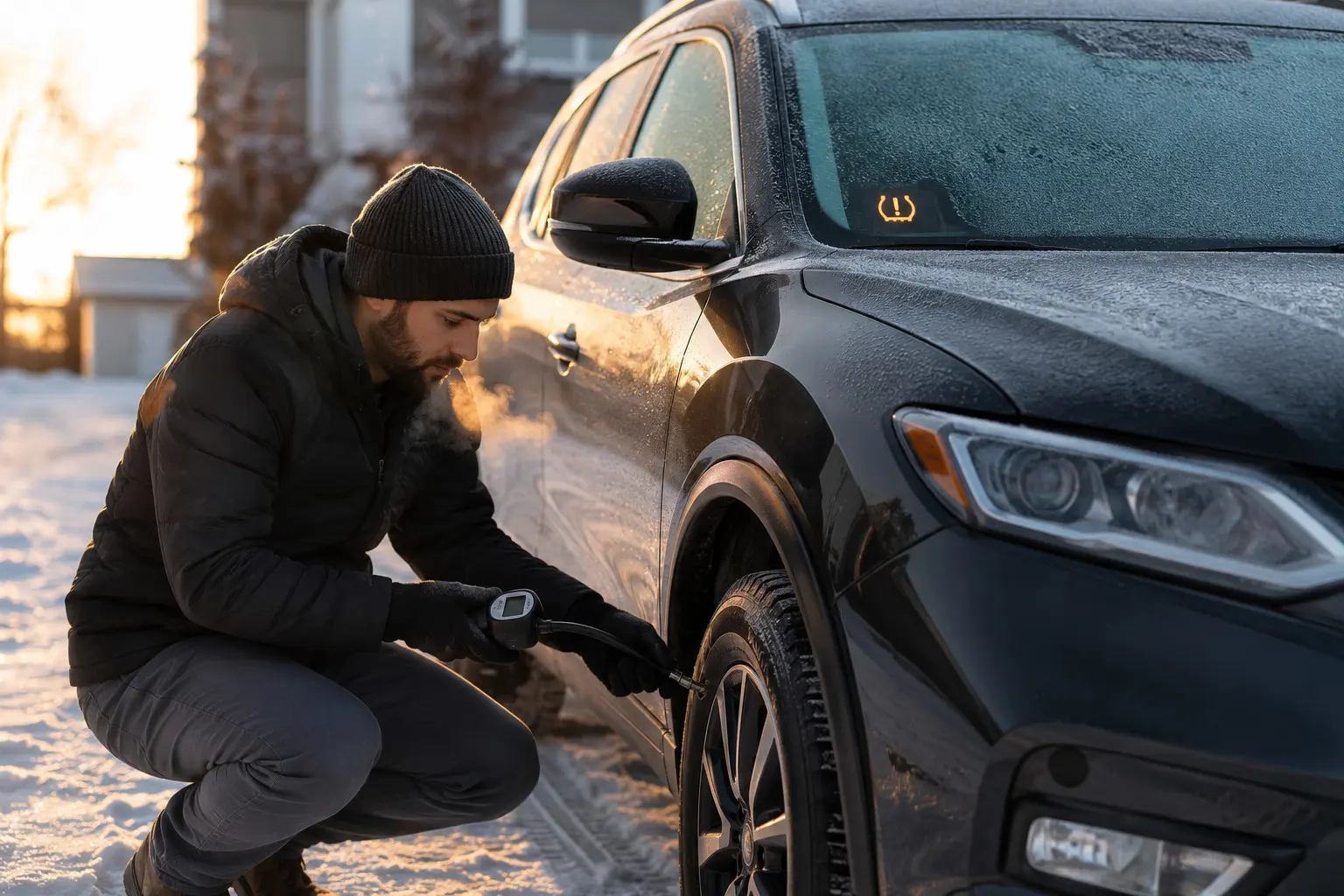
As temperatures begin to fall, most drivers prepare for icy roads, snow, and reduced visibility. However, one of the biggest winter driving hazards often goes unnoticed: low tire pressure.
Cold weather silently reduces the air pressure inside your tires, and even a small drop can affect your vehicle’s handling, braking performance, fuel economy, and tire longevity. Understanding why this happens—and how to respond—can help keep you safer throughout the winter season.
Why Does Tire Pressure Drop in Cold Weather?
Air contracts as temperatures decrease. This means that when the outside temperature falls, the air inside your tires becomes denser, causing the tire pressure to decrease.
As a general rule:
- Tire pressure drops by approximately 1 PSI for every 10°F (5.5°C) decrease in temperature.
- A temperature swing from a mild fall afternoon to a freezing winter morning can easily reduce your tire pressure by several PSI.
While this change may seem minor, modern vehicles are designed to perform within a specific tire pressure range recommended by the manufacturer.
Why Low Tire Pressure Matters
Driving with underinflated tires can create several problems that affect both safety and operating costs.
Reduced Traction
Underinflated tires change the shape of the contact patch, reducing stability and grip on wet, snowy, or icy roads. This can make cornering and emergency maneuvers less predictable.
Longer Braking Distances
When tire pressure is too low, braking performance may suffer, especially during winter conditions where every foot of stopping distance counts.
Increased Fuel Consumption
Soft tires create more rolling resistance, forcing the engine to work harder. As a result, your vehicle consumes more fuel over time.
Faster Tire Wear
Low pressure causes excessive wear along the tire shoulders instead of distributing weight evenly across the tread. This shortens tire life and may require premature replacement.
Don’t Rely Solely on the TPMS
Many vehicles are equipped with a Tire Pressure Monitoring System (TPMS), but drivers should remember that the warning light often activates only after pressure has already fallen significantly below the recommended level.
Checking your tire pressure manually remains the most reliable way to ensure your tires are properly inflated.
How Often Should You Check Tire Pressure in Winter?
Experts recommend checking tire pressure:
- At least once every month
- Before long road trips
- Whenever there’s a significant temperature drop
- Early in the morning, before driving, when tires are cold
Always inflate your tires according to the pressure listed on the driver’s door placard—not the maximum pressure printed on the tire sidewall.
Winter Tire Maintenance Tips
Keeping your tires in excellent condition during winter is simple with a few regular habits:
- Check tire pressure monthly using an accurate pressure gauge.
- Inspect tread depth to maintain traction on snow and ice.
- Look for uneven wear that may indicate alignment or inflation issues.
- Rotate tires according to your vehicle manufacturer’s maintenance schedule.
- Replace worn tires before winter weather becomes severe.
Stay Safe All Winter Long
Cold weather affects more than road conditions—it also changes how your tires perform. By monitoring tire pressure regularly and maintaining proper inflation, you’ll improve handling, maximize fuel efficiency, extend tire life, and enjoy a safer driving experience throughout the season.
A quick pressure check takes only a few minutes, but it can make a significant difference every time you hit the road this winter.
About
Next Day Shipping