
When Canadian Drivers Should Start Shopping for Winter Tires
Shopping early can mean better tire selection, easier installation scheduling, and less pressure when temperatures begin dropping toward 7°C.
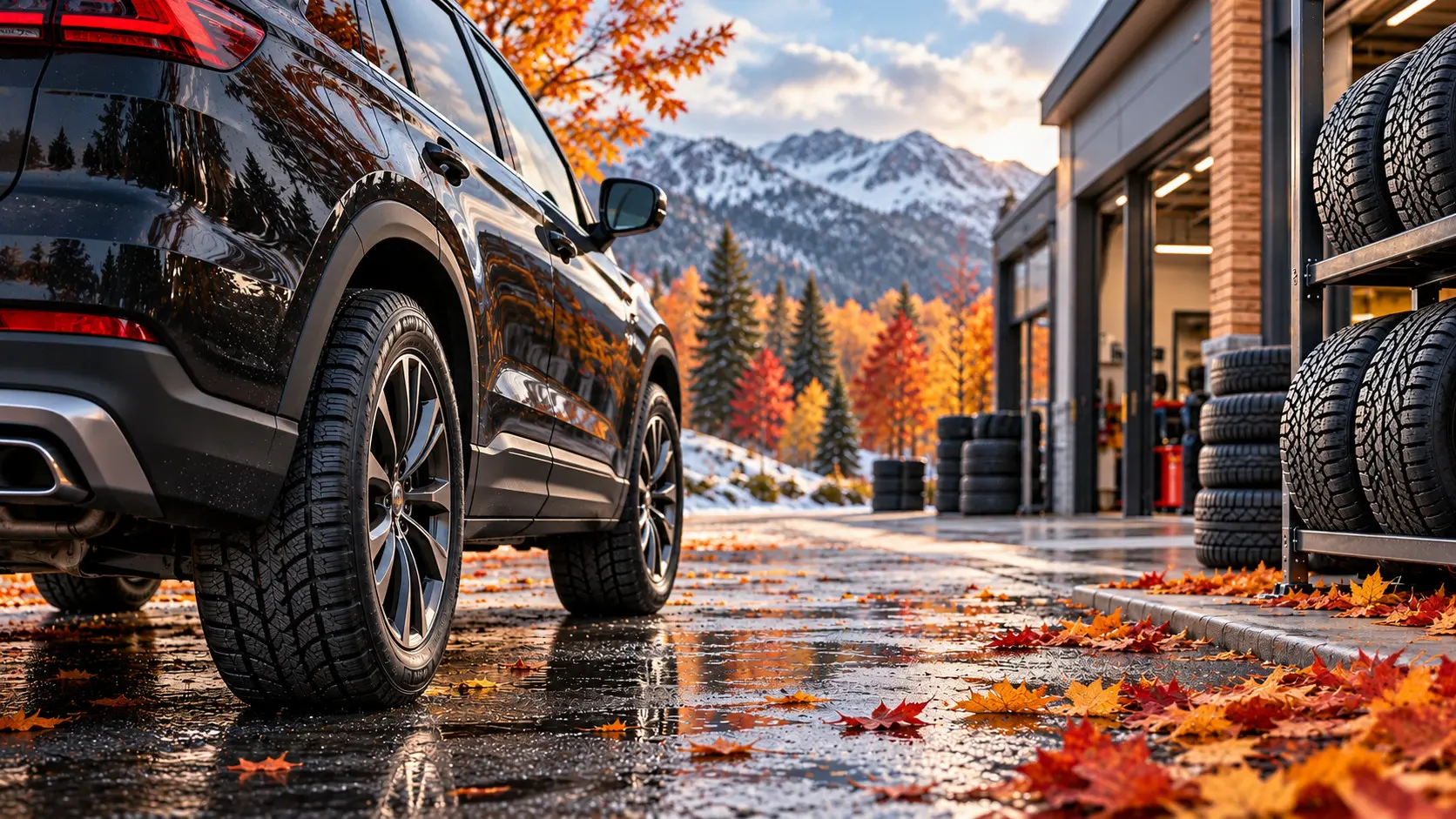
Planning Ahead: When Canadian Drivers Should Start Shopping for Winter Tires
Canadian drivers should generally start shopping for winter tires in late summer or early fall, before temperatures consistently approach 7°C and before the first major rush for winter tire installations. You may not need to install them immediately, but beginning your research and shopping early gives you more time to confirm tire size, compare suitable models, inspect an existing winter set, and arrange installation.
That distinction matters: the best time to shop for winter tires is often earlier than the best time to install them. Waiting for the first snowstorm can turn a planned purchase into a rushed decision.
Transport Canada notes that below 7°C, all-season and summer tires begin losing elasticity, which can reduce traction, while winter tires are designed to remain flexible at much lower temperatures. This makes temperature trends—not the first snowfall—a useful signal for planning your seasonal changeover.
When Should You Start Shopping for Winter Tires in Canada?
For many Canadian drivers, August through early October is a practical window to begin researching and shopping for winter tires, with the exact timing depending on local climate, travel routes, and provincial requirements.
This does not mean you should automatically install winter tires in August or September. Shopping and installation are two separate decisions.
| Time of Year | What to Do | Why It Matters |
|---|---|---|
| August–September | Inspect existing winter tires and research replacements | Provides time to identify wear, confirm sizing, and compare options |
| September–early October | Shop for winter tires and plan installation | Helps avoid making a rushed purchase as colder weather approaches |
| October–November | Monitor temperatures and complete installation when appropriate | Many Canadian regions begin experiencing sustained colder conditions |
| Before applicable legal deadlines | Make sure your vehicle meets provincial or route-specific requirements | Some jurisdictions have mandatory winter tire periods |
TireWarehouse Tip: Do not wait for snow to begin shopping. Start planning while the weather is still comfortable, then use temperature trends, local conditions, your driving habits, and applicable regulations to determine your installation date.
Why Is 7°C Important for Winter Tire Planning?
The 7°C guideline matters because tire performance is affected by temperature even when the pavement is dry and there is no snow on the ground.
Transport Canada advises that all-season and summer tires begin to lose elasticity at temperatures below 7°C, reducing traction. Winter tires are designed to retain their elasticity and grip at considerably lower temperatures.
That is why Canadian drivers should think beyond the date of the first snowfall. Cold pavement, frost, freezing rain, black ice, slush, and rapidly changing temperatures can arrive before a major snowstorm.
Watch temperature patterns rather than one cold morning
An unusually cold September morning does not necessarily mean you need to change your tires that afternoon. Instead, watch the trend.
Consider arranging your winter tire changeover when:
- Daily temperatures are consistently approaching approximately 7°C.
- Overnight temperatures are regularly dropping close to freezing.
- Your morning or evening commute exposes you to colder pavement.
- Frost or freezing precipitation is becoming increasingly likely.
- You regularly drive at higher elevations where temperatures can be significantly colder.
- Provincial or route-specific winter tire requirements are approaching.
Why Is It Better to Shop Before the First Snowstorm?
Shopping early gives you more time to make the right tire decision instead of choosing under the pressure of an approaching storm.
Winter tire shopping involves more than finding four tires labelled for winter. The tires must also be appropriate for your vehicle and intended driving conditions.
1. You have time to confirm the correct tire size
Do not assume that every version of the same vehicle uses the same tire size. Different trims, wheel packages, and model years can have different requirements.
Before ordering, verify the vehicle manufacturer’s specifications using the driver’s door-jamb placard and owner’s manual. Depending on your setup, you may also need to confirm:
- Tire width, aspect ratio, and wheel diameter
- Load index
- Speed rating
- Whether your winter wheel setup uses a different approved tire size
- TPMS compatibility, where applicable
2. You have more time to compare winter tire characteristics
Winter tires are not all identical. Your priorities may change depending on whether you primarily drive plowed city streets, rural roads, mountain highways, or long highway commutes.
Useful factors to compare can include:
- Snow traction
- Ice performance
- Slush and wet-road performance
- Ride comfort
- Road noise
- Tread life expectations
- Vehicle type and load requirements
- Studded versus studless designs, where permitted and appropriate
3. You have time to plan wheels and installation
If you need a second set of wheels, TPMS components, balancing, or other installation-related items, discovering that before cold weather arrives makes the process easier to manage.
Drivers who already own mounted winter tires should still inspect them well before installation season. A tire that looked acceptable when it went into storage may need attention before another Canadian winter.
Should You Wait Until It Snows to Buy Winter Tires?
No. Snowfall should not be your primary signal for starting the winter tire buying process. Temperature, road conditions, your travel patterns, and local regulations provide more useful planning information.
Consider a driver who commutes early in the morning in southern Ontario. Roads may be completely free of snow, but overnight temperatures can still produce frost or icy patches.
A driver travelling between the Lower Mainland and B.C. Interior faces another challenge: conditions at home may be mild while mountain routes are experiencing much colder temperatures and winter precipitation.
Similarly, drivers in Alberta, Manitoba, Saskatchewan, northern Ontario, and other colder regions may experience winter-like conditions considerably earlier than motorists in milder coastal areas.
Where and when you drive matters as much as what the weather looks like outside your home.
How Early Should You Shop in Different Parts of Canada?
There is no single Canadian shopping date because fall temperatures and winter driving requirements vary significantly by region. Drivers should combine seasonal timing with their own routes and applicable provincial rules.
| Region or Driving Situation | Planning Consideration |
|---|---|
| Northern Canada and colder northern regions | Begin planning earlier because cold temperatures and winter conditions can arrive sooner. |
| Prairies | Rapid autumn temperature changes make early preparation valuable. |
| Ontario | Timing varies significantly between southern Ontario and northern communities; watch sustained temperatures rather than relying on a province-wide date. |
| Québec | Plan well ahead of the province’s mandatory winter tire period. |
| Atlantic Canada | Consider local temperature trends, snow, freezing rain, and your urban, rural, or highway driving. |
| British Columbia | Pay particular attention to designated routes, elevation, mountain travel, and seasonal winter tire or chain requirements. |
What Are the Winter Tire Rules in Québec?
Most motor vehicles registered in Québec must be equipped with compliant winter tires from December 1 through March 15.
The Government of Québec notes that this requirement applies to Québec-registered motor vehicles, including rental vehicles, subject to specified exceptions.
December 1 should therefore be treated as a deadline—not as the ideal date to begin shopping. Waiting until late November leaves much less room for comparing tires, resolving sizing questions, or dealing with an existing set that turns out to be worn or damaged.
Québec drivers can make the process easier by checking their winter tires during late summer or early fall and arranging replacements well before the mandatory period begins.
What Should B.C. Drivers Know About Winter Tire Timing?
British Columbia drivers need to consider the routes they travel because winter tire and chain requirements apply to many designated highways beginning October 1.
On many designated B.C. routes, seasonal requirements run from October 1 through March 31, while certain highways and routes in higher-snowfall areas have requirements extending through April 30.
This is particularly important for drivers travelling through mountain regions. A mild day in Vancouver or another coastal community does not necessarily represent the conditions on the Coquihalla, mountain passes, or routes into the Interior.
Drivers should verify the current requirements for the specific highways they intend to travel rather than assuming that the conditions or rules at home apply throughout the province.
What Should You Look for When Buying Winter Tires?
Start with the correct specifications for your vehicle, then evaluate winter capability and the conditions you expect to encounter.
Look for the Three-Peak Mountain Snowflake symbol
The Three-Peak Mountain Snowflake, commonly abbreviated as 3PMSF, identifies tires that meet specified snow traction performance requirements and are designed for severe snow conditions.
Transport Canada recommends looking for the peaked mountain and snowflake symbol when shopping for winter tires.
Do not confuse 3PMSF with M+S
M+S stands for Mud and Snow. The marking is common on many tires, but it should not automatically be treated as equivalent to the 3PMSF severe-snow performance designation.
This distinction becomes particularly important when comparing conventional all-season, all-weather, and dedicated winter tires.
Install winter tires as a set of four
Transport Canada recommends installing winter tires on all four wheel positions to help maintain consistent control and stability in winter conditions.
Mixing tire types can create differences in traction between the front and rear axles, potentially affecting vehicle behaviour during braking, cornering, and emergency manoeuvres.
Should You Replace Your Existing Winter Tires Before the Season?
Inspect your existing winter tires before installation season so you have time to replace them if tread, damage, or deterioration makes another winter questionable.
Transport Canada advises that tires worn close to 4 mm (5/32 inch) of tread depth should not be used on snow-covered roads. Tread becomes particularly important when dealing with snow, slush, and standing water.
Use this pre-winter tire inspection checklist
- Measure tread depth at several points across every tire.
- Look for uneven shoulder, centre, or patchy tread wear.
- Inspect the sidewalls for cuts, cracking, bulges, or other damage.
- Check for punctures or previous repairs that may need professional inspection.
- Confirm that all four tires are the correct type and specification.
- Check the DOT tire identification information to understand tire age.
- Verify the 3PMSF marking where winter performance is required.
- Have persistent vibration or irregular wear investigated.
- Check wheel condition if your winter tires are stored on dedicated rims.
- Confirm that TPMS components are ready for the upcoming season, if equipped.
Expert Tip: Do this inspection before booking your seasonal changeover. Discovering that two tires need replacement while your vehicle is already on the hoist can limit your options and create unnecessary pressure.
All-Season, All-Weather or Winter Tires: What Should You Plan For?
The right choice depends on climate, winter severity, vehicle requirements, and how and where you drive. The terms all-season, all-weather, and winter describe different approaches and should not be treated as interchangeable.
| Tire Type | Primary Purpose | Winter Planning Consideration |
|---|---|---|
| All-season | Broad performance in moderate conditions | Not a substitute for dedicated winter capability in severe cold, snow, or ice simply because it carries an M+S marking |
| All-weather | Year-round use with greater winter capability when appropriately certified | Look for the 3PMSF symbol and evaluate whether year-round performance suits your winter conditions |
| Dedicated winter | Cold temperatures, snow, slush, and winter conditions | Requires seasonal installation and off-season storage but provides winter-focused design and compounds |
A driver spending most of the winter on plowed urban roads in a relatively mild climate may have different priorities from someone travelling daily on rural highways near Winnipeg or crossing mountain passes in British Columbia.
There is no substitute for matching the tire to the vehicle and the conditions in which it will actually operate.
How Should You Plan Your Winter Tire Purchase?
A simple three-stage plan—inspect, shop, then install—can make winter tire season much easier.
- Inspect in late summer or early fall. Determine whether your existing winter tires have adequate tread and are free of damage or significant deterioration.
- Confirm your specifications. Check tire size, load requirements, speed rating, wheel configuration, and other vehicle manufacturer requirements.
- Think about your actual winter driving. Consider ice, snowfall, highway kilometres, elevation, rural travel, and typical temperatures.
- Compare suitable winter tires. Look beyond price and consider the performance characteristics relevant to your driving.
- Check the markings. Look for the 3PMSF symbol when selecting tires designed to meet specified severe-snow traction requirements.
- Plan installation before the seasonal rush. Do not wait for a major snowfall warning to begin making arrangements.
- Watch the temperature. As your regular driving temperatures consistently approach approximately 7°C, evaluate whether it is time for installation.
- Check applicable regulations. Pay particular attention to Québec requirements and designated B.C. routes, as well as any rules relevant to where you will travel.
- Check cold inflation pressure after installation. Use the vehicle manufacturer’s recommended cold inflation pressure rather than the maximum pressure shown on the tire sidewall.
What Mistakes Should Canadian Drivers Avoid?
The biggest planning mistake is treating winter tire preparation as something that starts when snow appears in the forecast.
Avoid these common problems:
- Waiting for the first storm: Snowfall is not the only winter hazard, and waiting can compress your shopping and installation timeline.
- Buying based only on price: Tire specifications and suitability for your vehicle and driving conditions come first.
- Assuming last year’s tires are automatically ready: Tread wear, damage, deterioration, and storage conditions should be checked every season.
- Ignoring the 7°C guideline: Cold temperatures affect tire compounds even on dry pavement.
- Confusing M+S with 3PMSF: The markings do not represent the same performance requirement.
- Installing only two winter tires: Transport Canada recommends winter tires on all four wheel positions for consistent stability and control.
- Forgetting provincial and route requirements: Winter tire rules are not identical across Canada.
- Ordering without verifying tire size: Confirm vehicle specifications before purchasing.
A Practical Winter Tire Shopping Timeline
If you want one simple strategy, inspect in August or September, shop in September or early October, and plan installation according to sustained temperatures and local requirements.
| Trigger | Recommended Action |
|---|---|
| Late summer | Take winter tires out of storage and inspect them |
| Early fall | Research replacement tires if necessary |
| Before seasonal demand increases | Purchase the appropriate tires and plan installation |
| Temperatures consistently approach 7°C | Prepare to complete your seasonal changeover |
| Before a legal or route-specific deadline | Ensure your vehicle meets the applicable requirements |
| After installation | Check cold inflation pressure and periodically inspect tread and condition |
Frequently Asked Questions About Shopping for Winter Tires
What month should I buy winter tires in Canada?
September and early October are practical shopping periods for many Canadian drivers, but colder northern areas or drivers facing early seasonal route requirements may need to plan sooner. The goal is to purchase before sustained cold weather and the busiest part of winter tire season.
Is September too early to buy winter tires?
No. September can be an excellent time to research and purchase winter tires. Buying them does not mean you have to install them immediately. Separating the shopping date from the installation date gives you more flexibility.
When should I put winter tires on?
Watch sustained temperature trends rather than waiting for snowfall. Transport Canada notes that all-season and summer tires begin losing elasticity below 7°C. Your installation timing should also account for local conditions, your regular driving times and routes, and applicable regulations.
Should I wait for the first snow before installing winter tires?
Generally, no. Cold pavement, frost, freezing rain, and black ice can occur before significant snowfall. Consistently colder temperatures are a more useful seasonal signal.
Do I need four winter tires?
Transport Canada recommends installing winter tires in sets of four to help maintain consistent vehicle control and stability in winter conditions.
What does the 3PMSF symbol mean?
The Three-Peak Mountain Snowflake symbol identifies tires that meet specified snow traction performance requirements and are designed for severe snow conditions. Transport Canada recommends looking for this symbol when shopping for winter tires.
Is M+S the same as a winter tire?
Not necessarily. M+S and the 3PMSF designation are different markings. Regulations can also define acceptable winter tires differently, so verify both the tire’s certification and the requirements where you drive.
Are winter tires mandatory across Canada?
No. Winter tire requirements vary by jurisdiction. Québec has a province-wide seasonal requirement for most Québec-registered motor vehicles, while British Columbia applies winter tire and chain requirements on many designated routes during specified periods.
When are winter tires mandatory in Québec?
For most motor vehicles registered in Québec, compliant winter tires are required from December 1 through March 15, subject to specified exceptions. Drivers should shop and arrange installation well before the December 1 deadline.
When do B.C. winter tire requirements start?
Winter tire or chain requirements begin October 1 on many designated British Columbia highways. Depending on the route, requirements can continue through March 31 or April 30. Check current requirements for the specific route you intend to travel.
How much tread should winter tires have?
Transport Canada advises against using tires worn close to 4 mm (5/32 inch) of tread depth on snow-covered roads. Measure tread at multiple locations because uneven wear can make one part of the tire substantially more worn than another.
Can I use all-weather tires instead of winter tires?
All-weather tires can be a practical year-round option for some drivers when properly certified, but they should not automatically be considered equivalent to dedicated winter tires in every condition. Consider winter severity, ice and snow exposure, highway travel, elevation, and the specific tire’s capabilities.
Should I buy winter tires and wheels together?
A dedicated winter wheel set can make seasonal changes more straightforward, but it is not necessary for every driver. If purchasing separate wheels, confirm correct dimensions, fitment, load requirements, and TPMS compatibility where applicable.
How do I know what winter tire size I need?
Start with the vehicle manufacturer’s specifications found on the driver’s door-jamb placard and in the owner’s manual. Do not select a tire based solely on the size currently installed, especially if you purchased the vehicle used or are considering a different winter wheel size.
Is October too late to shop for winter tires?
Not necessarily, but October is already winter preparation season in many parts of Canada. B.C. requirements begin on many designated routes October 1, and temperatures in numerous regions can fall quickly. Starting earlier provides more planning flexibility.
Final Recommendation: Shop Early, Install at the Right Time
The best winter tire strategy is to shop before you urgently need them. For many Canadian drivers, that means inspecting winter tires in late summer, researching and shopping during September or early October, and completing installation as temperatures consistently approach the winter tire range.
Early planning gives you time to confirm the correct tire size, evaluate 3PMSF-certified options, inspect tread depth, compare tires for your actual driving conditions, and arrange installation without relying on the first snowfall as your reminder.
Most importantly, remember that Canada does not experience winter on one universal schedule. A driver in Vancouver, Toronto, Montréal, Winnipeg, Calgary, Halifax, or northern Ontario can face very different temperatures, road conditions, and regulatory requirements.
Plan according to where you drive, when you drive, and the conditions your vehicle is likely to face—not simply the date on the calendar.
Recommended Related Reading
In stock & ready to ship
Find the tires you need, delivered from a warehouse near you