
A Simple Checklist to Get Your Tires Season-Ready
The first day of fall is a smart reminder to check tire pressure, tread depth, wear, and your winter tire plan before colder temperatures, rain, slush, and early snow arrive.
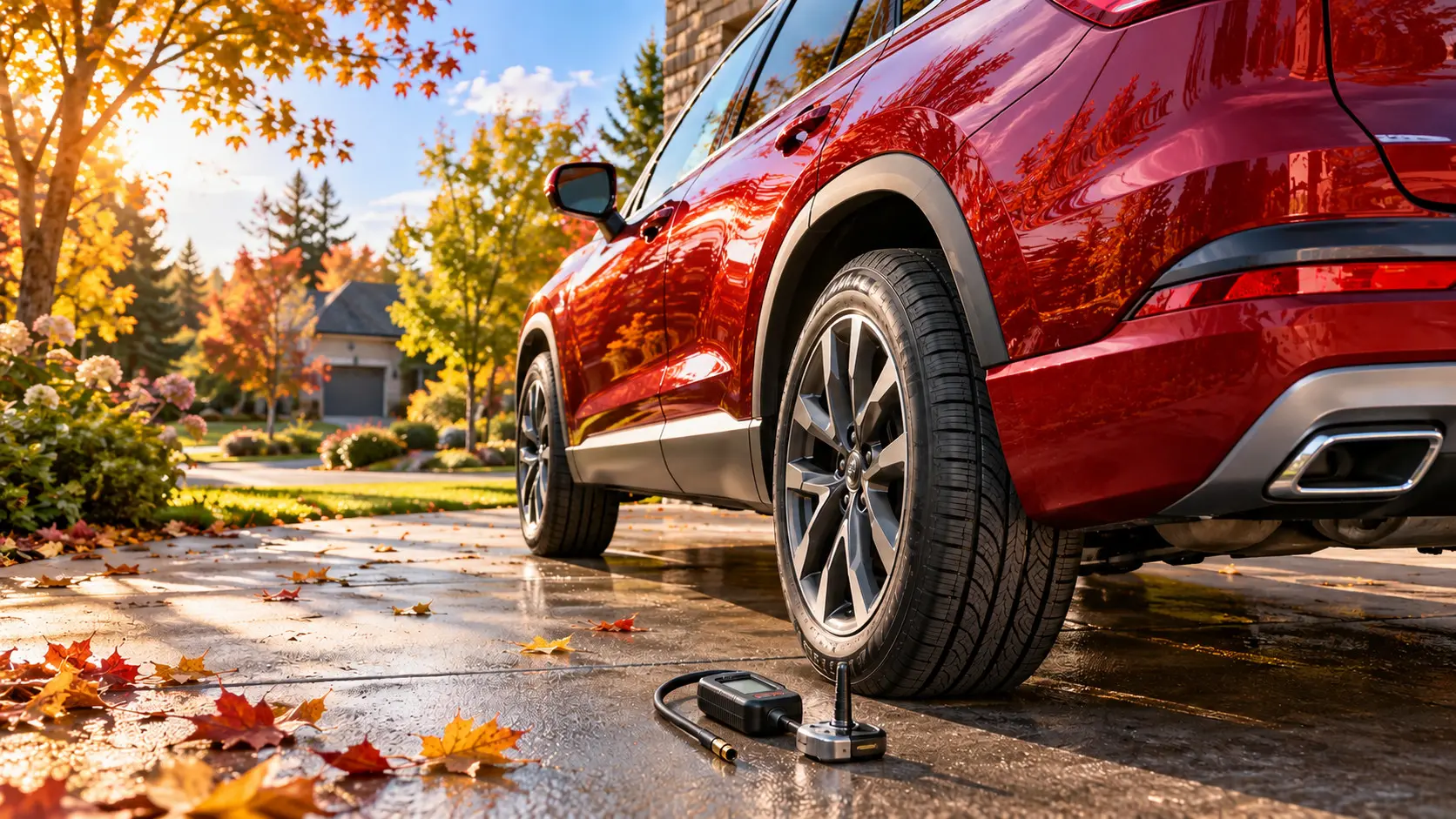
First Day of Fall: A Simple Checklist to Get Your Tires Season-Ready
The first day of fall brings cooler mornings, shorter daylight hours, heavier rain, and an important reminder for Canadian drivers: your tires need to be ready for the season ahead.
You do not need to wait for the first snowfall to think about tire maintenance. Fall is an ideal time to inspect tread depth, check cold tire pressure, look for uneven wear, and decide when to switch from summer or all-season tires to winter tires.
That preparation matters because temperatures can change quickly across Canada. Transport Canada notes that below 7°C, summer and all-season tires begin to lose elasticity and traction, while winter tires are designed to remain flexible at much lower temperatures.
Use this simple fall tire checklist to prepare your vehicle before cold weather becomes part of your daily drive.
Quick Fall Tire Checklist
Start with the basics: pressure, tread, condition, tire type, and your winter changeover plan. These checks can identify problems while there is still time to correct them before colder weather arrives.
| What to Check | What to Look For | Why It Matters |
|---|---|---|
| Tire pressure | Check all tires cold against the vehicle manufacturer’s recommended pressure | Cold temperatures can reduce tire pressure |
| Tread depth | Measure several areas of every tire | Worn tread can reduce traction on wet, snowy, and icy roads |
| Tire condition | Look for cuts, cracks, bulges, punctures, and unusual damage | Damage may indicate that a tire needs professional inspection |
| Uneven wear | Compare the inner, centre, and outer portions of the tread | Uneven wear can point to pressure, alignment, suspension, or rotation issues |
| Winter tire condition | Check tread, sidewalls, age, and 3PMSF markings | Helps determine whether your winter set is ready for another season |
| Winter changeover | Plan around temperatures and local requirements | Waiting for the first major snowfall can leave you unprepared |
| Spare tire | Check condition and pressure where applicable | A neglected spare may not be ready when needed |
1. Check Your Tire Pressure as Temperatures Drop
Fall is an important time to start checking tire pressure more regularly because colder temperatures can lower inflation pressure. A tire that appeared properly inflated during warm weather may be underinflated after temperatures fall.
Transport Canada recommends checking tire pressure regularly and taking readings when the tires are cold. The correct pressure for your vehicle can normally be found on the tire information label located on the driver’s door or door post.
How to check your tire pressure
- Park the vehicle long enough for the tires to be cold.
- Find the manufacturer’s recommended cold tire pressure on the vehicle placard or in the owner’s manual.
- Remove the valve cap.
- Use a reliable tire pressure gauge to measure each tire.
- Adjust the pressure to the vehicle manufacturer’s specification.
- Check all four tires and the spare tire, if applicable.
- Recheck pressure periodically as fall temperatures continue to fall.
Do not determine proper inflation simply by looking at a tire. A tire can appear normal while still being improperly inflated.
Expert tip: Do not use the maximum pressure printed on the tire sidewall as your normal inflation target. Follow the vehicle manufacturer’s recommended cold inflation pressure for your vehicle and tire application.
2. Measure Tread Depth Before Wet and Snowy Weather Arrives
Tread depth should be measured rather than estimated visually. Adequate tread helps the tire manage water, slush, and snow, while worn tires have less ability to provide traction in challenging conditions.
Use a tread depth gauge and measure several locations across each tire. Comparing readings across the tread can also reveal uneven wear that deserves attention.
Transport Canada advises drivers not to use tires worn close to 4 mm (5/32 in.) of tread depth on snow-covered roads and recommends winter tires have at least 4 mm of tread for safer winter driving.
Why tread depth matters in fall
Fall driving can involve heavy rain, standing water, wet leaves, frost, and eventually slush or snow. As tread wears down, the tire’s ability to manage these conditions can deteriorate.
Do not assume that a tire is ideal for another Canadian winter simply because it has not yet reached its legal wear limit. Winter performance should be considered separately from whether a tire is technically still usable.
3. Inspect Every Tire for Damage and Uneven Wear
A five-minute visual inspection can reveal tire problems before colder weather makes them more inconvenient. Check both the tread and visible sidewall areas of each tire.
Look for:
- Cracks or cuts in the sidewall
- Bulges or unusual deformation
- Embedded nails, screws, or other objects
- Chunks or sections missing from the tread
- Excessive wear on one shoulder
- Centre tread wearing faster than the shoulders
- Feathering or other irregular tread patterns
- Vibration or pulling while driving
If you find a bulge, significant cut, exposed cords, recurring pressure loss, or other serious damage, have the tire professionally inspected rather than assuming it is safe to continue using.
Uneven wear can tell you something
Unusual tread wear may be associated with incorrect tire pressure, wheel alignment, suspension issues, missed rotations, or other vehicle conditions. Correcting the underlying problem can be just as important as replacing a badly worn tire.
4. Decide Whether Your Current Tires Suit the Coming Weather
The start of fall is the right time to decide whether your current tires match the temperatures and driving conditions you expect over the next few months. Tire type matters because all-season, all-weather, summer, and winter tires are designed for different operating conditions.
| Tire Type | Typical Strength | Fall Consideration |
|---|---|---|
| Summer tires | Warm-weather performance | Plan a changeover before sustained cold conditions |
| All-season tires | Versatile three-season use | Performance declines as temperatures become colder; they are not the same as dedicated winter tires |
| All-weather tires | Year-round convenience with winter capability when 3PMSF-rated | Inspect tread carefully before entering another winter |
| Winter tires | Cold-weather, snow, and ice performance | Prepare the set and schedule installation before winter conditions become routine |
Remember the 7°C guideline
Transport Canada explains that at temperatures below 7°C, all-season and summer tires begin losing elasticity, which reduces traction. Winter tires maintain their elasticity and grip at considerably lower temperatures.
That is why your winter tire decision should not be based solely on whether snow is already on the ground.
5. Inspect Your Winter Tires Before You Install Them
If your winter tires have been stored since spring, inspect them now instead of discovering a problem on installation day. Storage does not guarantee that a tire is ready for another full season.
Check each winter tire for:
- Adequate tread depth
- Cracking or sidewall damage
- Uneven tread wear
- Foreign objects or previous damage
- The Three-Peak Mountain Snowflake symbol
- Correct tire size for your vehicle
- Correct load rating and speed rating for the application
- Signs of ageing or deterioration
Look for the Three-Peak Mountain Snowflake symbol
The Three-Peak Mountain Snowflake (3PMSF) symbol depicts a mountain containing a snowflake. Transport Canada says tires carrying this symbol meet specific snow traction performance requirements and are designed for severe snow conditions.
Do not confuse the 3PMSF symbol with an M+S marking. The markings represent different criteria, and provincial rules can also differ.
6. Schedule Your Winter Tire Change Before the Rush
Do not wait for the first major snowstorm to start thinking about winter tire installation. A better strategy is to monitor temperatures, understand your province’s requirements, and schedule your changeover before winter conditions become established.
Canada does not have one identical winter tire rule for every province and every road. Requirements vary by jurisdiction and, in some cases, by route.
Quebec winter tire requirements
For most motor vehicles registered in Quebec, winter tires are required from December 1 through March 15, subject to specified exceptions. Drivers who do not comply can face fines.
British Columbia winter tire routes
British Columbia has winter tire and chain requirements on many designated highways. Depending on the route, requirements can run from October 1 through March 31 or April 30, and drivers should follow posted regulatory signs.
Because regulations can change and specific routes may have different requirements, check current provincial rules before travelling.
7. Check Whether Your Tires Need Rotation or Alignment
Fall is a useful time to review tire rotation and wheel alignment because both can influence how evenly your tires wear. If one area of a tire is wearing substantially faster than another, simply changing seasons will not correct the underlying issue.
Signs that deserve attention
- The vehicle pulls noticeably to one side
- The steering wheel is off-centre when travelling straight
- One tire shoulder is wearing significantly faster
- You notice unusual vibration
- Your tires are developing irregular tread patterns
Some symptoms can have several causes, so a professional inspection is appropriate if you are unsure whether the issue involves alignment, balancing, suspension, or the tire itself.
8. Do Not Forget Your TPMS
Your Tire Pressure Monitoring System is useful, but it does not replace manual tire pressure checks. The TPMS warning light is designed to alert you to pressure-related conditions, not to perform a complete tire inspection.
If your vehicle has TPMS and the warning appears as temperatures drop, check the tires with an accurate pressure gauge rather than simply assuming cold weather is the only cause.
Drivers with separate winter wheels should also confirm whether their winter setup uses compatible TPMS sensors and whether any relearning or programming procedure is required for their vehicle.
9. Check the Age of Your Tires
Tread depth is not the only factor that affects whether a tire remains suitable for service. Tires can deteriorate with age, exposure, storage conditions, heat, and use.
The tire sidewall includes a date code identifying when the tire was manufactured. If you are uncertain about the age or condition of an older tire, have it inspected by a qualified tire professional and consult the tire manufacturer’s recommendations.
A tire should not automatically be considered safe simply because it still has visible tread.
10. Prepare for Fall Rain, Frost, Slush, and Early Snow
Fall tire preparation is about more than preparing for snow. September, October, and November can expose Canadian drivers to rapidly changing road conditions.
Depending on where you live or travel, fall can bring:
- Heavy rain and standing water
- Cold pavement
- Wet leaves
- Morning frost
- Freezing rain
- Slush
- Early-season snow
- Black ice
- Rapid temperature swings
Good tread, appropriate tires, correct pressure, and driving according to conditions all become increasingly important as autumn progresses.
TireWarehouse tip: Treat the first day of fall as a maintenance reminder, not a deadline. The best time to find a worn tire or plan your winter changeover is before you urgently need winter traction.
Your First-Day-of-Fall Tire Checklist
If you only have a few minutes, work through this checklist and make note of anything that needs attention.
- Check the cold inflation pressure of all four tires.
- Check the spare tire, if your vehicle has one.
- Measure tread depth with a proper gauge.
- Inspect tread and sidewalls for cuts, cracking, bulges, or embedded objects.
- Look for uneven or irregular tread wear.
- Review when your tires were last rotated.
- Investigate pulling, vibration, or steering changes.
- Confirm what type of tires are currently installed.
- Inspect your stored winter tires.
- Look for the 3PMSF symbol on winter-rated tires.
- Review provincial and route-specific winter tire requirements.
- Plan your winter tire installation before consistently cold weather arrives.
Common Fall Tire Mistakes to Avoid
The most common mistake is waiting until conditions become difficult before checking whether your tires are ready. Fall preparation gives you more time to address worn tires, pressure issues, or changeover scheduling.
Waiting for snow before installing winter tires
Snowfall is not the only factor. Temperature also affects tire performance, which is why the 7°C guideline is useful when planning your seasonal change.
Judging tire pressure by appearance
Use a gauge. Transport Canada specifically notes that you cannot always determine correct inflation simply by looking at the tire. :chatgpt-content-reference{index=”7″}
Checking tread in only one place
Measure at multiple points across the tire. This can help identify uneven wear that a single measurement may miss.
Installing only two winter tires
Transport Canada recommends installing winter tires in sets of four to help maintain vehicle control and stability in icy conditions. Mixing tires with different characteristics can negatively affect vehicle stability.
Ignoring the spare
If your vehicle uses an inflatable spare tire, include it in your seasonal pressure checks. A spare that has slowly lost pressure may be of little help during a roadside emergency.
When Should Canadians Put On Winter Tires?
Plan your winter tire installation around sustained temperatures near or below 7°C, local weather, your driving needs, and applicable provincial requirements. You do not have to wait for snow to begin planning the switch.
A driver in Vancouver may face a different autumn than someone in Calgary, Winnipeg, Montreal, or Northern Ontario. Drivers who regularly travel through mountain passes or colder regions may also encounter winter conditions earlier than temperatures at home would suggest.
If you travel between provinces, check the rules for the roads you will actually use rather than assuming your home province’s requirements apply everywhere.
Frequently Asked Questions About Fall Tire Preparation
Why should I check my tires on the first day of fall?
It is a convenient seasonal reminder. Temperatures are beginning to fall, winter is approaching, and there is still time to correct tire pressure, tread, wear, alignment, or winter tire issues before severe weather arrives.
At what temperature should I consider changing to winter tires?
Transport Canada notes that all-season and summer tires begin losing elasticity below 7°C. That makes temperatures around 7°C a useful guideline when planning your winter tire changeover.
Should I wait until it snows to install winter tires?
No. Temperature, forecast conditions, your location, and applicable regulations are more useful considerations than waiting for the first snowfall.
How often should I check tire pressure in the fall?
Transport Canada recommends checking tire pressure regularly and notes that cold weather lowers pressure. A monthly check is a useful routine, along with checks before highway driving or longer trips.
Should tire pressure be checked when the tires are hot or cold?
Check tire pressure when the tires are cold for the most appropriate comparison with the vehicle manufacturer’s cold inflation specification.
How much tread should winter tires have?
Transport Canada advises against using tires worn close to 4 mm of tread depth on snow-covered roads and recommends winter tires have at least 4 mm for safer winter driving.
Are all-season tires the same as winter tires?
No. All-season tires are designed for a broad range of moderate conditions, while dedicated winter tires use tread designs and compounds intended for cold temperatures and winter conditions.
Are all-weather tires the same as all-season tires?
No. Although terminology can be confusing, all-weather tires are generally designed for year-round use while providing winter capability and typically carry the 3PMSF symbol. Always confirm the markings and specifications of the specific tire model.
What does the mountain and snowflake symbol mean?
The Three-Peak Mountain Snowflake symbol identifies tires that meet specific snow traction performance requirements and are designed for severe snow conditions. :chatgpt-content-
Do I need four winter tires?
Transport Canada recommends installing winter tires in sets of four to help maintain consistent control and stability.
Are winter tires mandatory everywhere in Canada?
No. Winter tire requirements differ across Canada. Quebec has a province-wide seasonal requirement for most Quebec-registered motor vehicles, while British Columbia requires qualifying winter tires on many designated routes during specified periods. Always verify current requirements for your province and travel route.
What should I do if my TPMS light comes on when the weather gets colder?
Check all tires with a pressure gauge and adjust them according to your vehicle manufacturer’s recommended cold inflation pressure. If the warning remains on or pressure continues dropping, have the tire and TPMS system inspected.
Final Recommendation: Make Fall Your Tire Check Season
The first day of fall is an easy reminder to give your tires a few minutes of attention before Canadian driving conditions become more demanding.
Start by checking pressure, tread depth, visible damage, and uneven wear. Then inspect your winter tires, review the weather and local requirements, and make a plan for your seasonal tire change.
Fall tire preparation does not need to be complicated. A simple inspection now can help identify worn or damaged tires early, give you time to schedule service, and make sure your vehicle is better prepared for rain, colder pavement, slush, snow, and ice.
Recommended Related Reading
In stock & ready to ship
Find the tires you need, delivered from a warehouse near you