For many drivers, tires may seem like a mature product that hasn’t changed much over the years. After all, they’re still round, black, and designed to do the same basic job: connect your vehicle to the road.
However, behind the scenes, tire manufacturers have been pushing the boundaries of engineering at an unprecedented pace. The last decade has seen revolutionary advances in materials science, digital design, sustainability, and vehicle integration that have transformed what modern tires can achieve.
Here’s why tire technology has evolved faster in the last 10 years than it did during the previous 50.
1. Advanced Rubber Compounds Deliver Better Performance
One of the biggest breakthroughs has been the development of next-generation tire compounds.
Modern tires use sophisticated blends of silica, synthetic polymers, resins, and proprietary additives that improve:
- Wet-weather traction
- Dry-road grip
- Fuel efficiency
- Tread life
- Winter performance
Manufacturers can now fine-tune compounds for specific driving conditions, allowing drivers to enjoy better performance without sacrificing durability.
2. Computer-Aided Design Has Accelerated Innovation
Decades ago, developing a new tire required extensive physical prototyping and testing.
Today, manufacturers use:
- Artificial intelligence (AI)
- Machine learning
- Advanced simulations
- Digital twin technology
- High-performance computing
Engineers can model thousands of tread patterns and compound variations virtually before a single prototype is built. This dramatically reduces development time while improving overall tire performance.
3. Electric Vehicles Are Driving Tire Innovation
The rise of electric vehicles has forced tire manufacturers to rethink traditional tire design.
EVs present unique challenges:
- Increased vehicle weight
- Instant torque delivery
- Reduced road noise requirements
- Greater efficiency demands
As a result, tire manufacturers have introduced EV-specific tires designed to:
- Reduce rolling resistance
- Handle higher loads
- Improve tread longevity
- Minimize cabin noise
These advancements are now benefiting conventional vehicles as well.
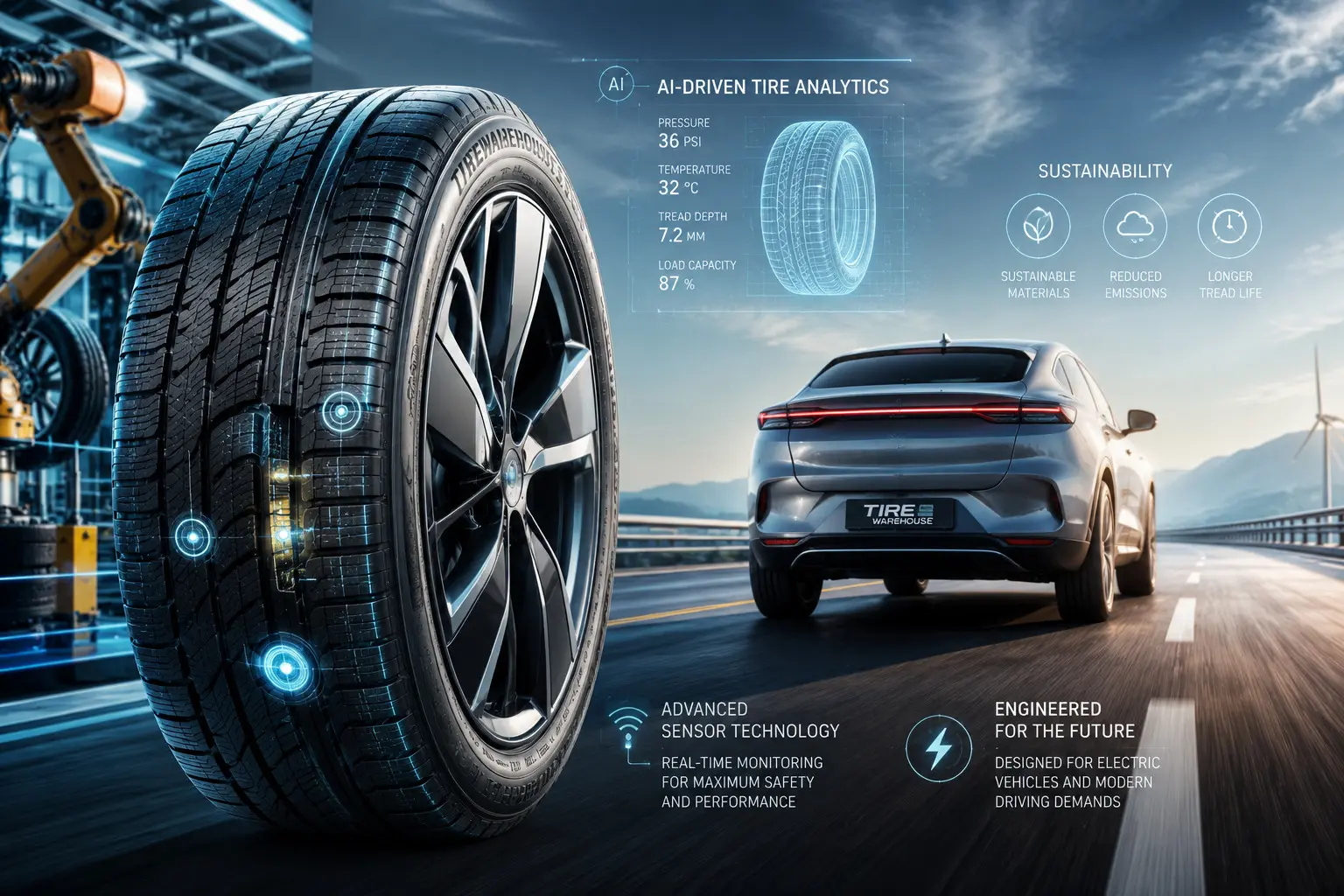
4. Smart Tire Technology Is Becoming Reality
Tires are no longer passive components.
Many modern tire systems can now monitor:
- Air pressure
- Temperature
- Load conditions
- Tread wear
- Road surface data
Integrated sensors provide real-time information that helps improve safety, efficiency, and predictive maintenance.
As connected vehicles become more common, smart tires are expected to play a major role in future transportation systems.
5. Sustainability Is Reshaping Tire Manufacturing
Environmental concerns have become a major catalyst for innovation.
Leading tire manufacturers are investing heavily in:
- Renewable raw materials
- Recycled rubber technologies
- Sustainable natural rubber sourcing
- Bio-based oils
- Reduced carbon manufacturing processes
The goal is to create high-performance tires with a significantly smaller environmental footprint while maintaining safety and durability standards.
6. Improved Tread Designs Enhance Safety
Modern tread patterns are far more sophisticated than those of previous generations.
Using advanced computer modeling, manufacturers can optimize:
- Water evacuation
- Hydroplaning resistance
- Cornering stability
- Noise reduction
- Snow traction
Today’s tire designs provide better performance across a wider range of weather and road conditions than ever before.
7. Tire Testing Has Become More Precise
New testing technologies allow manufacturers to gather enormous amounts of performance data.
Modern testing methods include:
- Laser tread analysis
- Real-time telemetry
- Automated durability testing
- Climate-controlled performance evaluation
- Digital wear modeling
This precision enables continuous improvement and faster innovation cycles.
The Future Looks Even More Exciting
The pace of tire innovation shows no signs of slowing down.
Emerging technologies include:
- Airless tire designs
- Self-healing materials
- Intelligent tread adaptation
- Fully connected tire ecosystems
- Sustainable 100% renewable tire construction
As vehicles become smarter, more efficient, and increasingly electrified, tires will continue evolving to meet the demands of modern mobility.
Final Thoughts
While tire technology may not always grab headlines, it has quietly become one of the fastest-evolving sectors in the automotive industry. Advances in materials, digital engineering, EV compatibility, smart sensors, and sustainability have accelerated development at a pace unmatched in previous decades.
For drivers, that means safer journeys, improved efficiency, longer-lasting performance, and a better driving experience every time they hit the road.
https://tirewarehouse.ca/product-category/all-season
https://tirewarehouse.ca/product-category/light-truck
How to Read Your Tire Size
Warranties