
One Tire, Every Season: Is the Ultramax 4S Enough for Your Winter?
The Summit Ultramax 4S offers 3PMSF-certified snow traction and year-round convenience—but whether one set is enough depends on how severe your winter really gets.
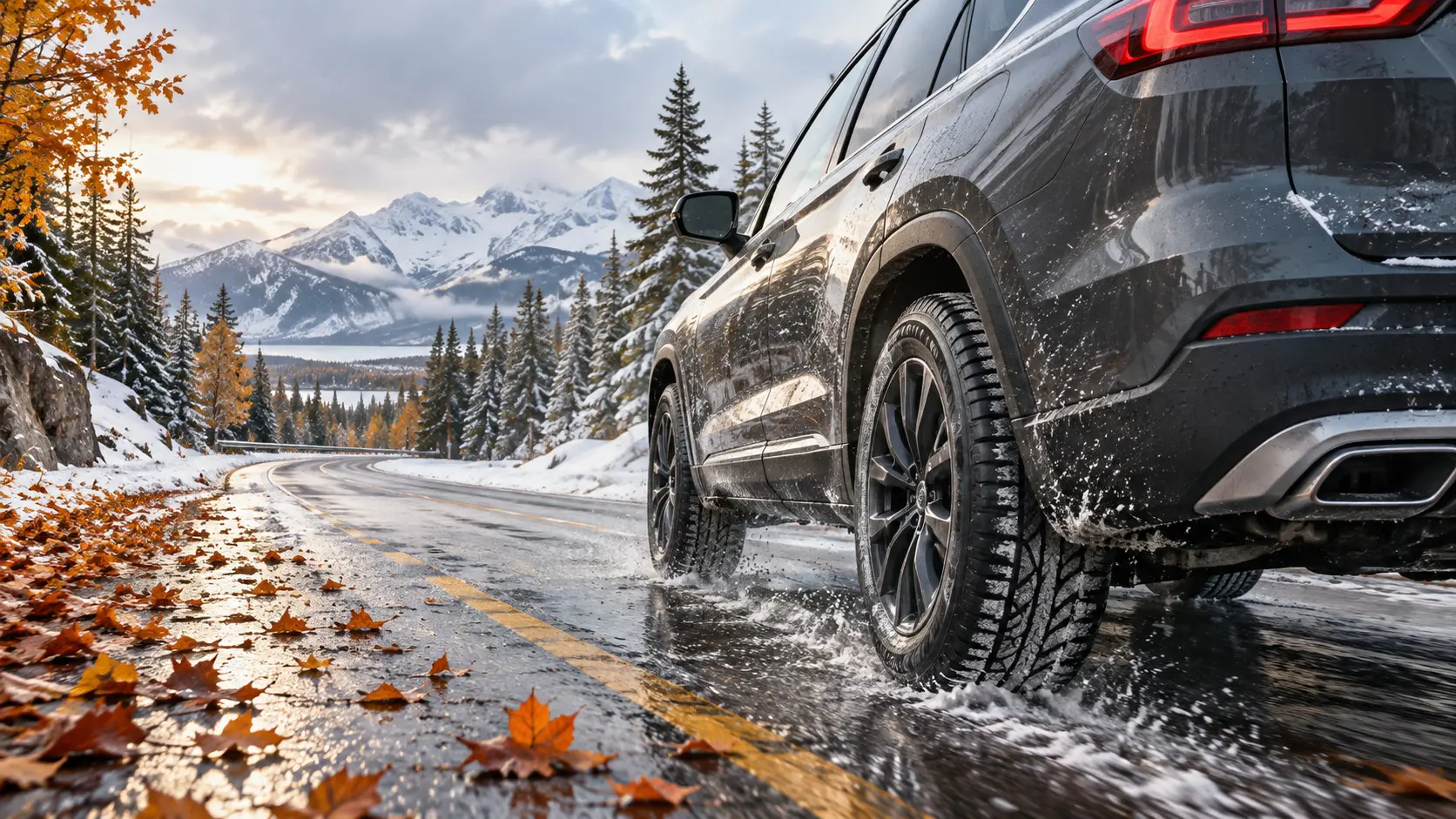
One Tire, Every Season: Is the Ultramax 4S Enough for Your Winter?
The appeal of one tire for every season is easy to understand. No spring and fall changeovers. No second set taking up space in the garage. No scrambling for a winter tire appointment when the first snow appears in the forecast.
That is exactly where the Summit Ultramax 4S becomes interesting for Canadian drivers. It is an all-weather tire designed for year-round use, and it carries the Three-Peak Mountain Snowflake (3PMSF) marking. That means it has met a defined snow-traction performance requirement—it is not simply a conventional all-season tire with an M+S marking.
But there is an important distinction: 3PMSF certification does not automatically make an all-weather tire equivalent to a dedicated winter tire in every Canadian winter condition.
So, can you install the Ultramax 4S and leave it on for all four seasons? For many drivers, potentially yes. Whether you should depends on your temperatures, snowfall, ice exposure, roads, commute, driving habits, and ability to avoid severe storms.
What Is the Summit Ultramax 4S?
The Summit Ultramax 4S is an all-weather tire intended to provide year-round capability across dry pavement, rain, colder temperatures, and snow. Its most important distinction for Canadian winter shoppers is the 3PMSF symbol.
That puts the Ultramax 4S in a different category from many conventional all-season tires.
The Ultramax 4S combines an asymmetric tread pattern with 3D siping and is offered for passenger-car and crossover applications. Its design is intended to balance several competing demands: warm-weather driving, wet-road performance, ride comfort, tread life, and winter traction.
That balance is the central idea behind an all-weather tire. Instead of being optimized primarily for summer or winter, it attempts to cover the entire year with one set.
Is the Ultramax 4S a True Four-Season Tire?
Yes, the Ultramax 4S is designed for year-round use and carries the 3PMSF winter-performance marking. In practical terms, that means you can potentially run the same set through spring, summer, fall, and winter rather than performing two seasonal tire changes each year.
However, the term four-season should not be interpreted as best possible performance in every season.
A dedicated winter tire has a narrower assignment: perform in cold, snow, slush, and ice. A conventional all-season tire generally prioritizes three-season versatility. An all-weather tire such as the Ultramax 4S has the much broader challenge of functioning through July heat and January snow.
| Feature | Conventional All-Season | Ultramax 4S All-Weather | Dedicated Winter Tire |
|---|---|---|---|
| Year-round use | Generally three-season focused in Canada | Yes | No |
| 3PMSF certification | Not necessarily | Yes | Typically yes |
| Warm-weather use | Yes | Yes | Not its intended role |
| Tested snow-traction qualification | Not with M+S alone | Yes | Yes when 3PMSF-marked |
| Severe winter specialization | No | Moderate | Highest of these three categories |
| Seasonal changeover | Needed if switching to winters | Potentially unnecessary | Required |
| Second set to store | Yes if using winters | No | Yes |
What Does 3PMSF Mean on the Ultramax 4S?
The Three-Peak Mountain Snowflake symbol means the Ultramax 4S has met a standardized snow-traction performance requirement. This is one of the most important things Canadian shoppers should understand when comparing an all-weather tire with an ordinary all-season tire.
The symbol looks like a snowflake enclosed inside a three-peaked mountain and is moulded into the tire sidewall.
Transport Canada advises drivers shopping for winter tires to look for the mountain-and-snowflake symbol. Tires displaying it must satisfy specific snow-traction performance requirements.
That makes 3PMSF more meaningful for winter comparison than an M+S marking by itself.
TireWarehouse Tip: Think of 3PMSF as proof that a tire has passed a specific snow-traction threshold—not as a promise that every 3PMSF tire performs identically on ice, in deep snow, or at extremely low temperatures.
3PMSF vs. M+S: Why the Difference Matters
3PMSF and M+S are not equivalent certifications because the mountain-and-snowflake symbol is associated with a defined snow-traction performance test.
M+S means Mud and Snow and may also appear as M/S or M&S. The marking is common on conventional all-season tires.
When comparing tire sidewalls, remember:
- M+S only: do not assume the tire has passed the 3PMSF snow-traction requirement.
- 3PMSF: the tire has met the applicable standardized snow-traction performance threshold.
- 3PMSF does not mean: unlimited ice traction or identical winter performance among every tire carrying the symbol.
The Ultramax 4S carrying the 3PMSF marking is therefore an important step beyond simply calling a tire “all-season.”
Is the Ultramax 4S Enough for a Canadian Winter?
The Ultramax 4S can be enough for some Canadian winters, particularly for drivers facing moderate, variable conditions on regularly maintained roads—but dedicated winter tires remain worth considering for severe conditions.
The difficulty with asking whether a tire is “good for Canada” is that there is no single Canadian winter.
A driver commuting on frequently cleared streets in Victoria faces a very different winter from someone travelling rural Manitoba highways. A Toronto commuter who can work from home during a major storm has different needs from someone driving every morning in northern Ontario. A driver crossing mountain passes in British Columbia faces another level of winter exposure altogether.
Instead of asking whether the Ultramax 4S is good enough for Canada, ask whether it is appropriate for your Canadian winter.
When the Ultramax 4S Makes the Most Sense
The Ultramax 4S is most compelling for drivers who want one year-round tire and encounter moderate winter conditions rather than routinely severe snow, ice, and extreme cold.
You mostly drive on maintained urban roads
If your commute consists primarily of city and suburban streets that are regularly plowed and treated, an all-weather tire may offer a practical balance.
You still need to adjust speed and following distance for conditions, but you may not require the same winter specialization as a driver regularly travelling untreated rural roads.
Your winters involve a mixture of rain, slush, and snow
Some Canadian regions experience winters that constantly move between wet pavement, cold rain, slush, light or moderate snow, and occasional heavier storms.
This mixed environment is one of the strongest use cases for an all-weather tire because the tire needs to operate across a broad temperature and precipitation range.
You can avoid driving during severe storms
Your schedule matters almost as much as your location.
If you can postpone a trip when freezing rain arrives or stay home during a major snowfall, your tire requirements may be different from those of a nurse, tradesperson, emergency worker, delivery driver, or commuter who must travel regardless of conditions.
You want to eliminate seasonal tire storage
Drivers living in apartments and condominiums do not always have convenient space for four additional tires.
Using the Ultramax 4S throughout the year eliminates the need to store a second seasonal set.
You want to avoid two seasonal changeovers
With one all-weather set, there is no need to schedule the traditional spring and autumn tire swap.
That saves time and simplifies maintenance, although it does not eliminate maintenance altogether. Tire pressure, tread depth, rotation, alignment, and wear still need regular attention.
When Dedicated Winter Tires Are the Better Choice
Dedicated winter tires deserve serious consideration when your normal driving involves frequent ice, deep snow, severe cold, steep terrain, remote roads, or winter travel that cannot be postponed.
An all-weather tire has to work in summer as well as winter. A dedicated winter tire can concentrate its design around cold-weather performance.
Consider a dedicated winter set if you regularly:
- Drive on packed snow or icy roads
- Leave home before roads are plowed
- Travel rural or remote highways
- Encounter prolonged periods of severe cold
- Drive steep hills in winter
- Cross mountain passes
- Travel frequently to ski areas
- Encounter freezing rain or black ice
- Have a long winter highway commute
- Cannot simply stay home during a major storm
- Want a tire specifically optimized for winter conditions
Transport Canada recommends winter tires on all wheels for driving in cold, snowy, or icy conditions. Four matching tires also help maintain more predictable handling and vehicle stability.
What About Ice?
The 3PMSF marking should not be interpreted as an ice-performance certification. This distinction is particularly important for Canadian drivers deciding whether an all-weather tire can replace a dedicated winter set.
The mountain-and-snowflake qualification focuses on snow traction. It does not tell you exactly how the Ultramax 4S—or any other 3PMSF tire—will perform during emergency braking on black ice.
Real-world winter traction can vary according to:
- Ambient and pavement temperature
- Loose, packed, or polished snow
- Black ice
- Freezing rain
- Slush
- Tire tread depth
- Inflation pressure
- Vehicle weight and configuration
- Road gradient
- Vehicle speed
- Braking, steering, and acceleration inputs
If ice and freezing rain are routine parts of your winter commute, this is a strong reason to compare the Ultramax 4S against dedicated winter tires rather than assuming 3PMSF tells the whole story.
Does AWD Make the Ultramax 4S Enough?
All-wheel drive does not replace appropriate winter tires because AWD can help a vehicle accelerate but does not create additional tire grip for braking and cornering.
This is one of the most common winter tire misconceptions.
AWD and four-wheel drive determine how engine torque is distributed to the wheels. Your tires are still the components making contact with the road.
When you brake, turn, or attempt an emergency manoeuvre, available traction still depends heavily on the tires and road surface.
Therefore, an AWD crossover on Ultramax 4S tires should be evaluated using the same basic question as a front-wheel-drive sedan: are these tires appropriate for the conditions in which I actually drive?
What Happens Below 7°C?
Approximately 7°C is a useful seasonal reference point because tire compound behaviour changes as temperatures fall. Transport Canada notes that conventional all-season and summer tires begin losing elasticity below approximately 7°C, while winter tires are designed to remain flexible at substantially lower temperatures.
This is another reason an all-weather tire should not be confused with an ordinary all-season tire.
An all-weather tire is intended to bridge a broader temperature range while remaining usable throughout the warmer months. A dedicated winter tire, however, can focus its compound and tread design much more specifically on cold-weather operation.
Ultramax 4S vs. Dedicated Winter Tires: Which Driver Are You?
The easiest way to decide is to compare your actual winter exposure rather than choosing solely by tire category.
| Your Driving Situation | Ultramax 4S | Dedicated Winter Tires |
|---|---|---|
| Mostly urban, regularly plowed roads | Strong option to consider | Also suitable |
| Mixed rain, slush, and moderate snow | Strong use case | Suitable |
| Want one set year-round | Major advantage | Requires seasonal changeover |
| No tire storage available | Major advantage | Storage required |
| Frequent heavy snow | Evaluate carefully | Generally preferable |
| Regular black ice or freezing rain | Evaluate carefully | Winter-focused option deserves consideration |
| Remote or untreated roads | May not be the ideal compromise | Generally preferable |
| Mountain highway driving | Check conditions and regulations carefully | Generally preferable |
| Can stay home during severe storms | More practical | Still offers additional winter specialization |
| Must drive regardless of weather | Consider winter exposure carefully | Often the stronger winter-focused choice |
What Do You Give Up by Using One Tire All Year?
The trade-off with an all-weather tire is specialization: one tire has to perform across a much wider range of conditions than a dedicated seasonal tire.
That does not make all-weather tires inferior. It means they solve a different problem.
A driver with separate seasonal sets can choose a tire optimized primarily for warmer conditions and another optimized specifically for winter. An Ultramax 4S owner asks one set to cover both jobs.
In return, you gain:
- One set of tires instead of two
- No routine seasonal changeover
- No second set requiring storage
- 3PMSF-qualified snow traction
- Year-round usability
- A simpler ownership routine
The decision is therefore not simply about which tire is “better.” It is about whether versatility or winter specialization is more valuable for your situation.
One Set Does Not Mean Zero Tire Maintenance
Running the Ultramax 4S year-round makes regular maintenance particularly important because the same four tires accumulate kilometres during every season.
A separate winter set spends part of the year in storage. An all-weather set does not get that break.
Monitor tread depth
Snow capability depends partly on having sufficient usable tread. A tire that performed well when new should not be assumed to provide the same winter performance after substantial year-round wear.
Check tread depth at multiple points across all four tires rather than relying only on a quick visual inspection.
Rotate the tires as recommended
Regular rotation can help promote more even tread wear when permitted by the tire and vehicle configuration. Follow the vehicle and tire manufacturer’s recommended interval and rotation pattern.
Check cold inflation pressure
Canadian temperature swings can affect tire pressure. Check inflation using a reliable gauge and follow the cold tire pressure specified by the vehicle manufacturer, usually found on the driver’s door-area placard.
Watch for uneven wear
Inner-edge, outer-edge, centre, or irregular wear can indicate that inflation, alignment, suspension, rotation, or another factor needs attention.
Year-round tires only deliver their intended performance when they remain in good condition.
Is the Ultramax 4S Legal for Winter Driving in Quebec?
The 3PMSF marking is important for Quebec winter-tire compliance, but drivers should always verify the exact tire and current provincial requirements before installation.
Quebec requires qualifying winter tires on most motor vehicles registered in the province during the legally defined winter period, subject to exemptions. The official mountain-and-snowflake pictogram is central to identifying tires recognized for winter use.
Because regulations can change and individual vehicle situations differ, confirm the current rules with the Government of Quebec before relying on any tire for legal compliance.
What About the Ultramax 4S in British Columbia?
British Columbia has route-specific winter tire requirements, making your travel plans as important as the tire itself.
Winter tires are required on many designated B.C. highways during specified periods. For passenger vehicles, provincial rules recognize qualifying tire markings subject to requirements including tread depth.
The 3PMSF marking on the Ultramax 4S gives it a meaningful advantage for winter use, but drivers should still check current B.C. requirements for the highways they intend to travel.
This is particularly important for anyone travelling through mountain passes, the Interior, or routes where weather can deteriorate rapidly.
Before an interprovincial winter trip: Check the latest provincial transportation requirements for every province and designated route on your itinerary. Do not assume that a tire considered acceptable in one jurisdiction automatically satisfies every requirement elsewhere.
Ask Yourself These 10 Questions Before Choosing One Tire for Every Season
Your answers to these questions will tell you more than the words “all-weather” on the sidewall.
- Are most of my winter roads quickly plowed and treated?
- How often do I actually drive through significant snowfall?
- Do I regularly encounter black ice or freezing rain?
- Do I drive before snowplows have cleared the roads?
- Do I travel rural or remote highways?
- Do I drive mountain passes or steep winter roads?
- Can I postpone driving during a severe storm?
- How many kilometres do I drive each year?
- Do I have room to store a second tire set?
- Is convenience more important to me than having a tire specifically optimized for winter?
If your answers point toward maintained roads, moderate conditions, flexible travel, and a strong preference for year-round convenience, the Ultramax 4S becomes a compelling option.
If they point toward ice, heavy snow, remote highways, extreme cold, mountains, or mandatory travel regardless of weather, dedicated winter tires deserve serious consideration.
The Ultramax 4S Winter Decision at a Glance
The Ultramax 4S offers genuine winter credentials, but its suitability depends on the severity of the winter you expect it to handle.
| Question | Ultramax 4S Answer |
|---|---|
| Can it stay installed year-round? | Yes, that is the purpose of an all-weather tire. |
| Does it carry 3PMSF? | Yes. |
| Is it more winter-oriented than an M+S-only conventional all-season? | Its 3PMSF marking confirms a snow-traction qualification that M+S alone does not. |
| Can it handle snow? | It meets the snow-traction requirement associated with 3PMSF. |
| Does 3PMSF guarantee exceptional ice performance? | No. |
| Does it eliminate seasonal changeovers? | Potentially, yes. |
| Does it eliminate tire maintenance? | No. |
| Is it automatically the best choice for severe Canadian winters? | No. Dedicated winter tires may be more appropriate. |
Frequently Asked Questions About the Summit Ultramax 4S
These questions address the most important concerns Canadian drivers have when considering the Ultramax 4S as a one-set, year-round tire.
Is the Summit Ultramax 4S an all-season or all-weather tire?
The Summit Ultramax 4S is an all-weather tire. It is intended for year-round use and carries the Three-Peak Mountain Snowflake marking associated with a defined snow-traction performance requirement.
Does the Ultramax 4S have the 3PMSF symbol?
Yes. The Summit Ultramax 4S is marketed with 3PMSF certification. As with any tire purchase, verify the markings and specifications of the exact size and tire supplied for your vehicle.
Can I use the Ultramax 4S all year in Canada?
That is its intended purpose. Whether year-round use is the right choice for you depends on your local winter conditions, vehicle, routes, driving schedule, tread condition, and applicable provincial regulations.
Is the Ultramax 4S a winter tire?
It is more accurately described as an all-weather tire with 3PMSF certification. Although it meets a defined snow-traction requirement, it should not automatically be treated as identical to a dedicated winter tire optimized specifically for cold, snow, and ice.
Is the Ultramax 4S better in snow than a conventional all-season tire?
The Ultramax 4S has met the 3PMSF snow-traction requirement, while an M+S-only conventional all-season tire has not necessarily passed that same performance test. Actual performance still varies according to tire model, tread condition, temperature, snow type, inflation, and other factors.
Is 3PMSF the same as M+S?
No. M+S describes a different tire marking and does not by itself indicate that the tire passed the standardized snow-traction requirement associated with 3PMSF.
Are all-weather tires as good as winter tires on ice?
Do not assume they are. The 3PMSF qualification relates to snow traction and should not be interpreted as a universal ice-performance rating. Drivers who frequently encounter black ice and freezing rain should consider dedicated winter tires carefully.
Do I still need winter tires if my vehicle has AWD?
AWD does not eliminate the importance of appropriate tires. It can help distribute power during acceleration, but braking and cornering still depend on available tire-to-road traction.
Do I need to change Ultramax 4S tires in the spring?
No seasonal change is normally required simply because spring arrives. All-weather tires are designed to remain on the vehicle through warmer months as well as winter. Continue monitoring tread depth, inflation pressure, wear, and overall condition.
Will running one set year-round wear the tires faster?
The tires will accumulate kilometres throughout the entire year rather than sharing annual mileage with a second seasonal set. Actual tread life depends on driving distance, alignment, inflation, rotation, road surfaces, vehicle characteristics, driving style, and other factors.
Is the Ultramax 4S suitable for highway driving in winter?
That depends on the highway and conditions. Maintained urban highways are different from snow-covered rural routes or B.C. mountain passes. Consider snowfall, ice, temperature, road maintenance, terrain, and the consequences of encountering severe weather during your trip.
Who should choose dedicated winter tires instead?
Drivers routinely facing heavy snow, ice, extreme cold, untreated roads, mountain routes, early-morning winter travel, or conditions that cannot be avoided should strongly consider a dedicated winter setup.
Final Recommendation: Is One Ultramax 4S Set Enough?
For Canadian drivers with moderate winters, maintained roads, and a strong preference for year-round convenience, the Summit Ultramax 4S can be a practical one-set solution worth considering.
Its biggest advantage is straightforward: it combines year-round usability with the recognized snow-traction qualification represented by the 3PMSF symbol. That makes it fundamentally different from relying on a conventional M+S-only all-season tire and simply hoping it will cope with winter.
But the Ultramax 4S should not be oversold.
If your winter routinely means black ice, deep snow, severe cold, mountain passes, untreated rural roads, or driving through storms because staying home is not an option, the added specialization of dedicated winter tires may be the better fit.
The question is not whether one tire can cover four seasons. The Ultramax 4S is designed to do exactly that.
The better question is: how demanding is the fourth season where you drive?
Recommended Related Reading
In stock & ready to ship
Find the tires you need, delivered from a warehouse near you