
How the Trail Climber LMD Handles Heavy Daily Duty
A practical look at how the Summit Trail Climber LMD supports delivery vans, service vehicles, and light-duty commercial fleets facing high mileage, repeated stops, payload demands, and Canadian road conditions.
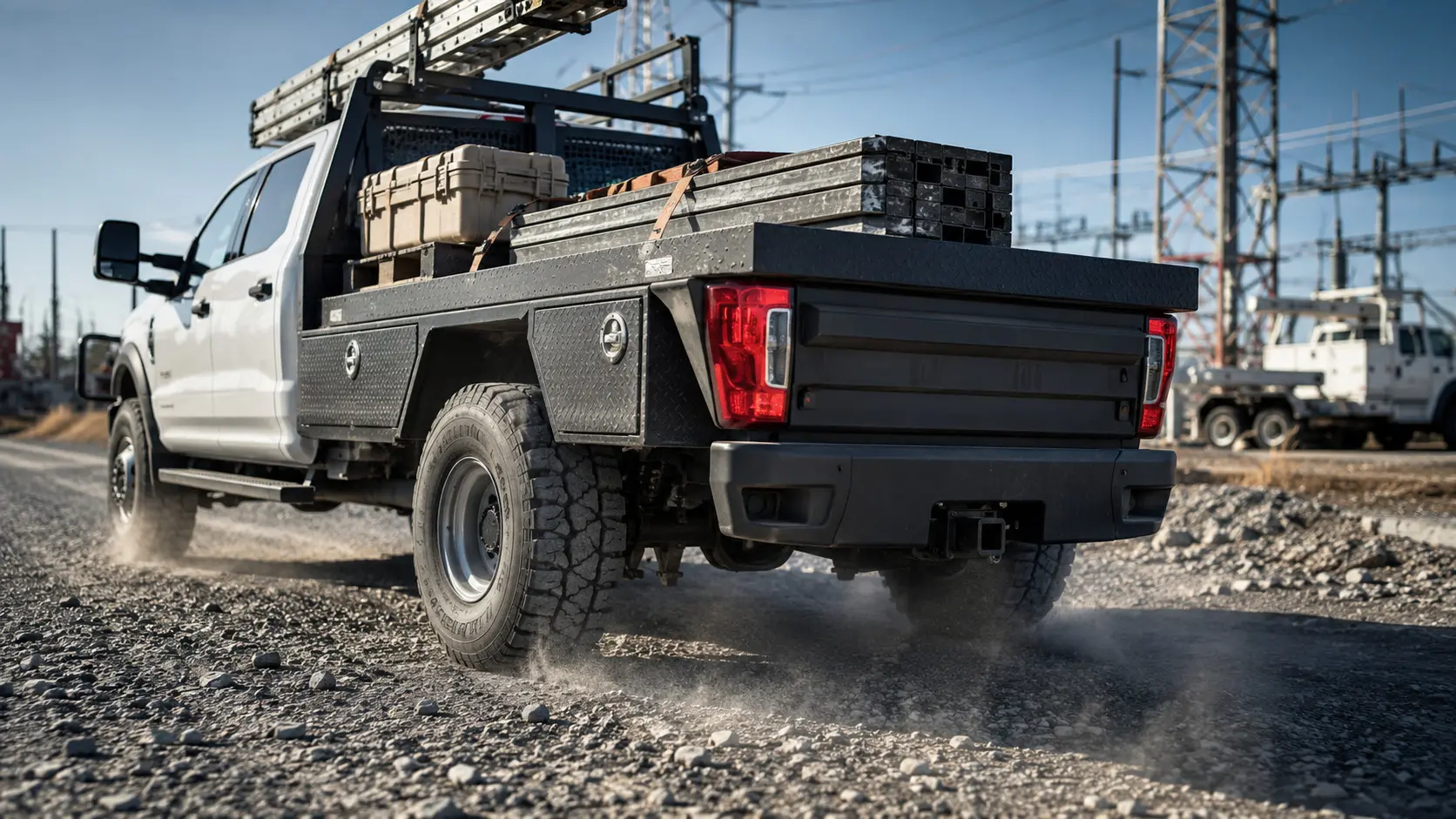
Work Trucks and Fleets: How the Trail Climber LMD Handles Heavy Daily Duty
For a work vehicle, a tire is not simply a replacement part. It affects uptime, payload capability, wet-road confidence, maintenance schedules, and ultimately the operating cost of every kilometre driven. That makes tire selection especially important for delivery vans, trades vehicles, service fleets, and other commercial vehicles that spend most of the day moving between jobs.
The Summit Trail Climber LMD is built specifically around this type of commercial duty cycle. Summit positions the tire for last-mile delivery work, where repeated acceleration, braking, turning, loading, and urban driving can place considerably different demands on a tire than ordinary commuting. Its published design highlights include a durable casing, deep tread, wear-focused rubber compounds, and four wide circumferential grooves for water evacuation.
This guide looks at what those features mean in practical fleet use. It is based on published manufacturer specifications and established tire-maintenance principles rather than an independent road test, so actual service life and performance will still depend on the vehicle, load, route, alignment, inflation pressure, driving behaviour, climate, and maintenance program.
What Is the Summit Trail Climber LMD?
The Trail Climber LMD is a commercial light-truck and van tire designed for high-frequency road use, particularly last-mile delivery and similar fleet applications. It should not be confused with a heavy truck tire for tractor-trailers or Class 8 vehicles. The published range centres on 16-inch commercial van sizes intended for compatible light-duty commercial vehicles.
TireWarehouse currently identifies the Trail Climber LMD as a Commercial Light Truck/Van tire, which makes its intended role clearer: cargo vans, route vehicles, delivery units, mobile service vehicles, and other work vans that require appropriate commercial load capability.
That distinction matters. When fleet operators talk about “heavy daily duty,” they may be describing a demanding workload rather than a heavy-duty vehicle classification. A van that makes dozens of stops per day, carries tools or parcels, travels thousands of kilometres per month, and rarely sits idle can be extremely hard on tires even though it is not a transport truck.
Why the Trail Climber LMD Is Built Differently for Daily Commercial Use
The Trail Climber LMD focuses on casing durability, tread depth, wear resistance, and wet-road drainage—the areas that matter most when a commercial vehicle accumulates kilometres quickly. Summit specifically highlights three construction and tread characteristics for this model.
1. A Casing Designed for Commercial Applications
Summit states that the Trail Climber LMD uses a durable casing designed to meet the demands of commercial applications. For a fleet manager, that is more relevant than cosmetic features or aggressive off-road styling. Commercial vans repeatedly transition between loaded and unloaded conditions, encounter curbs, potholes, loading areas, industrial roads, and extended highway stretches, and may operate for many hours per day.
A commercial tire still needs to be matched correctly to the vehicle. The load index, tire size, wheel specification, axle rating, and vehicle manufacturer’s requirements remain more important than simply choosing a tire marketed for work use.
2. 13/32-Inch Original Tread Depth
The manufacturer lists 13/32-inch tread depth across all three published Trail Climber LMD sizes, equivalent to approximately 10.3 mm when new. That gives fleet operators a substantial starting tread depth for vehicles expected to accumulate kilometres rapidly.
Deeper original tread alone does not guarantee a specific service life. Wear rate can change dramatically with alignment, pressure, vehicle weight, stop-and-go driving, road surface, rotation practices, and driver behaviour. For fleet management, the useful number is therefore not simply original tread depth but cost per usable kilometre.
3. Four Wide Circumferential Grooves
Summit says the Trail Climber LMD uses four wide circumferential grooves to improve water evacuation and wet-surface traction. That is particularly relevant to Canadian commercial fleets operating through heavy rainfall, standing water, spring thaw, and rapidly changing highway conditions.
No tire can eliminate hydroplaning, and wet traction always decreases as tread wears or speed increases in deep water. Fleet drivers should still reduce speed for conditions and maintain adequate tread depth.
Fleet tip: A tire designed for commercial service can only deliver its intended performance when inflation, alignment, load, tread condition, and rotation are controlled. Tire specification and fleet maintenance should be treated as one system rather than two separate decisions.
How the Trail Climber LMD Handles Repeated Stops, Turns, and Acceleration
The Trail Climber LMD is specifically positioned for the repetitive driving cycle associated with last-mile work. Summit describes this environment as one involving constant movement, turns, stops, and acceleration—the same pattern seen in parcel delivery, local service routes, municipal work, and many trades fleets.
These routes can accelerate tire wear because the tire rarely experiences the steady-state operation of a long highway journey. Instead, the tread repeatedly manages braking forces, acceleration forces, steering inputs, curbside manoeuvres, and varying payloads.
For fleet operators, that makes several characteristics especially important:
- Wear consistency: uneven shoulder wear can shorten replacement intervals even when plenty of tread remains elsewhere.
- Load suitability: commercial vans frequently operate with tools, inventory, parcels, shelving, or equipment onboard.
- Wet braking and drainage: delivery schedules continue during rain, making water evacuation an everyday concern.
- Heat management through proper inflation: underinflation increases flex and heat generation, especially under load.
- Predictable maintenance: fleets benefit when tires can be inspected, rotated, and replaced using a consistent schedule.
Transport Canada notes that proper inflation is fundamental to a tire’s ability to support vehicle weight and warns that underinflation increases rolling resistance, heat generation, tire wear, and the risk of tire damage. It recommends checking pressure when tires are cold and following the vehicle manufacturer’s recommended inflation pressures.
Trail Climber LMD Sizes and Load Ratings
The published Trail Climber LMD range currently includes three 16-inch commercial sizes, with 8-ply or 10-ply ratings depending on fitment. The correct option must match the vehicle manufacturer’s approved size, wheel requirements, load needs, and axle ratings.
| Tire Size | Load/Speed Index | Ply Rating | Tread Depth | Published Single Load Capacity | Published Dual Load Capacity |
|---|---|---|---|---|---|
| 195/75R16C | 107/105R | 8PR | 13/32 in. / approx. 10.3 mm | 2,150 lb / approx. 975 kg at 69 psi | 2,040 lb / approx. 925 kg at 69 psi |
| 225/75R16C | 121/120R | 10PR | 13/32 in. / approx. 10.3 mm | 3,197 lb / approx. 1,450 kg at 83 psi | 3,086 lb / approx. 1,400 kg at 83 psi |
| 235/65R16C | 121/119R | 10PR | 13/32 in. / approx. 10.3 mm | 3,197 lb / approx. 1,450 kg at 83 psi | 2,998 lb / approx. 1,360 kg at 83 psi |
These figures come from Summit’s published Trail Climber LMD specifications. TireWarehouse also lists matching product specifications for the 195/75R16C, 225/75R16C, and 235/65R16C versions.
Do not interpret the pressure shown in a tire specification table as an instruction to inflate every vehicle to that pressure. Fleet operators should use the pressure appropriate for the specific vehicle, axle load, approved tire specification, and manufacturer placard or documentation. Transport Canada requires tire and loading information on applicable vehicles and emphasizes the relationship between tire load capacity, axle rating, and recommended cold inflation pressure.
Why Load Rating Matters So Much for Work Vans
Load rating is one of the most important considerations when selecting tires for a commercial fleet because the tire must support the actual vehicle and cargo demands without exceeding its rated capability.
A work van may begin the morning carrying parcels, tools, replacement parts, ladders, shelving, fluids, generators, or service equipment. Even if no single item is particularly heavy, the combined payload can be substantial.
The safest approach is to work from the vehicle’s specifications rather than estimating visually. Check the vehicle certification label, Gross Axle Weight Rating, approved tire size, load index, wheel specification, and actual operating load where necessary. Transport Canada’s current tire-selection standards state that the combined load ratings of tires fitted to an axle must be sufficient for the vehicle’s applicable axle rating.
Choosing a higher-capacity tire does not increase the vehicle’s legal or mechanical payload. Suspension, brakes, wheels, axles, and the vehicle’s certified Gross Vehicle Weight Rating remain limiting factors.
Wet Roads, Spring Rain, and Canadian Fleet Conditions
The Trail Climber LMD’s four circumferential grooves make wet-weather evacuation one of its key published design priorities. That is useful for fleets because Canadian commercial driving can involve everything from summer thunderstorms to spring runoff and long periods of rain.
Water evacuation becomes increasingly important as tread wears. A tire with plenty of remaining legal tread may still not behave like a new tire in deep water, particularly at higher speeds.
Fleet inspections should therefore look beyond a simple pass-or-fail tread measurement. Drivers or technicians should monitor irregular wear, shoulder damage, embedded objects, cuts, cracking, pressure loss, and significant differences in tread depth between tires.
Transport Canada emphasizes that adequate tread is important for braking and cornering traction and recommends regular tire-pressure checks, including before longer trips.
Is the Trail Climber LMD a Winter Tire?
Fleet operators should not assume the Trail Climber LMD is a dedicated winter tire simply because it is intended for year-round commercial road use. Summit’s current Trail Climber LMD product page emphasizes commercial durability, tread wear, and wet traction but does not advertise the model there as a Three-Peak Mountain Snowflake-certified winter tire.
For vehicles operating through Canadian snow, ice, and sustained cold, inspect the actual tire sidewall and confirm the markings required for your route, province, and operating conditions. Transport Canada recommends winter tires on all wheels when driving in cold, snowy, or icy conditions and explains that winter tires use compounds and tread designs intended to provide better cold-weather traction than conventional all-season tires.
This is especially important for fleets operating in Quebec, British Columbia mountain regions, northern communities, or any area where severe winter weather forms a routine part of the duty cycle. Provincial rules and route requirements can differ, so fleet policies should be built around the jurisdictions in which vehicles actually operate.
What Kind of Fleet Is the Trail Climber LMD Best Suited To?
The Trail Climber LMD makes the most sense for compatible commercial vans and light-duty work vehicles that spend most of their time on paved urban, suburban, and highway routes. Its published design is centred on commercial durability and last-mile delivery rather than aggressive off-road traction.
Strong Potential Fit
Potential applications include courier and parcel-delivery vans, trades vans, plumbing and electrical service vehicles, telecom fleets, mobile maintenance vehicles, local parts-delivery vans, route-service vehicles, facility-maintenance fleets, and other commercial vehicles with compatible 16-inch fitments.
Situations That May Require a Different Tire
A different tire category may be more appropriate when a vehicle routinely operates on deep mud, construction access roads, severe off-road terrain, heavy snow and ice requiring dedicated winter capability, or loads and vehicle classes beyond the Trail Climber LMD’s approved specifications.
The key is to select the tire for the vehicle’s real route, not merely its job title. Two identical vans can require different tire strategies if one works almost entirely on city pavement while the other spends half its time accessing remote job sites.
How Fleet Maintenance Can Extend Useful Tire Life
A disciplined maintenance program is often just as important as the tire model itself when the goal is to control fleet tire costs. Pressure, alignment, rotation, load distribution, and inspections can determine whether the entire tread face wears evenly or whether tires must be removed early.
- Check cold tire pressure regularly. Transport Canada recommends monthly pressure checks and checking before longer trips. High-utilization fleets may choose to inspect more frequently as part of their own preventative-maintenance program.
- Record tread depth by position. Measure more than one point across the tread so shoulder wear or centre wear is not overlooked.
- Investigate irregular wear quickly. Feathering, one-sided wear, or rapid shoulder loss may point to alignment, suspension, inflation, or operating issues.
- Rotate according to the vehicle and tire requirements. Consistent rotation can help manage position-specific wear when the fitment allows it.
- Monitor vehicle loading. Do not allow cargo, tools, or upfits to push the vehicle or axle beyond approved ratings.
- Inspect for curb and pothole damage. Commercial vehicles spend considerable time near loading docks, curbs, alleys, and damaged pavement.
- Track cost per kilometre. Purchase price alone does not show whether a tire is economical in fleet service.
Fleet-management tip: Record installation odometer, removal odometer, starting tread depth, removal tread depth, repair history, and removal reason. After several replacement cycles, this gives you far more useful information than anecdotal driver impressions.
What the Lack of a Treadwear Warranty Means for Fleet Buyers
The Trail Climber LMD should be evaluated on actual fleet service results rather than an advertised mileage warranty. Summit’s published catalogue specifically states that its treadwear warranty does not apply to LT/LMD tires.
That does not automatically make the tire less suitable for commercial work. Commercial tire life varies too much with route, load, vehicle configuration, stop frequency, alignment, inflation, and driver behaviour for a mileage number alone to predict fleet economics accurately.
A practical fleet evaluation can compare:
| Metric | Why It Matters |
|---|---|
| Purchase cost | Determines initial tire investment. |
| Kilometres to removal | Shows real service life in your own fleet. |
| Cost per kilometre | Makes different tire prices easier to compare fairly. |
| Irregular wear rate | Can reveal maintenance or fitment issues. |
| Unscheduled removals | Helps track downtime and road-hazard exposure. |
| Driver complaints | Can identify recurring handling, vibration, or traction concerns. |
| Seasonal suitability | Determines whether a separate winter tire program is needed. |
How to Decide Whether the Trail Climber LMD Fits Your Fleet
The best way to evaluate the Trail Climber LMD is to confirm fitment first, then judge whether its commercial-road design matches your actual operating environment.
Start by confirming the OE tire size or an approved replacement size, required load index, axle ratings, wheel width, inflation requirements, and any winter requirements that apply to the vehicle. TireWarehouse’s tire-size guide explains where to find vehicle tire-size information and how load index and speed rating appear in a tire designation.
Next, look at route behaviour. A fleet dominated by urban parcel delivery has different priorities from a construction-support fleet travelling regularly on gravel access roads. The Trail Climber LMD’s strongest published attributes—commercial casing, deep tread, wear-focused compound, and wide water-evacuation grooves—point toward high-utilization paved-road service.
For larger fleets, consider testing the tire on a representative group of vehicles before changing the entire fleet. Record kilometres, tread loss, inflation history, alignment events, repairs, and removal reasons. That makes the purchasing decision measurable rather than subjective.
Common Fleet Tire Mistakes to Avoid
The biggest fleet tire mistakes usually involve fitment, pressure, loading, or delayed maintenance rather than the tire brand itself.
Using the wrong load index, assuming the sidewall maximum pressure is the vehicle’s recommended operating pressure, ignoring a slow leak, delaying alignment after a hard pothole impact, and continuing to run tires with severe uneven wear can all shorten service life or reduce the safety margin.
Transport Canada specifically advises motorists to follow the vehicle manufacturer’s recommended cold tire pressure, avoid overloading, and inspect pressure regularly rather than judging inflation by appearance.
For commercial fleets, consistency matters. A simple written inspection procedure used by every driver is often more effective than a detailed policy that is rarely followed.
Frequently Asked Questions About the Trail Climber LMD
These are the most important questions fleet operators should answer before putting the Trail Climber LMD into daily commercial service.
Is the Trail Climber LMD made for commercial vans?
Yes. Summit positions the Trail Climber LMD for last-mile delivery and commercial applications, while TireWarehouse classifies it as a Commercial Light Truck/Van tire.
What sizes does the Trail Climber LMD come in?
Summit’s current published specification table lists 195/75R16C, 225/75R16C, and 235/65R16C sizes. The first is rated 8PR, while the two larger published sizes are rated 10PR.
What is the tread depth of a new Trail Climber LMD?
Summit lists 13/32 inch of tread depth for all three published sizes, or approximately 10.3 mm.
Is the Trail Climber LMD suitable for heavily loaded work vans?
It can be appropriate for compatible commercial vehicles when the selected size provides the load capacity required by the vehicle. Do not choose a tire based on the word “commercial” alone. Confirm the OE specification, axle ratings, actual load, wheel compatibility, and inflation requirements. Transport Canada’s standards link tire capacity directly to vehicle axle ratings.
Can I use the maximum pressure printed for the tire as my everyday pressure?
Do not automatically use a tire’s maximum pressure as the vehicle’s recommended operating pressure. Check the vehicle manufacturer’s tire placard and documentation and use the approved cold inflation pressure for the specific fitment and load.
Does the Trail Climber LMD have a mileage warranty?
Summit’s published catalogue states that treadwear warranty coverage does not apply to LT/LMD tires. Fleet buyers should therefore evaluate the tire primarily through real operating cost, kilometres to removal, wear consistency, and downtime.
How does the Trail Climber LMD deal with rain?
Summit highlights four wide circumferential grooves designed to evacuate water and improve wet-road traction. Actual wet performance still depends on tread depth, inflation, vehicle condition, speed, water depth, and road surface.
Is the Trail Climber LMD a dedicated winter tire?
Summit’s current LMD product information does not advertise it as a Three-Peak Mountain Snowflake winter tire. For cold, snowy, or icy operation, confirm the sidewall markings and applicable provincial requirements. Transport Canada recommends winter tires on all wheels in winter driving conditions.
How often should fleet tire pressure be checked?
Transport Canada advises checking tire pressure at least monthly and before longer trips. A commercial fleet may decide that its duty cycle justifies more frequent inspections, particularly when vehicles accumulate kilometres quickly or carry substantial loads.
What vehicles are most likely to benefit from the Trail Climber LMD?
The design is most relevant to compatible cargo vans, delivery vans, trades vehicles, route-service vehicles, and similar light-duty commercial fleets that spend most of their time on paved roads. The vehicle’s approved tire specifications should always determine final fitment.
What should a fleet track after installing Trail Climber LMD tires?
Track installation kilometres, pressure checks, tread depth, rotations, alignment work, repairs, tire position, removal kilometres, and removal reason. That data makes it possible to calculate actual cost per kilometre and compare the Trail Climber LMD fairly with alternative commercial tires.
Final Recommendation: Is the Trail Climber LMD a Good Fleet Tire?
For compatible commercial vans operating primarily on paved delivery and service routes, the Trail Climber LMD has a specification set that makes sense for demanding daily fleet work. Its commercial casing, 13/32-inch tread depth, wear-focused compound, and four circumferential water channels directly address several of the challenges associated with high-utilization vans.
Its strongest use case is not extreme off-road work or heavy transport trucking. It is the working van that starts early, carries equipment or cargo, makes repeated stops, sees urban traffic and highway kilometres, and needs a tire designed with commercial service in mind.
The deciding factor should still be correct fitment. Match the tire to the vehicle’s size, load requirements, wheel specifications, operating environment, and seasonal needs. Then support it with disciplined pressure checks, rotations, inspections, alignment, and load management.
For a fleet manager, that combination—not the tire alone—is what turns a commercial tire into a dependable working asset.
Recommended Related Reading
Continue with these TireWarehouse resources to help select and maintain tires for Canadian work vehicles.
- How to Read Your Tire Size and Load Rating for understanding commercial tire specifications.
- Shop Light Truck Tires for Work Vehicles and Commercial Fleets when comparing compatible light-truck options.
- Explore Winter Tires for Canadian Fleet Vehicles when routes regularly involve snow, ice, and sustained cold.
- How Proper Tire Pressure Affects Tire Wear, Safety, and Fuel Use
- Fleet Tire Maintenance Checklist: Pressure, Rotation, Alignment, and Tread Depth
In stock & ready to ship
Find the tires you need, delivered from a warehouse near you