
Winter Tires and AWD/4×4 Systems: What Drivers Should Know
AWD and 4x4 systems help you move in winter conditions, but they don’t help you stop or steer on ice. Understanding how winter tires and drivetrains work together is key to safe Canadian winter driving.
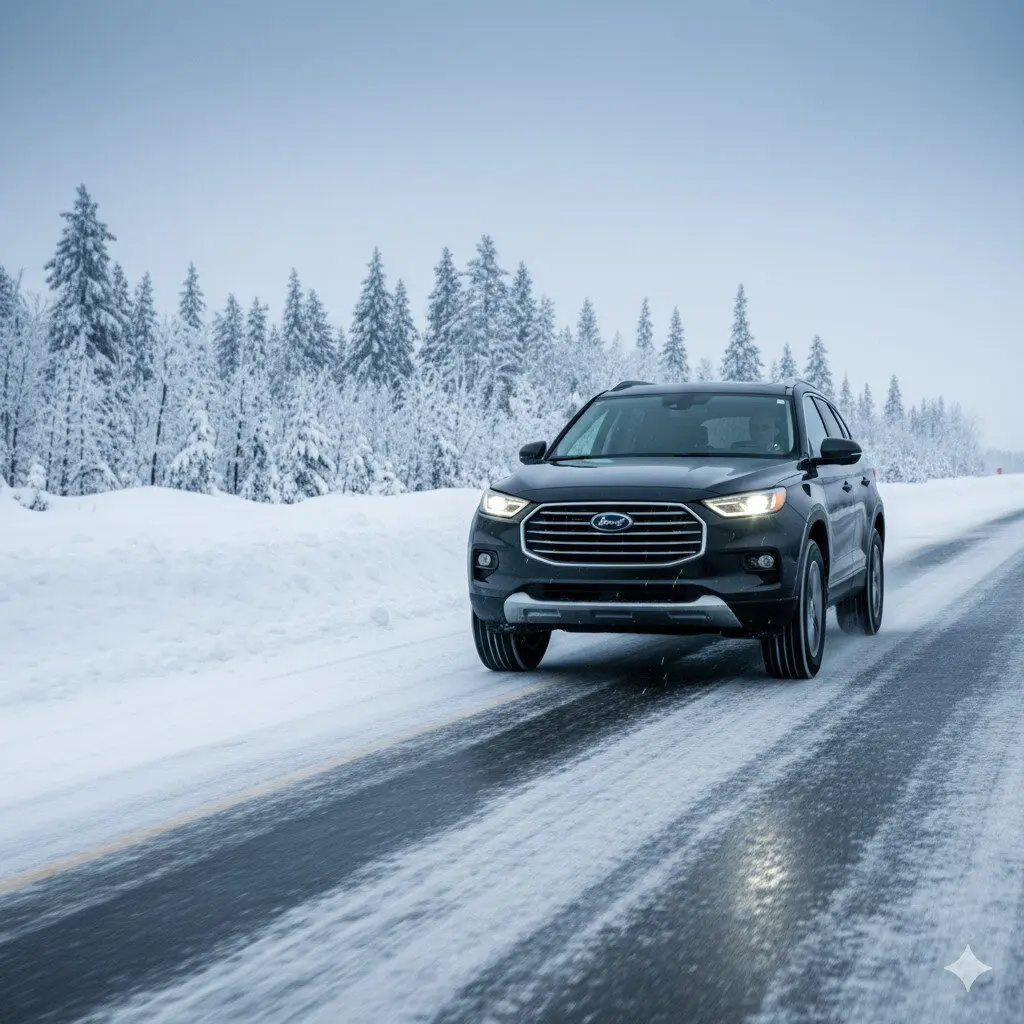
All-wheel drive (AWD) and four-wheel drive (4×4) systems are often seen as the ultimate solution for winter driving in Canada. Many drivers assume that if their vehicle has AWD or 4×4, winter tires are optional.
That assumption can be costly — and dangerous.
In this guide, we’ll explain how AWD/4×4 really works in winter, what it can and cannot do, and why winter tires remain essential, no matter how advanced your drivetrain is.
The Big Myth: “I Have AWD, So I Don’t Need Winter Tires”
Let’s be clear from the start:
AWD and 4×4 help you move — not stop or steer.
Your drivetrain can distribute power to multiple wheels, but traction still depends entirely on your tires. On snow and ice, the rubber touching the road matters far more than how many wheels receive power.
How AWD and 4×4 Actually Work
All-Wheel Drive (AWD)
-
Continuously or automatically sends power to multiple wheels
-
Optimizes traction when accelerating
-
Common in sedans, crossovers, and SUVs
-
Designed mainly for on-road stability
Four-Wheel Drive (4×4)
-
Typically driver-selectable (2H / 4H / 4L)
-
Often found in trucks and off-road SUVs
-
Excellent for deep snow, unplowed roads, and uneven terrain
Important:
Neither system improves braking distance or steering grip on ice.
Why Winter Tires Are Still Critical
Braking Performance
No matter how advanced your drivetrain is, all vehicles brake with four tires.
Winter tires:
-
Use softer rubber compounds that stay flexible below 7°C
-
Grip ice and packed snow far better than all-seasons
-
Reduce stopping distances significantly
AWD won’t help you stop sooner — winter tires will.
Steering and Control
Your ability to steer depends on front tire traction.
Without winter tires:
-
Front wheels can slide straight ahead (understeer)
-
Steering inputs feel delayed or ineffective
-
Emergency maneuvers become unpredictable
AWD cannot correct a lack of grip at the front tires.
False Sense of Confidence
One of the biggest risks of AWD/4×4 is overconfidence.
Drivers often:
-
Accelerate faster than conditions allow
-
Enter corners too quickly
-
Assume stability systems will save them
Winter tires provide real mechanical grip, not electronic assistance.
AWD + Winter Tires: The Best Combination
When AWD or 4×4 is paired with four winter tires, that’s when the system truly shines.
You get:
✔ Improved acceleration
✔ Shorter braking distances
✔ Better cornering stability
✔ More predictable handling
✔ Increased safety in emergencies
This combination is ideal for:
-
Canadian highways
-
Mountain roads
-
Urban winter commuting
-
Rural and unplowed routes
What About All-Season and All-Weather Tires?
All-Season Tires
-
Designed for mild climates
-
Rubber hardens in cold temperatures
-
Poor ice performance
Even on AWD vehicles, all-seasons are not sufficient for real Canadian winters.
All-Weather Tires (Three-Peak Mountain Snowflake)
-
A compromise between all-season and winter tires
-
Acceptable for light winter conditions
-
Still not equal to dedicated winter tires on ice
For maximum safety, dedicated winter tires remain the best choice.
In stock & ready to ship
Find the tires you need, delivered from a warehouse near you