
Winter Tire Regulations and Changeover Deadlines: What Canadian Drivers Need to Know
When do winter tires become mandatory in Canada? Discover provincial winter tire regulations, Quebec and British Columbia changeover deadlines, approved tire markings, potential fines, and expert tips to prepare your vehicle for safer winter driving.
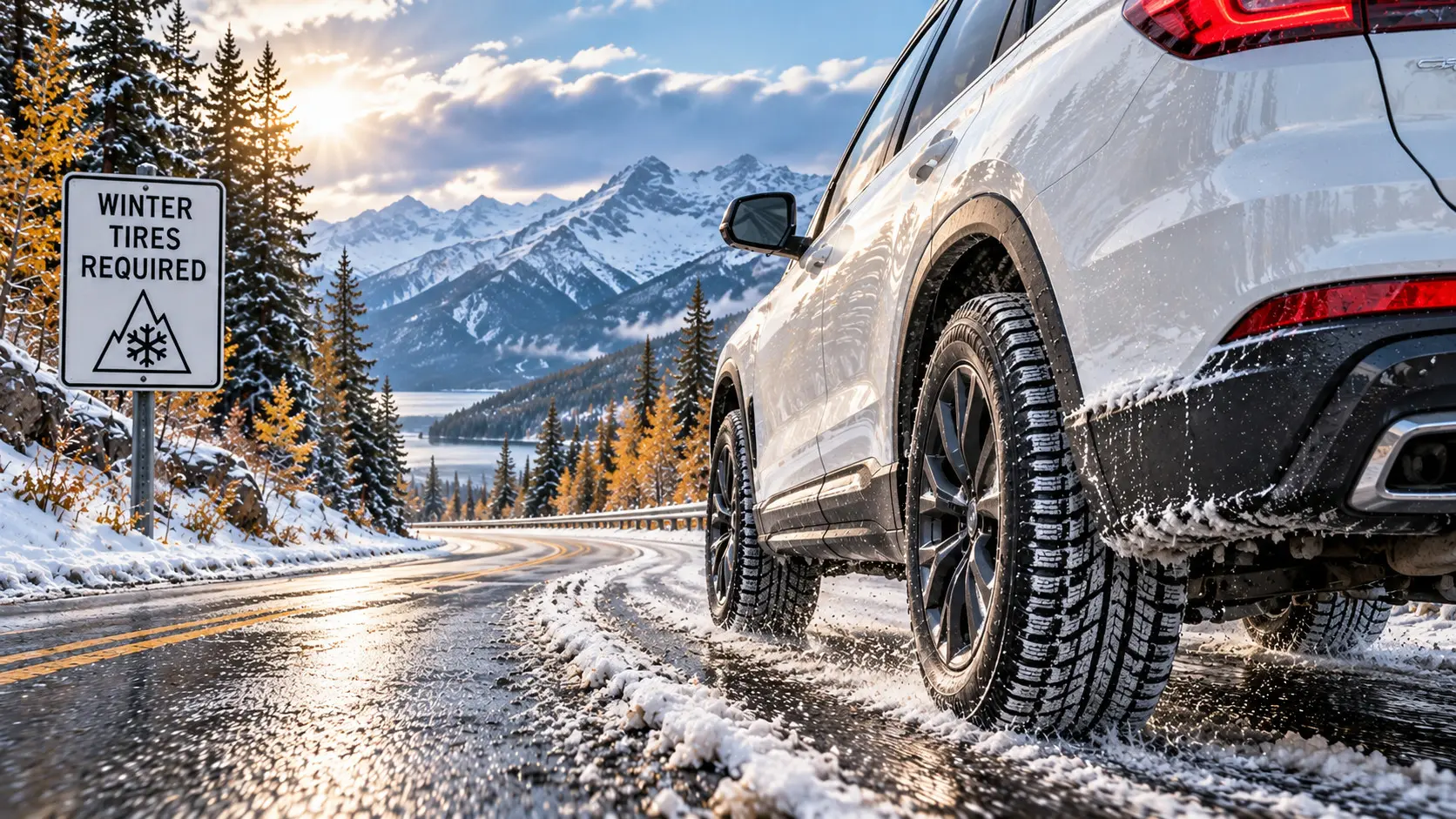
Winter Tire Regulations and Changeover Deadlines: What Canadian Drivers Need to Know
Winter driving in Canada brings freezing temperatures, heavy snowfall, black ice, slush, and unpredictable road conditions. Whether you’re commuting through Montréal, travelling across British Columbia’s mountain highways, or navigating icy roads in Ontario, choosing the right tires is an important part of staying safe behind the wheel.
But knowing when to install winter tires in Canada isn’t always straightforward. Winter tire regulations vary by province, some highways have specific seasonal requirements, and the legal deadline isn’t necessarily the best time to change your tires.
For the 2026–2027 winter season, Canadian drivers should pay particular attention to two provinces: Quebec, where winter tires are mandatory for most registered passenger vehicles from December 1 to March 15, and British Columbia, where winter tire or chain requirements apply to designated roads from October 1 through March 31 or April 30.
Other provinces generally rely on driver responsibility rather than province-wide mandatory winter tire dates for ordinary passenger vehicles. However, winter driving conditions can make proper cold-weather tires essential even where legislation doesn’t require them.
This guide explains Canadian winter tire laws, provincial changeover dates, approved tire symbols, potential penalties, and practical recommendations for deciding when to install and remove winter tires.
Quick Answer: When Are Winter Tires Mandatory in Canada?
Winter tires are mandatory for most Quebec-registered passenger vehicles from December 1 to March 15, while British Columbia requires qualifying winter tires or chains on designated highways beginning October 1. Most other provinces do not have a general winter tire mandate for passenger vehicles.
Here are the most important dates Canadian drivers should remember:
- October 1: British Columbia’s winter tire and chain requirements begin on designated roads.
- November: A practical target for winter tire installation in many parts of Canada, depending on local temperatures and forecasts.
- December 1: Quebec’s mandatory winter tire period begins for most Quebec-registered passenger vehicles.
- March 15: Quebec’s mandatory winter tire period ends.
- March 31: British Columbia’s winter tire and chain requirements end on certain designated roads.
- April 30: Requirements end on other designated British Columbia highways, including many mountain routes.
These dates describe legal requirements, not guaranteed safe changeover dates. Snowstorms and freezing conditions can arrive before regulations begin or continue after they expire.
Winter Tire Laws in Canada by Province and Territory
Canada does not have one nationwide winter tire deadline. Provincial and territorial governments establish their own rules, while road conditions and regional climate determine when winter tires are most useful.
Canadian Winter Tire Regulations at a Glance
| Province or Territory | Winter Tires Mandatory? | Key Dates or Requirements |
|---|---|---|
| Quebec | Yes, for most Quebec-registered passenger vehicles | December 1 to March 15 |
| British Columbia | Yes, on designated highways; qualifying tires or chains | October 1 to March 31 or April 30 |
| Ontario | No general passenger-vehicle mandate | No province-wide changeover deadline |
| Alberta | No general passenger-vehicle mandate | Winter tires strongly recommended for winter conditions |
| Manitoba | No general passenger-vehicle mandate | No province-wide changeover deadline |
| Saskatchewan | No general passenger-vehicle mandate | No province-wide changeover deadline |
| New Brunswick | No general passenger-vehicle mandate | Winter tires recommended for snow and ice |
| Nova Scotia | No general passenger-vehicle mandate | No province-wide changeover deadline |
| Prince Edward Island | No general passenger-vehicle mandate | Winter tires recommended for winter conditions |
| Newfoundland and Labrador | No general passenger-vehicle mandate | Winter tires recommended; separate rules may apply to studded tires |
| Yukon | No general passenger-vehicle mandate | Winter tires strongly recommended for severe winter conditions |
| Northwest Territories | No general passenger-vehicle mandate | Winter tires strongly recommended for extreme cold |
| Nunavut | No general passenger-vehicle mandate | Winter tire selection should reflect local road and ice conditions |
Important: This table summarizes general passenger-vehicle requirements. Commercial vehicles, studded tires, tire chains, specific roads, and temporary travel restrictions may be subject to additional rules. Always check current provincial transportation guidance before travelling.
Quebec Winter Tire Law: Mandatory Dates and Requirements
Quebec requires most passenger vehicles registered in the province to use compliant winter tires from December 1 through March 15, inclusive. This is Canada’s most comprehensive province-wide winter tire requirement for passenger vehicles.
When Must Winter Tires Be Installed in Quebec?
For the upcoming winter season, the important dates are:
- December 1, 2026: Winter tires must be installed on most covered Quebec-registered passenger vehicles.
- March 15, 2027: Final day of the mandatory winter tire period.
- March 16, 2027: The provincial seasonal requirement ends, although winter tires may still be advisable.
Drivers should not wait until December 1 if temperatures have already dropped or winter weather is forecast. In Montréal, Québec City, Sherbrooke, and other regions, winter conditions can arrive well before the legal deadline.
Which Vehicles Must Follow Quebec’s Winter Tire Law?
The requirement generally applies to passenger vehicles registered in Quebec, including covered taxis and comparable vehicles under the province’s rules.
There are limited exceptions and specific administrative provisions, including certain temporary exemption certificates. Vehicle owners should confirm their eligibility rather than assuming an exemption applies.
Vehicles registered outside Quebec are generally not subject to Quebec’s provincial winter tire mandate solely because they are visiting. However, travelling without appropriate winter tires can still be hazardous.
What Tires Are Legally Accepted in Quebec?
Winter tires must meet Quebec’s applicable regulatory requirements. For modern winter tires, drivers should look for the Three-Peak Mountain Snowflake (3PMSF) symbol on the tire sidewall.
This marking depicts a mountain with three peaks containing a snowflake and identifies tires that meet a defined snow-traction performance standard.
An M+S marking alone is not sufficient to establish compliance with Quebec’s winter tire requirement.
What Is the Fine for Not Having Winter Tires in Quebec?
Drivers who fail to comply with Quebec’s mandatory winter tire requirements may face a fine of $200 to $300, plus applicable fees and contributions.
Beyond the financial penalty, driving with unsuitable tires can reduce traction and vehicle control during snowstorms, freezing rain, and icy road conditions.
For current legal requirements, consult the Société de l’assurance automobile du Québec (SAAQ).
British Columbia Winter Tire Laws: October 1 to March 31 or April 30
British Columbia requires qualifying winter tires or chains on designated roads beginning October 1, with restrictions continuing until March 31 or April 30 depending on the route.
Unlike Quebec, British Columbia does not impose the same blanket winter tire requirement on every passenger vehicle throughout the province. Instead, its rules focus on designated highways and roads where winter conditions can create significant hazards.
British Columbia Winter Tire Deadlines for 2026–2027
| Date | Requirement |
|---|---|
| October 1, 2026 | Winter tire or chain requirements begin on designated routes. |
| March 31, 2027 | Restrictions end on certain designated roads. |
| April 30, 2027 | Restrictions end on other designated highways, including many mountain routes. |
Drivers must check the specific route they intend to travel because the end date varies by highway.
Which British Columbia Highways Require Winter Tires?
Winter tire and chain requirements apply to numerous designated highways throughout British Columbia, particularly in mountainous and interior regions.
Examples include sections of:
- Highway 1, including mountain and interior routes.
- Highway 3, including routes through southern British Columbia.
- Highway 5, including the Coquihalla Highway.
- Highway 97 and other designated interior highways.
- Additional provincial routes identified by official winter tire and chain signs.
Requirements can vary by highway segment. Drivers should consult the province’s official maps and posted signs rather than assuming that an entire highway follows one date.
For route-specific information, visit British Columbia’s official winter tire and chain requirements.
What Tire Markings Are Accepted in British Columbia?
For passenger vehicles travelling on designated winter routes, British Columbia generally recognizes tires displaying either:
- Three-Peak Mountain Snowflake (3PMSF): A marking indicating that the tire meets a defined snow-traction performance standard.
- M+S: A Mud and Snow marking that qualifies under British Columbia’s winter tire rules when other requirements are satisfied.
Qualifying winter tires must also have at least 3.5 mm of tread depth for the applicable provincial requirement.
Although M+S tires can satisfy the legal requirement, they do not necessarily provide the same cold-weather traction as dedicated winter tires.
TireWarehouse Expert Tip: Legal compliance and winter performance are not identical. If you regularly drive through mountain passes, heavy snowfall, or freezing temperatures, consider tires with the Three-Peak Mountain Snowflake symbol rather than relying only on an M+S marking.
Can You Use Chains Instead of Winter Tires in British Columbia?
British Columbia’s regulations provide for tire chains as an alternative in certain circumstances, but the rules depend on vehicle type, road conditions, and posted requirements.
Passenger vehicles and commercial trucks are not necessarily subject to identical chain requirements.
Commercial vehicles may have additional chain-carrying and chain-up obligations, including requirements that apply even when winter tires are installed.
Drivers should verify the rules for their specific vehicle before relying on chains as a substitute.
What Happens If You Drive Without Winter Tires in BC?
Drivers who fail to meet the applicable winter tire or chain requirements can receive a $121 fine under the province’s published penalty framework.
Authorities may also prevent a vehicle from continuing on a designated route until it meets the requirements.
Additional penalties may apply to commercial vehicles that fail to comply with chain-up requirements.
Ontario Winter Tire Regulations: Are Winter Tires Mandatory?
Ontario does not have a province-wide law requiring winter tires on ordinary passenger vehicles. However, winter tires are strongly recommended when temperatures fall and roads become snowy or icy.
Ontario experiences widely varying winter conditions. Drivers in Toronto may encounter freezing rain and slush, while motorists in Ottawa, Barrie, Sudbury, and Northern Ontario often face prolonged snow accumulation and lower temperatures.
When Should Ontario Drivers Install Winter Tires?
A practical guideline is to schedule winter tire installation when daily temperatures consistently approach or fall below 7°C.
For many Ontario drivers, this means planning a changeover during October or November, depending on the region.
Northern Ontario motorists may need to switch earlier than drivers in southwestern Ontario.
Ontario Winter Tire Insurance Discounts
Ontario requires automobile insurers to offer a winter tire discount to eligible policyholders.
The exact discount, qualifying dates, documentation requirements, and eligibility conditions depend on the insurance provider.
Insurers may require winter tires to be installed during a specified seasonal period and may request proof of installation.
Drivers should contact their insurer to confirm the applicable conditions before assuming that a particular tire or installation date qualifies.
Winter Tire Requirements in Alberta, Manitoba, and Saskatchewan
Alberta, Manitoba, and Saskatchewan do not generally require winter tires on all passenger vehicles by a fixed provincial deadline. Nevertheless, prairie winters can make dedicated winter tires especially valuable.
Alberta: Winter Tires for Rapid Weather Changes
Alberta drivers frequently experience changing temperatures, snowfall, freezing rain, and icy highways.
In Calgary, Chinook winds can cause rapid temperature fluctuations. Edmonton and northern communities may experience extended periods of severe cold.
Drivers travelling through the Rocky Mountains should pay particular attention to tire traction, road closures, and changing conditions near mountain passes.
Winter tires are recommended when cold temperatures become consistent, even without a mandatory provincial installation date.
Manitoba: Preparing for Extreme Cold
Manitoba winters often involve prolonged freezing temperatures, packed snow, and icy intersections.
Dedicated winter tires are designed with rubber compounds and tread patterns intended to maintain useful traction in cold conditions.
Manitoba also offers a winter tire financing program through Manitoba Public Insurance for eligible purchases and applicants.
Drivers can review current eligibility and financing conditions through Manitoba Public Insurance.
Saskatchewan: Winter Highway Safety
Saskatchewan motorists regularly encounter blowing snow, drifting snow, reduced visibility, and icy rural highways.
Even where roads appear clear, shaded areas, bridges, and intersections may remain slippery.
Winter tires can help improve traction, but drivers must still reduce speed and increase following distance when road conditions deteriorate.
Winter Tire Recommendations for Atlantic Canada and Northern Territories
Atlantic provinces and Canada’s northern territories generally do not impose a universal winter tire deadline on ordinary passenger vehicles, but local winter conditions often justify using dedicated winter tires.
Atlantic Canada: Snow, Slush, and Freezing Rain
Drivers in Nova Scotia, New Brunswick, Prince Edward Island, and Newfoundland and Labrador may encounter heavy snowfall, wet snow, coastal temperature fluctuations, and freezing rain.
These conditions can create a mixture of slush, standing water, ice, and compacted snow.
Winter tires with appropriate tread depth can help maintain traction and reduce the risk of losing control.
Drivers should also check provincial rules before using studded tires, because permitted dates and restrictions vary.
Yukon, Northwest Territories, and Nunavut
Northern driving conditions may involve extreme cold, persistent snow cover, ice roads, and limited roadside assistance.
Vehicle preparation is particularly important when travelling long distances between communities.
Drivers should select tires suited to local conditions, carry appropriate emergency supplies, and follow territorial road advisories.
In some remote environments, specialized tires or additional traction equipment may be appropriate.
When Should You Change to Winter Tires? Understanding the 7°C Rule
The 7°C rule is a practical seasonal guideline: consider switching to winter tires when temperatures consistently approach or fall below 7°C. It is not a legal requirement or a precise temperature at which all-season tires suddenly stop working.
Winter tire rubber compounds are engineered to remain more flexible in colder temperatures, while their tread designs help manage snow and slush.
Conventional all-season and summer tires may become less suitable as temperatures fall, depending on their construction and the driving conditions.
Why Temperature Matters for Tire Performance
Tire traction depends on several interacting factors:
- Rubber compound: Influences flexibility and grip as temperatures change.
- Tread design: Helps manage snow, slush, and water.
- Tread depth: Affects the tire’s ability to maintain traction in winter conditions.
- Road surface: Dry pavement, wet pavement, packed snow, and ice require different traction characteristics.
- Vehicle speed: Higher speeds increase stopping distance and reduce the time available to react.
Winter tires can offer meaningful advantages in cold weather, but actual performance varies between tire models, vehicles, and road conditions.
Recommended Winter Tire Changeover Timing by Region
| Canadian Region | Typical Planning Window | Important Consideration |
|---|---|---|
| Quebec | October to November | Mandatory by December 1 for covered vehicles |
| British Columbia Interior | September to early October | Designated-route requirements begin October 1 |
| British Columbia Coast | October to November | Consider travel on designated mountain routes |
| Southern Ontario | October to November | Monitor consistent temperatures near 7°C |
| Northern Ontario | September to October | Earlier snowfall and freezing temperatures |
| Alberta and Saskatchewan | September to October | Rapid temperature changes and early snow |
| Manitoba | September to October | Extended periods of severe cold |
| Atlantic Canada | October to November | Snow, slush, and freezing rain |
| Northern Territories | August to October, depending on location | Local weather and remote travel conditions |
These windows are general planning recommendations, not fixed deadlines. Local forecasts and the routes you drive should determine the actual installation date.
Winter Tires vs. All-Weather vs. All-Season Tires
Dedicated winter tires are generally the strongest choice for frequent snow, ice, and sustained freezing temperatures, while all-weather tires can provide a year-round alternative for some Canadian drivers.
Understanding the differences helps drivers select tires that suit their climate, driving habits, and legal obligations.
| Feature | Winter Tires | All-Weather Tires | Conventional All-Season Tires |
|---|---|---|---|
| Primary purpose | Cold weather, snow, and ice | Year-round driving, including qualifying winter conditions | General driving in moderate conditions |
| Cold-weather performance | Typically strongest | Varies by model; generally winter-capable | Often more limited in severe cold |
| Snow traction | Designed for winter conditions | Designed to meet winter traction standards when 3PMSF-marked | Varies; may be limited |
| Ice performance | Often better, especially ice-focused models | Varies by tire | Generally less suitable for severe ice |
| 3PMSF symbol | Generally present on modern qualifying models | Present on qualifying models | Not typically present on conventional models |
| Summer use | Not recommended | Designed for year-round use | Designed for non-severe winter and warmer conditions |
| Seasonal changeover | Usually required | Not necessarily required | Winter replacement recommended in harsh climates |
Are All-Weather Tires Legal in Quebec?
Yes. All-weather tires that meet Quebec’s applicable winter tire requirements, including the appropriate winter certification, can be used during the mandatory winter tire period.
The marketing label alone is not enough. Drivers must confirm that the specific tire meets the provincial standard.
Are All-Season Tires Legal in British Columbia?
Some all-season tires qualify for designated British Columbia routes if they display the M+S marking and meet the minimum tread-depth requirement.
However, a tire’s legal status does not guarantee optimal performance on icy mountain roads.
Are Winter Tires Worth Buying If They Aren’t Mandatory?
For drivers who regularly encounter snow, ice, freezing rain, or extended periods of cold weather, winter tires are often a worthwhile safety investment.
They can improve traction and handling under appropriate conditions and may help reduce stopping distances compared with tires that are not designed for winter use.
The benefit depends on the tire model, vehicle, road surface, and driving behaviour.
How to Identify Approved Winter Tires: 3PMSF vs. M+S
The Three-Peak Mountain Snowflake symbol indicates that a tire has met a defined snow-traction performance standard, while M+S is a broader designation that does not provide the same performance certification.
Three-Peak Mountain Snowflake (3PMSF)
The 3PMSF symbol appears on the tire sidewall as a mountain outline containing a snowflake.
It indicates that the tire meets a standardized performance threshold for traction in snow.
However, the marking does not mean every 3PMSF tire performs equally well on ice, wet pavement, or dry roads.
Drivers should compare independent tire tests and choose products suited to their specific conditions.
M+S: Mud and Snow
The M+S designation refers to a tire’s tread characteristics and intended use in mud and snow conditions.
It does not, by itself, establish that the tire has passed the same snow-traction test associated with the 3PMSF marking.
This distinction is particularly important when travelling between Quebec and British Columbia, where the legal acceptance of tire markings differs.
Expert Recommendation: Before purchasing winter tires, inspect the tire sidewall for the required markings. If you travel across provincial borders, choose tires that meet the strictest applicable requirements along your route.
Winter Tire Tread Depth: Legal Minimum vs. Recommended Replacement
Winter tire tread depth affects how effectively a tire can manage snow and slush, and the legal minimum may be lower than the depth recommended for dependable winter performance.
British Columbia requires at least 3.5 mm of tread depth for qualifying winter tires on designated routes.
In Quebec, the general minimum tread-depth requirement is approximately 1.6 mm, but a tire at that depth is not necessarily suitable for demanding winter conditions.
Many tire specialists recommend considering replacement when winter tire tread depth approaches 4 mm, especially for frequent snow-covered highway driving.
How to Check Winter Tire Tread Depth
- Park the vehicle on a level surface and secure it.
- Use a tire tread-depth gauge for an accurate measurement.
- Measure several locations across the tread.
- Check all four tires rather than measuring only one.
- Look for uneven wear, exposed cords, cracks, or other damage.
- Replace tires that are unsafe or no longer suitable for expected winter conditions.
Uneven tread wear may indicate incorrect inflation pressure, wheel alignment problems, suspension issues, or a need for tire rotation.
If you’re unsure about tire condition, have a qualified tire professional inspect the tires before winter driving.
How to Prepare Your Vehicle for Winter Tire Changeover
A proper winter tire changeover involves more than replacing four tires. Drivers should also inspect tire condition, verify fitment, check inflation pressure, and confirm that the wheels are installed correctly.
Winter Tire Installation Checklist
- Confirm tire size: Use a size approved for your vehicle.
- Check load rating: Select tires that meet the vehicle manufacturer’s requirements.
- Verify speed rating: Follow manufacturer recommendations and applicable requirements.
- Inspect tread depth: Replace worn tires before severe winter conditions arrive.
- Check tire age: Review the DOT date code and inspect for age-related deterioration.
- Inspect sidewalls: Look for bulges, cuts, cracking, and impact damage.
- Measure tire pressure: Inflate to the vehicle manufacturer’s recommended cold inflation pressure.
- Inspect wheels: Check for corrosion, cracks, and other damage.
- Confirm installation: Ensure wheel fasteners are tightened to the manufacturer’s specified torque.
- Check TPMS: Confirm that the tire pressure monitoring system operates correctly.
- Follow re-torque guidance: Follow the vehicle or wheel manufacturer’s instructions and the installing shop’s recommendations.
Why Tire Pressure Drops in Cold Weather
As temperatures decrease, tire inflation pressure generally falls.
Underinflated tires can affect handling, tire wear, fuel efficiency, and heat buildup.
Check pressure when tires are cold and use the vehicle manufacturer’s recommended pressure, typically found on the driver’s door-jamb placard or in the owner’s manual.
Do not use the maximum pressure printed on the tire sidewall as the routine inflation target.
Should You Install Two or Four Winter Tires?
For passenger vehicles, installing a complete matching set of four winter tires is the recommended approach.
Mixing winter tires with summer or conventional all-season tires can create differences in traction between the front and rear axles.
These differences may affect braking stability, steering response, and vehicle handling on slippery roads.
Four matching winter tires help maintain more balanced traction, whether the vehicle has front-wheel drive, rear-wheel drive, or all-wheel drive.
Do AWD and 4WD Vehicles Need Winter Tires?
Yes. All-wheel drive and four-wheel drive can help a vehicle accelerate on slippery surfaces, but they do not eliminate the need for appropriate winter tires.
AWD systems distribute engine power between wheels to improve traction during acceleration.
However, braking and cornering still depend heavily on the grip available between the tires and the road.
A vehicle equipped with AWD and unsuitable tires may have difficulty stopping or turning on snow and ice.
Winter tires are therefore valuable for AWD SUVs, crossovers, pickup trucks, and passenger cars alike.
Drivers should also remember that larger vehicles may require longer stopping distances because of their weight and operating conditions.
When Can You Remove Winter Tires in Spring?
Winter tires can generally be removed once mandatory seasonal restrictions have ended and temperatures consistently remain above approximately 7°C, provided snow and freezing conditions are no longer expected on your regular routes.
Removing winter tires too early can leave drivers unprepared for late-season snowfall.
Keeping dedicated winter tires installed throughout warm weather can also accelerate tread wear and compromise their suitability for summer driving.
Spring Changeover Considerations by Province
- Quebec: The legal winter tire period ends after March 15, but winter weather can continue into April.
- British Columbia: Drivers must respect applicable designated-route requirements through March 31 or April 30.
- Ontario: Changeover timing depends on local temperatures, road conditions, and insurance requirements.
- Prairie provinces: Late spring snowstorms may justify keeping winter tires installed longer.
- Atlantic Canada: Coastal storms and freezing rain can delay the spring changeover.
- Northern Canada: Local conditions may require winter tires well into spring.
Drivers planning mountain trips should check conditions along the entire route, not just the weather at their starting point.
Common Winter Tire Changeover Mistakes to Avoid
The most common winter tire mistakes involve waiting too long, misunderstanding provincial laws, choosing unsuitable tires, or neglecting maintenance.
1. Waiting Until the First Snowstorm
Tire shops often experience increased demand when the first major snowfall is forecast.
Booking an appointment before the seasonal rush helps reduce the risk of driving on unsuitable tires while waiting for installation.
2. Assuming All-Season Tires Are Always Sufficient
Some all-season tires meet specific legal requirements, but conventional all-season tires may not deliver the traction needed for severe Canadian winter conditions.
3. Confusing M+S With 3PMSF
The two markings do not represent identical performance standards, and provinces may treat them differently.
4. Ignoring Tread Depth
Even a tire with the correct winter certification can become unsuitable when its tread is excessively worn.
5. Installing Only Two Winter Tires
Mixing tire types can create uneven traction and unpredictable handling.
6. Forgetting About Tire Pressure
Cold temperatures can reduce inflation pressure, making regular checks important throughout winter.
7. Assuming AWD Replaces Winter Tires
AWD helps with acceleration but does not overcome the limits of tire traction during braking and cornering.
8. Removing Winter Tires Too Early
Legal deadlines and actual weather conditions do not always align. Late-season snow and freezing rain remain possible across much of Canada.
Winter Road Trip Checklist: Travelling Between Canadian Provinces
Drivers crossing provincial borders should verify winter tire requirements for every province and designated highway along their route.
A tire that satisfies the rules in one province may not satisfy the requirements in another.
For example, an M+S tire may qualify on a designated British Columbia highway but may not meet Quebec’s winter tire requirements for vehicles subject to that province’s law.
Before Starting a Winter Road Trip
- Check the winter tire regulations for your destination and all provinces along the route.
- Confirm that your tires have the required winter markings.
- Measure tread depth and inspect for damage.
- Check cold tire inflation pressure.
- Review current highway conditions and weather alerts.
- Confirm whether chains or additional equipment are required.
- Carry a winter emergency kit, warm clothing, and essential supplies.
- Keep the fuel tank or electric vehicle battery sufficiently charged for unexpected delays.
- Allow additional travel time and avoid unnecessary trips during severe weather warnings.
Drivers travelling in British Columbia can check DriveBC for road conditions, incidents, and travel advisories.
Across Canada, provincial 511 services and transportation ministry websites can provide useful information about highway conditions and closures.
How to Store Winter Tires After the Seasonal Changeover
Proper tire storage helps protect winter tires from unnecessary deterioration between seasons.
Before storing your winter tires:
- Clean away road salt, dirt, and brake dust.
- Allow the tires to dry completely.
- Inspect tread depth and sidewall condition.
- Mark each tire’s previous wheel position if helpful for future rotation.
- Store tires in a cool, dry location away from direct sunlight.
- Keep tires away from solvents, petroleum products, and sources of ozone.
- Follow appropriate storage methods for mounted and unmounted tires.
Tires mounted on wheels may be stored differently from unmounted tires. Follow tire manufacturer guidance for the specific assembly.
Before reinstalling stored tires, inspect them again for damage, deterioration, and suitability for continued service.
Frequently Asked Questions About Winter Tire Regulations in Canada
1. Are winter tires mandatory everywhere in Canada?
No. Canada does not have a nationwide winter tire mandate for passenger vehicles. Quebec requires compliant winter tires on most Quebec-registered passenger vehicles during its mandatory winter period, while British Columbia has winter tire or chain requirements on designated roads. Other provinces generally do not impose a universal passenger-vehicle winter tire deadline.
2. What is the winter tire deadline in Quebec for 2026?
The mandatory winter tire period begins on December 1, 2026, for most covered Quebec-registered passenger vehicles. The requirement continues through March 15, 2027. Drivers should install their winter tires earlier if temperatures and road conditions warrant it.
3. When do winter tire requirements start in British Columbia?
British Columbia’s winter tire and chain requirements begin October 1 on designated roads. Depending on the highway, the restrictions continue through March 31 or April 30.
4. Do you need winter tires in Ontario?
Ontario does not generally require winter tires by law for passenger vehicles. However, winter tires are recommended for cold, snowy, and icy conditions. Eligible drivers may also qualify for a winter tire insurance discount.
5. Are all-weather tires considered winter tires in Canada?
Many all-weather tires carry the Three-Peak Mountain Snowflake symbol and can meet applicable winter tire requirements. However, drivers should verify the markings and regulations for their province rather than relying on the all-weather product label alone.
6. Are M+S tires legal in British Columbia?
Yes. M+S tires generally qualify under British Columbia’s designated-route winter tire requirements when they meet the minimum 3.5 mm tread-depth requirement and other applicable conditions. However, M+S does not necessarily indicate the same snow-traction performance as a 3PMSF-certified tire.
7. Can I drive in Quebec with all-season tires during winter?
If your vehicle is subject to Quebec’s winter tire mandate, conventional all-season tires without the required winter certification generally do not comply during the mandatory period. Some winter-certified all-weather tires may qualify.
8. What happens if I don’t install winter tires in Quebec?
Drivers who violate Quebec’s mandatory winter tire law may receive a fine of $200 to $300, plus applicable fees. The absence of appropriate tires may also increase driving risks during snow and ice conditions.
9. Do I need winter tires if my SUV has AWD?
Winter tires are still recommended for AWD vehicles. All-wheel drive can improve acceleration traction, but it does not eliminate the need for adequate grip when braking or turning on slippery surfaces.
10. When should I install winter tires if my province has no deadline?
A practical approach is to install winter tires when temperatures consistently approach or fall below 7°C, or earlier if snow and ice are expected. The ideal timing depends on your location, regular driving routes, and weather forecast.
11. What is the minimum tread depth for winter tires in Canada?
There is no single winter-specific minimum that applies identically across Canada. British Columbia requires at least 3.5 mm for qualifying winter tires on designated routes. For winter performance, many tire specialists recommend considering replacement around 4 mm, particularly for frequent snow driving.
12. Can I use winter tires during summer?
Although winter tires can physically be driven on warm roads, year-round use is generally not recommended. Winter tire compounds and tread designs are optimized for colder conditions, and warm-weather use may accelerate wear and affect handling performance.
13. Do tourists need winter tires when visiting Quebec?
Quebec’s general mandatory winter tire requirement applies primarily to vehicles registered in Quebec. Vehicles registered elsewhere are generally exempt from that specific provincial requirement, although other laws and safety obligations still apply. Visitors should use tires appropriate for expected winter conditions.
14. Are studded winter tires legal across Canada?
Studded tire regulations vary by province and territory. Some jurisdictions allow them only during specified months, while others impose additional restrictions. Check local regulations before installing studded tires or travelling between provinces.
15. When should I book my winter tire changeover appointment?
Book before the first major cold-weather rush, ideally several weeks ahead of your expected installation date. Drivers in Quebec and British Columbia should plan around their applicable legal deadlines, while all motorists should consider local weather conditions.
Final Recommendation: Prepare for Winter Before the Deadline
The safest winter tire changeover strategy is to prepare for actual road conditions while respecting the legal requirements that apply to your vehicle and travel routes.
For Quebec drivers, December 1 is the critical mandatory installation deadline. For motorists travelling on designated British Columbia highways, October 1 marks the beginning of seasonal winter tire and chain requirements.
In other provinces, drivers should use local temperatures, snowfall patterns, road conditions, and personal driving habits to determine when winter tires are needed.
Regardless of where you live, selecting the right tires, maintaining proper inflation pressure, checking tread depth, and driving according to road conditions can make a meaningful difference during Canada’s winter months.
At TireWarehouse.ca, Canadian drivers can explore tire options suited to their vehicles, driving habits, and seasonal conditions. When choosing winter tires, prioritize correct vehicle fitment, appropriate winter certification, dependable traction, and the conditions you encounter most often.
Don’t wait for the first major snowfall to discover that your tires aren’t ready. Plan your changeover early, check the regulations for your province, and prepare for winter driving with confidence.
Recommended Related Reading
Continue preparing your vehicle for Canadian winter conditions with these helpful tire guides and resources.
- Winter Tires vs. All-Weather Tires: Learn how cold-weather traction, snow performance, tread compounds, and year-round convenience compare.
- How to Choose the Best Winter Tires for Canadian Roads: Understand tire sizing, winter certification, tread patterns, and important buying considerations.
- Winter Tire Tread Depth Guide: Discover how to measure tread wear and recognize when your winter tires should be replaced.
- When to Change Winter Tires in Spring: Learn how temperature, provincial requirements, and seasonal weather affect spring tire changeovers.
- Winter Tire Maintenance and Storage: Explore practical ways to maintain inflation pressure, protect stored tires, and extend their useful service life.
Explore available tire options and vehicle fitment information at TireWarehouse.ca.
Official Canadian Winter Tire Regulations and Resources
Winter tire regulations can change, and additional requirements may apply to specific vehicle categories or highways. The following official government resources provide information for Canadian drivers.
- Government of Quebec — Winter Tire Requirements: Mandatory dates, approved winter tires, exemptions, and penalties.
- Government of British Columbia — Winter Tires and Chains: Seasonal highway requirements and tire regulations.
- British Columbia — Designated Winter Tire and Chain Routes: Maps and seasonal restrictions for designated highways.
- Government of Ontario — Automobile Insurance Regulation: Regulatory information concerning winter tire insurance discounts.
- Transport Canada — Road Transportation: Federal vehicle and road transportation safety information.
In stock & ready to ship
Find the tires you need, delivered from a warehouse near you