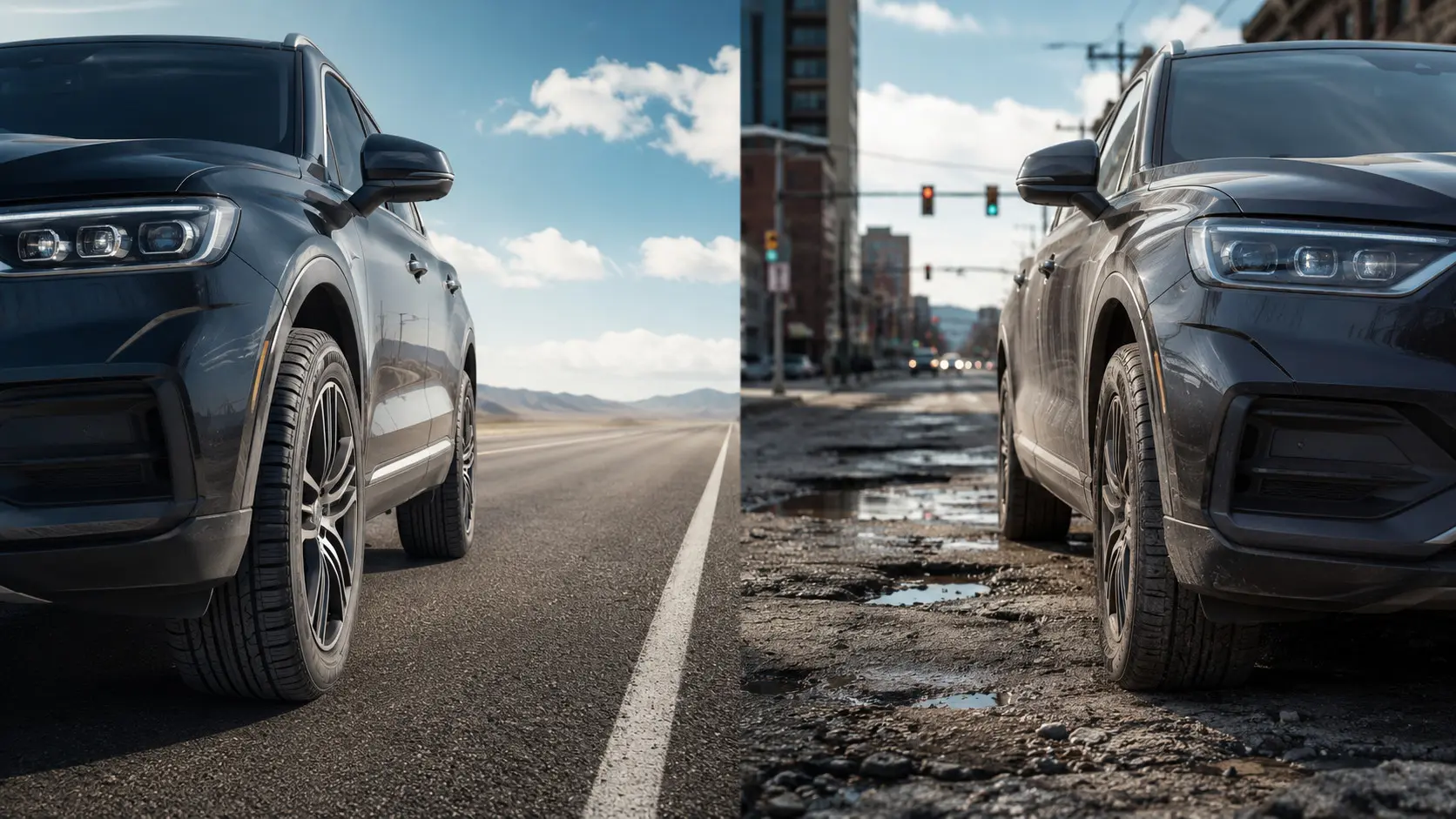
Imagine two drivers purchasing the exact same vehicle, equipped with the same tire model, on the same day. Fast forward two years, and one set of tires is ready for replacement while the other still has thousands of kilometers left. How is that possible?
The truth is that tire wear depends on much more than the vehicle itself. Driving style, maintenance, climate, and road conditions all play a major role in determining how long your tires will last.
1. Driving Habits Matter More Than You Think
Aggressive acceleration, hard braking, and taking corners at high speeds create additional friction that wears tread much faster. Even frequent stop-and-go city driving can shorten tire life compared to steady highway travel.
Drivers who maintain smooth acceleration and anticipate traffic typically enjoy significantly longer-lasting tires.
2. Tire Pressure Makes a Huge Difference
Incorrect tire pressure is one of the most common causes of premature wear.
- Underinflated tires wear more along the shoulders.
- Overinflated tires wear excessively in the center.
- Proper inflation helps distribute the vehicle’s weight evenly across the tread.
Checking tire pressure at least once a month can add thousands of kilometers to a tire’s lifespan while also improving fuel efficiency.
3. Wheel Alignment Is Critical
Even a slight alignment issue can cause uneven wear patterns.
Common causes include:
- Potholes
- Curbs
- Rough roads
- Suspension wear
If your vehicle pulls to one side or the steering wheel isn’t centered, it’s a good idea to have the alignment inspected before uneven wear becomes permanent.
4. Tire Rotation Extends Tire Life
Front and rear tires experience different loads depending on the drivetrain and steering forces.
Regular tire rotations help:
- Promote even tread wear
- Improve handling
- Maximize tire lifespan
- Delay the need for replacement
Following your vehicle manufacturer’s recommended rotation interval is one of the easiest ways to protect your investment.
5. Road Conditions Have a Bigger Impact Than Many Drivers Realize
Not every road is equally friendly to your tires.
Factors that accelerate wear include:
- Rough asphalt
- Gravel roads
- Frequent potholes
- Construction zones
- Extreme summer temperatures
Drivers who spend most of their time on smooth highways generally see slower tread wear than those navigating rough urban streets every day.
6. Vehicle Load Changes Everything
Consistently carrying heavy cargo or towing trailers places additional stress on the tires.
More weight means:
- Increased heat buildup
- Faster tread wear
- Greater rolling resistance
- Higher risk of irregular wear if inflation isn’t adjusted properly
Keeping your vehicle within its recommended load capacity helps preserve both tire performance and safety.
7. Maintenance Is the Biggest Difference
Perhaps the greatest separator between two identical vehicles is routine maintenance.
Simple habits like:
- Checking tire pressure monthly
- Rotating tires regularly
- Inspecting tread wear
- Maintaining proper alignment
- Balancing wheels when necessary
can dramatically increase tire longevity while improving ride quality and fuel economy.
The Bottom Line
Two identical cars rarely experience identical tire wear because every driver creates unique conditions for their tires. From driving style and maintenance habits to road quality and vehicle load, small differences accumulate over thousands of kilometers.
By practicing proper tire care and staying proactive with maintenance, you can maximize tread life, improve safety, and get the best value from every set of tires.