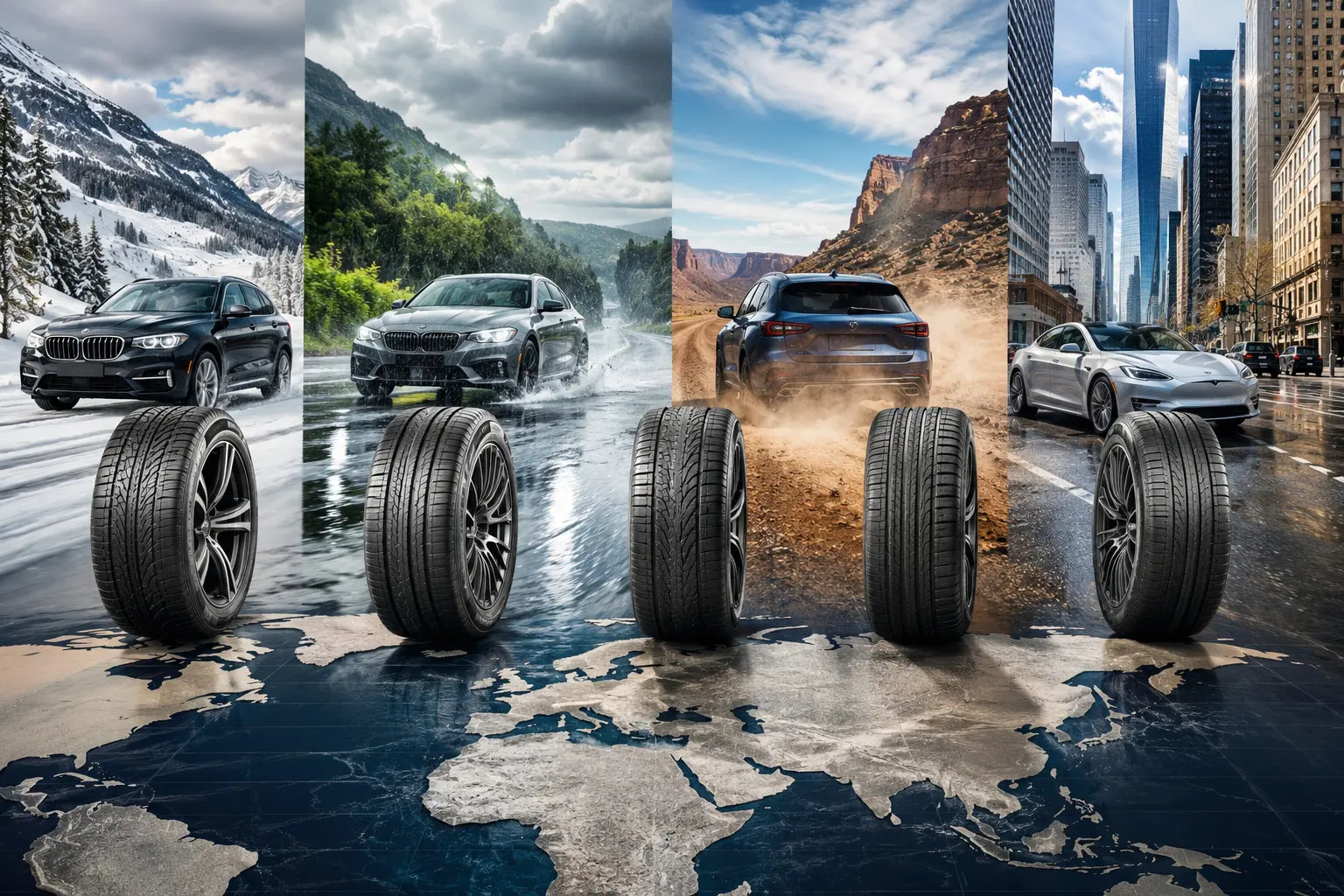
When shopping for tires, many drivers assume that safety standards are universal. In reality, tire regulations differ significantly across regions, reflecting each country’s unique environmental conditions, infrastructure, and regulatory priorities.
From North America and Europe to Asia and beyond, tire manufacturers must meet different testing requirements before bringing products to market. These variations influence everything from tire performance and durability to labeling and consumer information.
Climate and Road Conditions Shape Regulations
One of the biggest reasons for differing tire safety standards is geography.
Countries with harsh winters often require stricter testing for snow and ice performance. For example, winter tires sold in colder regions must demonstrate reliable traction under extreme conditions. In contrast, countries with predominantly warm climates may focus more heavily on heat resistance, tread wear, and wet-road performance.
Road quality also plays a major role. Regions with rougher road surfaces may prioritize durability and impact resistance, while areas with high-speed motorway networks often emphasize stability, braking performance, and fuel efficiency.
Different Governments, Different Priorities
Every regulatory authority develops standards based on local transportation needs and safety objectives.
Some jurisdictions place a strong emphasis on environmental impact, requiring manufacturers to disclose rolling resistance and noise levels. Others focus primarily on structural integrity, load capacity, and high-speed performance.
As a result, tire manufacturers must often conduct multiple certification processes to sell the same tire model in different markets.
Tire Labeling Requirements Vary Worldwide
Consumers may notice that tire labels look different depending on where they are sold.
In some markets, labels provide detailed information about:
- Fuel efficiency
- Wet braking performance
- External noise levels
- Winter traction capabilities
Other regions may require fewer consumer-facing metrics, relying instead on compliance testing that occurs before products reach retailers.
These labeling systems help drivers compare products but also reflect regional priorities and regulatory approaches.
Safety Testing Methods Are Not Always Identical
Although the ultimate goal is improved road safety, testing procedures can differ substantially.
Common evaluation areas include:
- High-speed endurance
- Load-carrying capacity
- Wet and dry braking
- Cornering stability
- Tread durability
- Temperature resistance
However, testing environments, pass/fail thresholds, and certification requirements often vary between countries. This means a tire approved in one market may need additional testing before it can be sold elsewhere.
Global Manufacturers Must Adapt
Leading tire manufacturers design products to satisfy a complex network of international standards.
To remain competitive worldwide, companies invest heavily in research, development, and testing facilities that can evaluate tire performance under a wide range of conditions. This ensures drivers receive products that meet local regulations while delivering reliable performance and safety.
What This Means for Consumers
For drivers, understanding global tire standards reinforces the importance of purchasing tires that are appropriate for their location and driving conditions.
Rather than focusing solely on brand or price, consumers should consider:
- Local climate conditions
- Seasonal driving requirements
- Vehicle specifications
- Regional safety certifications
- Performance ratings
Choosing tires that comply with local regulations helps maximize safety, performance, and long-term value.
Final Thoughts
Tire safety standards are not different by accident—they are designed to address the specific challenges faced by drivers in each region. Climate, road infrastructure, government regulations, and consumer expectations all influence how tires are tested and certified.
By understanding these differences, drivers can make more informed purchasing decisions and appreciate the extensive engineering that goes into producing safe, reliable tires for roads around the world.
Michelin
Toyo
Cooper
— Falken Tires