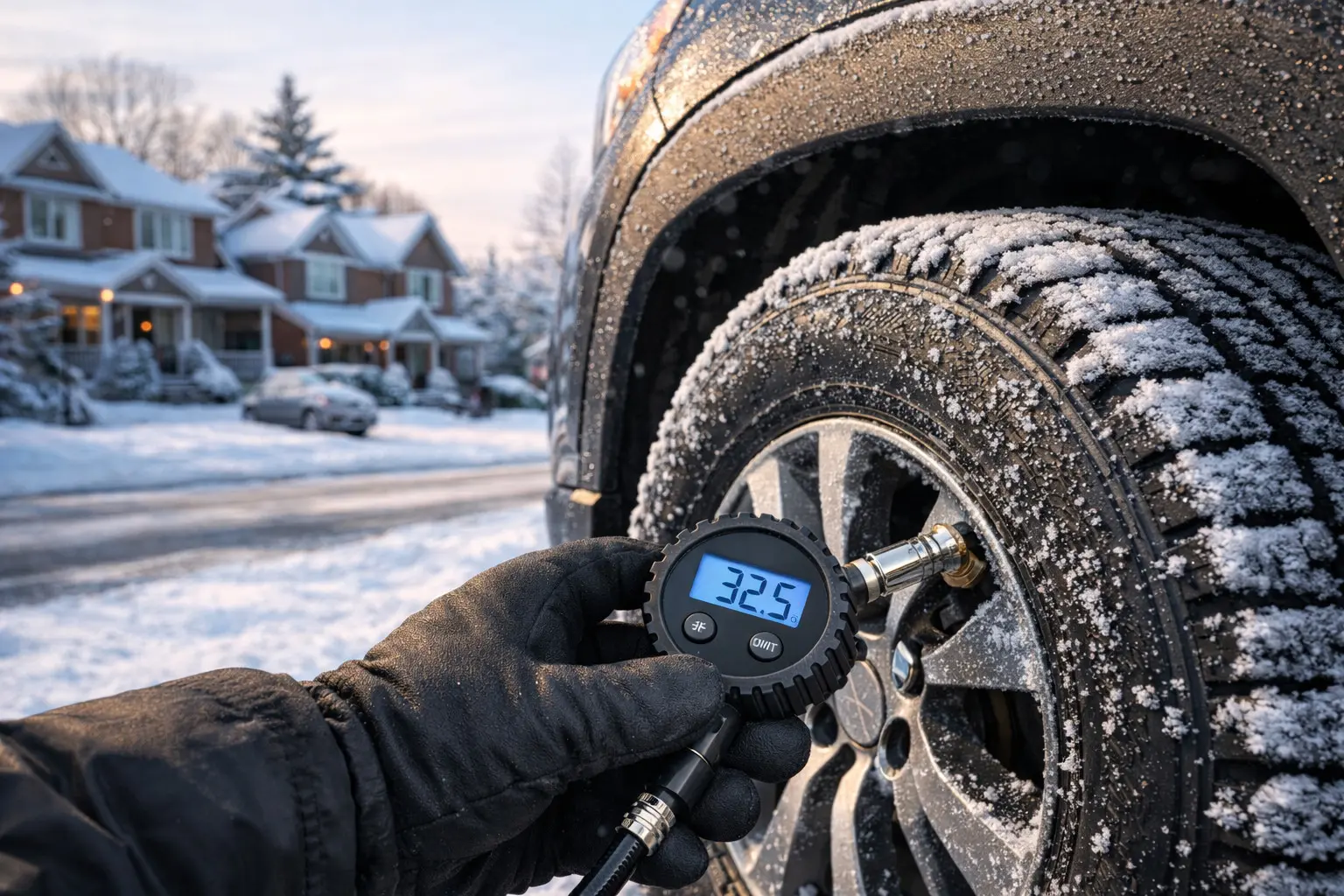
Canada’s extreme climate conditions do more than influence driving comfort—they directly impact the performance and safety of your tires. Seasonal temperature swings, and even day-to-night variations, can cause significant changes in tire pressure, affecting fuel efficiency, vehicle handling, and tire longevity.
The Impact of Temperature on Tire Pressure
The air inside your tires expands and contracts with temperature changes. When temperatures drop, air molecules slow down and compress, reducing tire pressure. Conversely, warmer temperatures cause the air to expand, increasing pressure.
Rule of Thumb:
For every 10°C (18°F) decrease in temperature, tire pressure drops by approximately 1 PSI.
In many Canadian regions, where temperatures can range from +25°C (77°F) in summer to -30°C (-22°F) in winter, tire pressure can fluctuate by more than 5 PSI, enough to significantly affect vehicle performance and safety.
Canadian Winters: The Biggest Challenge
Cold winter temperatures present several challenges:
- Underinflated tires, leading to increased rolling resistance.
- Reduced fuel efficiency.
- Irregular tread wear, particularly on the tire shoulders.
- Longer braking distances and reduced handling stability.
- Frequent activation of the Tire Pressure Monitoring System (TPMS).
Maintaining the correct tire pressure is crucial for maximizing traction on snow- and ice-covered roads.
Summer Heat and Sudden Temperature Changes
During the warmer months, rising temperatures can increase tire pressure. If tires are already inflated near their maximum recommended levels, this expansion may result in:
- Overinflation, reducing the tire’s contact patch with the road.
- Accelerated wear in the center of the tread.
- Higher risk of blowouts, especially during long highway trips.
Tips to Maintain Proper Tire Pressure
- Check tire pressure monthly, particularly during seasonal transitions.
- Measure pressure when tires are cold, ideally before driving.
- Follow the manufacturer’s recommended PSI, typically found on the driver’s door placard.
- Don’t forget the spare tire, which is often overlooked.
- Use a digital tire pressure gauge for more accurate readings.
- Install seasonal tires, such as winter tires, designed to perform better in low temperatures.
Benefits of Maintaining Correct Tire Pressure
- ✅ Enhanced driving safety
- ✅ Improved fuel efficiency
- ✅ Even tread wear
- ✅ Extended tire lifespan
- ✅ Reduced environmental impact
Find the Perfect Tires at Tirewarehouse.ca
At tirewarehouse.ca, we offer a wide selection of high-quality tires for every season, including winter, all-season, and summer options from leading brands. Our team is committed to helping you choose the best tires to confidently handle Canada’s diverse weather conditions.