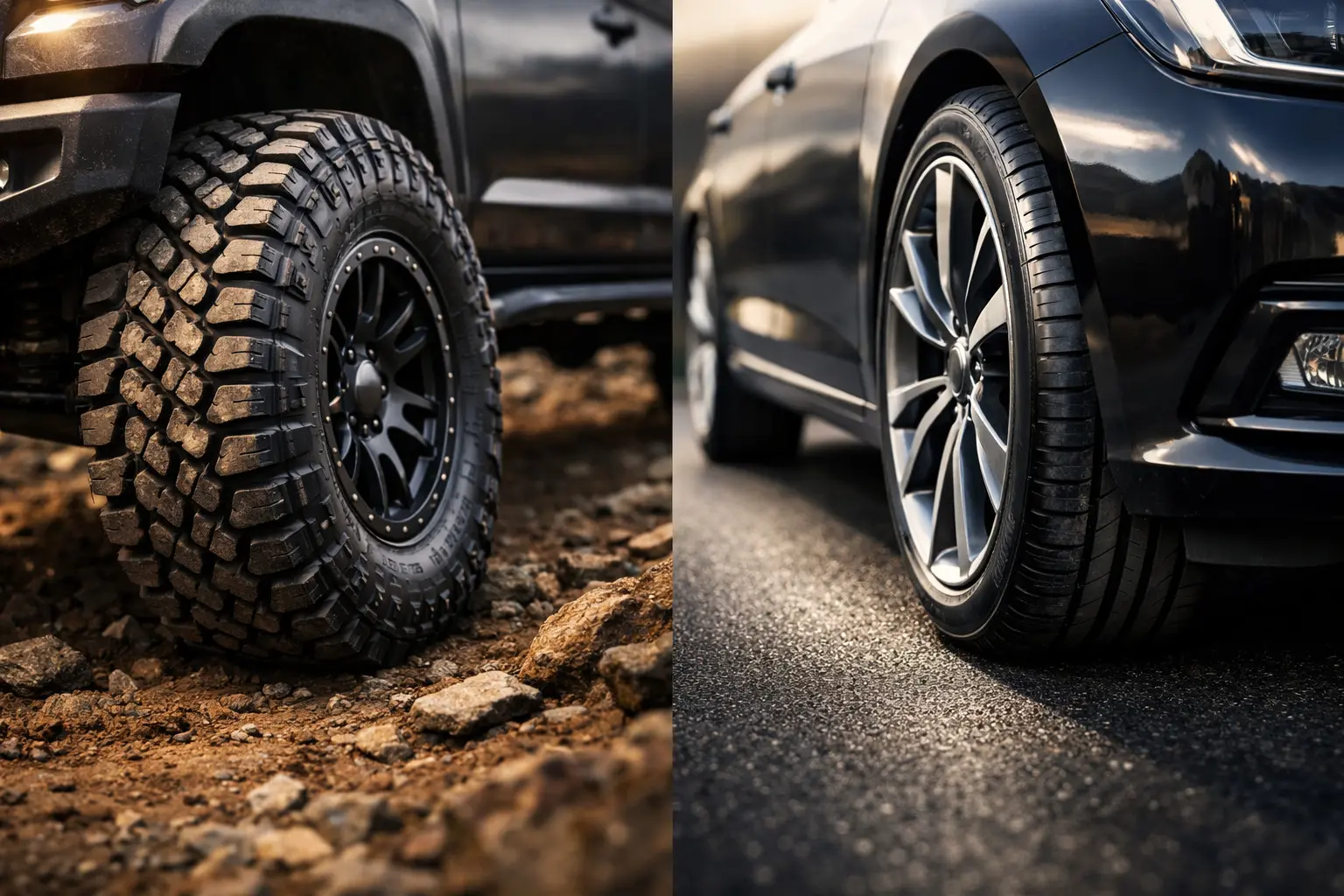
When it comes to choosing tires, not all vehicles are created equal. While SUVs and sedans may look similar at a glance, their tire requirements are fundamentally different. Using the right tire type directly affects performance, safety, and longevity.
1. Heavier Weight, Higher Demand
SUVs are significantly heavier than sedans, which means their tires must handle more stress.
- Reinforced internal construction
- Higher load ratings
- Increased durability under pressure
Sedan tires, on the other hand, are designed for lighter vehicles, prioritizing comfort and efficiency.
2. Higher Center of Gravity
SUVs have a higher center of gravity, which impacts stability—especially during cornering or sudden maneuvers.
SUV-specific tires are built to:
- Improve lateral grip
- Reduce body roll
- Enhance overall control
Sedans naturally sit lower, making stability less of a challenge.
3. Multi-Terrain Capability
SUVs are often driven beyond paved roads—think gravel, mud, or snow.
- All-Terrain (A/T)
- Mud-Terrain (M/T)
- Highway-Terrain (H/T)
Sedans typically use highway tires optimized for smooth asphalt performance.
4. Traction and Power Distribution
Many SUVs feature AWD or 4×4 systems, requiring tires that can evenly distribute power across all wheels.
This leads to:
- Stronger rubber compounds
- More aggressive tread patterns
- Better performance in challenging conditions
Sedans usually operate with front-wheel drive, placing less demand on tire performance.
5. Durability vs Comfort
SUV tires are built to withstand tougher conditions, often trading a bit of ride comfort and quietness for strength and longevity.
Sedan tires focus more on:
- Smooth ride quality
- Low road noise
- Better fuel efficiency
Conclusion
Choosing the wrong tires isn’t just a technical mistake—it’s a safety risk. SUVs require tires engineered for heavier loads, higher centers of gravity, and diverse terrains.
If you want optimal performance and safety, always choose tires designed specifically for your vehicle type.