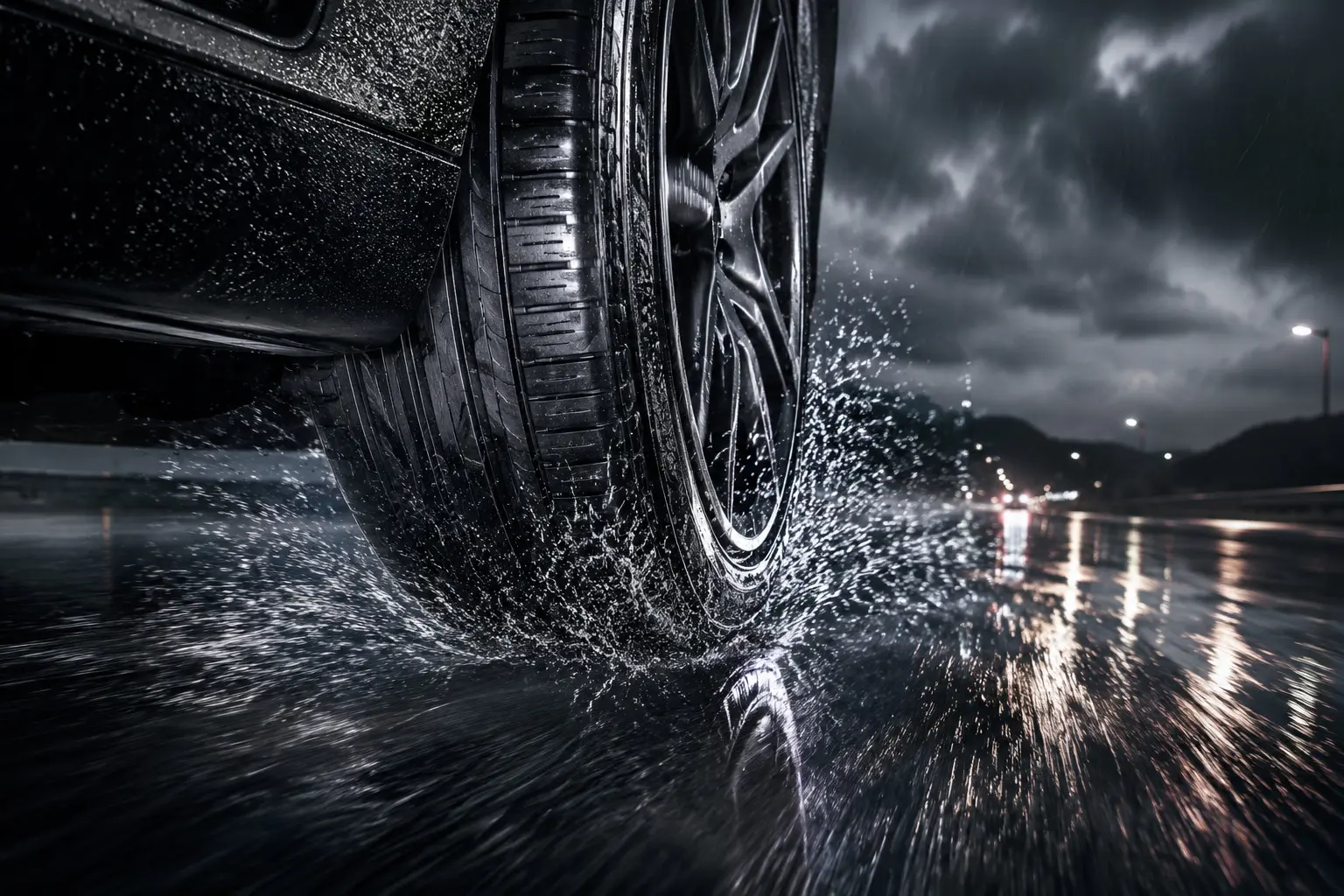
Driving in heavy rain can quickly turn dangerous if your tires aren’t designed to handle wet conditions. While many drivers focus on tire size or price, the real difference often comes down to tread design, rubber compounds, and water evacuation technology.
Here’s why some tires perform significantly better when the roads get soaked.
1. Advanced Tread Patterns Improve Water Evacuation
One of the biggest factors in wet-weather performance is how efficiently a tire channels water away from the contact patch.
Premium rain-performing tires feature:
- Wide circumferential grooves
- Deep lateral channels
- Directional or asymmetrical tread designs
These elements help push water out from beneath the tire, maintaining better road contact and reducing the risk of hydroplaning.
2. Rubber Compounds Matter More Than You Think
Not all rubber reacts the same way on wet pavement. High-quality wet-weather tires use silica-enhanced compounds that stay flexible even in cooler temperatures and rainy conditions.
This flexibility allows the tire to:
- Maintain traction on slick roads
- Improve braking performance
- Increase cornering stability
Lower-quality compounds can harden faster, reducing grip exactly when you need it most.
3. Hydroplaning Resistance Is a Game Changer
Hydroplaning happens when a layer of water separates the tire from the road surface. Once this occurs, steering and braking control can disappear almost instantly.
Tires built for heavy rain are engineered to resist hydroplaning through:
- Optimized groove spacing
- High void ratios
- Enhanced tread depth
The result is better stability and driver confidence during intense downpours.
4. Tire Width Can Affect Wet Grip
Many drivers assume wider tires always provide better traction. In heavy rain, however, extremely wide tires may struggle more with water displacement.
A properly balanced tire width paired with an efficient tread pattern often performs better in wet conditions than oversized tires focused purely on dry-road grip.
5. Worn Tires Lose Wet Performance Fast
Even the best rain tire becomes unsafe once the tread wears down.
As tread depth decreases:
- Water evacuation weakens
- Braking distances increase
- Hydroplaning risk rises dramatically
Experts recommend replacing tires before they reach minimum legal tread depth if you frequently drive in rainy climates.
Best Tire Features for Rainy Conditions
When shopping for tires designed for wet roads, look for:
- Silica-based rubber compounds
- Deep circumferential grooves
- High wet traction ratings
- Directional tread patterns
- Strong hydroplaning resistance reviews
Brands that invest heavily in wet-weather engineering typically deliver shorter braking distances and improved handling in storms.
Final Thoughts
Heavy rain performance isn’t accidental — it’s engineered. The right combination of tread design, rubber technology, and tire maintenance can dramatically improve safety on wet roads.
If you regularly drive through storms, investing in high-quality wet-performance tires can make a major difference in braking, cornering, and overall control.