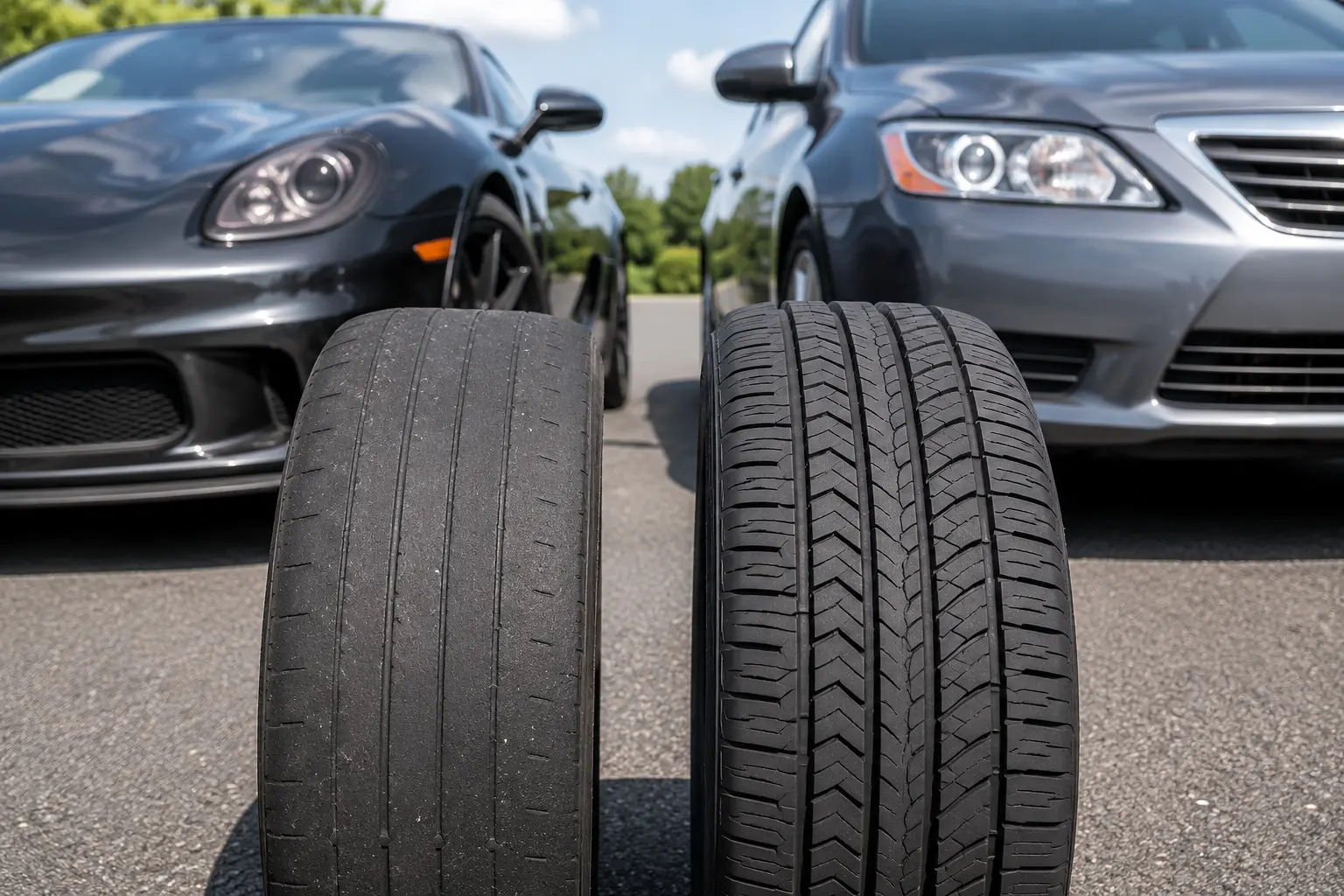
When shopping for new tires, many drivers notice that performance tires often have a shorter tread life compared to standard touring or all-season tires. While this may seem like a drawback, it’s actually a direct result of the specialized engineering that gives performance tires their superior grip and handling capabilities.
Softer Rubber Compounds Deliver More Traction
One of the primary reasons performance tires wear faster is the use of softer rubber compounds. These compounds are specifically designed to maximize contact with the road surface, improving:
- Dry traction
- Cornering stability
- Braking performance
- High-speed control
The downside is that softer rubber naturally degrades more quickly as it encounters friction, heat, and road surfaces during everyday driving.
Enhanced Grip Creates More Friction
Performance tires are built to generate higher levels of grip. While increased traction improves vehicle control, it also creates more friction between the tire and the pavement.
More friction means:
- Faster tread consumption
- Increased heat generation
- Accelerated wear during spirited driving
Drivers who frequently enjoy aggressive acceleration, hard braking, or fast cornering will typically notice even faster tread wear.
Lower Treadwear Ratings by Design
Most performance tires feature lower UTQG (Uniform Tire Quality Grading) treadwear ratings than standard tires.
For example:
- Touring tire: 600–800 treadwear rating
- Ultra-high-performance tire: 200–400 treadwear rating
A lower treadwear rating indicates a tire designed to prioritize performance over longevity. Manufacturers intentionally make this trade-off to achieve superior road feel and handling characteristics.
Specialized Tread Patterns Wear Differently
Performance tires often use tread patterns optimized for maximum road contact rather than extended mileage.
These designs typically include:
- Larger tread blocks
- Wider shoulder sections
- Reduced tread voids
While these features enhance responsiveness and stability, they can lead to faster and sometimes less uniform wear compared to conventional all-season tires.
Heat Is a Major Factor
Heat is one of the biggest contributors to tire wear.
Performance tires are engineered to operate effectively at higher temperatures, but repeated heat cycles can gradually break down the rubber compound. High-speed driving, warm climates, and aggressive driving habits can accelerate this process significantly.
Vehicle Setup and Driving Style Matter
Many vehicles equipped with performance tires also feature:
- Sport-tuned suspensions
- Aggressive alignment settings
- Rear-wheel-drive or performance-oriented drivetrains
These characteristics place additional stress on the tires and contribute to quicker wear patterns. Combined with enthusiastic driving, tire life can be substantially reduced compared to regular passenger tires.
How to Extend the Life of Performance Tires
Although performance tires naturally wear faster, proper maintenance can help maximize their lifespan:
Maintain Proper Tire Pressure
Underinflated or overinflated tires wear unevenly and reduce tread life.
Rotate Tires Regularly
Follow the vehicle manufacturer’s recommended rotation schedule to promote even wear.
Check Wheel Alignment
Misalignment can dramatically accelerate wear, especially on high-performance tires.
Avoid Excessive Aggressive Driving
Hard launches, sudden braking, and sharp cornering increase tread wear significantly.
Inspect Tires Frequently
Regular inspections help identify uneven wear patterns before they become serious problems.
Final Thoughts
Performance tires are designed with one goal in mind: delivering exceptional grip, handling, and driving confidence. The softer compounds, specialized tread designs, and enhanced traction that make them perform so well also cause them to wear faster than regular tires.
For drivers who prioritize responsiveness and control, the trade-off is often well worth it. By maintaining proper tire care and driving habits, you can enjoy the benefits of performance tires while getting the most value from every mile.