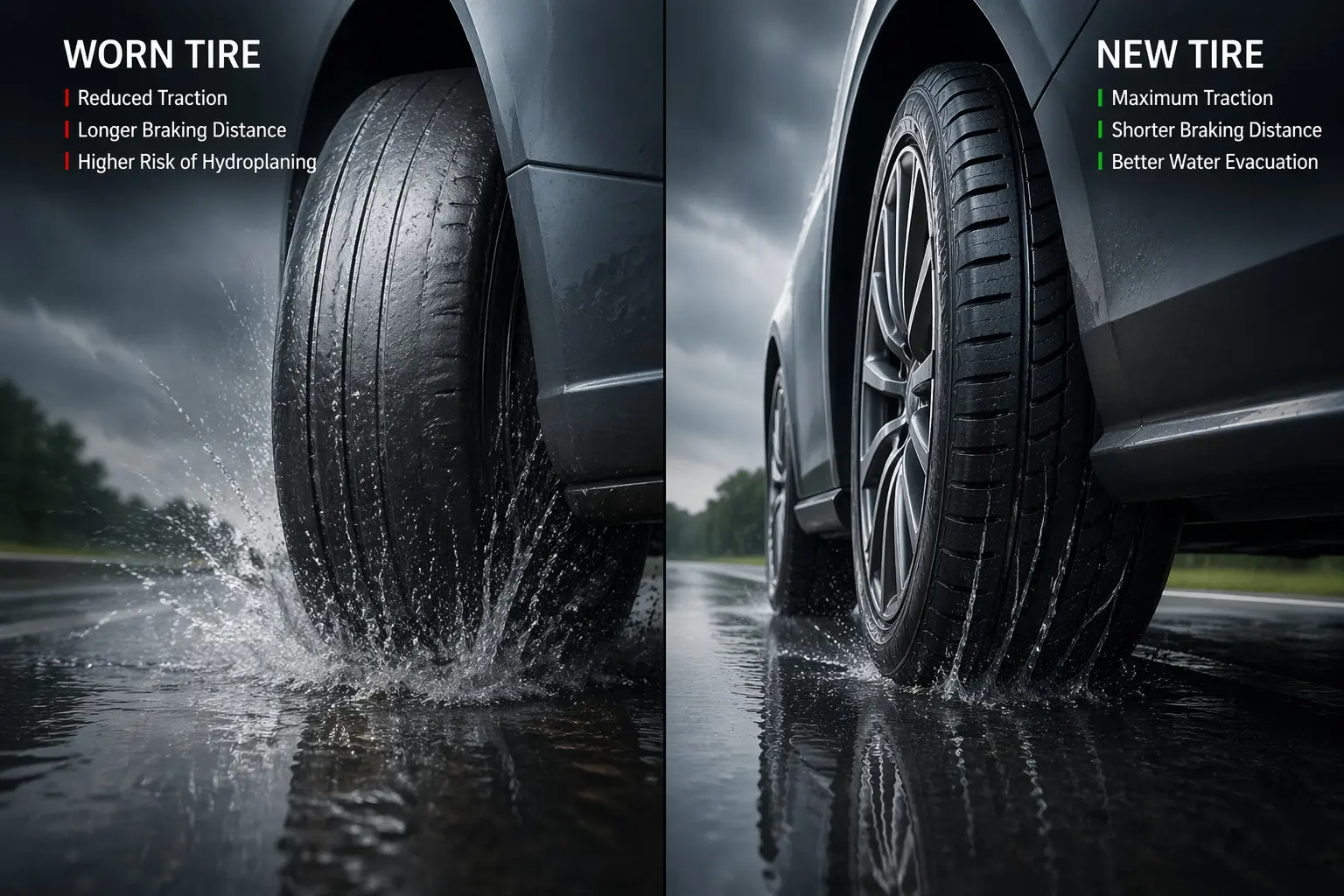
In the world of vehicle maintenance, one mistake is more common than most drivers realize: waiting too long to replace tires. Even if they “look fine,” worn tires can seriously compromise your safety, your vehicle’s performance, and your long-term costs.
Why do drivers delay tire replacement?
There are several reasons behind this risky habit:
- Short-term savings: Trying to get every last mile out of a tire
- Lack of awareness: Not everyone knows how to properly check tread wear
- False confidence: “They still have some tread left”
- Busy schedules: Maintenance gets pushed down the priority list
The risks of replacing tires too late
1. Loss of traction
As tread wears down, your tires lose their ability to grip the road—especially in wet or slippery conditions—making skidding more likely.
2. Increased braking distance
Worn tires need more distance to stop, which can be the difference between a close call and an accident.
3. Higher risk of hydroplaning
Without proper tread depth, water cannot be effectively channeled away, causing your car to lose contact with the road surface.
4. Increased chance of blowouts
Old or worn tires are more vulnerable to sudden failure, especially at high speeds or in hot weather.
5. Reduced fuel efficiency
Worn tires can increase rolling resistance, forcing your engine to work harder and consume more fuel.
When should you replace your tires?
- When tread depth falls below 2/32 of an inch (1.6 mm)
- If you notice uneven wear patterns
- Presence of cracks, bulges, or visible damage
- After 5 years of use, even if tread remains
Expert recommendation
At Tirewarehouse.ca, we recommend regular tire inspections and proactive replacement. Investing in new tires at the right time isn’t an expense—it’s a critical safety decision that protects you, your passengers, and everyone on the road.