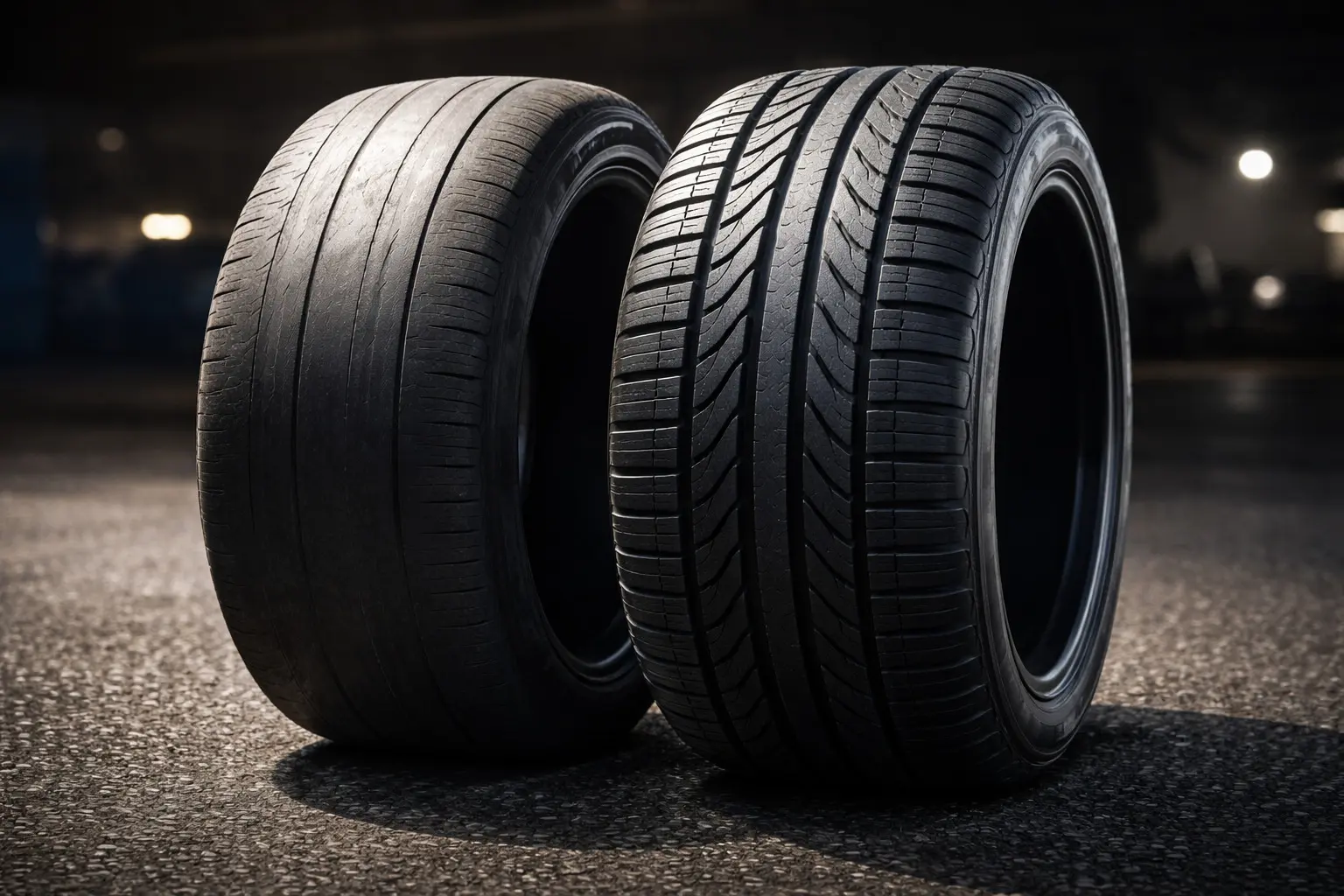
When buying new tires, one of the most common questions is how long they’ll last. The truth is, there’s no universal answer. Two sets of tires can differ by 40,000 km or more in lifespan depending on several key factors. Here’s what really makes the difference.
1. Rubber Compound: The Foundation of Longevity
Tires are made from different rubber compounds, and this directly affects durability.
- Harder compounds tend to last longer but provide less grip.
- Softer compounds deliver better traction but wear out faster.
For example, touring tires are engineered for longevity, while performance tires prioritize grip over lifespan.
2. Driving Style Matters More Than You Think
Your driving habits play a major role in how quickly your tires wear down.
- Aggressive acceleration and hard braking increase wear significantly.
- Smooth, consistent driving helps extend tire life.
Even small changes in driving behavior can add thousands of kilometers to your tires.
3. Road Conditions Make a Big Difference
Not all roads are equal when it comes to tire wear.
- Rough roads, potholes, and gravel surfaces accelerate deterioration.
- Smooth highways promote more even and slower wear.
Where you drive daily has a direct impact on how long your tires will last.
4. Maintenance: The Most Overlooked Factor
Proper maintenance can dramatically extend tire life.
- Incorrect tire pressure leads to uneven wear.
- Poor alignment can cut lifespan in half.
- Skipping tire rotations causes premature wear.
Consistent maintenance can mean the difference between 60,000 km and 100,000 km.
5. Tire Quality and Design
Not all tires are created equal.
- Premium brands invest in advanced technology for durability.
- The Treadwear rating gives an estimate of expected lifespan.
Choosing the right tire from the start has a long-term impact on performance and cost.
Key Takeaway
Tire lifespan depends on a combination of material, driving habits, maintenance, and environment. Making informed choices and taking proper care of your tires can save money and improve safety over time.