
Which Path Fits How You Drive?
A practical Canadian guide to choosing between the Bridgestone WeatherPeak Ultramax 4S approach and dedicated winter tires based on climate, mileage, road conditions, and how you actually drive.
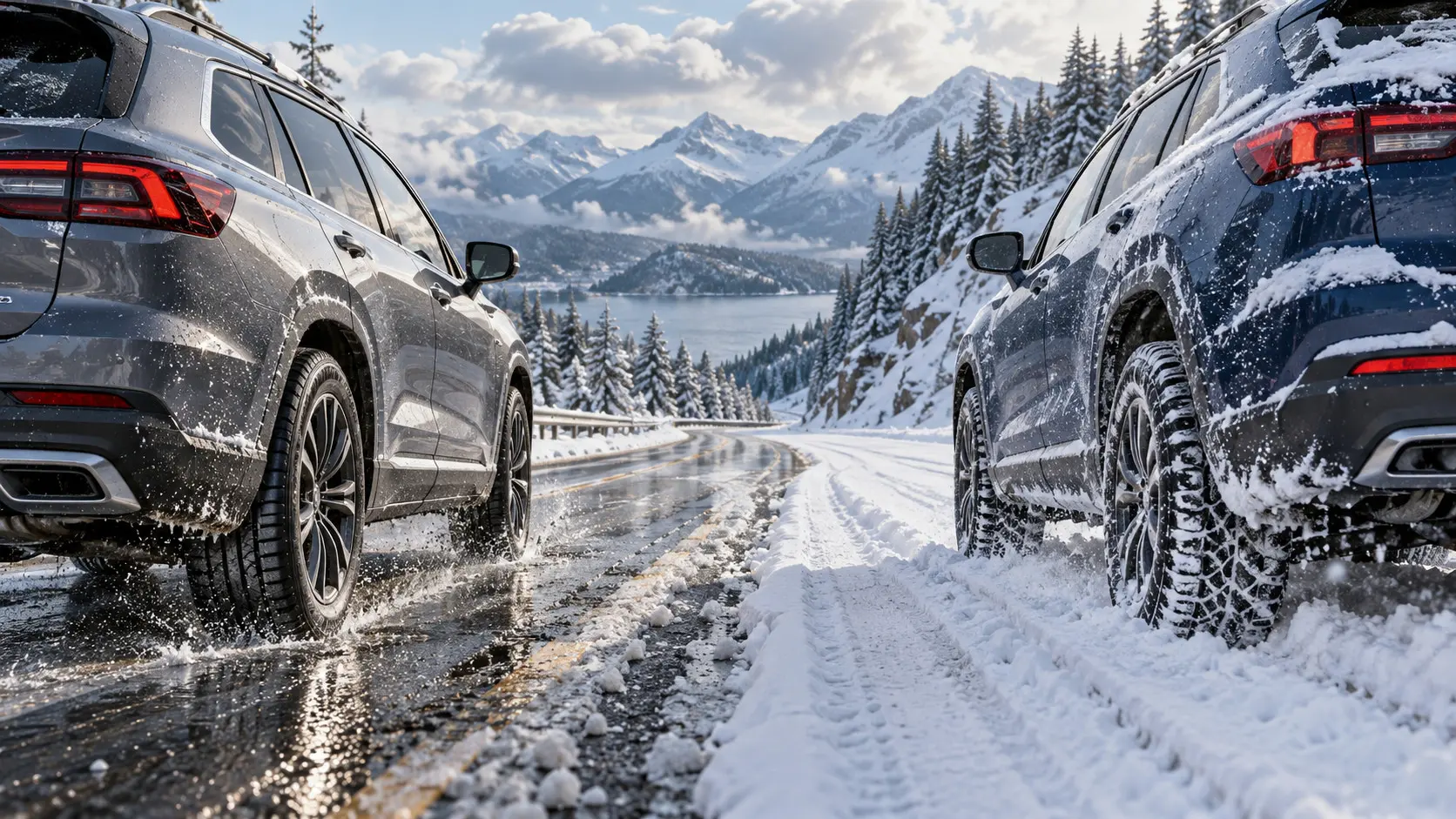
Ultramax 4S vs Dedicated Winter Tires: Which Path Fits How You Drive?
Choosing between an Ultramax 4S-style all-weather tire and a dedicated set of winter tires is less about finding one universally “better” option and more about matching your tires to the conditions you actually face.
For Canadian drivers, that distinction matters. A commuter dealing mainly with plowed urban streets has different needs from someone regularly driving rural highways, steep roads, cottage routes, or early-morning commutes before the plows arrive.
All-weather tires can provide year-round convenience while maintaining meaningful winter capability when properly certified. Dedicated winter tires, however, are engineered specifically around cold temperatures, snow, slush, and ice. Understanding where those strengths matter will help you choose the right path for your vehicle and driving habits.
Ultramax 4S vs Winter Tires: What Is the Main Difference?
The main difference is specialization: an Ultramax 4S-style all-weather tire is intended to remain on the vehicle throughout the year, while a dedicated winter tire is optimized specifically for cold-weather driving.
This creates an important trade-off. A year-round tire needs to work across a much broader range of temperatures and road surfaces. A winter tire can concentrate more heavily on cold-weather traction.
| Factor | Ultramax 4S / All-Weather | Dedicated Winter Tires |
|---|---|---|
| Primary purpose | Year-round driving with winter capability | Cold-weather and winter driving |
| Seasonal tire changes | Usually not required | Required |
| Cold-weather focus | Balanced with warm-weather needs | Highly winter-focused |
| Snow | Designed to provide winter traction when properly certified | Typically the stronger choice for frequent or deep snow |
| Ice | Capability varies significantly by tire | Generally better suited to frequent icy conditions |
| Summer use | Designed for year-round use | Not recommended for warm-season use |
| Storage | No second seasonal set to store | Off-season tires require storage |
| Best fit | Milder winters and drivers prioritizing convenience | Severe winters and drivers wanting greater winter specialization |
What Does “4S” Mean for a Year-Round Tire?
A 4S or four-season concept generally aims to cover spring, summer, fall, and winter with one tire. That should not automatically be interpreted as meaning every four-season product performs like a dedicated winter tire.
Canadian shoppers should pay particular attention to the markings on the tire sidewall. The Three-Peak Mountain Snowflake (3PMSF) symbol identifies tires that have met a standardized performance requirement in snow conditions.
This distinction is important because traditional all-season tires, all-weather tires, and dedicated winter tires are not interchangeable categories.
All-season tires
Conventional all-season tires are designed around broad three-season performance and some light winter capability. Many carry an M+S marking, but that alone should not be confused with the 3PMSF winter-performance designation.
All-weather tires
All-weather tires are intended for year-round use while providing greater winter capability than a conventional all-season design. Many all-weather products carry the 3PMSF symbol.
Dedicated winter tires
Winter tires are built specifically for cold-weather operation. Their rubber compounds, tread patterns, siping, and tread-block designs are selected with snow, slush, ice, and low temperatures in mind.
TireWarehouse Tip: Do not make the decision based only on words such as “all-season,” “all-weather,” or “4S.” Check the actual tire specifications and sidewall markings, including whether the tire carries the 3PMSF symbol.
Why Does the 7°C Guideline Matter?
Around 7°C is a useful seasonal reference point because tire compounds behave differently as temperatures change. It is not a magical temperature at which one tire suddenly works and another stops working.
As Canadian temperatures fall, cold-weather performance becomes increasingly important. Dedicated winter tires use compounds intended to remain suitable for cold conditions, while their tread designs are engineered to manage winter surfaces.
This is why waiting for the first major snowfall before thinking about winter tires can be misleading. Cold pavement, freezing rain, frost, slush, and black ice may arrive well before persistent snow cover.
When Does an Ultramax 4S Approach Make Sense?
A four-season or all-weather setup can make sense for drivers who experience moderate winters, drive mostly on maintained roads, and value avoiding seasonal tire changes.
Consider this path when several of the following describe your driving:
- You mainly drive on urban or suburban roads that receive regular winter maintenance.
- Your area experiences relatively moderate winter conditions.
- You can postpone unnecessary trips during major snow or freezing-rain events.
- You drive relatively few kilometres each year.
- You do not regularly travel on steep, remote, or poorly maintained winter roads.
- You want to avoid storing a second set of tires.
- You prefer one tire setup throughout the year.
- The tire you are considering carries appropriate winter certification for your needs and applicable routes.
For this type of driver, a capable all-weather tire can simplify vehicle ownership without relying on a conventional all-season tire through winter.
When Are Dedicated Winter Tires the Better Fit?
Dedicated winter tires become increasingly valuable as your exposure to snow, ice, severe cold, hills, and unpredictable winter roads increases.
They deserve serious consideration if you:
- regularly drive during snowstorms;
- commute before roads are fully plowed or treated;
- live in an area with prolonged winter conditions;
- frequently encounter packed snow, slush, or icy roads;
- travel on rural or secondary highways;
- drive through mountainous areas;
- cannot simply stay home when conditions deteriorate;
- frequently make long-distance winter trips; or
- want a tire specifically optimized around winter rather than four-season versatility.
The more unavoidable your winter driving becomes, the stronger the case for specialized winter equipment.
City Commuting vs Highway Driving Changes the Decision
Your regular route can matter just as much as the average winter temperature where you live. Two drivers living in the same Canadian city can reasonably choose different tire strategies.
Mostly urban driving
A driver travelling 10 or 15 kilometres through regularly maintained city streets may encounter relatively limited periods of deep snow.
If that driver also has flexibility to avoid severe weather, a quality all-weather setup may align well with those needs.
Daily highway commuting
Highway drivers face a different risk profile. Higher speeds leave less room for traction changes, and blowing snow, slush, freezing precipitation, shaded ice, and rapid weather changes can appear during a single trip.
A driver commuting significant distances every day may therefore place greater value on dedicated winter performance.
Rural and secondary roads
Road maintenance can vary considerably outside major urban corridors. Snow accumulation may be greater, plowing may occur less frequently, and drifting snow can quickly change conditions.
For drivers regularly using these roads, dedicated winter tires are often the more winter-focused solution.
How Do the Two Options Compare on Snow, Ice, Slush, and Wet Roads?
Both tire categories can provide winter capability, but dedicated winter tires place fewer design compromises between winter traction and warm-weather performance.
Snow
Winter tread patterns typically use numerous biting edges, strategically placed sipes, and tread features designed to interact with snow.
A 3PMSF-rated all-weather tire can also provide useful snow traction, making it substantially different from treating a basic all-season tire as a winter solution. Performance still varies considerably between individual models.
Ice
Ice is one of the most demanding surfaces a driver can encounter. Tire compound, tread design, temperature, vehicle speed, ice texture, and whether the surface is wet or polished can all affect traction.
Drivers who routinely encounter freezing rain, black ice, or hard-packed snow should give winter-specific performance significant weight in their decision.
Slush
Slush combines standing water with snow and can reduce the tire’s ability to maintain consistent contact with the road. Tread depth and effective evacuation channels become particularly important.
Regardless of tire category, reducing speed and leaving additional following distance are essential when slush accumulates.
Cold rain and wet pavement
Winter in Canada is not always white. Southern regions frequently move through cycles of rain, wet snow, freezing temperatures, and thawing pavement.
When comparing tires, consider wet braking and hydroplaning resistance alongside snow capability rather than focusing exclusively on snow traction.
Does an All-Weather Tire Save Money?
An all-weather setup can reduce some seasonal expenses, but the lowest upfront cost does not automatically mean the lowest long-term cost.
With one set of tires, you may avoid:
- twice-yearly seasonal tire changeovers;
- purchasing a second set of wheels;
- paying for seasonal tire storage; and
- finding storage space at home.
However, those tires also accumulate kilometres throughout the entire year. With separate summer or all-season and winter sets, annual kilometres are divided between two sets.
A high-mileage driver should therefore consider cost per kilometre and replacement frequency, not simply the initial purchase price.
What About Warm-Weather Handling and Tire Wear?
A tire designed for four-season operation must balance hot pavement, rain, cool autumn conditions, and winter weather. A dedicated winter tire does not need to make the same warm-weather compromise because it should be removed when the winter season ends.
Running winter tires well into warm weather can accelerate wear and may change steering response and braking behaviour. That is one reason seasonal changeovers remain important when using dedicated winters.
All-weather tires eliminate that particular changeover, but they still require normal maintenance, including:
- regular tire pressure checks;
- tire rotations at the appropriate interval;
- tread-depth inspections;
- wheel alignment checks when uneven wear appears;
- visual inspections for sidewall or tread damage; and
- TPMS attention when warning lights appear.
How Tire Pressure Affects Winter Performance
Correct cold inflation pressure matters regardless of which tire strategy you choose. Tire pressure typically changes as ambient temperature changes, making pressure checks especially important during Canadian fall and winter temperature swings.
Use the vehicle manufacturer’s recommended cold inflation pressure found on the vehicle placard or in the owner’s manual. Do not assume the maximum pressure moulded into the tire sidewall is the correct operating pressure for your vehicle.
Incorrect pressure can affect handling, tire wear, fuel efficiency, and the size and behaviour of the tire’s contact patch.
What About Quebec and British Columbia Winter Tire Requirements?
Canadian winter tire requirements vary by province and, in some cases, by road or route. Drivers should verify current provincial rules before choosing a year-round tire specifically to avoid seasonal changes.
Quebec has specific winter tire requirements for many passenger vehicles during the designated winter period. British Columbia also has winter tire and chain requirements on designated routes during specified periods.
Requirements can include definitions based on tire markings, dates, vehicle type, route, and tread condition. Regulations can change, so check current provincial transportation information before travelling.
Important: A tire being suitable for your normal commute does not necessarily mean it satisfies every winter route you may travel. Check current provincial and route-specific requirements before a winter road trip.
Choose Based on Your Worst Regular Drive, Not Your Best Day
A useful way to choose is to think about the most difficult conditions you regularly cannot avoid.
Do not base the decision on a dry February afternoon when the pavement is clear. Ask what your drive looks like when winter is actually challenging.
- How often do you drive in active snowfall? Occasional exposure and mandatory daily commuting create different needs.
- Can you delay a trip? Drivers with schedule flexibility can often avoid the worst conditions.
- How quickly are your roads cleared? Major urban roads may be treated sooner than rural or residential roads.
- Do you regularly encounter hills? Starting, stopping, and controlling speed on slippery grades increases traction demands.
- How far do you drive? More kilometres can mean more opportunities to encounter changing conditions.
- Do you travel between regions? A mild city commute can become a very different drive when heading north, into higher elevations, or onto remote highways.
Which Tire Setup Fits Your Driving Profile?
The following profiles provide a practical starting point rather than a universal prescription.
| Driving Profile | Option to Consider | Why |
|---|---|---|
| Low-mileage urban driver with flexible travel | All-weather / Ultramax 4S approach | Year-round convenience may fit moderate, well-maintained routes |
| Urban commuter who must drive every day | Depends on local winter severity | Schedule flexibility and road conditions become important factors |
| Long-distance highway commuter | Dedicated winter tires | Greater exposure to changing winter conditions |
| Rural driver | Dedicated winter tires | Snow clearing and road conditions can be less predictable |
| Frequent ski or mountain traveller | Dedicated winter tires | Elevation, snow, grades, and route requirements increase winter demands |
| Driver who rarely sees severe winter weather | All-weather / Ultramax 4S approach | Balances year-round operation with additional winter capability |
| Driver frequently encountering ice and heavy snow | Dedicated winter tires | Winter specialization becomes a higher priority |
Common Mistakes When Comparing 4S and Winter Tires
The biggest mistakes come from choosing by category name alone rather than considering the actual tire, vehicle, climate, and route.
Assuming all all-weather tires perform identically
Tires within the same category can differ in snow traction, wet braking, road noise, tread life, handling, rolling resistance, and ride comfort. Compare the actual models you are considering.
Confusing M+S with 3PMSF
M+S and the Three-Peak Mountain Snowflake symbol are not the same designation. Check the sidewall and product specifications carefully.
Choosing based only on purchase price
Factor in seasonal installation, storage, additional wheels, annual kilometres, expected tread life, and how long you intend to keep the vehicle.
Ignoring tread depth
Winter capability depends on more than the label printed on a tire. As tread wears, its ability to manage water, snow, and slush changes. Inspect tread depth regularly rather than waiting until the tire looks visibly worn out.
Expecting tires to overcome unsafe driving
No tire can eliminate the effects of excessive speed, insufficient following distance, black ice, deep standing water, or severe weather.
Good winter tires increase available capability; they do not change the laws of physics.
A Practical Pre-Winter Tire Checklist
Whichever path you choose, inspect your tires before winter conditions become routine.
- Confirm the tire type and winter-related sidewall markings.
- Measure tread depth at several points across each tire.
- Check for uneven wear that may indicate alignment or suspension concerns.
- Inspect sidewalls for cuts, bulges, cracking, or other damage.
- Set tire pressure according to the vehicle manufacturer’s cold inflation specification.
- Confirm your TPMS is functioning correctly if equipped.
- Review the tire’s age and condition rather than judging it by tread depth alone.
- Check provincial and route-specific winter tire requirements.
- Consider the most difficult conditions you realistically expect to drive through.
Ultramax 4S vs Dedicated Winter Tires: The Final Decision
Choose according to winter exposure, not simply convenience or the tire category printed on the product page.
An Ultramax 4S-style all-weather setup can be a practical solution for Canadian drivers with moderate winter conditions, maintained roads, manageable annual mileage, and enough flexibility to avoid the most severe storms.
Dedicated winter tires make a stronger case as winter becomes colder, snowier, icier, more mountainous, or simply less avoidable. They also suit drivers whose jobs, family responsibilities, or travel schedules require them to be on the road regardless of whether conditions are ideal.
The right question is therefore not simply, “Can I use one tire all year?”
A better question is: “What conditions does my vehicle need to handle safely and consistently when winter is at its worst?”
Once you answer that, the choice between four-season convenience and dedicated winter specialization becomes much clearer.
Frequently Asked Questions
Are Ultramax 4S tires the same as winter tires?
No. A four-season or all-weather tire is intended to cover a broad range of conditions throughout the year, while a dedicated winter tire is engineered specifically for cold-weather operation. Check the specific Ultramax 4S model’s certifications and specifications rather than assuming equivalent winter performance from the name alone.
Can I use all-weather tires all year in Canada?
All-weather tires are designed for year-round operation, but suitability depends on the specific tire, local climate, vehicle, driving conditions, and applicable provincial or route requirements. Drivers in severe winter environments may still prefer dedicated winter tires.
Are all-weather tires better than all-season tires in snow?
All-weather tires are generally designed with greater winter capability than conventional all-season tires. Look for the 3PMSF symbol and compare model-specific performance rather than relying solely on category names.
What does the 3PMSF symbol mean?
The Three-Peak Mountain Snowflake symbol identifies a tire that has met a standardized performance requirement for acceleration traction in snow. It is useful when identifying winter-capable tires, although it does not mean every 3PMSF tire will perform identically on ice, wet roads, or other winter surfaces.
Is M+S the same as a winter tire?
No. An M+S marking and the 3PMSF designation are different. Drivers should understand which markings are required for their intended roads and province and verify current regulations before travelling.
Should I install winter tires when temperatures reach 7°C?
Approximately 7°C is commonly used as a practical seasonal guideline for thinking about winter tire changeovers. Installation timing should also account for local forecasts, overnight temperatures, road conditions, and the tire manufacturer’s recommendations.
Do winter tires help on black ice?
Winter tires are designed to provide better cold-weather capability, but black ice can still offer extremely little traction. Drivers should reduce speed, increase following distance, and make steering, braking, and acceleration inputs smoothly when icy conditions are possible.
Do I need four winter tires?
Using four matching winter tires helps maintain more balanced traction and handling between the front and rear axles. Mixing tires with significantly different seasonal capabilities can create unpredictable differences in grip.
Are all-weather tires good for highway driving?
They can be, depending on the tire and conditions. Drivers who frequently cover long highway distances during heavy snow, freezing rain, or severe cold should weigh the additional winter specialization of dedicated winter tires more heavily.
Do all-weather tires wear faster because they stay on year-round?
They accumulate kilometres throughout the year, so their tread is not getting a seasonal break. Actual wear depends on the tire, vehicle, driving style, alignment, inflation pressure, rotation practices, road surfaces, temperatures, and annual mileage.
Are dedicated winter tires worth having if I work from home?
Possibly, but the decision depends more on when and where you drive than on commuting alone. A low-mileage driver who can avoid storms may have different needs from someone who frequently takes winter highway or mountain trips.
Can AWD replace winter tires?
No. All-wheel drive can help distribute driving torque among the wheels, but tires provide the vehicle’s contact with the road. Braking and cornering still depend heavily on available tire traction and road conditions.
When should I replace my winter or all-weather tires?
Replacement decisions should consider tread depth, uneven wear, damage, age, rubber condition, and declining performance. Legal minimums should not be treated as a guarantee of adequate performance in every winter condition.
Recommended Related Reading
In stock & ready to ship
Find the tires you need, delivered from a warehouse near you