
Trail Climber SUV2 vs HT03: Which Summit Fits Your SUV or Light Truck?
Trail Climber SUV2 vs HT03: compare comfort, wet-road traction, tread life, load capability, sizes, and highway-focused performance to find the better Summit tire for your vehicle.
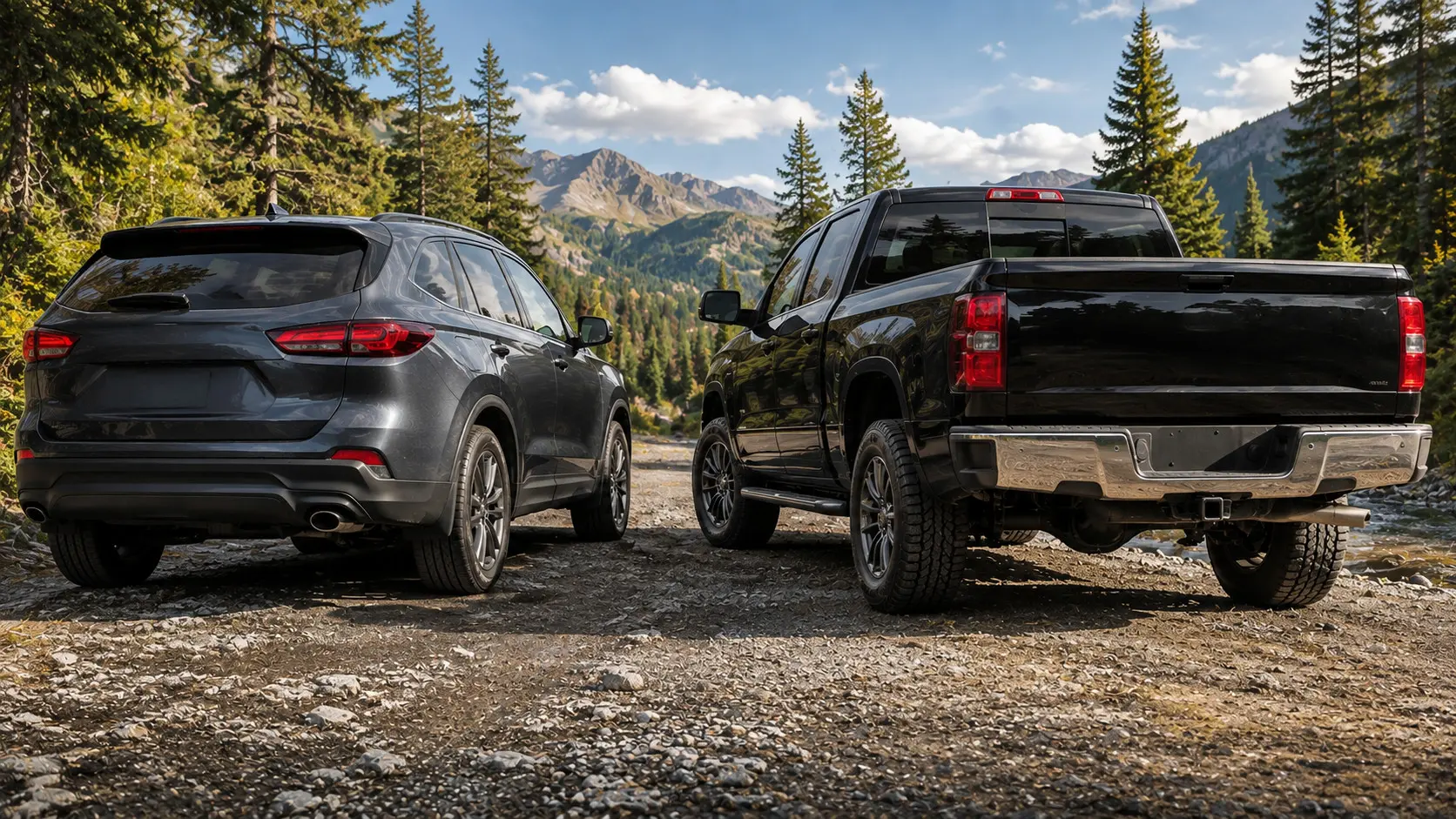
Trail Climber SUV2 vs HT03: Which Summit Fits Your SUV or Light Truck?
The Summit Trail Climber SUV2 and Trail Climber HT03 are both all-season tires designed for SUVs and utility vehicles, but they are aimed at somewhat different drivers. The SUV2 places a strong emphasis on quiet road manners, comfort, wet handling, and broad crossover/SUV fitment, while the HT03 is a highway-terrain tire developed for pickup trucks, larger SUVs, and 4x4s where durability and load-carrying capability can play a bigger role.
For many Canadian drivers, the choice comes down to a simple question: does your vehicle behave more like a daily-driven crossover or like a working light truck? If comfort, commuting, family trips, and paved-road driving dominate your kilometres, the Trail Climber SUV2 will often be the more natural match. If you drive a pickup or larger SUV, carry heavier loads, or require an LT-size tire, the Trail Climber HT03 deserves closer attention.
This comparison explains the differences that matter before you buy, including tread design, wet traction, ride comfort, tire sizes, treadwear coverage, winter limitations, and vehicle fitment.
Trail Climber SUV2 vs HT03: The Quick Answer
Choose the Trail Climber SUV2 for a crossover or SUV primarily driven on pavement; choose the HT03 when your pickup, large SUV, or 4×4 calls for a more truck-oriented highway tire or an LT fitment.
| Category | Trail Climber SUV2 | Trail Climber HT03 |
|---|---|---|
| Primary application | Crossovers and SUVs | Pickups, large SUVs and 4x4s |
| Tire type | All-season SUV tire | Highway-terrain all-season tire |
| Best suited to | Daily commuting, family driving and highway travel | Highway driving, larger vehicles and light-truck applications |
| Ride focus | Quietness and comfort | Comfort with truck-oriented durability |
| Wet-road design | Wide circumferential and shoulder lateral grooves | Four circumferential channels and multiple 3D sipes |
| New tread depth in published P-metric sizes | 10/32 in. | 11/32 in. |
| Published P-metric treadwear coverage | 60,000 miles | 60,000 miles |
| Published LT treadwear coverage | Not the model’s main application | 50,000 miles |
| Typical reason to choose it | Refined SUV road manners | Truck/SUV highway capability and available LT applications |
Those distinctions are more important than simply asking which tire is “better.” A tire is only the right choice when its size, load index, speed rating, construction, and application are appropriate for your specific vehicle.
What Is the Summit Trail Climber SUV2?
The Trail Climber SUV2 is an all-season tire designed around the everyday road needs of SUVs and crossovers. Summit describes the tire as combining quiet operation, handling, traction, and even tread wear for drivers whose vehicles spend most of their time on paved roads.
Its design includes several features aimed specifically at that use:
- SPPS noise simulation technology optimizes the tread lug arrangement to help reduce road noise.
- Wide circumferential grooves help evacuate water from the tread.
- Shoulder lateral grooves work with the main channels to support wet handling.
- A wide footprint and optimized shoulder profile are intended to maintain stable tread contact and promote even wear.
The result is a tire that makes sense for vehicles used for commuting, errands, school runs, highway trips, and other routine SUV duties.
TireWarehouse Tip: Don’t choose an SUV tire based on vehicle type alone. Two versions of the same SUV can require different tire sizes, load indexes, or speed ratings. Always confirm the specifications listed on the vehicle placard or in the owner’s manual.
What Is the Summit Trail Climber HT03?
The Trail Climber HT03 is Summit’s premium highway-terrain all-season tire for pickup trucks, large SUVs, and 4×4 vehicles. Its design balances paved-road comfort and wet-weather performance with construction intended for more demanding truck and SUV applications.
Important HT03 features include:
- Multiple 3D sipes across the tread contact area to support traction.
- Four circumferential channels designed to move water away from the tread.
- Reinforced casing construction intended to promote durability, even wear, and load-carrying capability.
- Void angles and lateral groove tie bars designed to manage airflow and contribute to handling stability and smooth road manners.
The HT designation is also useful context. HT means highway terrain: this category is generally aimed at trucks and SUVs that spend considerably more time on pavement than on trails.
How Do the Trail Climber SUV2 and HT03 Differ?
The biggest difference is their intended application rather than an enormous difference in basic all-season road performance. The SUV2 is more crossover/SUV-oriented, while the HT03 extends farther into traditional pickup and light-truck territory.
SUV2: More Crossover and SUV Focused
The SUV2 range covers many sizes associated with modern crossovers and SUVs. Summit lists fitments spanning wheel diameters from 16 through 21 inches, including lower-profile sizes found on newer SUVs.
Examples include 215/65R16, 225/65R17, 235/60R18, 235/55R19, 255/50R20, and several 21-inch applications. Some sizes use XL, or Extra Load, construction.
This broad range reinforces the SUV2’s role as a road-focused tire for the diverse crossover and SUV market.
HT03: More Pickup and Large-SUV Focused
The HT03’s published P-metric range includes familiar truck and full-size SUV dimensions such as 245/75R16, 265/70R17, 265/65R18, 275/55R20, and 275/50R22.
More importantly for some truck owners, the HT03 family also includes LT-size applications. That can make it the relevant choice when a vehicle requires an LT tire with the appropriate load range and carrying capacity.
An LT tire should not automatically be fitted simply because you own a pickup. Follow the vehicle manufacturer’s requirements and make sure the replacement tire meets the necessary size, load, and speed specifications.
Which Tire Is Better for Daily Highway Driving?
Both are designed for substantial paved-road use, but the SUV2 is particularly appealing for drivers prioritizing quiet, comfortable everyday SUV travel. Summit specifically highlights its noise-optimized tread arrangement and ride comfort.
That makes the SUV2 a logical option when your typical week involves:
- urban and suburban commuting;
- school and family transportation;
- long stretches of Canadian highway;
- weekend road trips;
- mostly paved-road driving; and
- little need for light-truck construction.
The HT03 is hardly out of place on the highway. Highway driving is central to its design. Its advantage is that it combines that road-oriented behaviour with features and fitments more relevant to pickups, larger SUVs, and light-truck use.
Which Is Better for Wet Canadian Roads?
Both Trail Climber models incorporate dedicated water-evacuation features, so neither should be selected on a simplistic assumption that one is the “wet tire” and the other is not.
Trail Climber SUV2 Wet-Traction Design
The SUV2 uses wide circumferential grooves in combination with lateral shoulder grooves. Their job is to provide pathways for water to leave the contact area, helping the tread maintain contact with wet pavement.
Trail Climber HT03 Wet-Traction Design
The HT03 uses four circumferential channels together with multiple 3D sipes. This design also targets water displacement and traction during all-season road use.
These features matter in Canada, where spring thaw, heavy summer rain, and autumn storms can leave substantial standing water on highways. However, no tread pattern eliminates hydroplaning risk. Vehicle speed, water depth, tire pressure, tread depth, and tire condition all affect how much traction remains.
Expert Tip: If your vehicle suddenly encounters deep standing water, a new tire cannot compensate for excessive speed. Maintaining appropriate speed and sufficient tread depth remains essential for wet-road safety.
Which Trail Climber Offers the Quieter Ride?
The SUV2 has the clearest noise-reduction emphasis on paper, although Summit also designed the HT03 for smooth highway operation.
The SUV2 uses Summit’s SPPS noise simulation technology to optimize tread lug placement and minimize road noise. For crossover and SUV owners who spend hours on highways such as Ontario’s 400-series routes or long stretches of the Trans-Canada Highway, reduced tread noise can make everyday driving more pleasant.
The HT03 addresses comfort differently. Summit cites its void angles and lateral groove tie bars as features intended to create smooth airflow while increasing handling stability.
Actual cabin noise will still vary with the vehicle, road surface, tire pressure, tread wear, wheel alignment, and tire size.
How Does Tread Life Compare?
Both models offer substantial published treadwear coverage, but HT03 coverage differs between P-metric and LT applications.
| Tire | Published Limited Treadwear Warranty |
|---|---|
| Trail Climber SUV2 | 60,000 miles |
| Trail Climber HT03 P-metric sizes | 60,000 miles |
| Trail Climber HT03 LT sizes | 50,000 miles |
Summit’s warranty documentation is expressed in miles. For Canadian context, 60,000 miles is approximately 96,500 kilometres, while 50,000 miles is approximately 80,500 kilometres. Warranty terms and eligibility conditions should always be reviewed before purchase rather than treating those figures as a prediction of exactly how long every set will last.
Real-world tread life can change considerably according to:
- driving style;
- vehicle weight and loading;
- tire pressure;
- wheel alignment;
- rotation practices;
- road conditions;
- suspension condition; and
- seasonal tire use.
Regular tire rotation and correct cold inflation pressure can help promote more even wear. Follow the intervals and pressures recommended by your vehicle manufacturer.
Does the HT03 Carry Heavier Loads Than the SUV2?
The HT03 is the more relevant product family when your application calls for light-truck construction, but load capacity must always be compared by the exact tire size and specification.
It is important not to generalize from the model name. Load-carrying capacity varies between individual sizes, and some SUV2 sizes also carry XL designations.
Before replacing tires on a pickup or SUV used for towing or carrying cargo, check:
- The original tire size.
- The required load index or load range.
- The required speed rating.
- The vehicle’s recommended cold tire pressure.
- The vehicle’s Gross Vehicle Weight Rating and axle limits.
- Whether your intended replacement size is approved for the wheel and vehicle.
A higher-capacity tire does not increase the payload or towing rating of the vehicle itself. The vehicle manufacturer’s limits still apply.
Are the Trail Climber SUV2 and HT03 Good for Canadian Winter?
They are all-season products, so Canadian drivers should not assume they provide the same severe-snow capability as a dedicated winter tire or qualifying all-weather tire.
All-season tires are designed to cover a broad range of conditions, but their performance becomes more important to evaluate as temperatures drop and roads become covered with packed snow, slush, or ice.
For Canadian winter use, look for the Three-Peak Mountain Snowflake (3PMSF) symbol when severe-snow qualification is required or desired. An M+S marking and a 3PMSF symbol do not mean the same thing.
This distinction is particularly important for drivers in provinces with specific winter requirements. Quebec has mandatory winter-tire rules during the prescribed winter period for most affected passenger vehicles, while British Columbia requires appropriate winter tires or chains on many designated routes during specified dates.
Drivers should verify current provincial regulations and route requirements before winter travel.
What About the 7°C Rule?
When temperatures consistently fall to around 7°C or below, dedicated winter tires generally become the more appropriate seasonal choice for Canadian winter driving. Winter compounds are engineered to remain more flexible in cold temperatures than conventional all-season compounds.
This matters even when the road looks dry. Canadian winter driving is not only about deep snow. Cold pavement, freezing rain, black ice, slush, and rapidly changing temperatures can all affect available traction and braking distance.
If you drive through a genuine Canadian winter, the SUV2-versus-HT03 decision should therefore be viewed primarily as a three-season/all-season comparison, unless the exact tire and your intended use meet applicable winter requirements.
Which Tire Fits Your Type of SUV?
Your vehicle’s size, weight, factory tire specification, and typical use should guide the decision more than the SUV badge itself.
Compact and Midsize Crossovers
For many road-focused crossovers, the Trail Climber SUV2 is likely to be the more logical starting point. Its extensive range includes numerous sizes used by modern crossovers, and its quiet-road focus suits everyday commuting.
Three-Row and Larger SUVs
Either model may be appropriate depending on the required size and rating. A family SUV used primarily for commuting and road trips may favour the SUV2, while a heavier body-on-frame SUV with truck-like requirements may point toward the HT03.
Pickup Trucks
The Trail Climber HT03 is generally the more natural model to investigate first. It is specifically positioned for pickups, large SUVs, and 4x4s and offers truck-oriented fitments.
Work and Tow Vehicles
If your truck regularly carries cargo or tows a trailer, concentrate on the exact load specification rather than choosing between model names alone. The HT03’s available LT applications can be important where an LT tire is required.
What If You Occasionally Drive on Gravel?
Either tire can encounter ordinary maintained gravel roads, but neither should be confused with a dedicated all-terrain tire. Both the SUV2 and HT03 are fundamentally road-oriented choices.
If your routine includes frequent cottage roads, forestry roads, construction sites, loose surfaces, or trails, a more aggressive all-terrain design may deserve consideration.
Highway-terrain and all-terrain tires involve different compromises. An HT tire generally emphasizes paved-road refinement, while an AT tire typically adds tread characteristics aimed at loose and uneven surfaces, potentially with trade-offs in areas such as noise, rolling resistance, and ride feel.
SUV2 vs HT03: Which One Should You Buy?
The SUV2 is the stronger fit for many crossover and road-focused SUV owners, while the HT03 makes more sense for pickups, larger SUVs, and drivers whose required fitment moves into light-truck territory.
| If This Describes You… | Start With | Why |
|---|---|---|
| I drive a crossover primarily in the city and on highways | Trail Climber SUV2 | Road comfort, quietness, and SUV-oriented sizing |
| I own a family SUV and prioritize a quiet ride | Trail Climber SUV2 | Noise-optimized tread design |
| I own a pickup and mostly drive paved roads | Trail Climber HT03 | Highway-terrain design for pickups and larger SUVs |
| My vehicle requires an LT-size tire | Trail Climber HT03 | LT applications are available in the HT03 range |
| I regularly carry heavier loads | Check HT03 fitments first | Truck-oriented construction and load applications, subject to exact size |
| I frequently drive off-road | Consider an all-terrain tire instead | Neither model is primarily an off-road tire |
Five Checks to Make Before Ordering Either Tire
Fitment should be confirmed before price or tread design becomes the deciding factor. Use this checklist before ordering the Trail Climber SUV2, HT03, or any replacement tire.
- Confirm the tire size. Read the vehicle placard and owner’s manual rather than relying only on the size currently installed.
- Check the load rating. The replacement must meet the requirements for your vehicle and intended use.
- Confirm the speed rating. Follow the vehicle manufacturer’s specifications and qualified tire-fitment guidance.
- Consider your real driving conditions. Highway commuting, towing, gravel roads, and severe Canadian winters create very different requirements.
- Plan for winter. If you live or travel where severe winter conditions are routine, decide whether you will use dedicated winter tires and verify provincial requirements.
Final Recommendation: Trail Climber SUV2 or HT03?
For a crossover or road-focused SUV, the Summit Trail Climber SUV2 is usually the model to consider first. For a pickup, large SUV, 4×4, or vehicle requiring an LT application, the Trail Climber HT03 is generally the more relevant starting point.
The SUV2 emphasizes the qualities many SUV drivers notice every day: quiet operation, ride comfort, wet-road handling, and even tread wear. The HT03 maintains a comfortable highway focus while adding truck-oriented construction, fitments, and load-carrying considerations.
Neither choice should be made from the model name alone. Confirm the exact tire size, load index, speed rating, and construction required by your vehicle. Canadian drivers should also plan separately for winter conditions and applicable provincial requirements.
Once those specifications are correct, the decision becomes straightforward: SUV2 for refined everyday SUV duty; HT03 for highway-focused truck and larger-SUV duty.
Frequently Asked Questions About the Trail Climber SUV2 vs HT03
Is the Summit Trail Climber SUV2 an all-season tire?
Yes. The Trail Climber SUV2 is an all-season SUV/crossover tire designed for road use across a broad range of non-severe-winter conditions. Canadian drivers who regularly face snow, ice, and sustained temperatures around or below 7°C should consider appropriate winter tires.
Is the Summit Trail Climber HT03 an all-season tire?
Yes. Summit describes the HT03 as a premium HT, or highway-terrain, all-season tire. It is designed for pickups, larger SUVs, and 4×4 vehicles, with an emphasis on highway handling, braking, comfort, durability, and load capability.
What does HT mean on the Trail Climber HT03?
HT stands for highway terrain. Highway-terrain tires are primarily designed for trucks and SUVs driven on paved roads, as opposed to all-terrain tires that place greater emphasis on loose surfaces and off-road capability.
Which is quieter, the Trail Climber SUV2 or HT03?
The SUV2 has a particularly clear noise-reduction focus, using Summit’s SPPS noise simulation technology to optimize tread lug arrangement. The HT03 is also designed for smooth highway operation, but actual cabin noise varies by vehicle, tire size, road surface, inflation pressure, and wear.
Which tire is better for a pickup truck?
The HT03 is generally the more appropriate model to investigate because Summit specifically designed it for pickup trucks, large SUVs, and 4x4s. Exact fitment still depends on your truck’s required tire size, load rating, speed rating, and construction.
Which tire is better for a crossover?
The Trail Climber SUV2 is generally the more natural choice for a road-focused crossover. Its available sizes and emphasis on quiet, comfortable SUV driving align well with typical crossover use.
Does the Trail Climber HT03 come in LT sizes?
Yes, the HT03 product family includes LT applications. Summit lists separate treadwear coverage for LT sizes and P-metric sizes. Always verify whether your specific vehicle requires P-metric or LT construction rather than changing construction solely for perceived toughness.
How long is the Trail Climber SUV2 treadwear warranty?
Summit publishes a 60,000-mile limited treadwear warranty for the Trail Climber SUV2, equivalent to roughly 96,500 kilometres. Warranty conditions apply, so Canadian buyers should review the applicable terms when purchasing.
How long is the Trail Climber HT03 treadwear warranty?
Summit publishes a 60,000-mile limited treadwear warranty for P-metric HT03 sizes and a 50,000-mile limited treadwear warranty for LT sizes, subject to warranty conditions.
Are the Trail Climber SUV2 and HT03 good in rain?
Both incorporate tread features intended to support wet traction and water evacuation. The SUV2 uses wide circumferential and shoulder lateral grooves, while the HT03 combines four circumferential channels with multiple 3D sipes. Safe wet-road performance still depends on tread depth, pressure, speed, road conditions, and other factors.
Can I use the Trail Climber HT03 off-road?
Occasional travel on maintained gravel roads is different from genuine off-road use. The HT03 is fundamentally a highway-terrain tire. Drivers who frequently encounter loose gravel, trails, mud, or rough access roads should compare it with a suitable all-terrain tire.
Can I use these tires through a Canadian winter?
Do not assume an all-season designation makes a tire equivalent to a dedicated winter tire. Check the exact tire’s markings, including whether it carries the 3PMSF symbol, and consider your temperatures, snowfall, ice exposure, province, and routes. Provincial winter-tire requirements should also be verified before travel.
Can I replace my SUV tires with HT03 tires if the size matches?
A matching size is only one part of correct fitment. Load index, speed rating, construction, wheel compatibility, inflation requirements, and vehicle manufacturer recommendations must also be considered. When uncertain, have the fitment confirmed by a qualified tire professional.
Recommended Related Reading
In stock & ready to ship
Find the tires you need, delivered from a warehouse near you