
Trail Climber RT vs Snow & Slush: Transitioning Your Light Truck for Late Fall Driving
Can Trail Climber RT tires handle Canada's late-fall mix of rain, mud, slush, and early snowfall? Discover where rugged-terrain tires perform best, when winter tires become the safer choice, and how to prepare your light truck for changing road conditions.
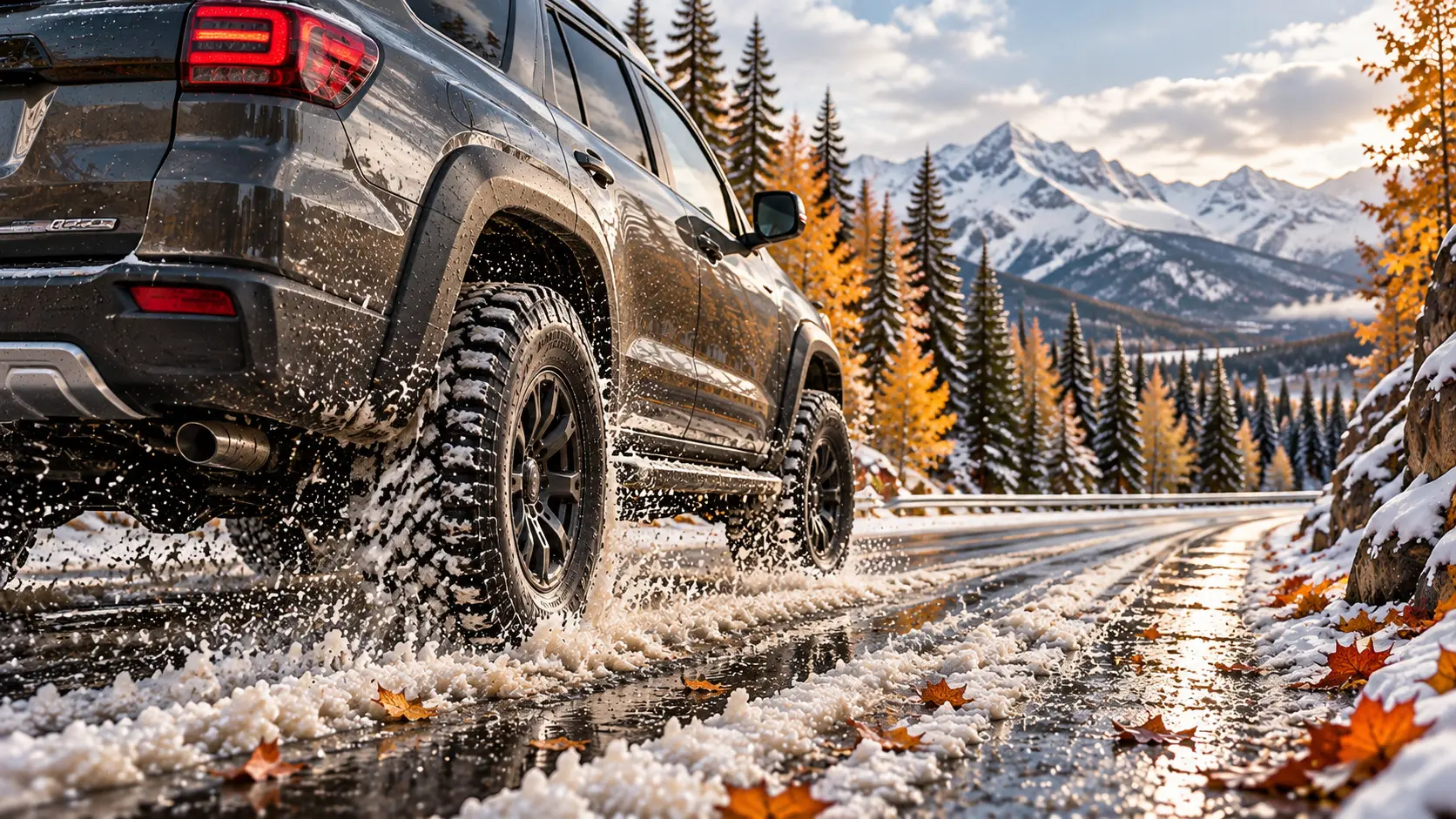
Trail Climber RT vs Snow & Slush: Transitioning Your Light Truck for Late Fall Driving
Late fall is one of the most unpredictable driving seasons in Canada. A morning commute can begin on cold, wet pavement, continue through muddy rural roads, and end with snow or freezing slush on the highway. For light truck owners running Trail Climber RT tires, these changing conditions raise an important question: Are rugged-terrain tires enough for late-fall driving, or is it time to switch to dedicated winter tires?
Trail Climber RT tires are designed around the demands of rugged-terrain driving, where durability, tread traction, and versatility are important considerations. However, the characteristics that help a tire perform on gravel, dirt, and uneven surfaces do not automatically translate into dependable traction on ice, packed snow, or freezing pavement.
Understanding the differences between rugged-terrain and winter tire performance can help Canadian pickup truck and light truck drivers prepare for the transition from autumn to winter.
This guide explains how Trail Climber RT tires fit into late-fall driving, what happens when temperatures drop, how snow and slush affect traction, and when changing to winter tires becomes the more appropriate decision.
Are Trail Climber RT Tires Suitable for Late-Fall Driving?
Trail Climber RT tires may be suitable for some late-fall conditions, particularly wet gravel, dirt roads, and moderate off-road use, but they should not automatically be considered substitutes for dedicated winter tires. Their suitability depends on the exact tire specification, tread condition, temperature, road surface, and expected winter weather.
Rugged-terrain tires are intended to balance on-road usability with off-road traction. This makes them appealing to drivers who use their trucks for commuting, hauling equipment, visiting worksites, and travelling on unpaved roads.
During autumn, these characteristics can be useful when roads are covered with loose gravel, fallen leaves, shallow mud, or standing water. However, late-fall driving introduces additional challenges.
- Falling temperatures: Cold weather can change how a tire’s rubber compound responds to the road.
- Wet pavement: Rain, fallen leaves, and road debris can reduce available traction.
- Slush accumulation: Heavy, wet snow can interfere with steering and braking.
- Early snowfall: Snow-covered roads require traction characteristics that differ from those needed on loose dirt.
- Black ice: Thin, difficult-to-see ice can form on bridges, shaded roads, and untreated pavement.
For drivers travelling through northern Ontario, rural Alberta, British Columbia mountain routes, or Quebec’s colder regions, these conditions may arrive well before the official beginning of winter.
TireWarehouse Tip: Do not judge a rugged-terrain tire’s winter suitability by its aggressive tread pattern alone. Check the actual sidewall markings, manufacturer specifications, and intended operating conditions before relying on it for snow-covered roads.
Understanding Trail Climber RT Rugged-Terrain Tires
Trail Climber RT belongs to the rugged-terrain tire category, which aims to combine off-road capability with practical on-road use. This category is generally positioned between traditional all-terrain and more aggressive mud-terrain tires.
Rugged-terrain tires are commonly selected for pickup trucks, light trucks, and certain SUVs that regularly encounter mixed driving surfaces.
What Does RT Mean on a Truck Tire?
RT typically stands for Rugged Terrain. The designation describes a tire category rather than a standardized winter performance certification.
Rugged-terrain designs commonly emphasize:
- Pronounced tread blocks for traction on loose surfaces.
- Open tread areas that can help release mud and debris.
- Robust construction appropriate for demanding truck applications.
- A balance between highway operation and off-road capability.
- Traction characteristics intended for gravel, dirt, and uneven terrain.
Individual tire models can differ significantly in rubber compound, tread depth, tread block arrangement, sidewall construction, and wet-road behaviour. Drivers should consult the specifications for their exact Trail Climber RT size and version rather than assuming every rugged-terrain tire performs identically.
Where Rugged-Terrain Tires Make Sense
For Canadian drivers who spend time on gravel roads, construction access routes, cottage roads, or rural properties, rugged-terrain tires can offer practical advantages over tires designed primarily for paved highways.
They may be especially useful when a truck regularly travels between paved roads and loose, uneven surfaces.
However, off-road traction and winter traction are different performance requirements. A tire that performs confidently in mud may still have difficulty maintaining grip on polished ice.
What Trail Climber RT Tires Cannot Guarantee
Without verified model-specific testing, it is not appropriate to claim that Trail Climber RT tires deliver a particular snow braking distance, ice traction rating, or winter performance advantage.
Likewise, the RT designation alone does not confirm whether a tire carries the Three-Peak Mountain Snowflake symbol.
Before winter use, verify the markings on the actual tire and consult the manufacturer’s published specifications.
Trail Climber RT vs Winter Tires: Key Differences
The main difference between rugged-terrain tires and dedicated winter tires is their intended traction environment. Rugged-terrain tires prioritize mixed-surface capability, while winter tires are engineered for cold-weather road conditions, including snow and ice.
| Driving Factor | Trail Climber RT / Rugged Terrain | Dedicated Winter Tires |
|---|---|---|
| Primary purpose | Mixed on-road and rugged off-road driving | Cold-weather road traction |
| Gravel and dirt | Generally a key design consideration | Depends on the tire model and surface |
| Mud | Open tread designs can be advantageous | Not generally the primary design priority |
| Cold pavement | Performance depends on the compound and model | Designed to retain useful cold-weather flexibility |
| Packed snow | Capability varies; verify winter certification | Designed specifically for snowy conditions |
| Ice | May provide limited grip, depending on conditions | Generally better suited, although ice remains hazardous |
| Slush | Performance depends on tread design and depth | Designed to manage winter road conditions |
| Winter certification | Must be verified on the actual tire | Typically carries the 3PMSF symbol |
| Best application | Mixed terrain without demanding winter conditions | Regular driving in freezing temperatures, snow, and ice |
Neither tire type eliminates the risks associated with freezing rain, deep slush, or black ice. Appropriate speed, following distance, and vehicle maintenance remain essential.
How Cold Temperatures Affect Light Truck Tire Performance
As temperatures fall, rubber compound behaviour changes, potentially affecting traction, braking, and handling. This is one reason Canadian drivers should evaluate seasonal tire changes before the first major snowfall.
Why the 7°C Guideline Matters
Approximately 7°C is commonly used as a practical reminder to begin considering winter tires. It is not a precise temperature at which every non-winter tire suddenly becomes unsafe.
The actual difference in traction depends on tire compound, road conditions, vehicle characteristics, and tire design.
When temperatures consistently approach or fall below 7°C, drivers should review their tire setup, especially if overnight freezing, snow, or icy roads are expected.
Winter tires are designed to perform in colder conditions, while some non-winter compounds may become less flexible as temperatures drop.
Cold Weather and Tire Pressure
Temperature changes also affect tire inflation pressure. As outside temperatures decrease, tire pressure generally falls.
A useful approximation is that tire pressure can decrease by about 1 psi for every 5–6°C drop in temperature, although actual changes vary.
Underinflated tires can contribute to:
- Uneven tread wear.
- Reduced steering responsiveness.
- Excessive heat buildup during operation.
- Increased rolling resistance.
- Reduced load-carrying capability.
Check inflation pressure when tires are cold and use the vehicle manufacturer’s recommended pressure for the tire size and loading configuration. The vehicle’s tire information placard is the starting point for standard applications.
Drivers using aftermarket LT tires, altered tire sizes, or specialized hauling setups should obtain appropriate load-and-inflation guidance rather than simply copying a pressure from the tire sidewall.
Trail Climber RT Tires in Snow: What Should Drivers Expect?
Rugged-terrain tires may provide some traction in loose snow, but an aggressive tread pattern does not establish reliable winter performance. Snow traction depends on much more than the size of the tread blocks.
Loose Snow vs Packed Snow
Loose snow and packed snow behave differently under a tire.
On loose snow, tread voids and block geometry can influence how the tire engages with the surface. Some aggressive tread designs may help a vehicle move through certain types of snow.
Packed snow presents another challenge. Repeated traffic compresses snow into a denser, sometimes polished surface that can become extremely slippery.
Dedicated winter tires typically incorporate specialized tread patterns, numerous biting edges, and cold-weather compounds to improve traction in these conditions.
A rugged-terrain tire’s ability to move through loose snow should never be taken as proof of dependable stopping performance on packed snow.
Why Braking Matters More Than Getting Moving
Pickup trucks with four-wheel drive can sometimes accelerate on slippery surfaces more easily than comparable two-wheel-drive vehicles.
However, four-wheel drive does not provide a comparable advantage when braking. All four tires must generate enough friction to slow the vehicle.
This distinction is especially important for heavier light trucks.
Even when a truck can climb a snowy driveway or move through an unplowed parking lot, it may still struggle to stop quickly on a slippery road.
Expert Reminder: Evaluate winter traction by steering control and stopping capability, not simply by whether your truck can accelerate through snow.
How Do Trail Climber RT Tires Handle Slush?
Slush traction depends on tread depth, drainage capability, tire design, speed, and the depth of the slush. Rugged-terrain tread patterns may help displace some loose material, but this does not guarantee predictable handling in heavy slush.
Slush is particularly challenging because it combines water and snow into a surface that can vary dramatically over short distances.
Why Slush Is Dangerous
When a tire encounters a significant amount of slush, it must push material away while maintaining contact with the road beneath.
If the tire cannot clear the slush effectively, available traction can decrease and the vehicle may begin to slide or lose directional stability.
This phenomenon is often called slushplaning. It shares similarities with hydroplaning, although the behaviour of water and snow mixtures is more complex.
Risks can increase when:
- Vehicle speed is too high for conditions.
- Slush accumulates in deep wheel tracks.
- Tire tread is worn.
- Water is trapped beneath snow.
- The road surface is uneven or rutted.
- The driver makes sudden steering or braking inputs.
Driving Through Slush Safely
Reduce speed before entering slushy sections, increase your following distance, and avoid sudden steering movements.
Do not use cruise control on slippery roads. Maintain smooth throttle inputs and allow additional time for braking.
If the vehicle begins to lose traction, avoid abrupt corrections and follow the vehicle manufacturer’s guidance for recovering control.
When conditions deteriorate beyond the capability of the vehicle and tires, postponing travel is the safer option.
Understanding M+S and the Three-Peak Mountain Snowflake Symbol
The M+S marking and Three-Peak Mountain Snowflake symbol are not interchangeable. Canadian drivers should understand the difference before deciding whether their rugged-terrain tires are appropriate for winter travel.
What Does M+S Mean?
M+S stands for Mud and Snow. It is a tire designation associated with certain tread characteristics.
However, an M+S marking alone does not establish that a tire has passed the standardized severe-snow traction test associated with the Three-Peak Mountain Snowflake symbol.
Many all-season, all-terrain, and rugged-terrain tires may carry M+S markings without being dedicated winter tires.
What Does 3PMSF Mean?
The Three-Peak Mountain Snowflake symbol, often abbreviated as 3PMSF, identifies tires that meet an established performance requirement for snow traction.
It is an important indicator when selecting tires for winter conditions.
However, 3PMSF certification does not mean that every qualifying tire offers the same ice braking performance, and it does not guarantee safe driving on every winter surface.
How to Check Your Trail Climber RT Tires
- Locate the markings on the tire sidewall.
- Look for the letters M+S or M/S.
- Check whether the mountain-and-snowflake symbol is present.
- Confirm the exact tire model and size.
- Review the manufacturer’s published winter-use specifications.
- Compare the tire’s certification with the legal requirements of the provinces and roads you plan to travel.
Do not assume that a tire carries the 3PMSF symbol because another rugged-terrain model does.
Canadian Winter Tire Regulations: What Light Truck Owners Need to Know
Winter tire requirements differ across Canada, and the applicable rules can depend on the province, road, vehicle type, and time of year. Drivers should verify current regulations before travelling.
| Province or Region | Important Winter Tire Considerations |
|---|---|
| Quebec | Most Quebec-registered passenger vehicles, including applicable light trucks, must use compliant winter tires from December 1 to March 15, subject to exemptions. |
| British Columbia | Designated routes require qualifying winter tires or chains during posted seasonal periods. Many routes begin requirements on October 1; some end March 31 and others April 30. |
| Ontario | No general province-wide mandatory winter tire law for passenger vehicles, but winter tires are strongly recommended for challenging conditions. |
| Alberta | No general province-wide mandatory winter tire law for passenger vehicles; winter preparation remains important. |
| Atlantic Canada | Requirements and recommendations vary; drivers should verify local rules and road conditions. |
| Prairie Provinces | Drivers should prepare for freezing temperatures, blowing snow, and icy highways even where general winter tire mandates do not apply. |
Quebec Winter Tire Requirements
Quebec has specific winter tire requirements for most passenger vehicles registered in the province, including light trucks covered by the legislation.
Qualifying tires generally need the recognized winter tire pictogram, subject to applicable legal provisions and exemptions.
Drivers should consult Société de l’assurance automobile du Québec (SAAQ) for current rules, vehicle applicability, and exemptions.
British Columbia Mountain Highway Requirements
British Columbia uses winter tire and chain requirements on designated routes.
For many passenger vehicles, qualifying tires may display M+S or the mountain-and-snowflake symbol, subject to minimum tread depth and other applicable requirements.
On designated routes, the minimum winter tire tread depth for applicable passenger vehicles is generally 3.5 mm.
Commercial vehicles and certain heavier trucks may have additional chain and equipment obligations.
Review British Columbia’s official winter driving guidance before travelling through mountain passes.
Meeting a legal minimum does not necessarily mean a tire is the best option for frequent icy or snowy driving.
When Should You Switch from Trail Climber RT to Winter Tires?
Consider switching before sustained cold weather, recurring frost, or expected snow and ice become part of your normal driving conditions. Waiting for a major storm can leave drivers unprepared.
For many Canadian light truck owners, the appropriate changeover period occurs during October or November, although northern and mountainous regions may require earlier preparation.
Signs It Is Time to Make the Change
- Daily temperatures are consistently near or below 7°C.
- Overnight temperatures frequently fall below freezing.
- Snow or freezing rain appears in the forecast.
- Your regular commute includes bridges, hills, or untreated roads.
- You frequently drive early in the morning or late at night.
- Your region has seasonal winter tire requirements.
- You regularly travel with passengers, equipment, or heavy loads.
What If Your Trail Climber RT Tires Have 3PMSF Certification?
If your exact Trail Climber RT tires carry the 3PMSF symbol, they have met a defined snow traction performance requirement.
That may make them more suitable for certain winter applications than a rugged-terrain tire without severe-snow certification.
However, a 3PMSF-rated rugged-terrain tire is not necessarily equivalent to a dedicated winter tire, particularly on ice or extremely cold pavement.
Drivers facing frequent freezing rain, icy highways, or prolonged winter conditions may still benefit from a dedicated winter tire setup.
Late-Fall Tire Inspection Checklist for Light Trucks
A thorough tire inspection before winter helps identify wear, inflation issues, and damage that could become more serious as road conditions deteriorate.
1. Measure Tread Depth
Tread depth influences the tire’s ability to evacuate water and interact with snow-covered surfaces.
Although 1.6 mm is a common minimum tread depth benchmark for passenger tires, it is not an appropriate target for dependable winter performance.
Many tire specialists recommend considering winter tire replacement around 4 mm of remaining tread, particularly when snow and slush are common.
Use a tread depth gauge and measure several locations across each tire.
2. Inspect for Uneven Wear
Check for shoulder wear, centre wear, cupping, or irregular tread patterns.
These conditions may indicate inflation problems, alignment issues, suspension wear, or other mechanical concerns.
3. Check Tire Pressure
Measure tire pressure before driving, ideally after the vehicle has been parked long enough for the tires to cool.
Check all four tires and the spare, if equipped.
4. Inspect Sidewalls and Tread
Look for:
- Bulges or bubbles.
- Exposed cords.
- Deep cuts.
- Embedded objects.
- Unusual cracking.
- Damage from rocks or potholes.
Have suspected structural damage assessed by a qualified tire professional.
5. Verify Load and Speed Ratings
Light trucks may carry heavy equipment, trailers, or other substantial loads.
Replacement tires must be appropriate for the vehicle’s load requirements and intended operation.
Consult the vehicle manufacturer’s recommendations and qualified tire fitment guidance before changing tire sizes, load ranges, or speed ratings.
6. Review Tire Age
Locate the DOT tire identification number and identify the manufacturing date code.
The final four digits of the date portion indicate the week and year of manufacture.
Tire age alone does not determine condition, but ageing, storage history, exposure, and visible deterioration all matter.
Follow the tire and vehicle manufacturers’ inspection and replacement guidance.
How to Prepare Your Light Truck for Late-Fall Driving
Preparing a light truck for late fall requires more than selecting the right tires. Brakes, visibility, suspension, and vehicle loading can all influence safety on wet or slippery roads.
Essential Vehicle Preparation Steps
- Inspect the brakes: Have worn pads, damaged rotors, or unusual braking behaviour evaluated.
- Check wheel alignment: Poor alignment can accelerate tire wear and affect handling.
- Inspect suspension components: Worn shocks and steering components can reduce vehicle control.
- Test the battery: Cold weather places additional demands on starting systems.
- Use appropriate washer fluid: Select fluid suitable for expected freezing temperatures.
- Inspect windshield wipers: Replace worn blades before snow and freezing rain arrive.
- Check exterior lights: Shorter daylight hours make visibility especially important.
- Prepare an emergency kit: Include warm clothing, a flashlight, basic supplies, and emergency contact information.
Pay Attention to Truck Loading
Payload, trailer tongue weight, and cargo placement can affect how a pickup truck handles.
Secure cargo properly, respect the vehicle’s gross vehicle weight rating and axle ratings, and maintain appropriate tire inflation for the load.
Do not assume that adding weight to the truck bed is a universal solution for improving winter traction. Improper loading can negatively affect braking, steering, and stability.
Driving Tips for Wet Roads, Early Snow, and Freezing Conditions
Smooth driving inputs and conservative speeds are essential when traction becomes unpredictable. Even properly equipped light trucks require additional stopping distance in adverse conditions.
On Wet Pavement
- Reduce speed during heavy rainfall.
- Avoid standing water when possible.
- Increase following distance.
- Inspect tires regularly for worn tread.
- Avoid abrupt steering inputs.
On Snow-Covered Roads
- Accelerate gradually.
- Brake early and smoothly.
- Keep additional distance from other vehicles.
- Avoid unnecessary lane changes.
- Be especially cautious on hills and curves.
On Potentially Icy Roads
- Watch for bridges and overpasses that may freeze before nearby pavement.
- Use extra caution in shaded areas.
- Avoid cruise control.
- Do not rely on four-wheel drive to shorten braking distance.
- Delay travel when freezing rain creates hazardous conditions.
Electronic stability control, anti-lock brakes, and traction control can help drivers maintain control in certain situations, but these systems cannot create traction that the tires and road surface do not provide.
Should You Choose Rugged-Terrain, All-Weather, or Winter Tires?
The best tire category depends on how and where you drive, not simply on the appearance of the tread. Canadian light truck owners should consider their daily routes, expected weather, and off-road requirements.
| Driving Situation | Category Worth Considering | Reason |
|---|---|---|
| Frequent gravel roads and moderate off-road driving | Rugged-terrain tires | Designed for mixed surfaces and rougher terrain |
| Year-round driving with occasional snow | 3PMSF-rated all-weather tires | Can provide a year-round compromise where conditions allow |
| Regular snow and freezing temperatures | Dedicated winter tires | Purpose-built for cold-weather road traction |
| Frequent icy highways | Dedicated winter tires with suitable ice performance | Ice traction should be a priority |
| Winter off-road work | Application-specific winter-capable LT tires | Requires balancing winter traction, load capacity, and terrain demands |
| Mountain highway travel | Legally compliant winter equipment appropriate to conditions | Route regulations and rapidly changing weather are critical |
All-Weather vs All-Season Tires
All-weather tires are generally designed to remain in service throughout the year while offering stronger winter capability than many conventional all-season tires.
Many all-weather models carry the 3PMSF symbol.
Conventional all-season tires typically prioritize moderate conditions and may not offer the same winter traction.
However, tire categories contain considerable variation. Compare actual test results, load ratings, tire sizes, and manufacturer specifications before buying.
When Dedicated Winter Tires Are the Better Choice
Dedicated winter tires are particularly worth considering when your truck regularly encounters packed snow, ice, freezing rain, or sustained sub-zero temperatures.
They are also a strong option for drivers who cannot easily postpone travel during severe winter weather.
For a truck used on demanding winter worksites, select a winter tire that also meets the vehicle’s load and durability requirements.
Common Mistakes Light Truck Owners Make Before Winter
Many seasonal tire problems begin with incorrect assumptions about tread design, four-wheel drive, or the timing of winter preparation. Avoiding these mistakes can improve readiness for late-fall weather.
Mistake 1: Assuming Aggressive Tread Means Winter Traction
Large tread blocks may help on loose surfaces but do not guarantee dependable ice traction or cold-weather braking.
Mistake 2: Waiting for the First Major Snowstorm
Changing tires only after roads become snow-covered can create unnecessary risk and make appointment availability more difficult.
Mistake 3: Ignoring Tire Pressure
Seasonal temperature drops can reduce inflation pressure enough to affect wear and handling.
Mistake 4: Mixing Incompatible Tire Types
Mixing winter and non-winter tires, or using tires with substantially different characteristics, can create handling imbalances.
For winter driving, use a properly matched set of four suitable tires, following vehicle and tire manufacturer requirements.
Mistake 5: Assuming Four-Wheel Drive Replaces Winter Tires
Four-wheel drive assists with distributing driving torque, but it cannot overcome insufficient tire grip during braking or cornering.
Mistake 6: Ignoring Provincial Requirements
A tire that is legally acceptable in one province may not meet the requirements for another route or jurisdiction.
Late-Fall Tire Changeover: A Practical Decision Checklist
Use your actual driving conditions to determine whether to continue using Trail Climber RT tires or prepare a winter tire changeover.
- Have you confirmed the winter markings on your exact tires?
- Is your remaining tread depth suitable for expected conditions?
- Are overnight temperatures regularly below freezing?
- Do you encounter packed snow, slush, or black ice?
- Will you travel through designated winter tire routes?
- Does your truck carry heavy loads or tow during winter?
- Do you regularly drive on untreated rural roads?
- Are your tires properly inflated and free from damage?
- Do you have access to appropriate winter tires before severe weather arrives?
If you frequently encounter freezing temperatures and slippery roads, a dedicated winter setup is generally the more appropriate choice than relying solely on an unverified rugged-terrain tire.
Frequently Asked Questions About Trail Climber RT Tires and Late-Fall Driving
1. Are Trail Climber RT tires good in snow?
Trail Climber RT snow performance depends on the exact tire specification, tread condition, and type of snow. Rugged-terrain tread may provide useful traction on certain loose surfaces, but it does not guarantee dependable performance on packed snow or ice. Check the tire’s winter certification and manufacturer guidance.
2. Are Trail Climber RT tires winter-rated?
The RT designation alone does not establish winter certification. Inspect the actual tire for the Three-Peak Mountain Snowflake symbol and verify the manufacturer’s specifications for the exact model and size.
3. Can I drive Trail Climber RT tires through slush?
They may be capable of operating in some slushy conditions, but performance depends on tread depth, tire design, speed, and slush accumulation. Deep slush can significantly reduce control regardless of tire category.
4. What is the difference between rugged-terrain and winter tires?
Rugged-terrain tires prioritize versatility across pavement and rougher surfaces. Dedicated winter tires are specifically designed for cold-weather traction, including snow and ice. Their rubber compounds and tread characteristics serve different priorities.
5. At what temperature should I switch to winter tires?
Consistent temperatures around 7°C or lower are a useful reminder to consider changing tires. Expected snow, freezing rain, local laws, and road conditions are more important than waiting for one exact temperature.
6. Is M+S enough for Canadian winter driving?
Not necessarily. M+S does not represent the same severe-snow traction certification as 3PMSF. Legal requirements also vary. For example, certain designated British Columbia routes accept qualifying M+S tires, while Quebec generally requires compliant winter tires for vehicles covered by its winter tire law.
7. Do I need winter tires if my truck has four-wheel drive?
Four-wheel drive does not replace appropriate winter tires. It can help with acceleration, but braking and steering still depend heavily on tire traction.
8. How much tread depth should winter tires have?
Winter tire performance generally decreases as tread wears. Many specialists recommend considering replacement at approximately 4 mm of remaining tread for snow and slush use. Always follow applicable legal requirements and manufacturer recommendations.
9. Can I use rugged-terrain tires year-round in Canada?
That depends on the tire’s specifications, your local climate, provincial regulations, and driving conditions. Some winter-certified rugged-terrain tires may be suitable for certain year-round applications, but dedicated winter tires can remain preferable for frequent icy conditions.
10. Are rugged-terrain tires better than all-season tires in snow?
Not automatically. A rugged tread pattern can be advantageous on some loose surfaces, but snow and ice performance depend on the entire tire design. A winter-certified all-weather tire may outperform a non-winter-rated rugged-terrain tire in particular winter conditions.
11. Does cold weather reduce tire pressure?
Yes. Inflation pressure generally decreases as temperatures fall. Check tire pressure regularly during seasonal changes and use the correct cold inflation pressure for your vehicle and loading requirements.
12. Can I tow a trailer with Trail Climber RT tires in late fall?
Towing suitability depends on the tire’s load rating, vehicle requirements, trailer weight, inflation pressure, and road conditions. Slippery pavement increases braking and stability risks. Confirm that your complete towing setup is suitable for the expected weather.
13. When do winter tire requirements begin in British Columbia?
On many designated British Columbia roads, winter tire and chain requirements begin October 1. End dates vary by route, commonly March 31 or April 30. Always check the latest posted requirements before travelling.
14. What should I do if my truck starts sliding on slush?
Avoid abrupt steering, braking, or acceleration. Look toward a safe path, make smooth corrections, and follow your vehicle manufacturer’s guidance for skid recovery. Reduce speed substantially when conditions become unpredictable, and stop travelling if the road is unsafe.
Final Recommendation: Prepare Your Trail Climber RT-Equipped Truck Before Winter Arrives
Trail Climber RT tires can be a practical choice for light truck drivers who need rugged-terrain capability, but late-fall snow, slush, and freezing temperatures require a separate assessment of winter traction.
The most important step is to understand what your actual tires are designed and certified to do.
If your driving consists mainly of wet pavement, gravel, and occasional off-road use before winter conditions arrive, properly maintained rugged-terrain tires may remain suitable.
However, if your regular routes include icy highways, packed snow, freezing rain, or extended sub-zero temperatures, dedicated winter tires are generally the stronger choice.
Before making a decision, inspect tread depth, verify sidewall markings, check inflation pressure, review local regulations, and consider the demands of your specific truck.
At TireWarehouse.ca, Canadian drivers can explore tire options suited to their vehicles and seasonal driving needs. Compare appropriate tire sizes, load ratings, and winter performance characteristics before selecting a new set.
The right late-fall tire strategy is not simply about getting through the first snowfall. It is about maintaining predictable control as Canadian road conditions transition toward winter.
Recommended Related Reading
Continue preparing your light truck for changing Canadian driving conditions with these related topics:
- Rugged-Terrain vs All-Terrain Tires: Learn how RT and AT tire designs differ in off-road traction, comfort, and daily driving performance.
- All-Weather vs Winter Tires in Canada: Understand when year-round tires are practical and when dedicated winter tires are worth considering.
- How to Read Tire Sidewall Markings: Decode M+S, 3PMSF, load indexes, speed ratings, and tire size information.
- Winter Tire Tread Depth Guide: Learn why tread depth matters for snow traction, braking, and slush evacuation.
- Light Truck Tire Pressure Guide: Understand cold inflation pressure, load capacity, and seasonal pressure adjustments.
- Canadian Winter Tire Laws by Province: Review the regulations and seasonal requirements that may affect your driving routes.
In stock & ready to ship
Find the tires you need, delivered from a warehouse near you