
A practical Canadian guide to choosing, checking, and maintaining Summit Hi Road ST trailer tires before towing a boat, camper, utility trailer, or RV this summer.
A practical TireWarehouse.ca recap for Canadian drivers: the tire checks to make before your next summer road trip, cottage drive, highway run, or family getaway.
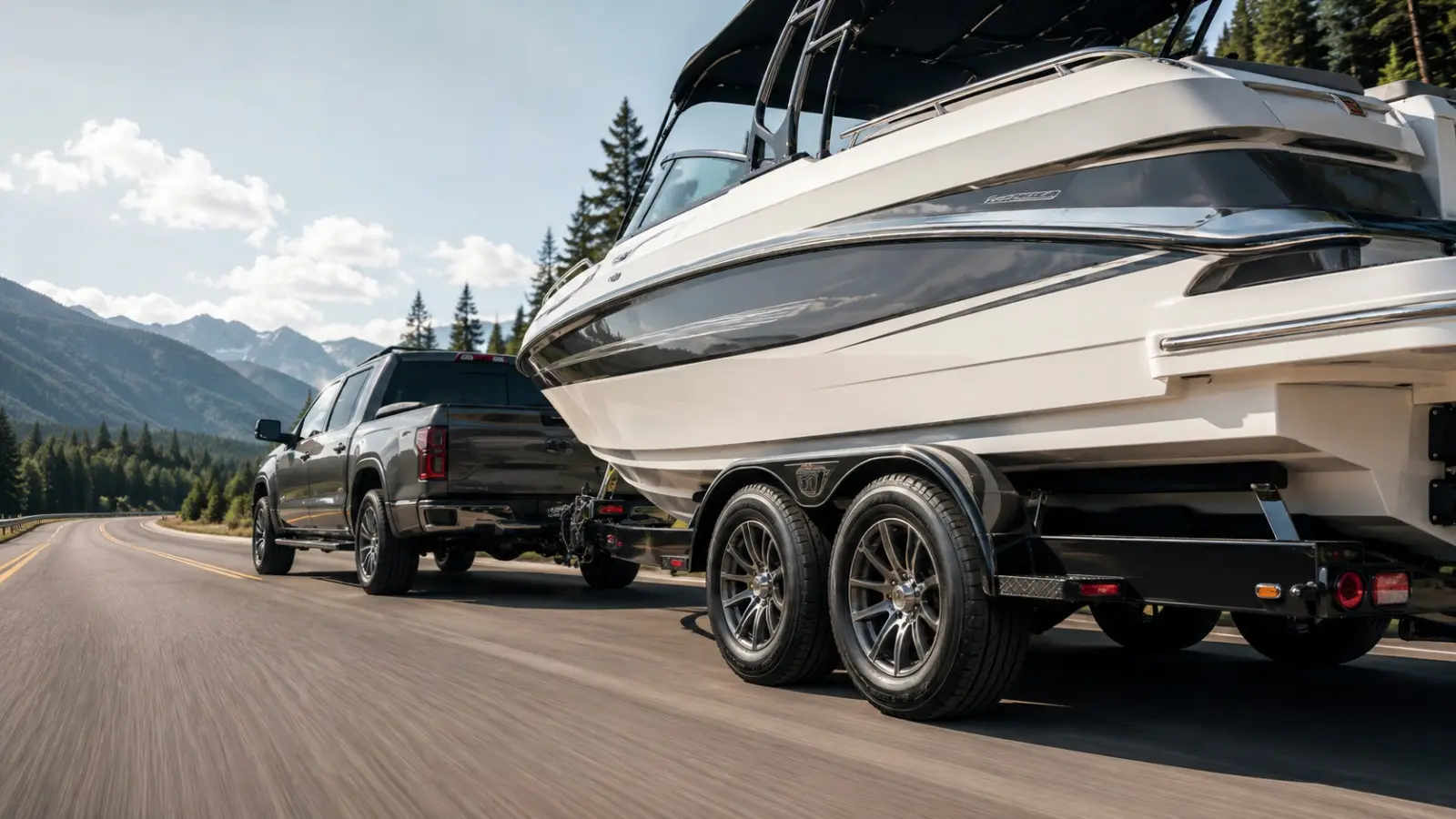
Towing a Boat or Camper This Summer? How Summit Hi Road ST Trailer Tires Keep Your Load Stable
Summer towing in Canada can be harder on trailer tires than many drivers expect. A loaded boat trailer heading to the lake, a camper travelling across the Trans-Canada Highway, or a utility trailer packed for a long weekend all place steady weight, heat, and side-to-side forces on a small contact patch of rubber.
That is why the trailer tires you choose matter. Summit Hi Road ST trailer tires are built for towed trailer applications, with features aimed at strength, durability, heat management, and highway stability. For Canadian drivers towing through summer rain, construction zones, cottage roads, mountain passes, ferry terminals, and long highway stretches, the right ST trailer tire can help your trailer track more confidently behind the vehicle.
Just as important, no trailer tire can correct unsafe loading, poor inflation, worn suspension, loose bearings, or an overloaded trailer. The best towing setup combines the right tire size, correct load range, proper cold inflation pressure, balanced cargo, and regular inspection before every trip.
Summit Hi Road ST trailer tires are designed for the demands of towed loads
Summit Hi Road ST trailer tires are made for trailers, not passenger vehicles, which means their job is to support load, resist heat, and help the trailer track steadily behind the tow vehicle.
The “ST” in ST trailer tire stands for Special Trailer. That matters because trailer tires have a different job than the tires on your SUV, pickup, or van. Your tow vehicle tires are responsible for steering, braking, acceleration, ride comfort, and handling. Trailer tires are primarily responsible for load carrying, straight-line tracking, stability, and durability under sustained weight.
Summit describes the Hi Road ST as an ST tire designed for towed trailer applications, with radial construction, a tread designed to reduce excessive heat build-up, a tread pattern intended for a stable and quiet ride, a rubber compound engineered for low rolling resistance, and nylon overlay on 15-inch and 16-inch sizes. :contentReference[oaicite:0]{index=0}
For summer towing, those features are especially relevant because trailer tires often work under heavy load for long periods. They may sit for weeks, then suddenly carry a boat, camper, ATV, tools, camping gear, coolers, water tanks, and luggage at highway speeds in hot weather.
Expert tip: Trailer tire stability is not just about the tire brand. It depends on using the correct tire size, load range, wheel rating, valve stem, inflation pressure, and load distribution for your specific trailer.
Trailer stability depends on load, pressure, heat, and sidewall control
A stable trailer is the result of several factors working together: the trailer must be loaded properly, the tires must be inflated correctly, and the tires must be strong enough for the weight they carry.
When a trailer feels unstable, drivers often describe it as sway, wandering, bouncing, vibration, or a “loose” feeling behind the tow vehicle. Tires are not the only cause, but they play a major role because they are the trailer’s only connection to the road.
Common stability issues can come from:
- Underinflated tires that flex too much, build heat, and feel soft under load.
- Overloaded tires that are carrying more weight than their load rating allows.
- Uneven cargo distribution that creates too much or too little tongue weight.
- Mismatched tires with different sizes, load ranges, tread depths, or wear patterns.
- Old or weather-cracked tires that may look acceptable but have weakened over time.
- Worn trailer components such as bearings, suspension parts, shackles, hubs, or bent axles.
Canadian tire regulations define load rating as the maximum load a tire is rated to carry at a given inflation pressure, and maximum load rating as the load rating at the tire’s maximum permissible inflation pressure. :contentReference[oaicite:1]{index=1} In practical terms, this means a trailer tire’s sidewall information is not just a label. It tells you whether the tire can support the real loaded weight of your trailer.
Radial construction helps support highway towing comfort and control
Radial construction helps a trailer tire run more smoothly and maintain a more stable footprint during highway towing.
Many modern trailer owners prefer radial ST tires for highway use because they are designed to flex in a controlled way, reduce heat compared with older bias-ply designs in many highway applications, and provide a smoother ride. For campers, boat trailers, enclosed trailers, and small utility trailers that spend most of their time on paved roads, a radial ST tire is often the practical choice.
The Summit Hi Road ST uses radial construction, which the manufacturer identifies as a feature for strength and durability. :contentReference[oaicite:2]{index=2} That is useful when towing on long summer drives, where a tire may need to handle steady speed, changing pavement temperatures, rain grooves, bridge expansion joints, and crosswinds.
Why radial trailer tires matter on Canadian highways
Summer towing in Canada can mean long stretches of highway with few stops. A camper leaving the Greater Toronto Area for Algonquin Park, a boat trailer heading from Calgary toward the Okanagan, or a family towing across New Brunswick toward the coast may spend hours at highway speed.
On these drives, tire heat can build quickly. Hot pavement, heavy loads, underinflation, and sustained speed can all increase stress. A trailer tire designed for stable highway towing helps reduce the risk of wandering and excessive flex, provided it is correctly inflated and not overloaded.
Heat management is critical when towing boats and campers in summer
Heat is one of the biggest enemies of trailer tires, especially when a loaded trailer is travelling for hours in warm weather.
Trailer tires are often smaller than tow vehicle tires and may rotate more times per kilometre. When underinflated or overloaded, they flex more than intended. That flex creates heat. Add summer pavement, long grades, heavy cargo, and stop-and-go cottage traffic, and tire stress can rise quickly.
Summit states that the Hi Road ST tread is designed to reduce excessive heat build-up. :contentReference[oaicite:3]{index=3} That feature matters for summer towing because heat can accelerate wear and increase the chance of tire failure, especially if the tire is already old, damaged, underinflated, or carrying too much weight.
Heat warning signs to watch for
During fuel stops or rest breaks, do a careful walkaround. Do not place your hand directly on a tire or hub if it may be hot. Instead, look for visible warning signs and use caution.
- One tire looks lower than the others.
- The trailer pulls, wanders, or vibrates more than usual.
- You notice bulges, cracks, cuts, or exposed cords.
- One wheel area smells hot or unusual.
- The tread shows uneven wear, cupping, or rapid shoulder wear.
- The valve stem looks cracked, loose, or damaged.
If something looks wrong, slow down safely, pull over where it is legal and safe, and inspect the trailer before continuing. Never continue towing on a tire that appears damaged or severely underinflated.
Load range and inflation pressure must match your trailer
The correct Summit Hi Road ST tire is the one that matches your trailer’s required size, load range, wheel capacity, and cold inflation pressure.
Before buying trailer tires, check the trailer placard, owner’s manual, existing tire sidewall, axle rating, and wheel rating. Do not upgrade or change sizes based only on appearance. A higher load range may require a higher inflation pressure, and the wheel and valve stem must be rated for that pressure.
Transport Canada advises drivers to measure tire pressure at least once a month with a good-quality gauge, check pressure when tires are cold, and remember the spare. :contentReference[oaicite:4]{index=4} Ontario’s Ministry of Transportation also advises checking the trailer hitch, wheels, tires, lights, load distribution, and load security before each trip, and checking tire pressure with the trailer loaded while the tires are still cold. :contentReference[oaicite:5]{index=5}
| What to Check | Why It Matters | What to Do Before Towing |
|---|---|---|
| Tire size | The tire must fit the trailer, wheel, fender clearance, and axle setup. | Match the trailer placard or manufacturer-approved replacement size. |
| Load range | The tire must support the loaded trailer weight safely. | Choose a load range that meets or exceeds trailer requirements without exceeding wheel limits. |
| Cold inflation pressure | Incorrect pressure can increase heat, wear, sway, and tire failure risk. | Check pressure cold before travel, especially with the trailer loaded. |
| Speed rating | Trailer tires are rated for specific speed limits under proper load and inflation. | Follow the tire’s rating and drive slower in heat, rain, wind, or heavy traffic. |
| Tread and sidewall condition | Cracks, bulges, cuts, or uneven wear can signal unsafe tire condition. | Inspect all tires, including the spare, before every summer trip. |
| Wheel and valve stem rating | A tire upgrade may require higher pressure than the wheel or valve can handle. | Confirm the wheel and valve stem are compatible with the tire pressure. |
The tread pattern helps the trailer track smoothly behind the tow vehicle
A stable tread pattern helps reduce unnecessary movement, vibration, and road noise while the trailer follows the tow vehicle.
Unlike a performance tire on a car, a trailer tire does not need aggressive cornering behaviour. It needs predictable tracking, load support, and consistent contact with the road. The Summit Hi Road ST tread pattern is designed to deliver a stable and quiet ride. :contentReference[oaicite:6]{index=6}
This can be useful when towing a camper on long highway stretches or a boat trailer over mixed pavement. A trailer that tracks smoothly feels less tiring to tow, especially when passing transport trucks, driving through open prairie crosswinds, or descending long grades in British Columbia or Alberta.
Stable tires still need proper trailer setup
Even a well-designed trailer tire cannot prevent sway if the load is placed incorrectly. For many trailers, too little tongue weight can make the trailer feel unstable. Too much tongue weight can overload the rear of the tow vehicle and affect steering and braking. Always follow the trailer and tow vehicle manufacturer’s guidance for loading, hitch setup, tongue weight, and weight-distribution equipment where applicable.
Low rolling resistance can help reduce towing effort
A trailer tire with lower rolling resistance can help the trailer roll more efficiently, although real-world fuel use still depends on speed, load, wind, terrain, and tow vehicle condition.
Summit says the Hi Road ST uses a rubber compound engineered to provide low rolling resistance. :contentReference[oaicite:7]{index=7} For drivers towing a camper, boat, or utility trailer over long distances, rolling resistance is one part of the overall towing equation.
However, it is important not to overstate the benefit. A tire alone will not make towing feel effortless. Trailer weight, aerodynamics, tire pressure, wheel bearings, brake drag, route elevation, and driving speed can all have a larger effect. The practical takeaway is simple: choose a trailer tire designed for the job, keep it properly inflated, and avoid unnecessary load.
Summit Hi Road ST is a strong fit for many summer trailer applications
Summit Hi Road ST trailer tires are a practical option for drivers who need trailer-specific tires for summer towing, highway use, and loaded recreational travel.
They may be suitable for many common Canadian towing setups, provided the exact size and load range match the trailer’s requirements. This can include:
- Boat trailers heading to lakes, marinas, and launch ramps.
- Travel trailers and campers used for summer road trips.
- Utility trailers carrying landscaping equipment, tools, or renovation materials.
- Enclosed cargo trailers used for motorcycles, ATVs, or business equipment.
- Small livestock or specialty trailers when the tire size and load range are correct.
They are not a substitute for checking the trailer’s gross vehicle weight rating, axle rating, cargo weight, hitch rating, tow vehicle rating, and provincial towing requirements. When in doubt, confirm fitment before ordering.
Use this summer towing checklist before every trip
A five-minute trailer tire inspection can prevent many common towing problems before they interrupt your trip.
Before heading out, especially before a long weekend, cottage trip, camping route, or boat launch day, check the following:
- Confirm tire pressure cold. Check all trailer tires and the spare before driving.
- Inspect tread depth. Replace tires that are worn, damaged, or unevenly worn.
- Look at the sidewalls. Check for cracks, bulges, punctures, weathering, or curb damage.
- Verify lug nut torque. Follow the trailer or wheel manufacturer’s torque specification.
- Check wheel bearings and hubs. Listen for noise and look for heat, grease leakage, or looseness.
- Balance the load. Keep heavy items low and secured, and follow tongue weight recommendations.
- Test trailer lights and brakes. Make sure brake lights, turn signals, running lights, and brakes work.
- Inspect the hitch and safety chains. Confirm the coupler is locked, chains are crossed, and breakaway cable is attached correctly.
- Secure cargo. Boats, coolers, propane tanks, bicycles, tools, and camping gear should not shift.
- Drive for conditions. Reduce speed in rain, wind, construction zones, gravel, and heavy traffic.
Expert tip: Check trailer tire pressure before the sun heats one side of the trailer. Direct sunlight can affect readings, especially when the trailer has been parked for hours at a campsite, marina, or driveway.
Common trailer tire mistakes can reduce stability
Most trailer tire problems are preventable when drivers avoid a few common mistakes.
Mistake 1: Using passenger tires on a trailer
Passenger vehicle tires are not designed for the same load-carrying behaviour as ST trailer tires. Use the tire type specified for your trailer unless the trailer manufacturer provides an approved alternative.
Mistake 2: Replacing only one tire on a worn set
If one trailer tire fails from age, heat, cracking, or wear, the others may be in similar condition. Replacing only one tire can leave mismatched tread depth, age, and performance across the axle.
Mistake 3: Ignoring trailer tire age
Trailer tires can age even when tread depth looks acceptable. Sun exposure, storage, ozone, underuse, and seasonal sitting can all contribute to cracking and weakening. Check the DOT date code and inspect condition regularly.
Mistake 4: Loading the trailer by guesswork
Guessing cargo weight can overload the tires or create sway. Water tanks, batteries, propane, tools, firewood, coolers, and gear add up quickly. When possible, weigh the loaded trailer or visit a scale before a major trip.
Mistake 5: Towing too fast for conditions
Even when a trailer tire has an appropriate speed rating, real-world conditions matter. Slow down for heat, rain, wind, rough pavement, steep descents, and construction zones.
Boat trailers need extra attention because water, ramps, and storage are hard on tires
Boat trailers face unique summer conditions because they often move between highways, gravel lots, wet ramps, and long storage periods.
A boat trailer may sit outside for months, then carry a heavy load to a lake at highway speed. Tires may be exposed to UV, moisture, standing water, road salt residue, and uneven storage surfaces. Launch ramps also add stress because the trailer moves from dry pavement to wet inclines while carrying a concentrated load.
For boat trailers, pay special attention to:
- Sidewall cracks from sun exposure.
- Flat-spotting after long storage.
- Rust or corrosion around wheels, stems, and hubs.
- Bearing condition after repeated water exposure.
- Correct inflation before loading the boat and gear.
- Secure transom straps and bow connection to reduce load movement.
Camper and RV trailers need stable tires because weight shifts during travel
Campers carry many items that can shift, settle, or concentrate weight on one side of the trailer.
Unlike a simple utility trailer, a camper may include water tanks, food, luggage, propane cylinders, batteries, awnings, bicycles, mattresses, tools, outdoor furniture, and appliances. If the trailer is loaded unevenly, one tire or axle position may carry more than expected.
Before a camping trip, check where the weight is located. Keep heavy items low and balanced. Secure cabinet contents. Empty unnecessary water when appropriate and legal. Check the tire pressure with the trailer loaded and cold, not after you have already driven several kilometres.
How to choose the right Summit Hi Road ST size
The right Summit Hi Road ST size is the one that matches your trailer’s required size, load capacity, rim diameter, and inflation needs.
Start with the tire size on your current trailer tire sidewall. It may look like ST205/75R15, ST225/75R15, or another ST size. Then check the trailer placard or owner’s manual to confirm the original equipment size and recommended pressure.
When comparing options, pay attention to:
- ST marking: Confirms the tire is intended for trailer use.
- Section width: The first number in the tire size, such as 205 or 225.
- Aspect ratio: The second number, showing sidewall height as a percentage of width.
- Rim diameter: The wheel diameter in inches, such as 14, 15, or 16.
- Load range: Indicates load-carrying capability and pressure requirements.
- Load index: A numerical code tied to load capacity.
- Speed rating: A letter code indicating the tire’s rated speed under proper conditions.
Do not assume a larger or heavier-rated tire will automatically fit. Confirm fender clearance, axle spacing, wheel width, bolt pattern, valve stem rating, and wheel pressure rating before changing size or load range.
Final recommendation: pair the right trailer tire with careful towing habits
Summit Hi Road ST trailer tires are a smart option to consider when you need trailer-specific tires for summer towing stability, load support, and highway travel.
Their trailer-focused radial design, heat-conscious tread, stable ride pattern, low rolling resistance compound, and nylon overlay on select sizes make them a strong fit for many boat, camper, RV, and utility trailer applications. But the safest towing setup still depends on matching the tire to the trailer, checking cold pressure, respecting load ratings, and driving for conditions.
Before your next summer trip, inspect your current trailer tires carefully. If they are cracked, old, unevenly worn, under-rated, or mismatched, replacing them before the trip is far less stressful than dealing with a roadside tire failure with a loaded trailer behind you.
Frequently Asked Questions About Summit Hi Road ST Trailer Tires
Are Summit Hi Road ST tires good for towing a camper?
Summit Hi Road ST trailer tires can be a good fit for many campers when the size, load range, speed rating, and cold inflation pressure match the trailer’s requirements. Always confirm the trailer placard and loaded weight before buying.
Can I use Summit Hi Road ST tires on a boat trailer?
Yes, they may be suitable for many boat trailers if the required ST size and load capacity match. Boat trailers need careful inspection because tires often sit for long periods and are exposed to water, sun, ramps, and storage conditions.
What does ST mean on a trailer tire?
ST means Special Trailer. ST tires are designed for trailer load-carrying and towing stability, not for use as passenger vehicle tires.
Do trailer tires need to be inflated to the maximum pressure on the sidewall?
Trailer tire pressure should follow the trailer manufacturer’s recommended cold inflation pressure and the tire and wheel limits. Many ST tires carry their rated maximum load at the listed sidewall pressure, but you should confirm the correct pressure for your exact trailer setup.
How often should I check trailer tire pressure in summer?
Check trailer tire pressure before every towing trip and at least monthly when the trailer is in use or storage. Pressure should be checked cold, before driving, with a reliable tire gauge.
Why do trailer tires fail in hot weather?
Trailer tires commonly fail from a combination of heat, underinflation, overloading, age, damage, and sustained highway speed. Hot pavement and heavy loads increase stress, especially on tires that are already weakened or improperly inflated.
Should I replace all trailer tires at the same time?
If the tires are the same age and have similar wear, replacing them as a set often helps keep tread depth, load capacity, and performance consistent across the trailer. This is especially important for multi-tire trailers.
How do I know if my trailer tires are overloaded?
Compare the loaded trailer weight and axle weight with the combined load capacity of the tires on each axle. The safest way is to weigh the loaded trailer and confirm that the tire load range, axle rating, and GVWR are not exceeded.
Can trailer tires age out even with good tread?
Yes. Trailer tires can become unsafe from age, cracking, UV exposure, storage conditions, and internal degradation even if the tread looks deep. Check the DOT date code and inspect the sidewalls before each season.
Do I need a spare trailer tire?
Yes, carrying a properly inflated spare trailer tire is strongly recommended. The spare should match the trailer’s size, load range, and wheel requirements, and it should be inspected along with the tires on the ground.
Can I mix different trailer tire brands or load ranges?
Mixing trailer tires is not ideal because differences in size, construction, load range, tread depth, and inflation requirements can affect stability and wear. Use matching tires whenever possible.
Where can I buy Summit Hi Road ST trailer tires in Canada?
You can shop for trailer tires through TireWarehouse.ca and confirm the correct Summit Hi Road ST size and load range for your boat trailer, camper, RV, enclosed trailer, or utility trailer before ordering.
Recommended Related Reading
- Shop trailer tires for Canadian towing
- How to read tire size, load range, and speed rating on a tire sidewall
- Trailer tire pressure guide for safer towing
- Tire load rating explained for towing and hauling
- Summer road trip tire checklist for Canadian drivers
In stock & ready to ship
Find the tires you need, delivered from a warehouse near you