
Tire Aging and Winter Safety: How to Check Your Tire’s Manufacture Date Before Heavy Snow
Your winter tires may have plenty of tread left, but are they still safe for another Canadian winter? Learn how to read the DOT tire date code, recognize tire aging, and decide when to replace older tires before heavy snow, freezing temperatures, and icy roads arrive.
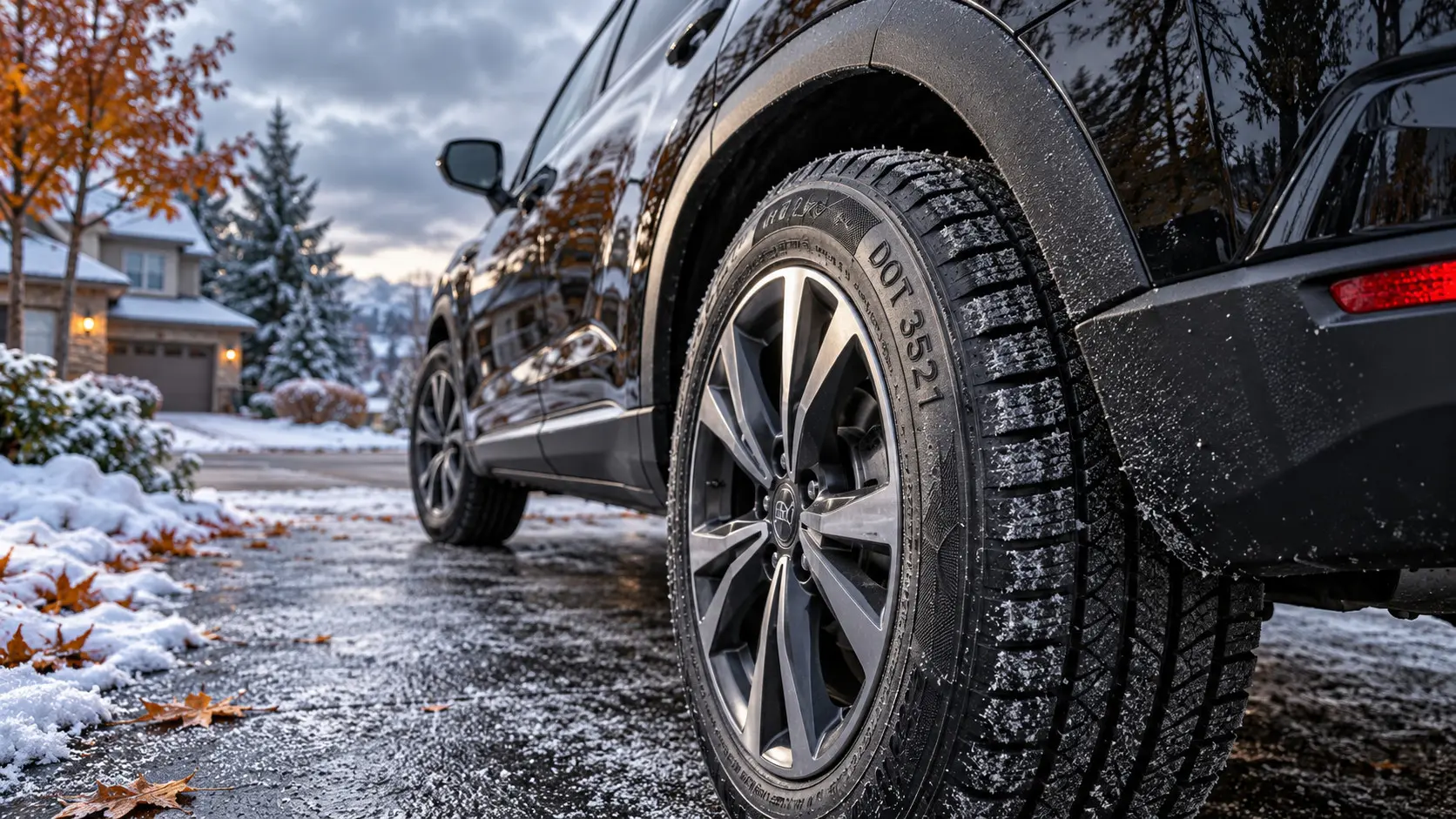
Tire Aging and Winter Safety: How to Check Your Tire’s Manufacture Date Before Heavy Snow
When the first major snowfall approaches, Canadian drivers usually focus on installing winter tires, checking tread depth, and preparing their vehicles for icy roads. However, there is another important safety factor that often gets overlooked: the age of your tires.
A tire can look perfectly acceptable from the outside, have plenty of tread remaining, and still be affected by aging. Over time, rubber compounds change, internal components can deteriorate, and exposure to heat, sunlight, oxygen, and environmental conditions can influence tire performance.
These changes deserve particular attention during Canadian winters, when drivers depend on reliable traction, predictable handling, and effective braking on snow-covered highways, freezing rain, slush, and black ice.
Fortunately, checking your tire’s manufacturing date is straightforward. Every road tire manufactured to applicable North American identification requirements carries a tire identification number that includes information about when it was produced.
Quick answer: To check your tire’s manufacture date, locate the DOT tire identification number on the sidewall and find its final four-digit date code. The first two digits represent the manufacturing week, while the last two indicate the year. For example, 3522 means the tire was manufactured during the 35th week of 2022.
In this guide, TireWarehouse.ca explains how to read tire date codes, why tire aging matters in winter, what warning signs to look for, and how to decide whether your tires are ready for another season of Canadian winter driving.
Why Tire Age Matters for Winter Driving Safety
Tire age matters because rubber and other tire components can deteriorate over time, even when a tire has not travelled many kilometres. This deterioration may affect the tire’s structural condition and its ability to perform as intended.
Winter driving places significant demands on tires. Snow, ice, freezing temperatures, and changing road surfaces require consistent contact between the tread and the pavement.
While tire age alone does not determine winter traction, an older tire may have experienced changes in its rubber compound and structure that make its overall condition less dependable.
How Tire Rubber Changes Over Time
Modern tires contain natural and synthetic rubber, reinforcing materials, steel belts, and chemical compounds designed to balance traction, durability, flexibility, and wear resistance.
As tires age, several processes may occur:
- Oxidation: Oxygen gradually reacts with components of the rubber compound, contributing to material aging.
- Heat exposure: Repeated exposure to elevated temperatures can accelerate certain aging processes.
- Ultraviolet exposure: Sunlight can contribute to visible surface deterioration, particularly on exposed sidewalls.
- Environmental exposure: Moisture, ozone, chemicals, and improper storage conditions can affect tire materials.
- Internal deterioration: Changes can occur within the tire structure without obvious external warning signs.
Not every tire ages at the same rate. Climate, storage, maintenance, inflation pressure, loading, and driving conditions all influence the aging process.
Why Aging Deserves Extra Attention Before Heavy Snow
Winter driving often reduces the margin for error. On snow and ice, available traction is already limited compared with dry pavement.
Drivers may encounter:
- Longer braking distances on slippery roads.
- Reduced steering response during sudden manoeuvres.
- Wheelspin when accelerating on packed snow.
- Slush accumulation and standing water during thawing conditions.
- Rapidly changing traction when temperatures move above and below 0°C.
A tire that is old, damaged, excessively worn, or improperly inflated can increase the difficulty of controlling a vehicle in these conditions.
TireWarehouse Winter Safety Tip: Never evaluate winter tires by tread depth alone. Check the manufacturing date, inspect the sidewalls, measure tread depth, and confirm that the tires remain suitable for winter service.
How to Find the DOT Tire Manufacture Date
The easiest way to determine a tire’s manufacturing date is to read the final four digits of its DOT tire identification number. This code identifies the week and year of production, not the date the tire was purchased or installed.
Step 1: Locate the Tire Identification Number
Look closely at the sidewall of your tire for a series of letters and numbers beginning with DOT.
The tire identification number may appear near the wheel rim or among other sidewall markings, including tire size, load index, speed rating, and manufacturer information.
On some tires, the complete identification number, including the manufacturing date, appears on only one sidewall.
If you cannot find the final four-digit code on the outward-facing side, it may be located on the inward-facing side of the tire.
Use a flashlight to inspect the visible markings. If the complete code is inaccessible, ask a tire technician to locate it safely.
Step 2: Identify the Last Four Digits
For tires manufactured since 2000, the date portion consists of four digits.
For example:
DOT XXXXXXXX 3522
The final four digits, 3522, are the manufacturing date code.
- 35: The tire was manufactured during week 35.
- 22: The tire was manufactured in 2022.
That places production around late August or early September 2022.
The remaining characters identify other manufacturing information and should not be confused with the date code.
Step 3: Calculate the Tire’s Age
Compare the manufacturing year and week with the current date to estimate how long the tire has existed.
Remember that the manufacture date is different from the installation date.
A tire manufactured in 2022 but installed in 2024 was already approximately two years old when it entered service.
Manufacturing age and time in service are both useful details when evaluating a tire’s condition.
DOT Tire Date Code Examples
| DOT Date Code | Manufacturing Date | Approximate Age in October 2026 |
|---|---|---|
| 1525 | Week 15 of 2025 | 1.5 years |
| 4023 | Week 40 of 2023 | 3 years |
| 3522 | Week 35 of 2022 | 4 years |
| 1020 | Week 10 of 2020 | 6.5 years |
| 4517 | Week 45 of 2017 | Nearly 9 years |
| 2516 | Week 25 of 2016 | More than 10 years |
These examples illustrate manufacturing age only. They do not establish whether a particular tire is safe to use.
What If Your Tire Has a Three-Digit Date Code?
Before 2000, tire date codes generally used three digits rather than four. These older codes did not always clearly distinguish the manufacturing decade.
Any tire with a pre-2000 three-digit manufacturing date code is far beyond commonly recommended tire service-life limits and should not be used for winter driving.
How Old Is Too Old for Winter Tires?
There is no universal tire age at which every tire automatically becomes unsafe, but aging tires require closer inspection and eventual replacement regardless of remaining tread.
Transport Canada advises consumers to consider tire age and follow the recommendations of tire and vehicle manufacturers. Many manufacturers recommend replacement around six to ten years, depending on the tire, its service history, and the manufacturer’s specific guidance.
Some vehicle and tire manufacturers recommend replacing tires at six years, while others specify a maximum of ten years from manufacture.
These differences are important: a tire should never be kept in service beyond the applicable manufacturer’s maximum age recommendation simply because it looks good.
Practical Tire Age Assessment Guide
| Tire Age | What It Means | Recommended Action |
|---|---|---|
| 0–3 years | Relatively recent manufacture | Perform normal condition, tread, and pressure checks. |
| 4–5 years | Aging becomes increasingly relevant | Review maintenance history and inspect carefully before winter. |
| 6–9 years | Within or beyond some manufacturers’ replacement recommendations | Arrange a professional assessment and follow the applicable replacement guidance. |
| 10 years or older | At or beyond widely used maximum service-life recommendations | Replace rather than continue using the tire, even if tread remains. |
This table is a general inspection guide, not a certification of tire safety. A damaged or deteriorated tire may need replacement at any age.
Can a Six-Year-Old Winter Tire Still Be Safe?
Possibly, depending on its manufacturer, storage history, maintenance, tread depth, physical condition, and service history.
However, six years is an important point to review the manufacturer’s recommendations. Some tires may already have reached their recommended replacement age.
Before another winter season, have older tires inspected by a qualified tire professional and replace them if the manufacturer’s guidance or their condition requires it.
Should You Replace Winter Tires After Ten Years?
Yes. Tires that have reached ten years from their manufacturing date should be replaced, even when they appear to have adequate tread, in line with widely adopted maximum-age guidance.
Aging-related deterioration may not always be visible during a basic driveway inspection.
Can Winter Tires Expire Even If They Have Never Been Used?
Yes. Unused winter tires still age because tire materials undergo chemical changes over time. However, proper storage can significantly influence how quickly deterioration occurs.
A tire stored indoors in a cool, dry environment, away from sunlight and ozone-producing equipment, may age differently from one exposed to outdoor heat and weather.
This distinction matters when buying old inventory, used tires, or a second set of winter tires.
New Old Stock Tires
New old stock refers to tires that have never been used but were manufactured some time ago.
These tires are not automatically defective. Their suitability depends on age, storage conditions, condition, and the manufacturer’s recommendations.
Before purchasing older inventory, ask:
- What is the DOT manufacturing date?
- How have the tires been stored?
- What is the manufacturer’s age-related replacement recommendation?
- Is there a manufacturer warranty, and when does coverage begin?
- Will the remaining expected service life meet your needs?
A discounted tire is not necessarily a good value if its remaining usable life is limited.
Signs Your Winter Tires May Be Too Old or Unsafe
Visible cracks, bulges, deformation, unusual vibration, and recurring air loss are warning signs that a tire needs professional attention, regardless of its age.
Not all aging-related deterioration can be seen, but regular visual inspection helps identify problems before severe winter conditions.
1. Sidewall Cracking
Inspect the sidewalls for fine cracks, especially near the tread shoulder and areas exposed to sunlight.
Cracking can indicate rubber deterioration. Extensive or deep cracks require prompt professional evaluation and may mean the tire needs replacement.
2. Cracks Between Tread Blocks
Examine the grooves and spaces between tread blocks.
Cracking in these areas may be less noticeable than sidewall damage but can still indicate deterioration.
3. Bulges or Blisters
A bulge can indicate damage to the tire’s internal structure.
Do not continue driving on a tire with a suspected structural bulge. Have it assessed and replaced as necessary before returning the vehicle to service.
4. Uneven Tread Wear
Uneven wear can result from improper inflation, alignment problems, worn suspension components, or other mechanical issues.
Although uneven wear is not proof of aging, it may reduce winter traction and signal the need for vehicle maintenance.
5. Persistent Air Pressure Loss
A tire that repeatedly loses pressure may have a puncture, damaged valve, bead sealing problem, or other defect.
Cold weather also naturally reduces tire pressure, so distinguishing normal temperature-related changes from a leak is important.
6. Unusual Vibration or Handling Changes
New vibrations, pulling, or unpredictable handling may indicate tire damage, imbalance, irregular wear, or mechanical problems.
Do not assume these symptoms are normal simply because the tires are older.
Expert Tip: If you notice cracks, bulges, unexplained pressure loss, or a sudden handling change, have the tire inspected promptly. Tire age is only one part of a complete safety assessment.
Tire Age vs. Tread Depth: Which Matters More in Winter?
Both tire age and tread depth matter, but they describe different aspects of tire condition. Adequate tread cannot reverse material aging, and a recently manufactured tire cannot compensate for severely worn tread.
Winter tires use tread blocks, grooves, and small cuts called sipes to help generate traction in snow and slippery conditions.
As tread wears, the tire generally becomes less capable of handling deep snow and slush.
Understanding Winter Tire Tread Depth
Many new winter passenger tires have tread depths around 8–10 mm or more, depending on the model.
For winter driving, a commonly recommended replacement threshold is approximately 4 mm of remaining tread, because snow performance can decline before a tire reaches the legal minimum tread depth.
In many Canadian jurisdictions, the general legal minimum tread depth for passenger tires is approximately 1.6 mm. However, legal requirements vary, and some winter-specific rules impose additional conditions.
For example, Quebec has a 1.6 mm minimum tread-depth requirement for winter tires, but that legal minimum should not be treated as the ideal depth for severe snow conditions.
| Remaining Tread Depth | Winter Driving Consideration |
|---|---|
| 8 mm or more | Typically substantial remaining tread, depending on the original design. |
| 6–7 mm | Often suitable for continued winter service if overall condition is good. |
| 4–5 mm | Monitor closely and consider replacement before demanding snow conditions. |
| Below 4 mm | Replacement is recommended for reliable winter snow performance. |
| At or below 1.6 mm | At or beyond the general legal wear limit in many jurisdictions; replace. |
Always check the applicable provincial requirements and the tire manufacturer’s recommendations.
Why an Old Tire With Deep Tread Can Still Be a Concern
Imagine two winter tires:
- Tire A: Manufactured two years ago, with 6 mm of tread and no visible damage.
- Tire B: Manufactured nine years ago, with 8 mm of tread and an unknown storage history.
Tire B has more tread, but its greater age and unknown history create additional concerns.
Neither tire can be declared safe based on those details alone. However, Tire B warrants particular attention to the manufacturer’s age limit and a professional inspection.
The important lesson is that tread depth is not a substitute for checking tire age.
Do Winter Tires Lose Grip as They Get Older?
Winter tire performance can change with age, wear, and exposure, but the extent of any traction loss depends on the tire’s construction, rubber compound, condition, and service history.
Winter tires are engineered to provide useful flexibility and traction at low temperatures.
Many feature specialized rubber compounds and tread patterns designed to help maintain grip in cold weather.
Rubber Flexibility and Cold Temperatures
Winter tire compounds are designed differently from typical summer tire compounds.
As temperatures approach and fall below approximately 7°C, winter tires can offer performance advantages over many summer and conventional all-season tires.
However, the commonly cited 7°C guideline is not an exact temperature at which every tire suddenly gains or loses traction.
Actual performance depends on the tire model, road surface, temperature, and driving conditions.
Material aging may affect rubber properties, but age alone cannot reliably predict a specific percentage reduction in winter grip.
Braking on Snow and Ice
Braking distance depends on several factors:
- Tire design and compound.
- Remaining tread depth.
- Road temperature and surface conditions.
- Vehicle speed and weight.
- Anti-lock braking system operation.
- Inflation pressure and tire condition.
Even good winter tires cannot eliminate the risk of skidding on ice.
When roads become slippery, reduce speed, increase following distance, and avoid sudden steering or braking inputs.
How to Inspect Your Winter Tires Before the First Heavy Snow
A complete pre-winter inspection should include the DOT date code, tread depth, inflation pressure, physical condition, and correct tire specifications.
Perform this inspection before the seasonal rush at tire shops, ideally while autumn temperatures are still manageable.
Pre-Winter Tire Safety Checklist
- Check all four manufacturing dates. Record the DOT date code for each tire, including the spare if equipped.
- Measure tread depth. Use a tread-depth gauge and check several points across each tire.
- Inspect sidewalls. Look for cracking, cuts, bulges, and other damage.
- Examine tread grooves. Check for embedded objects, irregular wear, and visible deterioration.
- Check cold tire pressure. Use the vehicle manufacturer’s recommended pressure from the door placard or owner’s manual.
- Confirm tire specifications. Verify the correct tire size, load rating, and appropriate speed rating.
- Look for winter markings. Identify the Three-Peak Mountain Snowflake symbol where winter performance certification is required or preferred.
- Review maintenance history. Consider previous repairs, storage conditions, mileage, and any unusual driving symptoms.
- Check wheel alignment and suspension. Address mechanical problems that could cause uneven tire wear.
- Schedule professional inspection. Have questionable or aging tires evaluated before severe winter weather.
How to Check Tire Pressure in Cold Weather
Tire pressure generally decreases as ambient temperature drops.
As a rough guideline, tire pressure may change by approximately 7 kPa (1 psi) for every 5–6°C temperature change, although the actual amount varies.
Check pressure when the tires are cold, typically before driving or after the vehicle has been parked long enough for the tires to cool.
Use the pressure specified by the vehicle manufacturer, not the maximum pressure printed on the tire sidewall.
A tire pressure monitoring system (TPMS) can warn of significant pressure loss, but it does not replace regular manual checks.
Canadian Winter Tire Laws: Why Age Is Only Part of the Picture
Canadian winter tire requirements vary by province, and compliance generally depends on tire type, markings, tread condition, dates, and sometimes the roads being travelled.
There is no single nationwide rule requiring all passenger vehicles to use winter tires during the same period.
Quebec Winter Tire Requirements
In Quebec, most passenger vehicles registered in the province must use compliant winter tires from December 1 through March 15, subject to applicable exemptions.
Compliant tires generally require the recognized mountain-and-snowflake pictogram or another qualification accepted under the regulation.
Although the regulation focuses on compliance rather than a universal tire manufacturing-age limit, drivers should still inspect older winter tires before the mandatory season begins.
British Columbia Winter Tire Requirements
British Columbia requires winter tires or chains on many designated highways during seasonal periods.
Requirements commonly begin October 1 and continue until March 31 or April 30, depending on the route.
Qualifying passenger-vehicle winter tires generally require an accepted M+S or Three-Peak Mountain Snowflake marking and at least 3.5 mm of tread depth.
Because route requirements vary, check current provincial signage and guidance before travelling.
Ontario, Alberta, and Other Provinces
Ontario and Alberta do not have the same province-wide passenger-vehicle winter tire mandate as Quebec.
Nevertheless, winter tires can be an important safety choice in regions experiencing freezing temperatures, snow, and ice.
Ontario drivers may also qualify for winter tire insurance discounts when meeting their insurer’s conditions.
Always verify current provincial rules, especially when planning interprovincial travel.
Winter Tires vs. All-Weather vs. All-Season Tires: Does Age Affect Them Differently?
All tire categories are subject to aging, but their intended operating conditions and rubber compounds differ. Tire type does not eliminate the need to inspect the manufacturing date.
| Tire Type | Primary Purpose | Winter Consideration |
|---|---|---|
| Dedicated winter tires | Cold temperatures, snow, and winter traction | Best suited to demanding winter conditions when properly selected and maintained. |
| All-weather tires | Year-round use with winter capability | Many carry the 3PMSF marking, but severe-winter performance varies by model. |
| Conventional all-season tires | General three-season and mild-weather versatility | May offer limited performance in severe snow and ice compared with dedicated winter tires. |
| Summer tires | Warm-weather handling and traction | Not intended for freezing winter conditions; some compounds can be damaged by extreme cold. |
What Does the Three-Peak Mountain Snowflake Symbol Mean?
The Three-Peak Mountain Snowflake (3PMSF) symbol identifies tires that meet a specified snow-traction performance standard.
It does not certify that a tire is new, free from aging-related damage, or equally effective on ice.
Is M+S the Same as a Certified Winter Tire?
No. The M+S marking means Mud and Snow, but it does not by itself indicate that the tire has passed the same standardized snow-traction test associated with the 3PMSF symbol.
Some provincial regulations accept M+S tires on designated roads, but that legal acceptance does not mean every M+S tire performs like a dedicated winter tire.
How Proper Tire Storage Can Help Limit Premature Aging
Proper storage helps protect tires from environmental conditions that can accelerate deterioration. It cannot stop aging completely, but it is an important part of tire care.
Choose a Cool, Dry Storage Location
Store tires indoors whenever possible, away from direct sunlight, excessive heat, moisture, and weather exposure.
A temperature-controlled garage or suitable indoor storage facility is generally preferable to leaving tires outdoors.
Keep Tires Away From Ozone Sources
Some electric motors, generators, and other equipment can produce ozone, which contributes to rubber degradation.
Avoid storing tires near equipment that creates ozone or excessive heat.
Clean Tires Before Seasonal Storage
Remove road salt, dirt, and debris before storing tires.
Allow the tires to dry thoroughly, and avoid applying petroleum-based products that are not approved by the manufacturer.
Store Mounted and Unmounted Tires Correctly
Storage recommendations depend on whether tires are mounted on wheels.
- Tires mounted on wheels: They may generally be stacked or suspended using appropriate methods, following manufacturer guidance.
- Unmounted tires: They are generally best stored upright and repositioned periodically if stored for an extended period.
Use suitable protective bags where recommended, and avoid crushing or deforming the tires.
For additional guidance, see the tire storage and seasonal maintenance resources available through TireWarehouse.ca.
Should You Buy Used Winter Tires? Check the Date First
Used winter tires require extra scrutiny because their age, maintenance, and storage history may be difficult to verify.
A used set with deep tread may look attractive, especially when winter tire prices are rising or a driver needs a temporary replacement.
However, the purchase price should never be the only consideration.
Questions to Ask Before Buying Used Winter Tires
- What is the manufacturing date of each tire?
- Are all four tires the same model and compatible with the vehicle?
- How much tread remains across the full width of each tire?
- Have any tires been repaired?
- Are there cracks, bulges, punctures, or irregular wear patterns?
- How were the tires stored between seasons?
- Does the tire manufacturer still permit their use at their current age?
- Can a qualified tire technician inspect them before installation?
Be especially cautious if a seller cannot provide clear photographs of the complete date codes or refuses a professional inspection.
Why Four Matching Tires Matter
For many passenger vehicles, using four compatible winter tires helps maintain balanced handling and predictable traction.
Mixing tires with significantly different tread depths, constructions, or performance characteristics can affect vehicle behaviour.
All-wheel-drive vehicles may have additional requirements for matching tire circumference and tread wear. Always follow the vehicle manufacturer’s guidance.
Common Mistakes Drivers Make When Checking Tire Age
The most common mistake is assuming that a tire with good-looking tread must still be safe. Several other misunderstandings can lead to poor winter tire decisions.
Mistake 1: Using the Purchase Date as the Tire’s Age
The purchase date does not identify when the tire was manufactured.
Always use the DOT date code to determine manufacturing age.
Mistake 2: Checking Only One Tire
Different tires on the same vehicle may have been manufactured months or years apart.
Check each tire individually, including replacement tires and the spare where applicable.
Mistake 3: Assuming Low Mileage Prevents Aging
Rubber and other tire materials age even when a vehicle is rarely driven.
Low mileage does not guarantee good tire condition.
Mistake 4: Ignoring Hidden Sidewall Markings
The complete DOT date code may be on the inward-facing sidewall.
Do not assume a tire has no date code simply because you cannot see it from outside the vehicle.
Mistake 5: Treating the Legal Minimum as the Safety Target
Minimum legal tread depth is not necessarily sufficient for demanding winter conditions.
Replacing winter tires before they reach the legal minimum may provide a better margin of performance in snow and slush.
Mistake 6: Waiting Until the First Snowstorm
Waiting until roads become hazardous can create unnecessary pressure to make quick decisions.
Inspect and replace questionable tires before the winter tire installation rush.
When Should Canadian Drivers Check Their Tire Manufacture Dates?
The best time to check tire age is before the winter tire installation season, ideally in early autumn. This provides time to inspect, compare replacement options, and arrange installation before heavy snowfall.
September to October: Early Winter Preparation
Drivers in colder regions, including parts of Alberta, Manitoba, Saskatchewan, northern Ontario, and British Columbia’s Interior, may experience freezing conditions early in autumn.
Check tire age, tread, and condition before temperatures consistently approach 7°C.
October to November: Installation and Final Checks
For many Canadian drivers, October and November are important months for seasonal tire changes.
Confirm tire condition before installation, and make sure inflation pressures are adjusted to the vehicle manufacturer’s recommendations.
Before Long Winter Highway Trips
Recheck tire pressure, visible condition, and tread before extended trips.
This is particularly important when travelling through mountain passes, remote highways, or regions where snow and freezing rain can develop quickly.
Check provincial road conditions and weather forecasts before departure.
What to Do If Your Winter Tires Are Too Old
If your winter tires have reached the manufacturer’s replacement age, show significant deterioration, or fail a professional inspection, replace them before driving in winter conditions.
Do not attempt to restore aging rubber with tire dressings or chemical treatments.
Step 1: Confirm the Date and Condition
Record the DOT date code and inspect all four tires.
Compare their age with the tire manufacturer’s replacement guidance.
Step 2: Check Your Vehicle’s Tire Specifications
Use the vehicle’s tire placard and owner’s manual to confirm:
- Approved tire size.
- Required load capacity.
- Appropriate speed rating.
- Recommended inflation pressure.
- Any special requirements for all-wheel-drive systems.
Step 3: Choose Tires for Your Driving Conditions
Dedicated winter tires are often a strong choice for Canadian drivers who regularly encounter snow, ice, and sustained freezing temperatures.
All-weather tires may be a practical alternative for some drivers in milder regions, depending on driving habits, tire model, and applicable regulations.
Compare the actual performance characteristics of individual tire models rather than relying on category labels alone.
Step 4: Arrange Professional Installation
Professional installation helps ensure appropriate mounting, balancing, inflation, and inspection.
After installation, follow the tire and vehicle manufacturers’ guidance for wheel fastener checks, TPMS operation, and ongoing maintenance.
How TireWarehouse.ca Can Help You Prepare for Winter
Choosing suitable winter tires starts with understanding your vehicle, local weather, and driving needs. TireWarehouse.ca helps Canadian drivers explore tire options and make informed purchasing decisions.
When comparing replacement tires, consider:
- Winter traction requirements for your region.
- Vehicle compatibility and manufacturer specifications.
- Expected snow, ice, slush, and wet-road conditions.
- Tread design and winter performance characteristics.
- Driving frequency and annual mileage.
- Long-term value, rather than purchase price alone.
Explore tire options at TireWarehouse.ca and review the specifications of models suited to your vehicle.
When ordering, confirm available manufacturing-date information and applicable warranty details with the retailer.
Frequently Asked Questions About Tire Aging and Winter Safety
1. How do I know how old my winter tires are?
Find the four-digit manufacturing date at the end of the complete DOT tire identification number. The first two digits show the production week, and the last two show the year. For example, 4023 means week 40 of 2023.
2. Where is the DOT date code located on a tire?
The DOT identification number is moulded into the tire sidewall. The complete number, including the date code, may appear only on one side of the tire, sometimes facing inward when mounted.
3. Are seven-year-old winter tires safe?
Seven-year-old winter tires may already exceed some manufacturers’ recommended replacement ages. Their suitability depends on the applicable manufacturer guidance, storage and service history, and physical condition. Have them professionally evaluated and replace them if the manufacturer recommends it.
4. Do winter tires expire after five years?
Not automatically. Five years is not a universal expiration date. Tire manufacturers have different recommendations, and environmental exposure affects aging. Regular inspection and adherence to the manufacturer’s age limits are essential.
5. Can I use ten-year-old winter tires if they have good tread?
No. Ten-year-old tires should be replaced in accordance with widely used maximum-age guidance, even if they retain substantial tread. Internal aging-related deterioration may not be visible.
6. Does tire age affect traction on snow?
Aging can change rubber properties and tire condition, potentially influencing performance. However, snow traction also depends heavily on tread depth, tire design, temperature, road conditions, and inflation pressure. Tire age alone does not establish a precise amount of traction loss.
7. What does DOT 2521 mean on a tire?
It means the tire was manufactured during the 25th week of 2021, approximately June 2021. This is the manufacturing date, not the purchase or installation date.
8. Are winter tires with 5 mm of tread still good?
Five millimetres may be sufficient for continued winter service depending on the tire’s overall condition and intended driving conditions. However, performance in deeper snow and slush generally declines as tread wears. Monitor tread carefully and consider replacement before severe conditions.
9. Can unused winter tires become unsafe in storage?
Yes. Tires continue to age while stored. Exposure to heat, sunlight, ozone, and unsuitable conditions can accelerate deterioration. Proper storage helps reduce these risks but does not stop the aging process.
10. Is the DOT date code required on tires sold in Canada?
Tires sold for road use in Canada must meet applicable Canadian identification and safety requirements. Many tires display a DOT identification number, particularly those designed for the North American market. The exact markings may vary according to the tire and applicable regulatory requirements.
11. Do all-weather tires age faster than winter tires?
There is no universal rule that all-weather tires age faster. Aging depends on rubber formulation, construction, environmental exposure, maintenance, and usage. Both types require periodic inspection and eventual replacement.
12. Should I replace all four winter tires at the same time?
Replacing all four is often preferable for balanced winter handling, particularly when existing tires have substantial age or wear differences. Some all-wheel-drive vehicles have strict matching requirements. Consult the vehicle manufacturer and a qualified tire professional before replacing fewer than four.
13. Can a tire shop tell whether my tires are too old?
A qualified tire technician can identify the manufacturing date, inspect visible condition, assess tread and wear patterns, and consider the manufacturer’s recommendations. However, a routine inspection cannot detect every form of hidden internal deterioration.
14. When should I check my winter tires before snowfall?
Check them in early autumn, before temperatures consistently approach 7°C and before the first major snowstorm. This allows time for inspection, replacement, and installation without last-minute pressure.
15. Is the Three-Peak Mountain Snowflake symbol enough to guarantee winter safety?
No. The symbol indicates that a tire meets a defined snow-traction performance standard. It does not guarantee the condition of an aging tire, adequate tread depth, proper inflation, or traction on every icy surface.
Recommended Related Reading
Continue preparing your vehicle for winter with these helpful TireWarehouse.ca topics:
- Winter Tire Tread Depth Guide: Learn how to measure remaining tread and understand when winter tire replacement becomes advisable.
- Winter Tires vs. All-Weather Tires in Canada: Compare tire categories for snow, ice, cold pavement, and year-round driving.
- When to Install Winter Tires in Canada: Understand the 7°C guideline, regional weather differences, and seasonal installation timing.
- How to Store Winter and Summer Tires Properly: Discover practical storage techniques that help limit premature tire deterioration.
- Winter Tire Laws in Quebec and British Columbia: Review provincial tire requirements, seasonal dates, and accepted winter tire markings.
- How Cold Weather Affects Tire Pressure: Understand winter pressure changes, TPMS warnings, and correct inflation practices.
Browse additional tire information and available products at TireWarehouse.ca.
Final Recommendation: Check Your Tire Age Before Winter Arrives
Checking your tire’s manufacture date is one of the simplest steps you can take when preparing for Canadian winter driving. It takes only a few minutes to locate the DOT date code, but the information can help you identify tires that deserve closer inspection or replacement.
Before the first heavy snowfall, remember these five essentials:
- Find and record the manufacturing date of every tire.
- Compare tire age with the manufacturer’s replacement recommendations.
- Inspect sidewalls, tread grooves, and overall tire condition.
- Measure tread depth and verify cold inflation pressure.
- Replace tires that are damaged, excessively worn, or beyond their recommended service life.
Do not rely on appearance alone. A tire with deep tread may still be too old for continued service, while a relatively recent tire can be unsafe if damaged or poorly maintained.
Whether you commute through Toronto, drive mountain highways in British Columbia, or navigate snow-covered roads in Quebec, Alberta, or the Prairies, proper tire selection and maintenance are essential parts of winter preparation.
Before heavy snow arrives, check the date, inspect the condition, and make sure your tires are ready for the season ahead.
Explore winter tire options and vehicle-compatible replacements at TireWarehouse.ca.
In stock & ready to ship
Find the tires you need, delivered from a warehouse near you