
The Science of Sipes: How Tiny Grooves Provide Maximum Grip on Icy Roads
Discover how thousands of tiny grooves in winter tire tread help improve traction, braking, and control on icy Canadian roads—and why siping technology makes a difference when temperatures drop.
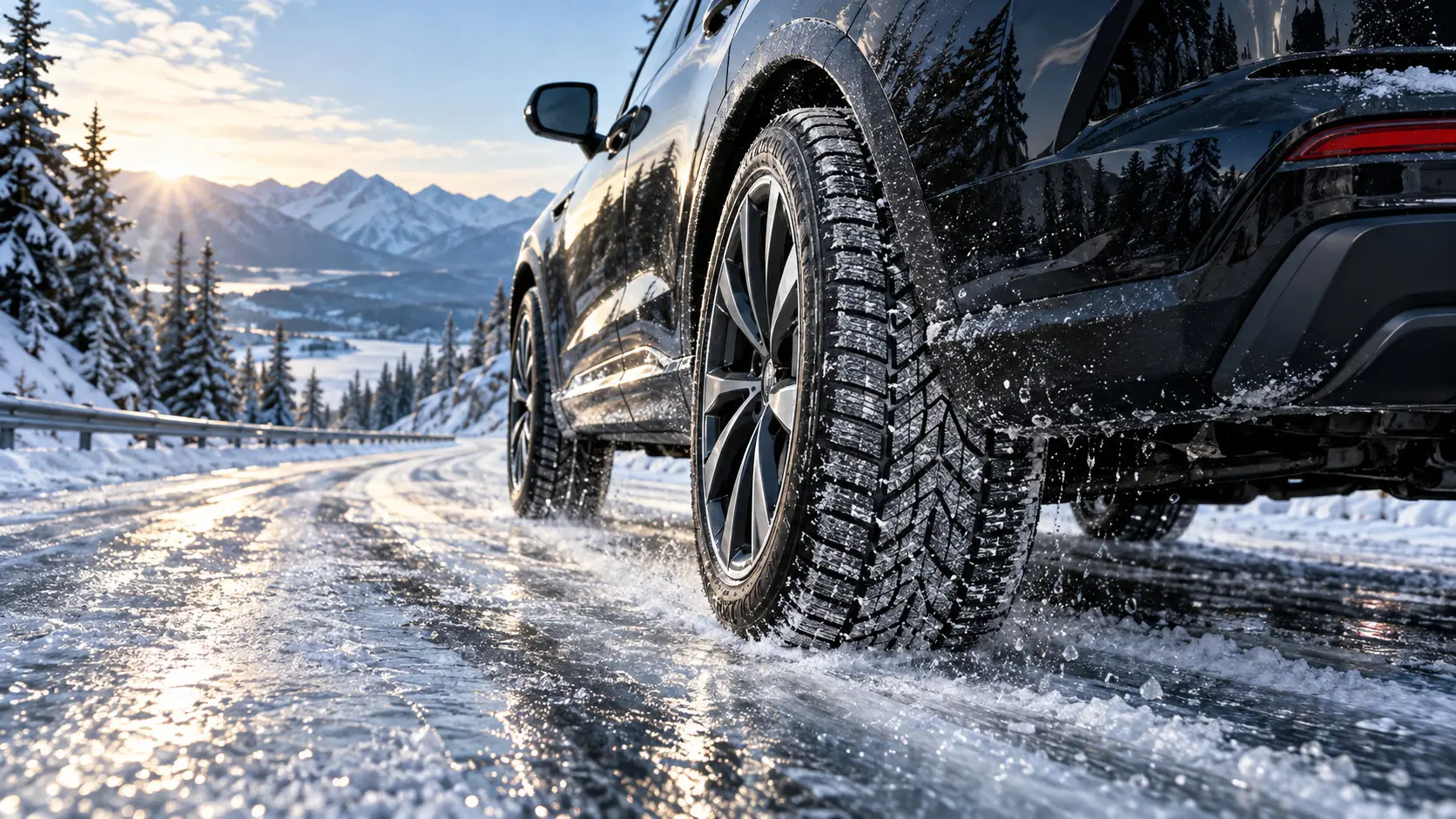
The Science of Sipes: How Tiny Grooves Provide Maximum Grip on Icy Roads
When winter arrives in Canada, even a familiar commute can become a serious test of tire traction. Freezing rain, packed snow, slush, and nearly invisible black ice can dramatically change how your vehicle responds to steering, braking, and acceleration.
While winter tires are widely recognized for their specialized rubber compounds and aggressive tread patterns, one of their most important technologies is much smaller: tire sipes.
These tiny grooves, cut or moulded into individual tread blocks, help winter tires interact with slippery road surfaces. They create additional biting edges, influence how tread blocks flex, and support traction on snow and ice.
But how do tire sipes actually work? Why do winter tires have so many of them? And can adding more sipes to a tire automatically improve winter driving performance?
In this guide, TireWarehouse explains the science behind tire siping, the differences between modern sipe designs, and what Canadian drivers should know when choosing tires for icy roads.
What Are Tire Sipes?
Tire sipes are narrow slits or grooves built into tire tread blocks to create additional gripping edges and improve traction under certain road conditions. Unlike the larger channels that help move water and slush away from the contact patch, sipes are much finer features designed to influence how the tread interacts with the road.
On many winter tires, these small cuts appear as straight, curved, zigzag, or interconnected lines across the tread surface.
Although they may look simple, modern sipes are carefully engineered to balance several competing performance requirements:
- Ice traction: Creating additional edges that interact with slippery surfaces.
- Snow grip: Helping tread blocks engage with compacted snow.
- Braking performance: Supporting traction when the tire must slow the vehicle.
- Cornering stability: Providing additional grip while maintaining tread-block support.
- Tread flexibility: Allowing controlled movement within the tire’s contact patch.
- Wear resistance: Limiting excessive tread movement that can accelerate irregular wear.
Sipes are found in winter tires, all-weather tires, many all-season tires, and some specialized commercial tires. However, their number, depth, orientation, and internal structure vary considerably depending on the intended application.
How Are Sipes Different From Regular Tread Grooves?
Both sipes and tread grooves contribute to traction, but they perform different functions.
| Feature | Tire Sipes | Main Tread Grooves |
|---|---|---|
| Size | Very narrow slits | Wider, deeper channels |
| Primary purpose | Create additional gripping edges | Channel water, snow, and slush |
| Typical design | Straight, zigzag, curved, or 3D | Circumferential, lateral, or directional |
| Ice performance | Can improve local traction and edge interaction | Help manage surface water and debris |
| Snow performance | Increase biting-edge opportunities | Provide space for snow evacuation and snow packing |
| Tread stability | Depends on sipe geometry and block support | Depends on groove layout and tread design |
The most effective winter tread patterns use both technologies together. Large grooves manage snow, slush, and water, while sipes provide additional opportunities for grip within individual tread blocks.
The Science Behind Sipes: How Do They Improve Grip on Ice?
Sipes improve icy-road traction primarily by creating additional biting edges and allowing controlled tread deformation. Their effectiveness depends on the tire’s rubber compound, contact pressure, tread geometry, road temperature, and ice conditions.
To understand why these tiny cuts matter, it helps to examine what happens where the tire meets the road.
1. Creating Thousands of Additional Biting Edges
A tire without sipes has relatively large, uninterrupted tread-block surfaces. When the tire rolls over ice or compacted snow, those blocks must generate traction through the available friction and mechanical interaction with the surface.
Adding sipes divides the tread surface into smaller flexible sections and creates many additional edges.
As the tire enters the contact patch, these edges can engage with microscopic surface irregularities and packed snow, supporting the transmission of braking, acceleration, and cornering forces.
This is often described as the biting-edge effect.
However, the edges do not literally cut deeply into hard, smooth ice under normal driving conditions. Ice traction remains heavily dependent on rubber properties, surface conditions, and the thin water films that may exist at the interface.
2. Managing the Thin Water Film on Ice
Ice is not equally slippery under every condition. Temperature, pressure, surface roughness, and the presence of liquid water all influence friction.
Near the melting point, ice can become particularly challenging because a thin layer of water may reduce direct contact between the rubber and the solid surface.
Some modern winter tire tread designs use fine channels, surface textures, and specialized rubber compounds to help manage this moisture.
Sipes can contribute by providing small spaces and edges within the contact area, although their ability to remove water is much more limited than that of the tire’s main drainage grooves.
The important distinction: sipes support ice traction, but they are not miniature pumps capable of eliminating all water beneath a tire.
3. Allowing Controlled Tread-Block Flexibility
Winter tires must remain capable of conforming to uneven surfaces even when temperatures are well below freezing.
Sipes allow portions of a tread block to flex relative to one another. This controlled movement can help the rubber maintain effective contact with small surface irregularities.
But flexibility creates an engineering challenge.
Too much tread-block movement can reduce steering precision, increase heat generation, and contribute to uneven wear.
That is why premium winter tire designs frequently use interlocking or three-dimensional sipes to improve traction without sacrificing excessive tread stability.
TireWarehouse Expert Tip: More sipes do not automatically mean a safer winter tire. Sipe design, rubber compound, tread depth, and overall tire construction must work together. A well-engineered tire with fewer strategically positioned sipes may outperform a tire with more poorly supported tread cuts.
Why Winter Tires Have More Sipes Than Summer Tires
Winter tires generally use denser siping because they are designed to generate traction on snow and ice, while summer tires prioritize warm-weather handling, braking, and stability.
Different tire categories must balance competing performance characteristics.
Winter Tires
Dedicated winter tires commonly feature numerous sipes distributed across their tread blocks. These work with cold-weather rubber compounds and deeper tread patterns to improve performance in freezing conditions.
Many modern winter tires use specialized sipe arrangements in the centre tread and shoulder areas to balance straight-line braking with cornering grip.
All-Weather Tires
All-weather tires are designed for year-round operation, including winter conditions. Many carry the Three-Peak Mountain Snowflake (3PMSF) symbol and incorporate more winter-oriented siping than conventional all-season designs.
However, all-weather tires must also provide acceptable performance during warm Canadian summers, so their tread and compound designs involve different compromises from dedicated winter tires.
All-Season Tires
Conventional all-season tires may include sipes for wet-road traction and light winter conditions.
However, the presence of sipes does not establish that a tire is suitable for severe winter driving. Rubber compound behaviour and winter performance testing are equally important.
Summer Tires
Summer tires generally feature larger, more stable tread elements and fewer winter-oriented sipes.
They are engineered to perform in warm weather, including on wet pavement, but are not intended for use on snow or ice.
| Tire Type | Typical Siping | Primary Design Priority | Canadian Winter Suitability |
|---|---|---|---|
| Dedicated winter | High density, often advanced 3D patterns | Cold-weather snow and ice traction | Best suited to demanding winter conditions |
| All-weather | Moderate to high, model-dependent | Year-round use with winter capability | Suitable for many winter conditions when properly rated |
| Conventional all-season | Moderate, variable | Wet, dry, and mild-weather versatility | Limited in severe snow and ice |
| Summer | Generally fewer winter-oriented sipes | Warm-weather handling and braking | Not appropriate for snow or ice |
These are general design tendencies. Individual tire models can differ significantly, and independent performance testing provides a more reliable comparison than appearance alone.
Different Types of Tire Sipes Explained
Modern tire manufacturers use several sipe designs to balance traction, braking, tread stability, and durability. The shape of a sipe is often as important as its quantity.
Straight Sipes
Straight sipes are simple, narrow cuts across or along tread blocks.
They create additional edges and allow some tread flexibility. Their effectiveness depends on orientation, depth, spacing, and surrounding block geometry.
They can be found in a range of tire categories, including certain winter and commercial designs.
Zigzag Sipes
Zigzag sipes follow an angular pattern rather than a straight line.
Their geometry creates edges facing multiple directions, which can help the tread respond to different driving forces.
They are commonly associated with winter tire tread designs because vehicles require grip during acceleration, braking, and cornering.
Three-Dimensional (3D) Sipes
Three-dimensional sipes use internal shapes that can interlock when the tread block is loaded.
This technology helps address one of the biggest compromises in tire engineering: providing numerous gripping edges while limiting unwanted tread movement.
Under certain loads, opposing surfaces inside the sipe support each other, increasing local block stiffness.
Potential advantages include:
- Improved tread-block support during braking.
- More controlled handling on dry pavement.
- Reduced excessive block deformation.
- Better balance between winter traction and tread wear.
The actual benefits depend on the specific manufacturer’s design and tire construction.
Interlocking and Multi-Directional Sipes
Some winter tires combine different sipe orientations across the tread.
For example, the centre tread may emphasize straight-line traction while the shoulders use geometries intended to support lateral forces during turning.
These arrangements allow tire engineers to tune different regions of the contact patch for different tasks.
How Sipes Affect Braking Distance on Icy Roads
Effective siping can help improve the traction available during icy braking, but stopping distance depends on the entire tire and vehicle system. No specific reduction in braking distance can be attributed to siping alone without controlled testing.
When a driver applies the brakes, the tires must transmit braking force to the road surface.
On dry pavement, relatively high friction allows substantial braking force. On ice, available friction is much lower and can vary sharply over short distances.
Sipes can help by increasing edge interaction and improving local tread conformity, but several other factors affect the result:
- The winter tire’s rubber compound.
- Ice temperature and surface texture.
- Whether the ice is dry, wet, polished, or covered with snow.
- Tread depth and tire wear.
- Correct cold tire inflation pressure.
- Vehicle weight and weight transfer.
- Anti-lock braking system (ABS) operation.
- Vehicle speed and road gradient.
Why Small Changes in Speed Matter
Braking distance increases approximately with the square of vehicle speed when available braking deceleration remains constant.
For example, increasing speed from 40 km/h to 60 km/h increases the theoretical braking distance by a factor of 2.25 under otherwise identical conditions.
This relationship is particularly important on icy roads because available traction is already limited.
Even a high-quality winter tire cannot overcome the physical consequences of excessive speed.
Can ABS Replace Winter Tire Traction?
No. ABS helps prevent wheel lockup and supports steering control during hard braking, but it cannot create friction that the tires and road surface cannot provide.
Similarly, electronic stability control and traction control depend on available tire grip.
Winter tires with effective tread designs give these systems a better opportunity to operate within the available traction limits.
Safety Reminder: On black ice, reduce speed smoothly, leave generous following distance, and avoid sudden steering or braking inputs. Winter tires improve the available traction but cannot guarantee control on every icy surface.
How Sipes Work on Snow, Slush, and Wet Pavement
Sipes can contribute to traction across several winter surfaces, but the mechanism changes depending on what lies beneath the tire. Snow, ice, slush, and wet asphalt present different engineering challenges.
On Packed Snow
Snow traction involves more than rubber-to-road friction.
Compacted snow can interact mechanically with tread features, and snow retained within tread voids can generate useful snow-to-snow contact.
Sipes add smaller edges that help engage the surface, while larger tread grooves and voids support snow packing and evacuation.
On Smooth Ice
On smooth ice, the role of the rubber compound and microscopic surface interaction becomes particularly important.
Sipes can improve edge engagement and local contact behaviour, but smooth, wet ice remains one of the most challenging surfaces for any non-studded tire.
On Slush
Slush contains both liquid water and partially melted snow.
Large tread channels are particularly important because they provide paths for material to escape from beneath the tire.
Sipes support local grip, but they cannot replace adequate groove depth or a tread pattern designed to resist slush-related loss of traction.
On Wet Pavement
Sipes may help with localized water-film management and tread flexibility.
However, wet braking and hydroplaning resistance depend on multiple characteristics, including rubber formulation, groove volume, tread depth, contact pressure, and vehicle speed.
| Road Surface | How Sipes Help | Other Critical Tire Features |
|---|---|---|
| Black ice | Additional edges and controlled surface contact | Cold-weather compound and overall ice grip |
| Packed snow | Mechanical engagement with the snow surface | Tread voids and snow-to-snow traction |
| Deep snow | Supplementary biting edges | Groove depth, tread geometry, and evacuation |
| Slush | Localized grip contribution | Water and slush evacuation channels |
| Wet pavement | Local edge and contact effects | Compound, drainage, and tread depth |
| Dry pavement | May influence block flexibility | Block stiffness, compound, and tread stability |
Why Rubber Compound Matters Just as Much as Siping
Sipes cannot compensate for a tire compound that becomes excessively stiff in freezing temperatures. Winter traction depends on the interaction between tread design and rubber material.
Rubber is a viscoelastic material, meaning its response depends on temperature, deformation, and loading speed.
As temperatures fall, some tire compounds become less compliant. Reduced flexibility can make it harder for the tread to conform to fine surface irregularities.
Winter tire compounds are formulated to maintain useful flexibility at low temperatures while balancing durability, wet grip, and rolling resistance.
The Canadian 7°C Guideline
Many Canadian tire specialists recommend considering a seasonal change to winter tires when temperatures consistently approach or fall below approximately 7°C.
This is a practical seasonal guideline, not a universal temperature at which every all-season tire suddenly loses traction.
Actual performance depends on the individual tire model, road surface, and weather conditions.
For drivers in Ontario, Quebec, Alberta, British Columbia, and other regions with significant winter weather, planning the tire change before the first major snowfall helps avoid being caught unprepared.
Why Advanced Compounds and Sipes Work Together
A winter tire’s tread blocks need sufficient flexibility for their sipes to function as intended.
At the same time, the compound must provide suitable frictional behaviour against ice and cold pavement.
This combination explains why simply cutting additional grooves into an ordinary tire cannot reliably reproduce the performance of a purpose-built winter tire.
Do More Sipes Always Mean Better Winter Traction?
No. Sipe quantity is only one factor in winter tire performance, and excessive siping can create compromises in handling, wear, and tread stability.
Every sipe changes the structure of its surrounding tread block.
Increasing the number of cuts may create more edges, but it can also allow greater block movement if the design does not provide adequate support.
Potential consequences of poorly optimized siping include:
- Less precise steering response.
- Increased tread-block squirm.
- Irregular tread wear.
- Changes in road noise.
- Reduced stability under certain braking or cornering loads.
- Possible changes in rolling resistance and heat generation.
Modern tire engineers use computer simulation, laboratory testing, and real-world vehicle testing to optimize these trade-offs.
The goal is not to maximize the number of sipes. It is to achieve the best practical balance for the tire’s intended operating conditions.
Can You Add Sipes to Existing Tires?
Aftermarket tire siping is possible in some applications, but it is not generally recommended as a substitute for purchasing tires designed and tested for winter use.
Aftermarket siping involves cutting additional narrow slits into an existing tire tread using specialized equipment.
Although the practice is sometimes used in specific commercial or off-road applications, it raises important questions for passenger vehicles.
Potential Risks of Aftermarket Siping
- Altered tread integrity: New cuts change how the tread blocks deform.
- Unverified performance: Added sipes do not guarantee improved braking or cornering traction.
- Irregular wear: Poorly placed cuts can contribute to unwanted tread movement.
- Manufacturer restrictions: Modifications may affect warranty coverage or conflict with manufacturer guidance.
- Incorrect cutting depth: Improper procedures may damage the tire.
Passenger tires are engineered as complete systems. Their tread patterns, compounds, internal structures, and performance characteristics are validated together.
For Canadian winter driving, choosing a properly rated winter or all-weather tire is generally a more dependable approach than modifying a conventional all-season tire.
What Happens to Sipes as Winter Tires Wear Down?
As tread depth decreases, the tire gradually loses some of its ability to manage snow, water, and slush, while the effective depth and shape of its sipes may also change.
Not all sipes extend through the entire usable tread depth.
Depending on the tire design, certain sipes may become shallower, change shape, or disappear as the tread wears.
Other designs maintain substantial siping through more of the tire’s service life.
Why Tread Depth Matters in Canada
A tire may still be above the legal minimum tread depth while providing noticeably reduced winter performance.
Many tire specialists recommend considering replacement of winter tires at approximately 4 mm of remaining tread depth, particularly for regular snow and slush driving.
This is a conservative winter-performance recommendation rather than a universal legal replacement threshold.
Provincial legal requirements differ, and some designated winter routes have specific minimum tread-depth rules.
How to Inspect Winter Tire Sipes
- Measure tread depth: Use a proper tread-depth gauge at several points across the tire.
- Examine the tread blocks: Look for cracking, tearing, missing rubber, or unusual deformation.
- Check for uneven wear: Compare the inner, centre, and outer tread areas.
- Inspect all four tires: Differences in wear can affect handling and stability.
- Check inflation pressure: Use the vehicle manufacturer’s recommended cold inflation pressure.
- Consult a tire professional: Have unusual wear, damage, or questionable tread conditions assessed before winter driving.
Uneven tread wear may indicate inflation problems, wheel alignment issues, worn suspension components, or missed tire rotations.
Maintaining proper tire condition helps preserve the performance that the tread design was intended to deliver.
Are Siped Winter Tires Necessary Across Canada?
Winter-oriented tread designs are valuable wherever drivers regularly encounter freezing temperatures, snow, or ice, but tire requirements and winter conditions vary by province.
Canadian drivers should consider both local regulations and the conditions they actually encounter.
Quebec: Mandatory Winter Tire Requirements
In Quebec, most passenger vehicles registered in the province must use compliant winter tires from December 1 through March 15, subject to applicable exemptions.
Compliant tires generally need the recognized mountain-and-snowflake winter tire marking or another legally accepted designation.
Sipes alone do not establish legal winter tire compliance.
British Columbia: Designated Winter Routes
British Columbia requires appropriate winter tires or chains on designated routes during specified winter periods, commonly beginning October 1.
Requirements vary by route and vehicle type. Many designated routes have winter tire requirements through March 31, while certain routes extend through April 30.
For passenger vehicles, qualifying tire markings and minimum tread depth are important. Drivers should consult current provincial requirements before travelling.
Ontario, Alberta, and the Prairies
In provinces without a general passenger-vehicle winter tire mandate, dedicated winter tires can still provide important performance benefits.
Drivers may encounter:
- Freezing rain and black ice on Ontario highways.
- Rapid temperature changes and snow-packed roads in Alberta.
- Blowing snow and polished intersections across Saskatchewan and Manitoba.
- Prolonged sub-zero temperatures that challenge tire flexibility.
Atlantic Canada and Northern Regions
Coastal regions frequently experience combinations of wet snow, slush, freezing rain, and changing temperatures.
Northern regions can experience prolonged extreme cold and compacted snow surfaces.
These conditions reinforce the importance of selecting tires for the local climate rather than relying only on a generic tire category.
Drivers should verify current provincial or territorial rules through the relevant transportation authority, since requirements and exemptions can change.
How to Choose Winter Tires With Effective Siping
Choose winter tires based on proven performance, appropriate certification, vehicle compatibility, and expected driving conditions—not simply the visible number of sipes.
A practical buying process helps narrow the options.
1. Look for the Three-Peak Mountain Snowflake Symbol
The 3PMSF marking indicates that a tire meets a defined snow-traction performance requirement.
It is more informative for severe-snow capability than an M+S marking alone.
However, the 3PMSF symbol is not a comprehensive ice-braking certification and does not mean all marked tires perform equally well on ice.
2. Consider Independent Winter Tire Tests
Look for testing that evaluates braking, acceleration, and handling on snow and ice, as well as wet and dry pavement.
Pay attention to whether the test used the same tire size and comparable vehicle conditions.
A tire that excels in deep snow may not necessarily lead in wet-ice braking or dry-highway steering response.
3. Match the Tire to Your Driving Environment
Drivers facing frequent freezing rain and polished urban intersections may prioritize ice braking.
Drivers regularly travelling through deep snow may place greater emphasis on snow traction and tread evacuation.
For long-distance Canadian highway travel, stability, wet-road performance, noise, and wear also matter.
4. Confirm the Correct Tire Specifications
Before purchasing, verify:
- Manufacturer-approved tire size.
- Appropriate load index.
- Suitable speed rating.
- Wheel compatibility.
- Vehicle-specific requirements.
- Recommended cold tire inflation pressure.
Do not choose a tire solely because its tread appears aggressive. Correct fitment is essential for safe vehicle operation.
5. Compare Overall Ownership Value
A good winter tire purchase considers more than the initial price.
Evaluate expected service life, winter performance, road noise, ride comfort, and suitability for your annual driving distance.
Premium siping technologies may offer meaningful design advantages, but their value should be judged alongside independent testing and the tire’s overall performance.
How to Maintain Siped Winter Tires for Consistent Performance
Proper inflation, regular inspections, appropriate rotation, and seasonal storage help winter tires maintain their intended performance over time.
Even advanced tread technology cannot compensate for neglected maintenance.
Check Tire Pressure in Cold Weather
Tire inflation pressure generally decreases as ambient temperature falls.
As a rough guideline, pressure may change by approximately 7 kPa (1 psi) for every 5–6°C temperature change, although the actual change depends on conditions.
Check pressure when tires are cold and use the vehicle manufacturer’s recommended value on the tire information placard or in the owner’s manual.
Do not use the maximum pressure printed on the tire sidewall as the routine inflation target.
Rotate Tires According to Manufacturer Guidance
Regular tire rotation can help manage uneven wear when permitted by the vehicle and tire manufacturers.
Rotation patterns depend on whether tires are directional, staggered, or subject to other fitment restrictions.
Many vehicles use rotation intervals around 8,000–10,000 km, but the vehicle manufacturer’s schedule should take priority.
Store Winter Tires Correctly
When winter ends, clean the tires and store them in a cool, dry location away from direct sunlight, ozone-producing equipment, and unnecessary exposure to heat.
Follow appropriate storage methods depending on whether the tires remain mounted on wheels.
Use This Winter Tire Maintenance Checklist
- Check cold inflation pressure regularly and before long trips.
- Measure tread depth at several locations.
- Inspect tread blocks and sipes for visible damage.
- Watch for unusual vibration or pulling.
- Follow the correct tire rotation schedule.
- Maintain wheel alignment and suspension condition.
- Install a suitable matching set of four winter tires when recommended.
- Replace tires that are damaged, excessively worn, or otherwise unserviceable.
Common Myths About Tire Siping
Several misconceptions about siping can lead drivers to overestimate what tread cuts can accomplish. Understanding their limitations makes it easier to evaluate tire technology.
Myth 1: More Sipes Always Mean More Grip
Reality: Sipe geometry, rubber compound, tread stability, and surface conditions determine how effectively the edges contribute to traction.
Myth 2: Siping Turns Any All-Season Tire Into a Winter Tire
Reality: Adding cuts cannot reproduce the complete engineering of a winter tire, including its cold-weather compound and validated tread construction.
Myth 3: Sipes Eliminate the Danger of Black Ice
Reality: Black ice can remain extremely slippery even with high-quality winter tires. Reduced speed and smooth driving inputs are essential.
Myth 4: AWD Makes Winter Tire Siping Unnecessary
Reality: All-wheel drive can help distribute driving torque during acceleration, but it does not eliminate the need for traction when braking or turning.
Myth 5: Every Tire With Sipes Is Winter Rated
Reality: Sipes appear in many tire categories. Winter suitability must be assessed through the tire’s intended application, markings, and performance characteristics.
Frequently Asked Questions About Tire Sipes
These answers address common questions Canadian drivers have about tire siping, icy-road traction, and winter tire performance.
1. What are sipes on a tire?
Sipes are narrow cuts or slits within tire tread blocks. They create additional gripping edges and influence tread flexibility, helping tires interact with snow, ice, and certain wet surfaces.
2. Do tire sipes really improve traction on ice?
Well-designed sipes can improve ice traction by creating additional edges and supporting controlled contact with the road. Their effectiveness depends on the rubber compound, tread geometry, and ice conditions. Sipes alone do not guarantee better performance.
3. Why do winter tires have so many tiny grooves?
Winter tires often use dense siping to provide additional biting edges and controlled tread flexibility on snow and ice. These features complement specialized cold-weather compounds and larger tread grooves.
4. What is the difference between tire sipes and grooves?
Sipes are fine cuts primarily intended to create additional edges and influence tread behaviour. Main grooves are wider channels that help evacuate water, slush, and snow from the tire’s contact area.
5. Are 3D sipes better than traditional sipes?
Three-dimensional sipes can offer advantages by interlocking under load and limiting excessive tread-block movement. However, the actual performance difference depends on the complete tire design and cannot be determined from sipe type alone.
6. Can I add sipes to my existing all-season tires?
Aftermarket siping is technically possible in some applications, but it is not a reliable substitute for purpose-built winter tires. Modifying the tread can affect durability, wear, handling, and manufacturer warranty coverage.
7. Do sipes help on black ice?
Sipes can contribute to traction on black ice, but smooth or wet ice may provide extremely limited grip. A dedicated winter tire, reduced speed, and careful vehicle control remain important.
8. Do all-weather tires have sipes?
Yes. Many all-weather tires incorporate winter-oriented siping and carry the 3PMSF marking. However, their performance varies by model, and dedicated winter tires may provide advantages in demanding ice and snow conditions.
9. Do tire sipes wear out?
Sipes are part of the tread and change as the tire wears. Depending on their design and depth, some may become less effective or disappear before the tread reaches its legal wear limit.
10. Do sipes reduce braking distance?
Effective siping can support better braking traction on certain slippery surfaces. However, stopping distance depends on the tire compound, overall tread design, road conditions, vehicle speed, and braking system. No universal percentage improvement applies.
11. Do sipes make tires noisier?
Sipe patterns can influence tread movement and noise generation, but overall road noise also depends on tread-block arrangement, tire construction, pavement texture, and vehicle characteristics. More sipes do not necessarily mean a louder tire.
12. Are siped tires good for highway driving?
Properly designed and rated winter tires with sipes can be suitable for highway use. Drivers should choose tires with appropriate load and speed ratings and consider independent testing for wet braking, stability, and winter handling.
13. How much tread depth should winter tires have?
Many tire professionals recommend considering winter tire replacement around 4 mm of remaining tread depth to maintain useful snow and slush performance. Legal requirements differ by jurisdiction and may permit less tread in certain circumstances.
14. Are sipes more important than the winter tire compound?
Neither should be evaluated in isolation. Sipes provide additional edges and influence tread flexibility, while the rubber compound determines important friction and low-temperature characteristics. Effective winter performance requires both to work together.
15. Does the Three-Peak Mountain Snowflake symbol mean a tire has good ice grip?
Not necessarily. The 3PMSF marking indicates compliance with a defined snow-traction requirement, not a comprehensive ice-braking performance standard. Drivers concerned about freezing rain and black ice should review independent ice-performance testing.
Final Recommendation: Small Grooves, Important Winter Performance
Tire sipes are a critical part of modern winter tire engineering, but their value comes from how they work with the entire tire.
These tiny grooves create additional gripping edges, support controlled tread flexibility, and help winter tires interact with snow and ice. Advanced designs, including three-dimensional and interlocking sipes, also help manufacturers balance winter traction with handling stability and tread durability.
For Canadian drivers, the practical lesson is straightforward: do not judge winter tire performance by the number of visible grooves alone.
Instead, look for a tire with a suitable cold-weather compound, a well-engineered tread pattern, appropriate winter certification, correct vehicle fitment, and credible performance-test results.
Whether you regularly drive through freezing rain in Ontario, mountain snow in British Columbia, or long periods of sub-zero weather on the Prairies, choosing the right winter tire can make an important difference in how your vehicle responds to challenging road conditions.
At TireWarehouse.ca, our goal is to help Canadian drivers understand the technology behind their tires so they can make informed choices for every season.
The best winter traction does not come from one feature. It comes from the right combination of tire design, maintenance, and responsible driving.
Recommended Related Reading
Continue exploring winter tire safety, traction technology, and seasonal tire maintenance with these related topics:
- Winter Tires vs. All-Weather Tires: Understand the differences in cold-weather traction, seasonal performance, and Canadian driving suitability.
- What Does the Three-Peak Mountain Snowflake Symbol Mean? Learn how winter tire markings relate to snow-traction standards.
- How Much Tread Depth Do Winter Tires Need? Discover why tread wear matters for snow, slush, and wet-road safety.
- Why Winter Tires Perform Better Below 7°C: Explore the relationship between temperature, rubber flexibility, and traction.
- How to Check Tire Pressure in Canadian Winter Weather: Learn how falling temperatures affect inflation pressure and tire performance.
- Black Ice Driving Safety Tips: Understand the hazards of invisible ice and the importance of smooth driving inputs.
In stock & ready to ship
Find the tires you need, delivered from a warehouse near you