1. Friction vs. Hydrodynamics
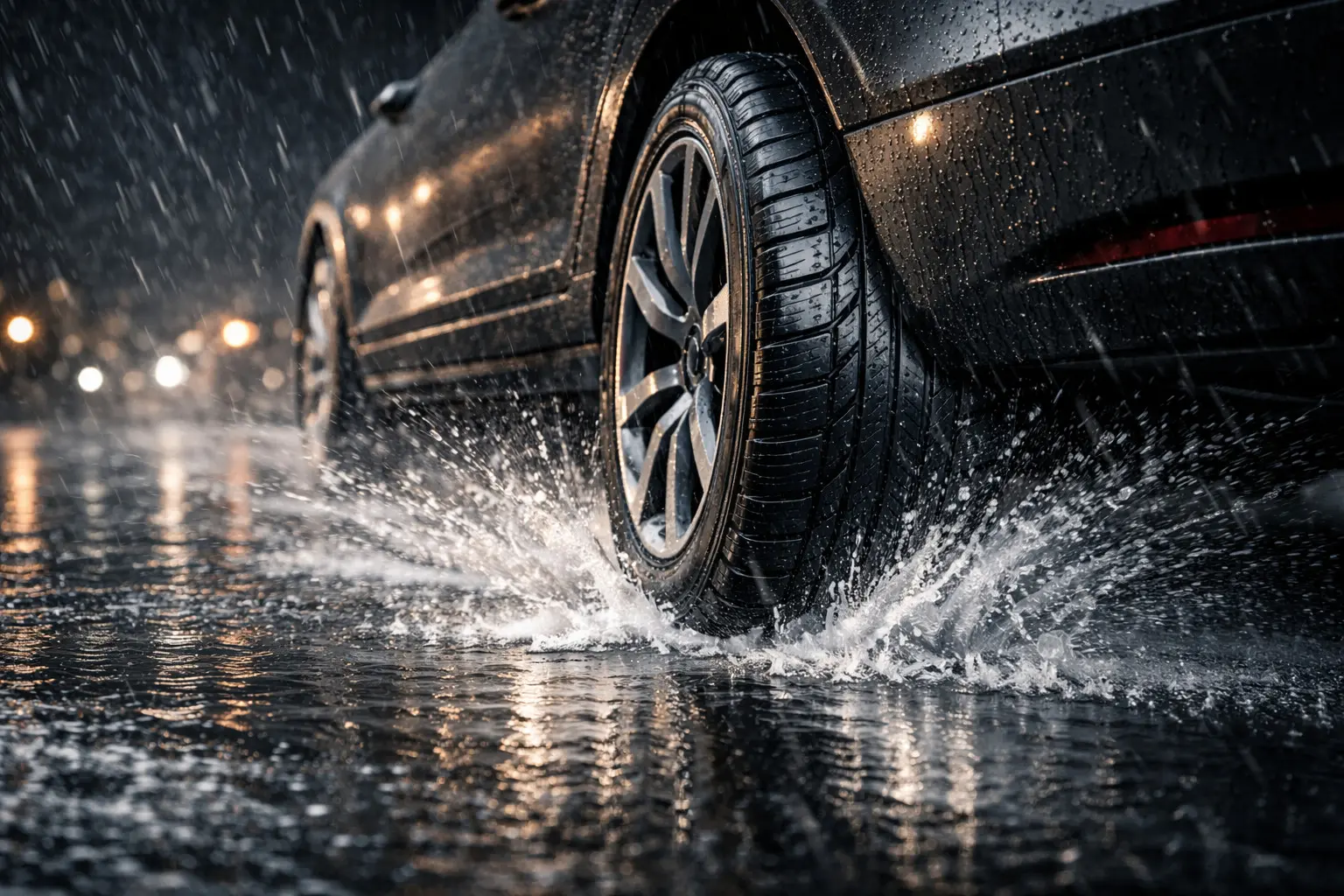
On dry pavement, tire grip comes from direct rubber-to-road contact. In wet conditions, water creates a barrier that reduces this contact. Tires must channel water away efficiently to maintain traction.
When they fail to do so, hydroplaning occurs—where the tire rides on top of the water layer instead of the road. This leads to a near-total loss of control.
2. The Critical Role of Tread Design
- Longitudinal grooves: channel water backward
- Lateral grooves: push water sideways
- Sipes: small slits that enhance grip by increasing biting edges
Worn tires lose tread depth, significantly reducing their ability to disperse water and increasing hydroplaning risk.
3. Rubber Compound Matters More Than You Think
Not all tires are made from the same rubber. Wet-performance tires often include silica-enhanced compounds that provide:
- Better grip on wet surfaces
- Improved flexibility in lower temperatures
- Enhanced ability to break through water films
4. Speed and Tire Pressure: Key Risk Factors
The faster you drive, the less time your tires have to evacuate water—raising the risk of hydroplaning.
Also:
- Underinflated tires: may struggle to channel water effectively
- Overinflated tires: reduce the contact patch, decreasing grip
Maintaining proper tire pressure is essential for optimal wet performance.
Conclusion: Grip Is Physics, Not Luck
Tire performance in wet conditions is determined by a combination of tread design, rubber compound, tire condition, and driving behavior. Understanding these factors can significantly improve safety and control when driving in the rain.