
SUV and Crossover Winter Prep: Choosing Between All-Weather and Dedicated Winter Tires
All-weather or dedicated winter tires? Discover which option delivers the right balance of winter traction, braking performance, safety, convenience, and value for your SUV or crossover on Canadian roads.
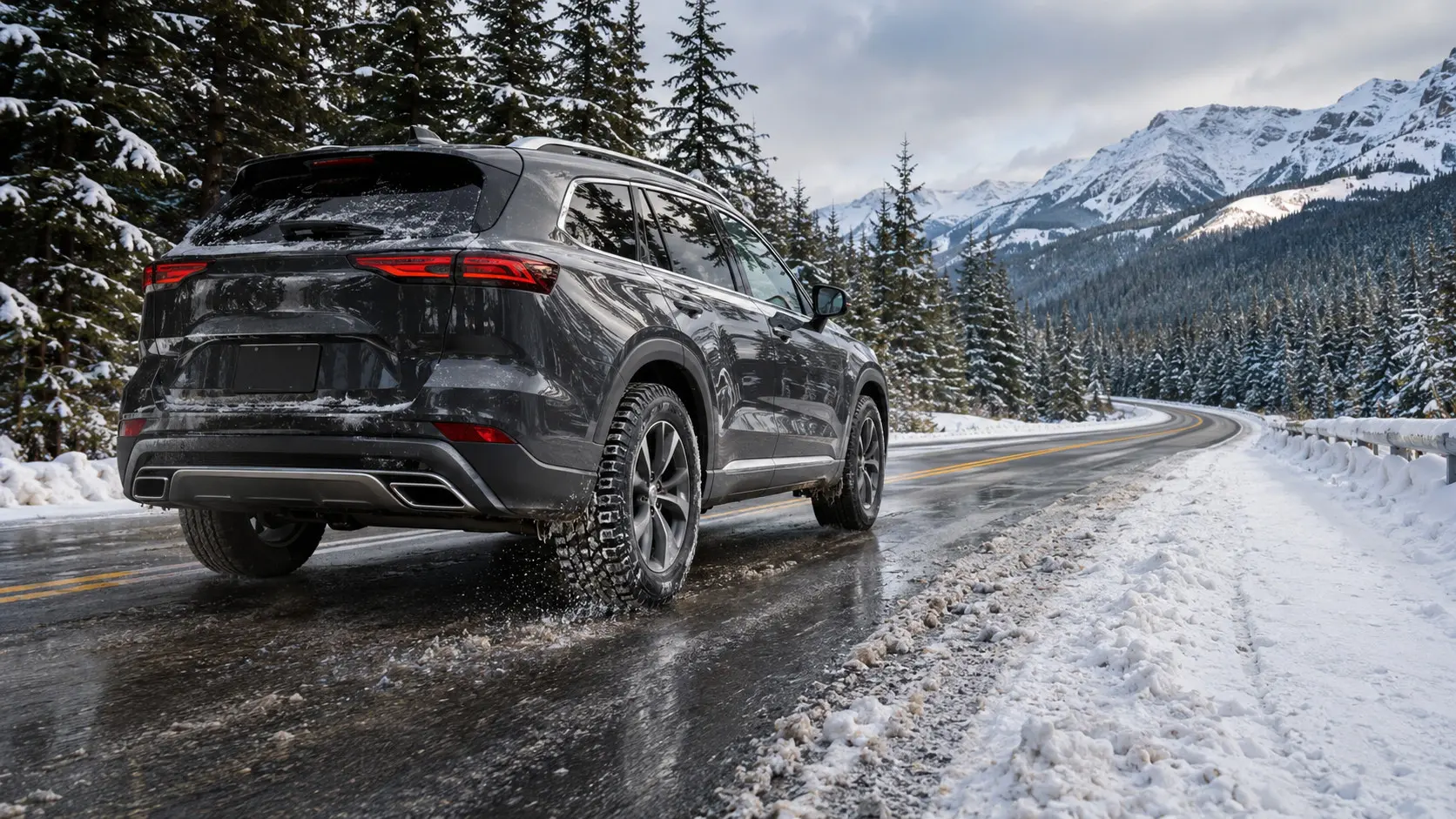
SUV and Crossover Winter Prep: Choosing Between All-Weather and Dedicated Winter Tires
Canadian winters can challenge even the most capable SUVs and crossovers. Snow-covered highways, freezing rain, black ice, slush, and rapidly changing temperatures all affect how your vehicle accelerates, steers, and stops. While many SUVs feature all-wheel drive (AWD) or four-wheel drive (4WD), these systems cannot replace the traction provided by properly selected winter-ready tires.
For SUV and crossover owners, one of the most important seasonal decisions is choosing between all-weather tires and dedicated winter tires. Both can offer winter capability, but they are designed around different priorities, driving conditions, and performance expectations.
All-weather tires provide year-round convenience with winter-rated traction, while dedicated winter tires are engineered specifically for cold temperatures, snow, and ice. Understanding these differences can help you choose the right tires for your vehicle, driving habits, and Canadian climate.
In this guide, TireWarehouse explains how both tire categories perform, why SUV weight and AWD systems matter, what Canadian winter tire regulations require, and how to prepare your SUV or crossover for safer winter driving.
All-Weather vs. Winter Tires for SUVs: What’s the Difference?
The main difference is specialization. All-weather tires are designed to handle a broad range of temperatures and road conditions throughout the year, while dedicated winter tires prioritize performance in cold weather, snow, and ice.
Both tire types can be suitable for Canadian winter driving when they carry the appropriate winter certification. However, their rubber compounds, tread designs, and performance compromises are different.
What Are All-Weather Tires?
All-weather tires combine year-round usability with enhanced cold-weather and snow performance. Unlike conventional all-season tires, winter-rated all-weather models carry the Three-Peak Mountain Snowflake (3PMSF) symbol, indicating that they meet a defined severe-snow traction performance requirement.
They are particularly attractive to Canadian drivers who want to avoid switching between separate summer and winter tire sets.
Typical advantages include:
- Year-round use without scheduled seasonal tire changes.
- Better winter capability than many conventional all-season tires.
- Performance across dry, wet, and moderately snowy roads.
- Reduced need for a second set of tires and wheels.
- Convenience for drivers in regions with relatively mild winters.
However, all-weather tires involve compromises. Although they can perform well in snow, they may not deliver the same ice braking, deep-snow traction, or extreme-cold performance as a high-quality dedicated winter tire.
What Are Dedicated Winter Tires?
Dedicated winter tires are engineered specifically for cold-weather operation. Their tread patterns, rubber compounds, and fine tread cuts, called sipes, are designed to support traction when temperatures drop and roads become slippery.
Key benefits include:
- Strong traction on snow-covered roads.
- Enhanced braking and cornering performance in freezing conditions.
- Rubber compounds designed to remain flexible in cold weather.
- Specialized tread patterns that manage snow and slush.
- Greater suitability for prolonged winter driving and demanding conditions.
Some winter tires are especially focused on ice performance, while others prioritize deep-snow traction or highway handling. This makes selecting the right winter tire model just as important as choosing the winter tire category.
All-Weather vs. Winter Tires Comparison Table
| Feature | All-Weather Tires | Dedicated Winter Tires |
|---|---|---|
| Primary purpose | Year-round driving with winter capability | Cold-weather and winter driving |
| Cold-temperature performance | Good, depending on tire model | Specialized for cold conditions |
| Light snow | Generally capable | Generally excellent |
| Deep snow | Model-dependent and more limited | Typically stronger traction |
| Ice braking | Varies considerably by model | Typically better, especially ice-focused models |
| Warm-weather driving | Designed for year-round use | Not recommended for prolonged warm-weather use |
| Seasonal tire changes | Generally unnecessary | Required |
| Winter certification | Look for 3PMSF | Most dedicated winter models carry 3PMSF |
| Best suited for | Milder winters and convenience-focused drivers | Harsh winters and demanding winter travel |
Bottom line: All-weather tires are a practical compromise for year-round driving, while dedicated winter tires are usually the stronger choice when severe winter traction and braking performance are priorities.
Why SUVs and Crossovers Need the Right Winter Tires
SUVs and crossovers need winter-ready tires because vehicle weight, handling characteristics, and drivetrain systems affect how they respond on slippery roads. AWD and increased ground clearance are helpful features, but neither guarantees safe braking or cornering on ice.
AWD Helps You Accelerate, Not Necessarily Stop Faster
One of the most common misconceptions among SUV owners is that all-wheel drive eliminates the need for winter tires.
AWD distributes engine torque between the wheels to improve traction during acceleration. This can help an SUV move away from a stop on snowy pavement or climb a slippery incline.
However, AWD does not create additional tire grip during braking.
When you apply the brakes, your vehicle depends on tire traction, braking system performance, road conditions, and electronic safety systems such as anti-lock braking (ABS) and electronic stability control (ESC).
TireWarehouse Expert Tip: An AWD SUV equipped with worn or unsuitable tires may struggle to stop or turn on icy roads. Prioritize tire condition and winter traction over drivetrain capability alone.
Vehicle Weight Influences Braking and Handling
Many SUVs are heavier than smaller passenger cars. Their mass, centre of gravity, suspension design, and tire specifications can influence how they respond during sudden braking or emergency manoeuvres.
On snow and ice, reduced friction makes controlling a heavy vehicle more challenging. Winter-appropriate tires help provide the grip needed for predictable steering and braking.
Drivers should also remember that a heavier vehicle does not automatically generate better usable traction simply because more weight rests on the tires.
Ground Clearance Does Not Equal Winter Traction
Higher ground clearance can help an SUV travel through moderate snow accumulation without the underside contacting the surface.
But ground clearance does not improve grip on black ice or polished snow.
Even a capable 4WD SUV can slide if the tires cannot maintain sufficient contact with the road.
How Winter Temperatures Affect SUV Tire Performance
Temperature changes affect tire rubber flexibility and road grip. Dedicated winter tires are formulated for cold-weather conditions, while all-weather tires balance cold-weather flexibility with the durability needed for warmer seasons.
Understanding the 7°C Rule
The commonly referenced 7°C rule is a practical guideline for deciding when to consider switching from summer or conventional all-season tires to winter tires.
As temperatures consistently approach or fall below approximately 7°C, winter tire compounds can offer advantages over tires designed primarily for warmer conditions.
However, 7°C is not a universal performance cutoff. Actual grip depends on tire design, road surface, temperature, tread condition, and driving circumstances.
For many Canadian drivers, monitoring overnight lows and typical morning driving temperatures is more useful than waiting for the first snowfall.
What Happens to Tires in Extreme Cold?
During prolonged periods below -15°C or -20°C, tire compound design becomes particularly important.
Dedicated winter tires are engineered to retain useful flexibility in freezing conditions, allowing the tread to interact more effectively with cold pavement, compacted snow, and ice.
All-weather tires can also provide cold-weather traction, but performance varies significantly between products.
Drivers in northern Ontario, Manitoba, Saskatchewan, Alberta, and other regions with extended cold periods should pay close attention to independently tested winter performance rather than relying only on the tire category.
How Do All-Weather and Winter Tires Perform on Snow, Ice, and Slush?
Dedicated winter tires generally offer the strongest overall performance in severe winter conditions, while all-weather tires can be effective in lighter and more variable winter weather. The differences become particularly important during emergency braking and sudden steering corrections.
Driving on Fresh and Packed Snow
Snow traction depends on tread depth, tread block geometry, sipes, and the ability of the tire to interact with snow-covered surfaces.
Winter tires commonly feature aggressive tread patterns and specialized rubber compounds designed for these conditions.
All-weather tires with 3PMSF certification can provide useful snow traction, particularly on plowed roads and in moderate accumulation.
However, drivers who regularly encounter unplowed roads, steep snowy hills, or heavy snowfall may benefit from dedicated winter tires.
Driving on Black Ice and Freezing Rain
Black ice is especially dangerous because it can be difficult to see and may provide extremely little traction.
Dedicated winter tires, particularly models designed for ice performance, typically offer better grip on icy surfaces than many all-weather alternatives.
Nevertheless, no tire can eliminate the risks of black ice.
Reduce speed, increase following distance, and avoid abrupt braking or steering when freezing rain or ice is possible.
Driving Through Slush
Slush creates a combination of wet-road and snow-related challenges.
Effective slush performance depends on the tread’s ability to channel water and loose snow away from the contact area.
Both all-weather and winter tires may feature directional grooves or other tread designs that help manage slushy conditions.
As tires wear, their ability to clear water and slush can decline, increasing the risk of losing traction.
Winter Highway Driving
Highway travel introduces additional challenges, including higher speeds, crosswinds, freezing spray, changing pavement conditions, and longer stopping distances.
For SUVs frequently travelling on routes such as Highway 401 in Ontario, Highway 1 across the Prairies, or mountain highways in British Columbia, choosing tires suited to the expected winter conditions is essential.
Dedicated winter tires may offer a valuable performance advantage during severe weather, particularly on icy or snow-covered highways.
Understanding the Three-Peak Mountain Snowflake and M+S Symbols
The Three-Peak Mountain Snowflake symbol is an important indicator of winter snow-traction capability. The M+S marking alone does not establish the same level of tested severe-snow performance.
What Does the 3PMSF Symbol Mean?
The Three-Peak Mountain Snowflake symbol appears as a mountain with three peaks surrounding a snowflake.
It identifies tires that meet an established minimum performance requirement for acceleration traction on snow.
This certification is commonly found on dedicated winter tires and winter-rated all-weather tires.
Importantly, 3PMSF certification does not guarantee superior braking on ice, nor does it mean every certified tire performs equally well.
What Does M+S Mean?
M+S stands for Mud and Snow.
This marking is associated with tread design characteristics intended for certain mud and snow conditions, but it does not require the same standardized severe-snow traction test used for 3PMSF certification.
Some conventional all-season tires carry an M+S marking without providing the winter performance expected from a dedicated winter tire.
Which Symbol Should Canadian SUV Owners Look For?
For reliable winter capability, look for the 3PMSF symbol and review the tire’s intended use and independent performance testing.
For provincial compliance, always confirm the specific legal requirements applicable to your vehicle, location, and travel route.
Canadian Winter Tire Laws: What SUV Drivers Should Know
Winter tire requirements vary across Canada. Some provinces impose seasonal rules, while others emphasize recommendations and safe vehicle operation rather than a universal winter tire mandate.
| Province or Region | Winter Tire Requirements and Considerations |
|---|---|
| Quebec | Most Quebec-registered passenger vehicles, including SUVs, require compliant winter tires from December 1 through March 15, subject to legal exceptions. |
| British Columbia | Designated routes require qualifying winter tires or chains during posted seasonal periods, commonly October 1 to March 31 or April 30 depending on the route. |
| Ontario | No general passenger-vehicle winter tire mandate; qualifying winter tires may provide insurance discounts. |
| Alberta | No general province-wide passenger-vehicle winter tire mandate, but winter-ready tires are strongly advisable. |
| Manitoba and Saskatchewan | No general province-wide passenger-vehicle winter tire mandate; severe cold and snow make winter traction important. |
| Atlantic Canada | Requirements and recommendations vary; drivers should prepare for snow, freezing rain, and coastal winter conditions. |
Quebec Winter Tire Requirements
Quebec requires most passenger vehicles registered in the province, including SUVs and crossovers, to use legally compliant winter tires between December 1 and March 15.
Qualifying all-weather tires may satisfy this requirement when they carry the required mountain-and-snowflake pictogram and otherwise meet applicable regulations.
Drivers should confirm the current requirements, exemptions, and accepted markings with the Société de l’assurance automobile du Québec (SAAQ).
British Columbia Winter Tire Rules
British Columbia requires winter tires or chains on designated roads during specified seasonal periods.
For many passenger vehicles, qualifying tires may carry either the 3PMSF symbol or an M+S marking, provided they meet the required minimum tread depth of 3.5 mm.
However, a tire that satisfies the legal minimum may not be the best choice for severe mountain winter conditions.
Check British Columbia’s official winter tire and chain requirements before travelling.
Ontario and Other Provinces
Ontario does not generally require passenger vehicles to use winter tires, but eligible drivers can receive winter tire insurance discounts.
Insurers may impose specific installation dates, tire requirements, or documentation conditions.
Across Canada, always verify current provincial rules, especially when travelling between provinces or driving on designated mountain routes.
Which Tires Are Best for Your SUV Based on Where You Drive?
The best choice depends on your local winter climate, road maintenance, annual mileage, and tolerance for severe-weather driving. A city-based crossover and a rural SUV used for frequent highway travel may have very different tire requirements.
Urban Driving in Southern Ontario
Drivers in Toronto and surrounding areas often encounter a mix of wet pavement, freezing temperatures, slush, snowfall, and occasional freezing rain.
For drivers who mainly use well-maintained urban roads and can postpone trips during severe storms, high-quality all-weather tires may provide a practical balance.
However, dedicated winter tires remain a strong choice for frequent early-morning commuting, highway driving, or drivers who cannot avoid travelling in poor weather.
Quebec and Areas With Heavy Snowfall
Montreal, Quebec City, and many other parts of Quebec experience extended periods of freezing temperatures and regular snowfall.
Although qualifying all-weather tires can meet applicable winter tire rules, dedicated winter tires may provide better performance in persistent snow and ice.
Drivers who regularly travel outside urban centres should pay particular attention to braking performance and snow traction.
Prairie Provinces and Extreme Cold
In Manitoba, Saskatchewan, and Alberta, winter conditions can include extreme cold, blowing snow, hard-packed surfaces, and icy highways.
Dedicated winter tires are generally the preferred choice for drivers facing prolonged freezing temperatures and regular winter travel.
For rural highways and exposed roads, tire performance should be considered alongside weather forecasts, visibility, and road closure information.
British Columbia’s Coastal and Mountain Regions
Winter conditions in British Columbia vary significantly by location.
Drivers primarily using urban coastal roads around Vancouver or Victoria may find winter-rated all-weather tires suitable for their needs.
However, frequent travel through mountain passes, ski destinations, or interior highways often makes dedicated winter tires the more appropriate option.
Mountain routes can experience rapidly changing weather, deep snow, freezing temperatures, and steep grades.
Atlantic Canada
Atlantic Canadian drivers often encounter changing conditions involving rain, snow, slush, and freezing rain.
All-weather tires may be suitable for some coastal urban drivers, while dedicated winter tires are worth considering for rural routes, frequent storms, and regions with sustained snow cover.
How to Choose the Right Tire Size and Load Rating for Your SUV
Correct tire specifications are essential for safe SUV operation. Choosing winter-ready tires involves more than selecting a tread pattern or a recognizable tire brand.
Check the Manufacturer’s Recommended Tire Size
Your SUV’s recommended tire size can usually be found on the driver’s door-jamb tire information placard and in the owner’s manual.
For example, a tire marked 235/60R18 indicates:
- 235: Nominal tire width in millimetres.
- 60: Sidewall height expressed as a percentage of tire width.
- R: Radial tire construction.
- 18: Wheel diameter in inches.
Different trims of the same SUV model may use different tire sizes, so always confirm the specifications for your particular vehicle.
Understand Load Index and Speed Rating
Many SUVs and crossovers require tires with load-carrying capabilities suited to their weight and intended use.
The load index indicates how much weight an individual tire can support under specified conditions, while the speed rating identifies its tested speed capability.
Replacement tires must meet the vehicle manufacturer’s requirements and any applicable restrictions.
Some winter tire applications permit different speed ratings under specific conditions, but these decisions should follow the owner’s manual and qualified tire professional guidance.
Should You Choose Smaller Winter Wheels?
Some SUV owners choose an approved smaller-diameter wheel with a taller tire sidewall for their dedicated winter setup.
Potential advantages include:
- Greater sidewall height for absorbing road imperfections.
- Potentially lower replacement tire costs.
- Reduced exposure of expensive larger wheels to winter road conditions.
- More tire size options in certain applications.
However, downsizing is not appropriate for every SUV.
The replacement wheel must provide sufficient brake clearance, correct fitment, suitable load capacity, and compatibility with the vehicle’s systems.
Overall tire diameter should remain within manufacturer-approved limits.
Are All-Weather Tires More Cost-Effective Than Winter Tires?
All-weather tires can reduce upfront expenses and seasonal service costs, but dedicated winter tires may offer better value for drivers who regularly encounter severe winter conditions. Total cost depends on tire lifespan, mileage, storage, installation, and performance needs.
The Cost of One Tire Set
With all-weather tires, drivers generally purchase one set for year-round use.
This can eliminate recurring seasonal tire change appointments and the need to store an additional set.
However, because the same tires accumulate mileage throughout the year, they may require replacement sooner than expected under high-mileage use.
The Cost of Two Tire Sets
A dedicated winter tire setup usually requires separate tires for the warmer months.
Additional expenses may include:
- A second set of wheels, if desired.
- Seasonal tire installation or wheel changeover services.
- Storage when the unused set is not on the vehicle.
- Additional TPMS sensors when applicable.
On the other hand, alternating between summer or all-season tires and winter tires distributes annual driving mileage across two sets.
Consequently, the cost comparison should consider multiple years rather than only the initial purchase.
Example of a Multi-Year Cost Comparison
| Cost Factor | All-Weather Setup | Dedicated Winter Setup |
|---|---|---|
| Initial tire purchase | One year-round set | Winter set plus warm-season set |
| Additional wheels | Usually unnecessary | Optional |
| Seasonal changeovers | Generally not required | Usually twice per year |
| Storage | Generally unnecessary | Required for the unused set |
| Annual mileage per set | Entire annual distance | Divided between seasonal sets |
| Winter performance | Balanced with year-round needs | Prioritizes cold-weather performance |
There is no universal least-expensive option. Compare actual tire prices, expected kilometres driven, installation costs, and replacement intervals for your vehicle.
How Long Do SUV All-Weather and Winter Tires Last?
Tire lifespan depends on driving habits, vehicle alignment, tire rotation, road conditions, maintenance, and compound design. Neither all-weather nor winter tires have a guaranteed service life.
Monitor Tread Depth
Tread depth is particularly important during winter because tires need adequate grooves to manage snow, water, and slush.
Although legal minimum tread depths vary by jurisdiction and application, many tire professionals recommend considering replacement of winter tires when tread depth approaches approximately 4 mm.
This is a practical winter-performance guideline, not a universal legal replacement threshold.
At reduced tread depths, snow traction and slush evacuation can deteriorate even if the tire remains legally usable.
Rotate Tires at Appropriate Intervals
Regular tire rotation helps promote more even tread wear.
For many vehicles, rotation intervals of approximately 8,000 to 10,000 kilometres are common, but the vehicle and tire manufacturer’s recommendations should take priority.
AWD vehicles can be particularly sensitive to differences in tire circumference and tread depth.
Follow the manufacturer’s limits for tread wear differences and replacement procedures to help protect drivetrain components.
Inspect Tires for Age and Damage
Check for cracks, bulges, cuts, uneven wear, and embedded objects.
The DOT tire identification code can help identify the tire’s manufacturing date. The final four digits of the date portion indicate the production week and year.
Tire age alone does not determine whether a tire is safe, but older tires require careful inspection and consideration of manufacturer recommendations.
Preparing Your SUV or Crossover for Winter: Essential Checklist
Winter preparation should include tire inspection, correct inflation pressure, vehicle maintenance, and emergency supplies. Even high-quality winter tires cannot compensate for neglected vehicle systems or unsafe driving habits.
1. Inspect Tire Condition
- Measure tread depth across each tire.
- Inspect sidewalls for cracks, bulges, and cuts.
- Look for irregular tread wear.
- Confirm all four tires are appropriate for winter use.
- Verify tire size, load rating, and wheel compatibility.
2. Check Cold Tire Pressure
Air pressure typically decreases as temperatures fall.
A commonly used approximation is a reduction of about 7 kPa (1 psi) for every 5°C to 6°C drop in temperature, although actual changes vary.
Check tire pressure when tires are cold and inflate them according to the vehicle manufacturer’s recommended cold inflation pressure, usually found on the driver’s door-jamb placard.
Do not use the maximum pressure printed on the tire sidewall as the routine inflation target.
3. Inspect the TPMS
The Tire Pressure Monitoring System (TPMS) alerts drivers to certain low-pressure conditions.
If the warning light appears, check tire pressure manually and investigate the cause.
Remember that TPMS is not a substitute for regular pressure inspections.
4. Check Wheel Alignment and Suspension
Incorrect wheel alignment can cause uneven tire wear and reduce the useful lifespan of your tires.
If your SUV pulls to one side, exhibits unusual steering behaviour, or shows uneven tread wear, arrange an inspection.
Winter potholes and damaged pavement can also affect alignment and suspension components.
5. Prepare the Rest of the Vehicle
- Test the battery and charging system.
- Inspect windshield wipers and washer fluid.
- Check coolant protection and fluid levels.
- Inspect headlights, brake lights, and turn signals.
- Verify that the heating and defrosting systems work properly.
- Keep winter emergency supplies in the vehicle.
6. Carry a Winter Emergency Kit
Useful supplies include:
- Warm blankets and extra clothing.
- Flashlight and spare batteries.
- Phone charger or power bank.
- Ice scraper and snow brush.
- Small shovel.
- Traction aids appropriate for your vehicle.
- First-aid kit.
- Water and non-perishable snacks.
- Reflective warning equipment.
Before longer trips, check road conditions and weather alerts from the appropriate provincial transportation service.
Common Mistakes SUV Owners Make When Choosing Winter Tires
The most costly mistakes involve overestimating AWD capability, selecting unsuitable tire specifications, and overlooking tread condition. Avoiding these errors can improve both safety and tire value.
Mistake 1: Assuming AWD Eliminates the Need for Winter Tires
AWD improves the distribution of driving torque but does not guarantee adequate braking or cornering traction.
Choose tires based on winter road conditions, not simply the number of driven wheels.
Mistake 2: Confusing All-Season and All-Weather Tires
Conventional all-season tires and winter-rated all-weather tires are not interchangeable categories.
Look for the 3PMSF symbol when winter snow capability is an important requirement.
Mistake 3: Installing Only Two Winter Tires
Installing winter tires on only one axle can create an imbalance in traction between the front and rear wheels.
This may increase the risk of unpredictable handling, particularly during cornering or emergency manoeuvres.
Use four appropriately matched winter tires unless the vehicle manufacturer specifies a different approved configuration.
Mistake 4: Ignoring SUV Load Requirements
Not every tire in the correct physical size has the required load capacity.
Confirm load index, speed rating, and any additional vehicle-specific requirements before purchasing.
Mistake 5: Waiting Until the First Major Snowstorm
Booking winter tire installation only after significant snowfall can lead to limited appointment availability and unnecessary driving on unsuitable tires.
Plan seasonal changeovers based on temperature trends and local conditions.
Mistake 6: Using Worn Winter Tires Too Long
Winter traction can decline significantly as tread wears.
Inspect tread depth before each winter season and replace tires when their condition no longer meets your performance needs or applicable requirements.
Should You Choose All-Weather or Dedicated Winter Tires?
Choose all-weather tires if convenience and moderate winter capability are your priorities. Choose dedicated winter tires if maximum practical winter traction is more important than avoiding seasonal changeovers.
All-Weather Tires May Be Right for You If:
- You primarily drive in urban or suburban areas.
- Your local winters are relatively mild or variable.
- Roads are generally plowed and maintained promptly.
- You can avoid driving during severe winter storms.
- You prefer one tire set for the entire year.
- You want to reduce seasonal changeover and storage requirements.
Dedicated Winter Tires May Be Right for You If:
- You regularly encounter heavy snowfall or freezing rain.
- You drive frequently on rural or poorly maintained roads.
- You travel through mountain passes.
- You commute during early mornings or overnight freezing conditions.
- You live in a region with prolonged extreme cold.
- You prioritize winter braking and traction performance.
Quick SUV Tire Decision Guide
| Driving Situation | Suggested Tire Category |
|---|---|
| Urban driving in relatively mild winters | Winter-rated all-weather tires may be suitable |
| Frequent driving on icy highways | Dedicated winter tires |
| Regular deep snow and rural roads | Dedicated winter tires |
| Year-round driving with occasional light snow | Winter-rated all-weather tires |
| Frequent mountain-pass travel | Dedicated winter tires, with route compliance verified |
| Extended periods of extreme cold | Dedicated winter tires |
| Limited tire storage space and moderate winters | Winter-rated all-weather tires may be practical |
These are general recommendations. Tire model performance, vehicle specifications, road conditions, and driving habits should always guide the final decision.
What About Electric SUVs and Hybrid Crossovers?
Electric and hybrid SUVs require the same attention to winter traction as conventional vehicles, with additional consideration for vehicle weight, tire load capacity, and energy efficiency.
Some electric SUVs are relatively heavy because of their battery packs, and electric motors can deliver immediate torque.
Appropriate tire selection helps manage traction during acceleration, braking, and steering.
When selecting tires for an electric or hybrid crossover, consider:
- Manufacturer-approved tire sizes and load ratings.
- Winter braking and handling performance.
- Rolling resistance and its potential effect on driving range.
- Road noise and ride comfort.
- Tire wear characteristics.
- Compatibility with the vehicle’s wheel and TPMS systems.
Winter temperatures can also reduce electric vehicle driving range, making trip planning and tire inflation particularly important.
Do not sacrifice required load capacity or winter traction simply to select a tire marketed as energy-efficient.
Frequently Asked Questions About SUV Winter Tires
1. Are all-weather tires good enough for Canadian winters?
Winter-rated all-weather tires can be suitable for many Canadian drivers, particularly in areas with milder winters and well-maintained roads. However, dedicated winter tires are generally better suited to prolonged freezing temperatures, heavy snow, and challenging ice conditions.
2. Do SUVs with AWD really need winter tires?
AWD SUVs benefit from winter-ready tires because AWD primarily assists with acceleration. Braking and cornering still depend heavily on tire grip. Dedicated winter tires are particularly valuable in regions with frequent snow and ice.
3. Are all-weather tires better than all-season tires in snow?
Winter-rated all-weather tires generally provide stronger snow traction than many conventional all-season tires. Look for the 3PMSF symbol, but remember that performance varies between individual tire models.
4. Can all-weather tires replace winter tires in Quebec?
Qualifying all-weather tires can meet Quebec’s winter tire requirements when they carry the required mountain-and-snowflake pictogram and satisfy applicable regulations. Always verify current requirements with the SAAQ.
5. Are all-weather tires legal in British Columbia during winter?
All-weather tires may qualify on designated British Columbia routes if they carry an accepted winter tire marking and meet minimum tread depth requirements. Passenger-vehicle requirements can recognize 3PMSF or M+S markings, but drivers should check the specific route and current provincial rules.
6. At what temperature should I install winter tires?
A common guideline is to install dedicated winter tires when temperatures consistently approach or fall below 7°C. Consider your local overnight temperatures and expected road conditions rather than waiting for snow.
7. Do winter tires help SUVs stop faster on ice?
Dedicated winter tires can improve braking performance on icy surfaces compared with many all-season and all-weather alternatives. Actual stopping distances depend on the tire model, road surface, temperature, vehicle, and driving speed.
8. Can I use winter tires all year on my SUV?
Using dedicated winter tires throughout warm weather is generally not recommended. Their cold-weather-focused compounds may wear more quickly and provide less suitable handling and braking characteristics on warm pavement.
9. How much tread depth should SUV winter tires have?
Legal requirements vary, but approximately 4 mm is a commonly used threshold for considering winter tire replacement because snow and slush performance can decline as tread wears. Always follow applicable laws and manufacturer recommendations.
10. Should I buy a separate set of winter wheels?
A separate set of compatible winter wheels can simplify seasonal changeovers and reduce repeated tire mounting. However, it adds upfront expense and may require additional TPMS sensors. Ensure any wheel package meets vehicle fitment and load requirements.
11. Are dedicated winter tires worth the extra money?
For drivers who regularly face heavy snowfall, icy highways, mountain roads, or extreme cold, dedicated winter tires can provide meaningful performance benefits. For milder conditions, all-weather tires may offer a reasonable balance of safety, convenience, and cost.
12. Can I mix all-weather and winter tires on an AWD SUV?
Mixing tire types is generally not recommended. Differences in traction, rolling circumference, and handling characteristics can affect vehicle stability and potentially place stress on AWD systems. Follow the vehicle manufacturer’s tire matching requirements.
13. Are winter tires necessary for electric SUVs?
Electric SUVs benefit from suitable winter tires just like gasoline-powered SUVs. Vehicle weight, immediate motor torque, and regenerative braking characteristics make predictable tire traction especially important. Select tires with appropriate load ratings and manufacturer-approved specifications.
14. How often should I check SUV tire pressure in winter?
Check tire pressure at least monthly and before longer trips, preferably when tires are cold. Recheck after significant temperature changes, and use the vehicle manufacturer’s recommended cold inflation pressure.
Final Recommendation: Prioritize Winter Traction Over Convenience
Choosing between all-weather and dedicated winter tires for your SUV or crossover comes down to how, where, and when you drive.
For drivers in Canadian cities with relatively mild winters, well-maintained roads, and flexible travel schedules, high-quality 3PMSF-rated all-weather tires can be a convenient year-round solution.
For drivers who regularly face icy highways, deep snow, mountain roads, rural routes, or extended periods of extreme cold, dedicated winter tires are generally the stronger choice.
Regardless of which category you select, remember that AWD does not eliminate the need for traction, tire condition matters as much as tire type, and safe winter driving requires appropriate speeds and increased following distances.
Before buying, confirm your SUV’s tire size, load rating, winter certification, and local regulations. Compare models based on real winter performance rather than appearance or marketing claims alone.
At TireWarehouse.ca, Canadian drivers can explore tire options for SUVs and crossovers and make more informed decisions based on their vehicle and seasonal driving needs.
The right winter-ready tires are not simply about getting your SUV moving. They are about helping you maintain control when Canadian roads become unpredictable.
Recommended Related Reading
Continue preparing your vehicle for Canadian driving conditions with these related topics:
- All-Weather vs. All-Season Tires in Canada: Understand the differences between two commonly confused tire categories.
- When Should You Install Winter Tires in Canada? Learn how temperature and regional conditions affect seasonal tire changes.
- Understanding the Three-Peak Mountain Snowflake Symbol: Discover what winter tire certification means and what it does not guarantee.
- How to Check Tire Tread Depth Before Winter: Learn practical ways to evaluate tire wear and winter readiness.
- Best Winter Tire Features for Canadian SUVs: Explore the tread patterns, compounds, and specifications that matter most.
- Winter Tire Pressure Guide for Canadian Drivers: Understand cold inflation pressure and seasonal TPMS warnings.
Explore more tire advice and shopping options at TireWarehouse.ca.
In stock & ready to ship
Find the tires you need, delivered from a warehouse near you