
Storing Your Off-Season Tires: How to Store All-Season/Summer Tires Correctly
Protect your tire investment between seasons. Learn how to clean, prepare, position, and store your summer and all-season tires correctly through Canada's cold winter months, whether they are mounted on rims or stored separately.
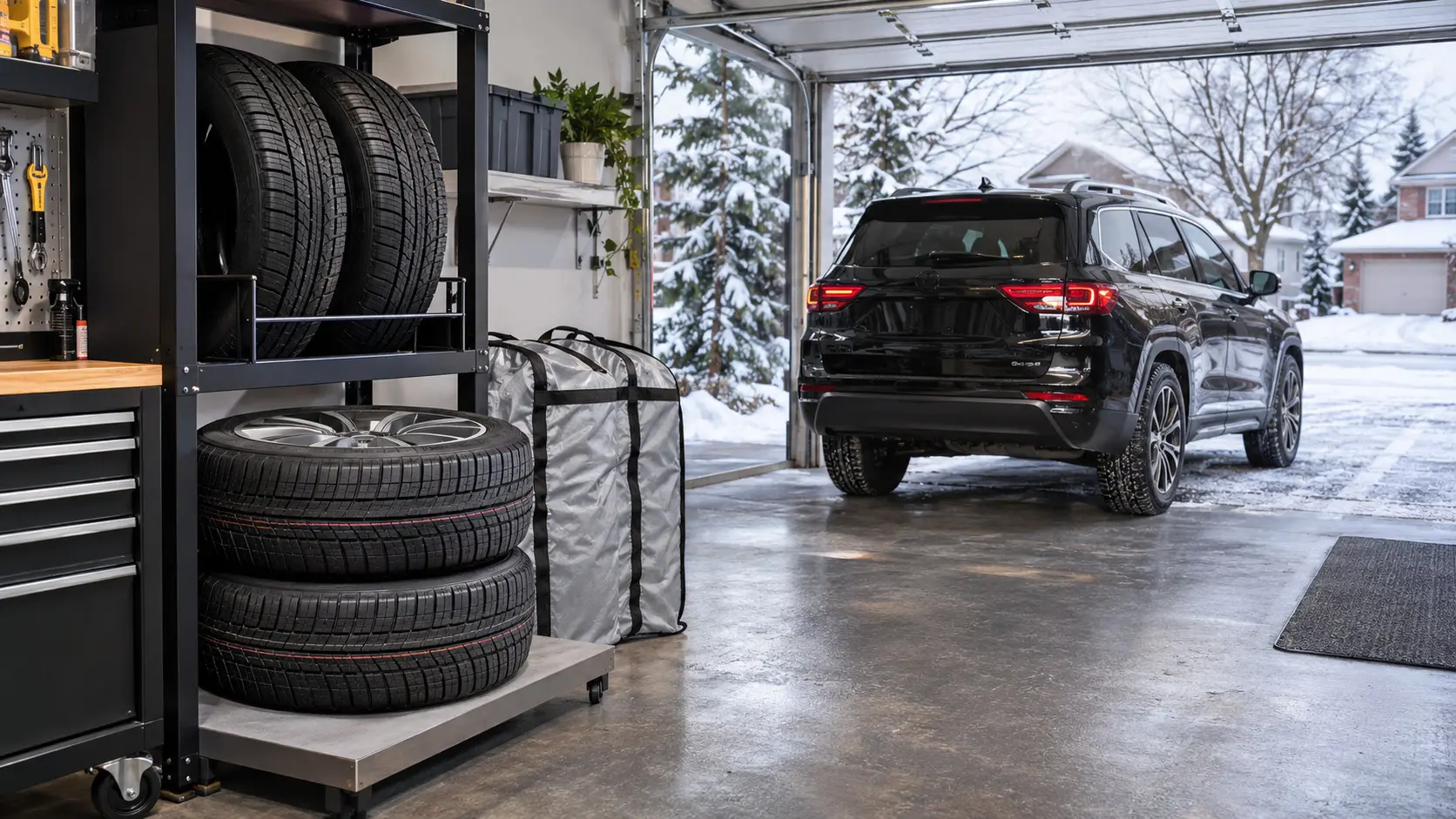
Storing Your Off-Season Tires: How to Store All-Season and Summer Tires Correctly
When winter arrives in Canada, switching to winter tires is an important part of preparing your vehicle for colder temperatures, snow, and icy roads. But what happens to the all-season or summer tires you remove? Proper off-season tire storage is just as important as choosing the right tires for the driving season.
Leaving tires exposed to sunlight, moisture, extreme temperatures, or improper stacking can contribute to premature rubber ageing, deformation, and reduced tire life. Even tires with plenty of tread remaining can deteriorate when stored under unsuitable conditions.
Fortunately, storing your summer or all-season tires correctly does not require expensive equipment. With the right preparation, storage location, and positioning, you can help preserve their condition until the next seasonal tire change.
This complete guide explains how to store tires properly in Canada, including the differences between tires mounted on rims and unmounted tires, recommended storage conditions, common mistakes, and what to inspect before reinstalling your tires in spring.
Why Proper Off-Season Tire Storage Matters
Proper tire storage helps protect rubber compounds, maintain tire shape, and reduce avoidable deterioration while tires are not being used.
Many Canadian drivers store their summer or all-season tires for several months, often from late fall until spring. During this time, environmental conditions can affect the tires even though they are not accumulating kilometres on the road.
Protecting the Rubber Compound
Tires contain specially formulated rubber compounds designed to provide traction, flexibility, durability, and resistance to wear. However, rubber naturally ages through exposure to oxygen, ozone, heat, and ultraviolet (UV) radiation.
Improper storage can accelerate some of these ageing processes. Over time, deterioration may contribute to:
- Surface cracking in the tread or sidewall.
- Loss of rubber flexibility.
- Changes in the tire’s physical properties.
- Reduced service life.
- Potential safety concerns if deterioration becomes significant.
Good storage practices cannot stop rubber ageing completely, but they can reduce unnecessary exposure to conditions that accelerate it.
Preventing Tire Deformation
Tires are engineered to support vehicle loads while maintaining their intended shape. During extended storage, improper positioning or heavy objects placed on tires can create unnecessary stress.
Unmounted tires and tires mounted on wheels require different storage arrangements. Understanding this distinction is one of the most important parts of seasonal tire storage.
Protecting Your Tire Investment
A quality set of summer or all-season tires represents a meaningful investment. Proper storage can help avoid preventable damage and may allow otherwise serviceable tires to remain in use longer.
However, storage does not reverse existing tread wear, sidewall damage, or age-related deterioration. Tires should always be inspected before returning to service.
What Is the Best Way to Store Summer and All-Season Tires?
The best way to store off-season tires is indoors, in a cool, dry, clean, and dark environment, away from direct sunlight, ozone-producing equipment, chemicals, and excessive heat.
Before storage, clean the tires, allow them to dry completely, inspect their condition, and position them according to whether they are mounted on rims.
| Storage Factor | Recommended Practice | Why It Matters |
|---|---|---|
| Temperature | Cool, stable indoor conditions | Limits exposure to excessive heat and temperature fluctuations |
| Sunlight | Avoid direct sunlight and UV exposure | Helps reduce premature rubber deterioration |
| Humidity | Dry, well-controlled environment | Reduces moisture-related problems, including wheel corrosion |
| Ventilation | Clean space away from ozone sources | Helps limit exposure to harmful environmental contaminants |
| Position | Based on whether tires have rims | Helps avoid unnecessary deformation |
| Protection | Clean, dry, opaque tire bags | Limits light, dust, and contamination |
| Chemicals | Keep away from oils, fuels, and solvents | Prevents potentially damaging contact with rubber |
These principles apply to most passenger vehicle tires, including summer tires, all-season tires, and all-weather tires. Always follow any additional storage instructions provided by the tire manufacturer.
How to Prepare Tires for Seasonal Storage: Step by Step
Preparing your tires before storage is essential because dirt, road salt, moisture, and unnoticed damage can cause problems during the months they are not being used.
Step 1: Clean Your Tires Thoroughly
Start by removing accumulated road grime, brake dust, dirt, and salt residue.
Canadian roads can expose tires and wheels to a variety of contaminants, especially during late fall and early spring. Cleaning these materials away before storage helps protect the tires and, when applicable, the wheels.
- Rinse the tires with water to remove loose dirt.
- Use a mild soap or tire-safe cleaner compatible with the manufacturer’s recommendations.
- Gently scrub the tread and sidewall with a suitable brush.
- Remove stones and debris lodged in the tread grooves without damaging the rubber.
- Rinse away remaining cleaning products.
- Clean the wheels if the tires are mounted on rims.
Avoid harsh petroleum-based cleaners, strong solvents, and products not approved for tire rubber.
Step 2: Let the Tires Dry Completely
After washing, allow the tires and wheels to dry thoroughly before placing them in storage bags.
Trapped moisture can create undesirable storage conditions and may contribute to corrosion on metal wheel components.
Pay particular attention to the tread grooves, wheel openings, and areas around the rim where water may remain.
Step 3: Inspect Tread Depth and Tire Condition
Before storing your tires, check whether they are suitable for another driving season.
Look for:
- Uneven tread wear.
- Cracks in the sidewall or tread.
- Bulges or visible structural damage.
- Cuts, punctures, or embedded objects.
- Exposed cords or unusual surface deterioration.
- Signs of wheel damage or corrosion.
In Canada, 1.6 mm is a commonly referenced minimum tread depth for passenger tires, although applicable provincial requirements and vehicle categories should be checked. For wet-weather driving, replacement may be advisable before reaching the legal minimum because water evacuation and hydroplaning resistance generally decline as tread wears.
For example, a summer tire with only 2 mm of remaining tread may technically exceed a 1.6 mm threshold but still offer significantly less wet-road performance than a comparable tire with deeper tread.
TireWarehouse Expert Tip: Inspect your tires before putting them away rather than waiting until spring. If you discover uneven wear, sidewall damage, or insufficient tread depth, you will have time to plan a replacement before the next seasonal changeover.
Step 4: Label Each Tire’s Original Position
Mark where each tire was installed before removing it from the vehicle.
Common labels include:
- FL: Front left.
- FR: Front right.
- RL: Rear left.
- RR: Rear right.
Use removable labels, wheel tags, or another non-damaging identification method.
This information helps your tire technician evaluate wear patterns and determine the appropriate rotation arrangement when the tires are reinstalled.
Remember that directional tires, staggered wheel setups, and some vehicle-specific configurations may limit rotation options.
Step 5: Place Tires in Appropriate Storage Bags
Once the tires are clean and completely dry, consider placing them in individual opaque tire storage bags.
Purpose-made tire bags or suitable heavy-duty bags can help reduce exposure to dust, light, and contaminants. Follow the tire manufacturer’s guidance regarding sealed storage and moisture control.
Do not seal damp tires inside plastic bags. Avoid adding tire dressings or petroleum-based products before storage unless specifically approved by the tire manufacturer.
How to Store Tires With Rims vs. Without Rims
The correct storage position depends on whether the tires remain mounted on their wheels. Mounted tire-and-wheel assemblies can generally be stacked or hung using appropriate equipment, while unmounted tires are best stored upright.
| Storage Method | Tires With Rims | Tires Without Rims |
|---|---|---|
| Stacked horizontally | Generally acceptable | Not recommended for extended storage |
| Stored upright | Possible with suitable support | Preferred method |
| Hung from wheel hooks | Acceptable using suitable wheel supports | Not recommended |
| Placed on tire racks | Yes, with appropriate rack design | Yes, with proper tread support |
| Special consideration | Check inflation pressure and wheel support | Avoid deformation of the beads and sidewalls |
How to Store Tires Mounted on Rims
When tires remain mounted on their wheels, the assembly is more structurally supported and offers additional storage options.
Option 1: Stack the wheel assemblies horizontally.
Place them on a clean, stable, level surface or a suitable tire storage platform. Keep stacks low enough to remain stable and avoid placing heavy equipment on top.
Option 2: Hang the assemblies from suitable wheel supports.
Mounted assemblies can be suspended using properly rated hooks or storage equipment designed to support the wheel. The assembly should be supported by the wheel, not by a hook pressing directly into the tire rubber.
Option 3: Use a purpose-built tire rack.
A tire rack can help organize the storage area and keep assemblies away from dirt and standing water.
Check the inflation pressure before storage and follow the tire or vehicle manufacturer’s recommendations for stored wheel assemblies. Avoid assuming that every tire should be fully deflated or inflated to its maximum sidewall pressure.
How to Store Tires Without Rims
Unmounted tires should generally be stored vertically, standing on their tread.
This arrangement helps maintain their natural shape and avoids unnecessary stress on the tire beads.
For best results:
- Position each tire upright on a clean, level surface or suitable rack.
- Keep tires away from sharp edges and excessive pressure.
- Rotate their resting position periodically if recommended by the manufacturer.
- Avoid hanging unmounted tires from hooks.
- Avoid long-term horizontal stacking unless the tire manufacturer specifically permits it.
The bead is the reinforced area that creates a secure seal between the tire and wheel. Improper support can distort this area and potentially complicate mounting.
Where Should You Store Off-Season Tires in Canada?
A temperature-controlled indoor space is generally the best location for storing summer or all-season tires through a Canadian winter. A dry basement, suitable garage, or professional tire storage facility can work well.
1. Climate-Controlled Garage
A heated or temperature-controlled garage can be an excellent option if it is clean, dry, and free from excessive heat or chemical exposure.
Keep tires away from:
- Space heaters and furnaces.
- Electric motors and ozone-generating equipment.
- Gasoline, oil, and chemical containers.
- Direct sunlight through windows.
- Standing water or melting snow.
Be especially cautious with garages where vehicles bring in road salt, slush, and moisture throughout winter.
2. Basement Storage
A dry basement with stable temperatures can provide favourable tire storage conditions.
However, avoid areas with excessive humidity, flooding risks, or nearby heating equipment. Tire storage may also be restricted by building rules or fire-safety requirements.
3. Unheated Garage
An unheated garage can be used when no better option is available, but it is less ideal in regions experiencing prolonged extreme cold or significant temperature fluctuations.
In cities such as Winnipeg, Edmonton, Ottawa, and Québec City, winter temperatures can fall far below freezing.
Some summer performance tires are particularly sensitive to very low temperatures and may require special handling or storage precautions.
Always consult the tire manufacturer’s temperature guidance. Certain ultra-high-performance summer tires can be damaged by flexing, rolling, mounting, or handling them while excessively cold.
4. Outdoor Shed
An outdoor shed may protect tires from direct precipitation, but it often lacks temperature and humidity control.
Potential concerns include:
- Extreme winter cold.
- High summer temperatures.
- Moisture and condensation.
- Rodent activity.
- Dust and chemical exposure.
If a shed is your only option, choose a dry, enclosed space and follow the tire manufacturer’s temperature restrictions. Keep tires off wet surfaces and protect them from sunlight.
5. Professional Tire Storage Facility
Professional seasonal tire storage can be a practical solution for drivers who lack suitable space at home.
Many tire retailers and automotive service centres offer seasonal tire storage, sometimes referred to as a tire hotel.
Before choosing a provider, ask about environmental controls, identification procedures, insurance coverage, inspection services, and whether storage includes the wheels.
How Cold Is Too Cold to Store Summer Tires?
There is no single minimum storage temperature that applies to every summer tire. Cold-weather limitations depend on the rubber compound, tire construction, and manufacturer’s specifications.
Summer tires are generally designed to deliver their intended performance in warmer conditions. Their rubber compounds can become less flexible as temperatures decrease.
The commonly discussed 7°C guideline helps drivers understand when winter tires may become more suitable for cold-weather driving. However, 7°C is not a universal minimum storage temperature or an automatic damage threshold for summer tires.
Standard Summer Tires vs. Ultra-High-Performance Tires
Some performance-oriented summer tires have manufacturer warnings against storage or handling below specified temperatures.
For certain models, extremely cold conditions can make the rubber susceptible to cracking if the tire is flexed or subjected to impact.
Other summer tires may have different requirements.
For this reason, do not assume that all summer tires can safely remain in an unheated Canadian garage throughout winter.
TireWarehouse Expert Tip: If you own ultra-high-performance summer tires, check the exact manufacturer’s cold-weather storage instructions before temperatures drop. If tires have been exposed to temperatures below their permitted range, allow them to warm gradually according to manufacturer guidance before moving, mounting, inflating, or handling them.
Can You Store Tires Outside During Winter?
Outdoor tire storage is generally not recommended for extended periods, especially during Canadian winters. Exposure to sunlight, precipitation, temperature extremes, and environmental contaminants makes it harder to maintain suitable storage conditions.
Even when covered, tires stored outdoors can experience condensation, freezing moisture, and large temperature changes.
If temporary outdoor storage is unavoidable:
- Keep the tires away from direct sunlight.
- Use a weather-resistant cover that does not trap moisture.
- Place them on a clean, dry, elevated platform.
- Avoid contact with snow, ice, and standing water.
- Prevent contact with chemicals and petroleum products.
- Move them to appropriate indoor storage as soon as practical.
These precautions reduce some exposure risks but do not make outdoor storage equivalent to a controlled indoor environment.
Should Tires Be Stored in Plastic Bags?
Yes, suitable tire storage bags can help protect clean, dry tires from light, dust, and contaminants. However, the bags must be used correctly to avoid trapping moisture.
Benefits of Tire Storage Bags
- Reduce direct exposure to dust and dirt.
- Help protect against light exposure when opaque.
- Keep storage areas cleaner.
- Make tires easier to identify and organize.
- Limit contact with some environmental contaminants.
Common Bagging Mistakes
Avoid placing wet tires inside sealed bags or leaving moisture trapped around the wheels.
Also avoid storing bagged tires near furnaces, electric motors, or other sources of excessive heat and ozone.
Storage bags are a protective accessory, not a substitute for a suitable storage environment.
How Long Can Summer or All-Season Tires Be Stored?
Summer and all-season tires can generally be stored throughout the off-season when storage conditions are appropriate. However, there is no universal maximum storage period or guaranteed tire lifespan.
A typical seasonal storage period in Canada may last approximately four to six months, depending on the region, driving conditions, and tire changeover schedule.
For example, drivers in southern Ontario may switch tires at different times than drivers in northern Alberta or Manitoba.
Does Tire Age Matter During Storage?
Yes. Tire rubber continues to age even when the tire is not being driven.
Factors influencing tire service life include:
- Manufacturing date.
- Storage environment.
- Previous heat and sunlight exposure.
- Driving conditions.
- Inflation and maintenance history.
- Physical damage.
- Tire construction and rubber compound.
Transport Canada advises drivers to pay attention to tire age and condition. Manufacturer recommendations can vary, and some recommend replacement at a specified age regardless of remaining tread depth.
Follow the tire and vehicle manufacturers’ recommendations, and have older tires inspected by a qualified tire professional.
How to Read the Tire Date Code
Many tires have a Tire Identification Number that includes a four-digit date code identifying the week and year of manufacture.
For example, a code ending in 2423 indicates the tire was manufactured during the 24th week of 2023.
This information helps determine the tire’s chronological age, but it does not establish whether the tire is safe by itself.
Common Tire Storage Mistakes to Avoid
The most common tire storage mistakes involve improper positioning, exposure to environmental hazards, and failing to inspect tires before storage.
| Common Mistake | Potential Consequence | Better Practice |
|---|---|---|
| Storing tires in direct sunlight | Accelerated rubber ageing | Choose a dark indoor location |
| Storing wet tires in sealed bags | Trapped moisture and possible wheel corrosion | Dry tires thoroughly first |
| Hanging tires without rims | Potential bead or shape distortion | Store unmounted tires upright |
| Placing tires near electric motors | Possible ozone exposure | Keep tires away from ozone sources |
| Leaving tires near gasoline or solvents | Potential rubber deterioration | Use a clean, chemical-free area |
| Ignoring cold-weather restrictions | Possible damage to sensitive summer compounds | Check model-specific manufacturer instructions |
| Failing to inspect tires | Damage may go unnoticed until installation | Inspect before storage and before reuse |
| Stacking heavy items on tires | Unnecessary deformation or damage | Use dedicated storage space |
Seasonal Tire Storage Checklist for Canadian Drivers
Use this practical checklist every time you remove your summer or all-season tires for winter storage.
Before Storage
- Inspect tread depth and overall tire condition.
- Check for cracks, cuts, bulges, and punctures.
- Clean dirt, brake dust, and road salt from tires and wheels.
- Allow tires and wheels to dry completely.
- Record each tire’s original vehicle position.
- Check the manufacturing date and relevant age recommendations.
- Review manufacturer-specific storage instructions.
During Storage
- Choose a cool, dry, indoor location.
- Keep tires away from direct sunlight.
- Avoid ozone-producing equipment and chemical exposure.
- Use appropriate tire storage bags when suitable.
- Store mounted assemblies using approved stacking or hanging methods.
- Store unmounted tires upright.
- Check periodically for moisture, damage, or unsuitable conditions.
Before Spring Installation
- Remove storage bags and inspect each tire.
- Check tread depth and wear patterns.
- Look for cracks, bulges, or other damage.
- Have questionable tires assessed by a professional.
- Verify correct tire size, load rating, and speed rating.
- Check inflation pressure when the tires are cold.
- Confirm wheel fasteners are tightened to vehicle specifications.
- Ensure the tire pressure monitoring system (TPMS) operates correctly.
How to Inspect Stored Tires Before Reinstalling Them
Before reinstalling tires after winter, inspect their condition and confirm they remain appropriate for the vehicle and upcoming driving conditions.
Check the Tread
Measure tread depth at several points across each tire using a suitable tread depth gauge.
Uneven wear may indicate alignment problems, incorrect inflation pressure, worn suspension components, or other issues requiring attention.
Summer and all-season tires need sufficient tread to channel water away from the contact patch during rainy spring and summer conditions.
As tread becomes shallower, the risk of hydroplaning can increase, particularly at higher speeds or in standing water.
Inspect Sidewalls and Beads
Look carefully for cracking, cuts, bulges, unusual distortion, or other visible damage.
If a tire shows signs of structural damage, do not reinstall it without a professional assessment.
For tires stored without wheels, the tire technician should also inspect the bead areas before mounting.
Check Tire Pressure
Tire inflation pressure changes with temperature, and stored mounted assemblies may lose some pressure over time.
After installation, check cold tire pressure against the vehicle manufacturer’s specifications, usually found on the driver’s door-jamb placard or in the owner’s manual.
Do not use the maximum pressure printed on the tire sidewall as the vehicle’s recommended operating pressure.
Confirm the Correct Seasonal Changeover Timing
Do not reinstall summer tires simply because the calendar says spring has arrived.
Consider actual temperatures, overnight lows, road conditions, and the possibility of late-season snow or freezing rain.
For many Canadian drivers, consistently warmer conditions around or above 7°C can be a useful general signal for considering a change from winter tires. However, tire-specific temperature restrictions and provincial requirements take priority.
In Quebec, winter tire requirements generally apply from December 1 through March 15 for covered vehicles, subject to applicable exceptions. In British Columbia, designated routes have winter tire or chain requirements during specified periods, commonly October 1 through March 31 or April 30 depending on the route.
Always check current provincial regulations before changing tires, especially when travelling between regions.
DIY Tire Storage vs. Professional Tire Storage
Both home storage and professional tire storage can be suitable. The best choice depends on available space, environmental conditions, convenience, and the services offered.
| Factor | DIY Home Storage | Professional Storage |
|---|---|---|
| Cost | Usually lower ongoing cost | Typically involves a seasonal fee |
| Space | Requires garage, basement, or dedicated area | Does not require home storage space |
| Environmental conditions | Depends on the home environment | Depends on the facility’s controls |
| Convenience | Requires handling and organizing tires | May be coordinated with seasonal changeovers |
| Inspection | Owner must arrange inspections | Some providers offer inspection services |
| Access | Usually available whenever needed | May require advance notice |
If you have a clean, dry, suitable storage space, storing tires at home can be cost-effective.
If you live in a condominium, apartment, or home without adequate storage, a professional facility may offer greater convenience.
Ask providers how tires are stored rather than assuming every facility uses temperature-controlled conditions.
Special Considerations for Different Tire Types
Although the general storage principles are similar, different tire categories can have specific handling requirements.
Summer Tires
Summer tires are designed primarily for warm-weather performance, including dry and wet-road handling.
Some performance summer tires have strict low-temperature handling restrictions. Check the manufacturer’s instructions before storing them in unheated spaces.
All-Season Tires
All-season tires are designed for a broader range of conditions than dedicated summer tires, but they are not automatically suitable for severe winter driving.
When storing all-season tires, use the same basic cleaning, inspection, environmental protection, and positioning practices.
Do not assume an M+S marking provides the same winter capability as a tire carrying the Three-Peak Mountain Snowflake (3PMSF) symbol.
All-Weather Tires
All-weather tires are generally designed for year-round use and commonly carry the 3PMSF symbol.
Drivers who switch between all-weather and another seasonal set should store the unused tires using the same principles outlined in this guide.
Run-Flat and Performance Tires
Run-flat tires and certain high-performance models may have additional manufacturer-specific requirements relating to inspection, handling, mounting, or temperature exposure.
Always prioritize those instructions over general tire storage recommendations.
Frequently Asked Questions About Off-Season Tire Storage
1. What is the best way to store summer tires during winter?
Store summer tires in a cool, dry, dark indoor location away from sunlight, heat, ozone, and chemicals. Clean and dry them first. Unmounted tires should generally stand upright, while mounted tire-and-wheel assemblies may be stacked or supported using suitable equipment.
2. Is it better to store tires vertically or horizontally?
It depends on whether the tires have rims. Unmounted tires are generally best stored vertically on their tread. Tires mounted on wheels can usually be stacked horizontally or hung using appropriate wheel supports, subject to manufacturer guidance.
3. Can summer tires be stored in an unheated garage in Canada?
Sometimes, but suitability depends on the tire model and local temperatures. Some ultra-high-performance summer tires have specific low-temperature restrictions. Check the manufacturer’s instructions before using an unheated garage during a Canadian winter.
4. Should tires be deflated before storage?
Do not automatically deflate tires before storage. Unmounted tires do not contain inflation pressure, while mounted assemblies should be stored according to the tire or vehicle manufacturer’s recommendations. Never assume maximum sidewall pressure is the correct storage pressure.
5. Can I stack four tires on top of each other?
Mounted tire-and-wheel assemblies can generally be stacked if the stack is stable and the storage arrangement is appropriate. Long-term stacking of unmounted tires is generally discouraged because it can place unnecessary stress on their shape and bead areas.
6. Do tire storage bags actually help?
Yes. Suitable opaque storage bags can help limit exposure to light, dust, and contaminants. Tires must be completely dry before bagging, and bags should not be considered a replacement for proper temperature and moisture control.
7. How long can tires sit in storage without being used?
Tires can remain in suitable storage for a normal off-season period, but there is no universal safe maximum duration. Ageing continues during storage, and serviceability depends on tire age, condition, previous use, and manufacturer recommendations.
8. Can tires develop flat spots while in storage?
Improper support or prolonged loading can contribute to deformation. Unmounted tires should generally be stored upright with suitable support, while mounted assemblies should follow the recommended storage method. Tires left installed on a stationary vehicle require separate precautions.
9. Should I apply tire shine before storing tires?
It is generally unnecessary. Some tire dressings contain ingredients that may be unsuitable for prolonged storage. Clean tires with approved products and avoid petroleum-based treatments unless specifically recommended by the tire manufacturer.
10. Can tires be stored directly on a concrete floor?
A clean, dry concrete floor may be acceptable for upright unmounted tires, but a suitable rack or platform can help keep tires away from moisture and contaminants. Avoid wet floors, chemical spills, and sharp surfaces.
11. Does freezing weather permanently damage summer tires?
Not necessarily. The risk depends on the tire’s rubber compound and manufacturer-specific limitations. Certain performance summer tires can become vulnerable to cracking when handled or flexed at extremely low temperatures. Follow the exact model’s cold-weather guidance.
12. Should I rotate my tires after taking them out of storage?
Rotation may be appropriate depending on tread wear, vehicle configuration, and tire design. Directional tires, staggered fitments, and manufacturer specifications can limit rotation patterns. A tire professional can recommend the correct arrangement.
13. How do I know whether stored tires are still safe?
Inspect tread depth, sidewalls, beads, tyre age, and visible wear or damage. If you notice cracking, bulges, deformation, or other concerns, have the tires assessed by a qualified technician before installation. Visual inspection alone cannot identify every internal defect.
14. Is professional tire storage worth paying for?
It can be worthwhile when home storage conditions are unsuitable or space is limited. Compare the provider’s storage environment, handling procedures, fees, insurance terms, and included services before deciding.
Final Recommendations: Keep Your Off-Season Tires Ready for Spring
Proper tire storage is a simple but valuable part of seasonal vehicle maintenance. Whether you drive through Toronto’s changing spring weather, Calgary’s winter temperature swings, or Montreal’s snowy streets, protecting your off-season tires helps keep them in better condition for their next period of use.
The most important steps are straightforward: clean and dry your tires, inspect them carefully, choose an appropriate indoor location, and store them in the correct position based on whether they are mounted on rims.
For summer tires, pay special attention to manufacturer-specific cold-weather restrictions. For all-season tires, remember that good storage preserves condition but does not replace the need for adequate tread depth, proper inflation, and seasonal suitability.
Before reinstalling any stored tires, confirm they remain safe and appropriate for your vehicle and driving conditions.
At TireWarehouse.ca, we believe informed tire care helps Canadian drivers protect their investment and make more confident decisions about tire maintenance and replacement.
If your stored tires are worn, damaged, or approaching the end of their recommended service life, explore replacement options before your next seasonal changeover.
Recommended Related Reading
Continue learning about seasonal tire care, Canadian driving conditions, and tire maintenance with these related topics:
- All-Season vs. All-Weather Tires in Canada: Understand how these tire categories differ and which may be more appropriate for your driving conditions.
- When to Switch From Winter Tires to Summer Tires: Learn how temperature, road conditions, and provincial regulations affect seasonal changeover timing.
- How to Check Tire Tread Depth: Discover how to measure tire wear and recognize when replacement may be necessary.
- How Long Do Tires Last in Canada? Understand tire ageing, mileage, maintenance, and the factors that influence replacement decisions.
- Tire Pressure Guide for Canadian Drivers: Learn how changing temperatures affect inflation pressure and tire performance.
- Summer Tires vs. All-Season Tires: Compare warm-weather traction, handling, comfort, and practical suitability.
Explore tire information and shopping resources at TireWarehouse.ca.
In stock & ready to ship
Find the tires you need, delivered from a warehouse near you