
Is Your Spare Tire Winter-Ready? Essential Maintenance Steps Most Drivers Forget
Your winter tires might be ready for snow, but what about the spare hiding in your trunk? Discover the essential spare tire maintenance checks Canadian drivers often overlook, from cold-weather tire pressure and tread condition to emergency equipment and safe winter roadside procedures.
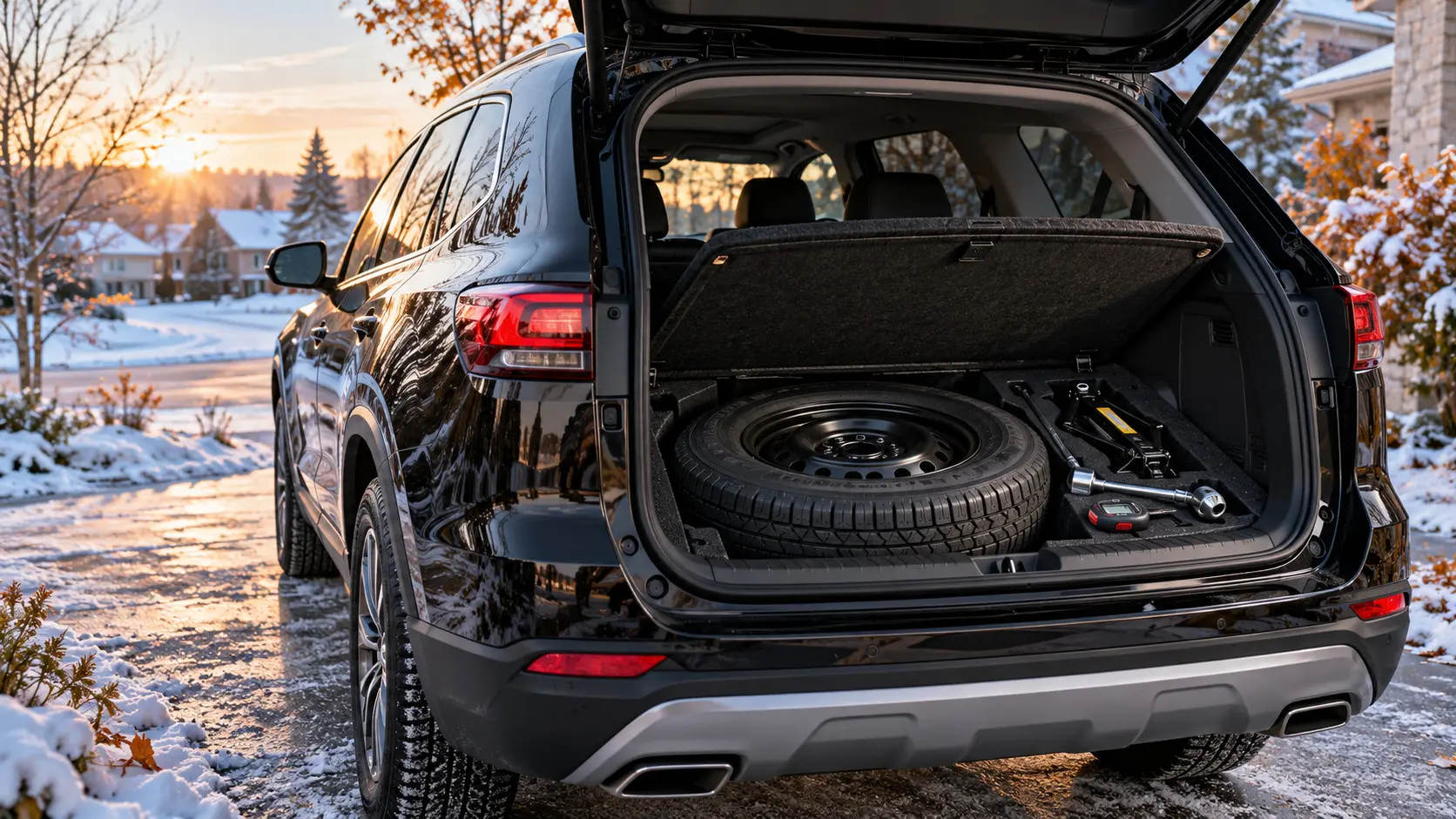
Is Your Spare Tire Winter-Ready? Essential Maintenance Steps Most Drivers Forget
You’ve installed your winter tires, topped up your windshield washer fluid, checked your battery, and packed an emergency blanket. Your vehicle seems ready for another Canadian winter. But there’s one important piece of equipment you may have forgotten: your spare tire.
A flat tire is inconvenient on a sunny summer afternoon. On a freezing winter evening, along a snow-covered highway or an isolated rural road, it can become a serious safety concern. And discovering that your spare tire is flat, damaged, or incompatible with your vehicle makes an already difficult situation worse.
Whether you’re commuting through Toronto, travelling between Calgary and Edmonton, or navigating snowy roads in Quebec, spare tire maintenance should be part of your winter vehicle preparation.
The good news? Most essential checks take only a few minutes. This guide explains how to inspect your spare tire, maintain proper tire pressure, identify hidden damage, understand winter traction limitations, and prepare for a roadside emergency before temperatures drop.
Why Your Spare Tire Needs Special Attention Before Winter
Your spare tire needs regular inspection because it can lose air pressure, deteriorate with age, and develop problems even when it has never been used. Winter temperatures make these issues especially important.
Most drivers concentrate on the four tires touching the road. That’s understandable: winter tires directly affect braking, steering, traction, and handling on snow and ice. However, the spare tire is your backup when one of those tires fails.
Imagine getting a puncture during a January road trip. You pull over, open your trunk, and discover your temporary spare has almost no air pressure. The tire might look perfectly normal, but it may not be safe to install.
Cold Temperatures Reduce Tire Pressure
As air temperature decreases, tire inflation pressure generally drops. A common approximation is a decrease of about 1 psi for every 5–6°C reduction in temperature, although the actual change depends on the tire and conditions.
That matters for a spare tire stored in your vehicle for months without inspection.
For example, a tire inflated during mild autumn weather may be noticeably underinflated when temperatures reach -20°C. If the spare was already losing air slowly, the problem could be much worse.
Underinflation can cause excessive heat buildup, poor handling, and tire damage when the spare is driven on.
Winter Roads Increase the Consequences of a Flat Tire
Canadian winter driving presents several challenges that make a functional spare especially valuable:
- Potholes: Freeze-thaw cycles can damage tire sidewalls and wheels.
- Hidden road debris: Snow and slush may conceal sharp objects.
- Road salt and moisture: Corrosion can affect wheel hardware and underbody spare tire carriers.
- Extreme cold: Working outside becomes more difficult, particularly without proper gloves and clothing.
- Reduced visibility: Snowfall, blowing snow, and shorter daylight hours increase roadside hazards.
- Remote travel: Roadside assistance may take longer to reach some rural locations during severe weather.
A properly maintained spare won’t prevent a puncture, but it can provide an additional recovery option when conditions allow a safe tire change.
First, Know What Type of Spare Tire Your Vehicle Has
Before checking your spare tire, identify whether your vehicle has a full-size spare, a temporary compact spare, or no spare at all. Each arrangement has different maintenance requirements and winter-driving limitations.
Full-Size Spare Tire
A full-size spare is generally similar in dimensions to your vehicle’s regular tires. Some vehicles include a matching wheel and tire, while others carry a full-size spare that differs in tread design, construction, or intended use.
Advantages may include:
- Greater driving flexibility than a compact temporary spare when fully compatible.
- Potentially more suitable traction if fitted with an appropriate winter tire.
- Fewer temporary-use restrictions when the spare matches the vehicle’s approved tire specifications.
However, a full-size spare is not automatically winter-ready. If your vehicle uses four dedicated winter tires but the spare is an all-season tire, its snow and ice traction may be significantly different.
Also check whether the spare matches the required tire size, load capacity, and other vehicle specifications. On all-wheel-drive vehicles, differences in rolling circumference can be particularly important.
Compact Temporary Spare Tire (Donut)
A compact spare, commonly called a donut tire, is smaller and lighter than a conventional tire. It is intended for limited emergency use rather than normal everyday driving.
Many temporary spares have a maximum speed of 80 km/h, but drivers must follow the restrictions printed on their particular spare and listed in the vehicle owner’s manual.
Compact spare tires typically offer less traction than dedicated winter tires, especially on snow, ice, and slush. Their different dimensions can also affect vehicle handling and braking.
They should be used only as directed by the vehicle manufacturer and replaced with a suitable regular tire as soon as practical.
Vehicles Without a Spare Tire
Some newer vehicles come with a tire mobility kit, sealant and compressor, or run-flat tires instead of a traditional spare.
If your vehicle doesn’t have a spare, inspect the equipment it does provide. Check the sealant expiration date, compressor operation, and manufacturer’s instructions.
Remember that tire repair kits cannot fix every type of damage. Large punctures, sidewall damage, and some bead or wheel problems may require towing.
| Spare Tire Type | Winter Considerations | Recommended Preparation |
|---|---|---|
| Matching full-size winter spare | May provide winter traction comparable to the installed tires when specifications and condition match. | Check pressure, tread depth, age, size, and vehicle compatibility. |
| Full-size all-season spare | May have substantially less grip on snow and ice than the vehicle’s winter tires. | Confirm compatibility and use extra caution; follow applicable regulations. |
| Compact temporary spare | Limited traction, speed, distance, and sometimes installation-position restrictions. | Verify the higher inflation pressure and follow all manufacturer limitations. |
| Tire repair kit | Cannot repair every puncture or tire failure. | Inspect the compressor, sealant expiration date, and operating instructions. |
| Run-flat tire system | Driving distance and speed after pressure loss depend on the specific tire and vehicle. | Review manufacturer limits and confirm the TPMS is working. |
1. Check Your Spare Tire Pressure Before the First Deep Freeze
Checking spare tire pressure is one of the most important winter maintenance tasks. A spare can lose inflation pressure while sitting unused, and colder temperatures can reduce it further.
One common mistake is assuming that the spare uses the same recommended pressure as the vehicle’s regular tires.
That’s not always true.
How Much Air Pressure Does a Spare Tire Need?
The correct pressure depends on the type of spare and the vehicle manufacturer’s specifications.
Many compact temporary spare tires require approximately 60 psi (414 kPa), while full-size spares commonly use pressures appropriate to their approved vehicle application.
These are not universal settings. Always confirm the required cold inflation pressure using the spare tire markings, vehicle owner’s manual, or manufacturer-provided instructions.
Do not inflate a temporary spare to the regular tire pressure simply because both are stored in the same vehicle.
How to Check Spare Tire Pressure Properly
- Locate the spare. It may be under the trunk floor, attached to the rear of the vehicle, or mounted underneath the vehicle.
- Inspect the valve stem. Look for cracks, corrosion, or visible damage.
- Use a reliable tire pressure gauge. Make sure its measurement range is suitable for your spare, especially a high-pressure compact tire.
- Measure the pressure when cold. Ideally, the tire should not have been driven on recently and should be close to the surrounding ambient temperature.
- Compare the reading with the specified pressure. Do not use the tire’s maximum sidewall pressure as a substitute for vehicle-specific instructions.
- Inflate if necessary. Use a suitable air compressor and recheck the reading.
- Replace the valve cap. It helps keep dirt and moisture away from the valve.
TireWarehouse Expert Tip: Add your spare tire to your monthly tire pressure inspection. Many vehicles do not monitor spare tire pressure through their TPMS, so you may receive no dashboard warning when the spare becomes underinflated.
2. Inspect the Spare Tire for Cracks, Bulges, and Hidden Damage
A spare tire can deteriorate even without accumulating kilometres. Rubber ageing, temperature exposure, storage conditions, and moisture can affect its condition over time.
Before winter, remove the spare from its storage compartment if it is safe and practical to do so, then inspect the entire accessible tire.
Examine the Sidewalls
Look carefully for:
- Cracks or splitting in the rubber.
- Bulges or unusual deformation.
- Deep cuts or abrasions.
- Exposed cords or internal reinforcement.
- Evidence of oil or chemical contamination.
- Damage around the bead where the tire meets the wheel.
Bulges, exposed cords, and significant cracking are warning signs that the tire may be unsafe. Do not rely on a damaged spare simply because it still holds air.
Check the Tread Surface
Inspect the tread for embedded nails, screws, cuts, unusual wear, or visible separation.
A full-size spare that was previously used may have less tread remaining than expected. If it is intended for winter service, its tread condition and winter suitability deserve the same attention as your other winter tires.
Inspect the Wheel and Storage Area
Check for corrosion, bent wheel flanges, or damage around the mounting holes.
If your spare is mounted underneath the vehicle, examine the carrier and retaining mechanism according to the owner’s manual. Salt, water, and road grime can contribute to corrosion or make the mechanism difficult to operate.
Do not crawl beneath an unsupported vehicle or force a heavily corroded spare tire carrier. Have a qualified technician inspect it instead.
3. Check the Spare Tire’s Age Using the DOT Date Code
Spare tires age even when unused. The manufacturing date helps you determine whether the tire deserves closer inspection or replacement consideration.
To find the age, locate the Tire Identification Number on the sidewall. The final four digits of the applicable DOT date code identify the manufacturing week and year.
For example:
- 3522: Manufactured during week 35 of 2022.
- 1020: Manufactured during week 10 of 2020.
- 4818: Manufactured during week 48 of 2018.
The complete date code may appear on only one sidewall, so checking the inward-facing side may be necessary.
How Old Is Too Old for a Spare Tire?
There is no single age at which every tire automatically becomes unsafe. Tire lifespan depends on storage, use, environmental exposure, construction, and manufacturer guidance.
As a practical maintenance approach, tires that have been in service for approximately five years or more deserve regular professional assessment, while many tire manufacturers recommend replacement no later than 10 years from manufacture, regardless of tread appearance. Some manufacturers specify earlier limits.
Follow the recommendations of your tire and vehicle manufacturers rather than relying on age alone.
A spare tire approaching 10 years old should not be assumed reliable merely because it has never touched the pavement.
Important: A tire’s manufacturing date is not an expiration date. However, advanced age, visible deterioration, repeated pressure loss, or unknown storage history are strong reasons to request a professional inspection.
4. Make Sure Your Spare Tire Has Enough Tread for Winter Conditions
Tread depth affects a tire’s ability to channel water and slush and maintain traction. For a full-size spare intended for winter use, adequate tread depth is particularly important.
Many Canadian jurisdictions use a general minimum tread depth of approximately 1.6 mm for passenger vehicle tires, but legal requirements and winter-specific rules can differ.
For winter driving, a commonly recommended replacement consideration point is around 4 mm of remaining tread, because snow and slush performance can deteriorate before the tire reaches the general legal minimum.
This is a practical winter-performance guideline, not a universal legal minimum.
How to Measure Spare Tire Tread Depth
- Use a dedicated tread depth gauge.
- Measure several main tread grooves across the tire.
- Take readings at multiple points around the circumference.
- Look for uneven wear or unusually shallow sections.
- Compare the measurements with legal requirements and the manufacturer’s recommendations.
If your full-size spare has insufficient tread for winter driving, consider replacing it with an appropriate tire before relying on it for emergency use.
Compact temporary spares are different. Their tread designs and use restrictions are not equivalent to those of conventional winter tires. Do not assume a compact spare is suitable for extended snow or ice driving simply because its tread appears deep.
5. Understand Why a Spare Tire May Not Perform Like a Winter Tire
Most spare tires are not designed to provide the same winter traction as dedicated winter tires. This difference can affect acceleration, steering, braking, and vehicle stability.
Dedicated winter tires typically use rubber compounds and tread patterns engineered to maintain useful flexibility and grip in cold conditions.
Winter tire performance becomes especially relevant as temperatures approach or fall below approximately 7°C, although actual performance varies by tire model and road conditions.
Winter Tire Markings: 3PMSF and M+S
The Three-Peak Mountain Snowflake symbol (3PMSF) identifies tires that meet a defined snow traction performance standard.
The M+S marking stands for Mud and Snow, but by itself it does not establish the same tested snow-traction performance as the 3PMSF symbol.
A temporary spare may carry neither marking, and even a full-size M+S tire may offer less traction than the dedicated winter tires fitted to your vehicle.
What Happens When One Tire Has Less Winter Grip?
A vehicle with three winter tires and one different spare may experience uneven traction between the wheels.
Depending on the vehicle and conditions, this can affect:
- Braking stability on snow and ice.
- Cornering and steering response.
- Traction during acceleration.
- ABS and electronic stability control behaviour.
- All-wheel-drive and traction-control system operation.
A temporary spare should never be treated as an equivalent substitute for a proper winter tire.
When a tire fails in severe winter conditions, professional roadside assistance or towing may be safer than attempting to continue on a compact spare.
6. Check Spare Tire Compatibility With Your Vehicle
A spare tire must be compatible with your vehicle’s wheel mounting, braking system, drivetrain, and manufacturer specifications. A tire that physically fits is not necessarily approved for use.
This is particularly important if you’ve purchased a used vehicle, changed wheel sizes, or installed aftermarket wheels.
Verify the Tire and Wheel Specifications
Depending on the spare type, relevant specifications include:
- Tire size and overall rolling diameter.
- Load capacity and speed restrictions.
- Wheel bolt pattern and centre bore.
- Wheel offset and brake clearance.
- Approved installation positions.
- Required wheel nuts or bolts.
- Vehicle drivetrain requirements.
Special Considerations for AWD and 4WD Vehicles
Some all-wheel-drive systems are sensitive to differences in tire rolling circumference.
A mismatched tire can cause drivetrain components to operate under conditions they were not designed to handle. Depending on the system, prolonged use may contribute to premature wear or damage.
Always follow the manufacturer’s spare tire instructions, including any limits on distance, speed, drivetrain modes, or installation position.
Do not assume that a full-size spare from another vehicle is acceptable merely because the wheel bolts line up.
7. Inspect Your Jack, Lug Wrench, and Spare Tire Tools
A properly inflated spare is only useful if you can install it safely with the equipment provided. Before winter, confirm that your tire-changing tools are present, complete, and functional.
Vehicles sometimes lose their original tool kits after repairs, ownership changes, or previous roadside emergencies.
Essential Equipment Checklist
- Vehicle-specific jack: Inspect for visible damage and confirm the correct lifting points.
- Lug wrench: Ensure it fits the installed wheel fasteners.
- Locking wheel nut key: Verify it is present if your wheels use locking hardware.
- Spare tire retaining hardware: Check that the tire can be accessed and removed.
- Wheel fasteners: Confirm whether the spare requires different nuts or bolts.
- Owner’s manual: Keep the manufacturer’s lifting and spare tire instructions accessible.
- Wheel chocks: Have suitable chocks available if recommended for your vehicle.
- Torque wrench: Useful for achieving the specified wheel fastener torque after installation.
Wheel fasteners must be tightened according to the manufacturer’s specified torque and sequence. If you cannot complete the installation correctly, seek professional assistance.
Check for Corroded or Seized Hardware
Road salt and moisture can make spare tire carriers, wheel fasteners, and other components difficult to operate.
During a scheduled tire service, ask a technician to check the spare tire access mechanism and confirm that the correct tools are available.
Never use excessive force on a damaged jack or attempt to lift a vehicle on unstable ground.
8. Build a Winter Roadside Emergency Kit Around Your Spare Tire
A spare tire is only one part of winter roadside preparedness. Canadian drivers should also carry equipment that helps them remain visible, warm, and connected while waiting for assistance.
Recommended Winter Emergency Supplies
- Warm gloves, winter boots, and an extra insulated jacket.
- Emergency blanket or sleeping bag.
- Reflective safety vest.
- Flashlight or headlamp with spare batteries.
- Portable phone charger or power bank.
- Compact snow shovel.
- Traction aids suitable for the vehicle.
- Ice scraper and snow brush.
- First-aid kit.
- Drinking water and non-perishable snacks.
- Roadside assistance contact information.
- Portable tire inflator compatible with the required tire pressure.
Transport Canada and Canadian emergency preparedness resources encourage drivers to prepare for seasonal road conditions and keep appropriate emergency supplies in their vehicles.
A portable compressor can be particularly useful for checking or correcting inflation pressure, provided the tire is otherwise safe and the compressor is rated for the pressure required.
However, adding air will not make a structurally damaged tire safe to drive on.
9. Know When It Is Unsafe to Change a Tire During Winter
Not every flat tire should be changed at the roadside. Snow, ice, traffic, limited visibility, and unstable ground can make jacking up a vehicle dangerous.
Before attempting a tire change, evaluate your surroundings.
Situations Where Roadside Assistance Is the Safer Choice
- You are stopped on a narrow highway shoulder.
- Traffic is passing close to the vehicle.
- The ground is icy, soft, uneven, or snow-covered.
- Visibility is poor because of blowing snow or darkness.
- The vehicle is on a steep incline.
- You cannot position the jack on a stable, manufacturer-approved lifting surface.
- The spare is damaged, underinflated, or incompatible.
- You do not have the correct tools or cannot safely perform the procedure.
If your vehicle is in an immediate traffic hazard, follow local emergency guidance and contact emergency services when necessary.
Where it is safe to remain inside the vehicle, keeping your seatbelt fastened while waiting for assistance may be preferable to standing near moving traffic. The safest choice depends on the location and circumstances.
Winter Roadside Safety Tip: Never crawl underneath a vehicle supported only by a jack. Do not attempt a tire change on ice or unstable snowpack. If the location is unsafe, call roadside assistance rather than taking unnecessary risks.
10. Follow Temporary Spare Tire Driving Restrictions
After installing a temporary spare, drive only within the manufacturer’s specified speed, distance, and operating limits. A compact spare is designed to help you reach an appropriate repair location, not to replace a normal tire for an extended period.
How Fast Can You Drive on a Donut Spare?
Many temporary spares are limited to 80 km/h, but the exact maximum speed is printed on the tire or specified in the vehicle manual.
In winter, even that maximum may be too fast for road conditions.
Snow, black ice, slush, and reduced traction may require substantially lower speeds, or make driving on the spare inadvisable altogether.
How Far Can You Drive on a Temporary Spare?
Distance restrictions vary by tire and vehicle. Some manufacturers provide a specific maximum distance, while others instruct drivers to replace the temporary spare as soon as possible.
Do not treat commonly quoted distances as universal limits.
Plan to reach the nearest appropriate service location when road conditions permit, and follow the manufacturer’s instructions.
Driving Precautions After Installation
- Accelerate gently.
- Allow additional following distance.
- Avoid abrupt steering and hard braking.
- Reduce speed well below the tire’s maximum when conditions demand it.
- Avoid unnecessary highway travel.
- Do not exceed the spare’s load limitations.
- Follow any special drivetrain or installation-position instructions.
- Arrange proper tire repair or replacement promptly.
If the vehicle pulls strongly, vibrates abnormally, or becomes difficult to control, stop in a safe location and request assistance.
11. Understand Canadian Winter Tire Rules Before Relying on a Spare
Winter tire requirements vary across Canada, and emergency spare tire use may be subject to specific legal provisions. Drivers should check the regulations for their province and travel route before winter.
Quebec Winter Tire Requirements
In Quebec, most passenger vehicles registered in the province must use compliant winter tires from December 1 through March 15, subject to applicable exemptions and special provisions.
Quebec also has specific rules addressing temporary replacement tires and emergency situations. These provisions should not be interpreted as permission to use a non-compliant tire indefinitely.
Check the current guidance from the Société de l’assurance automobile du Québec (SAAQ) before relying on a spare during the mandatory winter tire period.
British Columbia Winter Tire Requirements
British Columbia requires qualifying winter tires or chains on many designated routes during specified seasonal periods.
For many routes, the requirement applies from October 1 to March 31, while certain routes extend through April 30.
Qualifying winter tires generally require the appropriate M+S or 3PMSF marking and sufficient tread depth, with a 3.5 mm minimum applicable to designated winter tire and chain routes.
Because compact spare tires may not meet the normal winter tire criteria, drivers should confirm the rules governing emergency use and seek professional assistance when necessary.
For current route requirements, consult DriveBC and provincial transportation guidance.
What About Other Canadian Provinces?
Ontario, Alberta, Manitoba, Saskatchewan, and the Atlantic provinces have different winter tire policies and road safety requirements.
Even where dedicated winter tires are not universally mandatory for passenger vehicles, proper tire condition, vehicle control, and safe operation remain essential.
For national tire safety information, consult Transport Canada.
12. Store Your Spare Tire Correctly to Prevent Winter Damage
Proper storage helps protect your spare from unnecessary deterioration and ensures it remains accessible when needed.
For most vehicles, the best approach is to keep the spare in its designated factory storage position, secured with the original retaining hardware.
Spare Tire Storage Tips
- Keep the spare properly secured to prevent movement during driving.
- Remove standing water from the spare tire compartment.
- Inspect the compartment for leaks and corrosion.
- Keep sharp tools and loose metal objects away from the tire.
- Avoid contact with oil, fuel, solvents, and other damaging chemicals.
- Check the underbody spare carrier for corrosion or mechanical damage.
- Make sure luggage and emergency supplies do not prevent access to the spare.
If the spare is stored externally, inspect its protective cover and mounting hardware.
After using the spare, clean and inspect it as appropriate, restore the specified inflation pressure, and secure it correctly once it is suitable for continued emergency service.
How Often Should You Check Your Spare Tire?
Check spare tire pressure approximately once a month and perform a more complete inspection before winter and before long road trips. The exact schedule should also reflect the vehicle manufacturer’s recommendations.
| Maintenance Task | Suggested Frequency | Why It Matters |
|---|---|---|
| Check spare tire pressure | Monthly and before long trips | Detects pressure loss before an emergency. |
| Inspect sidewalls and tread | Before winter and before major trips | Helps identify damage or deterioration. |
| Check DOT manufacturing date | During annual inspection | Supports age-related maintenance decisions. |
| Inspect wheel and storage compartment | At seasonal tire changes | Identifies corrosion, leaks, and damage. |
| Verify jack and lug wrench | Before winter | Confirms equipment is available. |
| Inspect underbody spare carrier | At least annually, or more often in severe conditions | Helps identify corrosion and access problems. |
| Review vehicle spare tire instructions | After vehicle or wheel changes | Confirms compatibility and operating restrictions. |
| Check tire repair kit sealant | Before winter and before long trips | Prevents reliance on expired materials. |
These are practical inspection intervals rather than universal manufacturer requirements. If your vehicle or tire manufacturer specifies a different schedule, follow that guidance.
The Most Common Spare Tire Maintenance Mistakes Canadian Drivers Make
The biggest spare tire mistakes involve assuming that an unused tire is ready to use, overlooking inflation pressure, and failing to understand temporary spare restrictions.
Mistake 1: Never Checking Spare Tire Pressure
A spare can slowly lose air without triggering a warning light. Regular pressure checks help prevent discovering an unusable tire during a roadside emergency.
Mistake 2: Assuming an Unused Spare Is Still in Good Condition
Low mileage does not eliminate rubber ageing. Always inspect the spare’s age and physical condition.
Mistake 3: Treating a Donut Like a Regular Tire
Compact temporary spares have important limitations. Ignoring speed, distance, and drivetrain restrictions can create additional safety and mechanical risks.
Mistake 4: Forgetting the Locking Wheel Nut Key
Even with a perfectly maintained spare, you may be unable to remove a wheel if the locking key is missing.
Mistake 5: Ignoring Winter Traction Differences
A spare without suitable winter characteristics may behave very differently from your regular winter tires, especially during braking or cornering.
Mistake 6: Failing to Replace or Repair the Original Tire
A temporary spare is not a long-term solution. Have the damaged tire assessed promptly and restore the vehicle to its approved tire configuration.
Mistake 7: Never Inspecting the Spare Tire Carrier
Underbody carriers can corrode or seize after repeated exposure to road salt and moisture. Discovering this during a snowstorm is avoidable with periodic inspection.
Your 10-Minute Pre-Winter Spare Tire Checklist
A quick inspection can reveal many common spare tire problems before winter weather arrives. Set aside a few minutes during your seasonal tire change to complete these checks.
- Locate the spare: Confirm where it is stored and how to access it.
- Identify the spare type: Determine whether it is full-size, compact, or another manufacturer-approved design.
- Check tire pressure: Use a reliable gauge and the specified cold inflation pressure.
- Inspect the rubber: Look for cracking, bulges, cuts, and other damage.
- Examine the tread: Check for wear, punctures, and visible deterioration.
- Read the DOT date code: Consider whether the tire needs a professional age-related inspection.
- Check the wheel: Look for corrosion or damage.
- Verify the tools: Confirm the jack, lug wrench, and locking wheel nut key are present.
- Review operating limits: Know the spare’s approved speed, distance, and installation restrictions.
- Check emergency supplies: Ensure you have suitable winter clothing, a charged phone, lighting, and roadside assistance information.
If your inspection reveals significant damage, repeated air loss, or compatibility concerns, have the spare assessed by a qualified tire professional before relying on it.
Frequently Asked Questions About Spare Tire Winter Maintenance
1. Do I need a winter tire as my spare tire in Canada?
Not every vehicle is required to carry a dedicated winter spare. However, winter tire laws and emergency-use provisions vary by province. A matching full-size winter spare may provide better cold-weather compatibility than a conventional temporary spare, provided it meets the vehicle’s specifications. Always check the manufacturer’s instructions and applicable provincial regulations.
2. Can I use a donut spare tire in snow?
A compact temporary spare may provide limited emergency mobility, but it generally offers less traction than a dedicated winter tire. Snow, ice, and slush can make its use especially risky. Follow the vehicle manufacturer’s restrictions, and consider roadside assistance when road conditions are unsafe.
3. What tire pressure should my spare have in winter?
Use the manufacturer’s specified cold inflation pressure. Many compact spares require approximately 60 psi (414 kPa), but not all do. Full-size spares may require a different pressure. Check the spare tire markings and owner’s manual rather than assuming the correct setting.
4. Does a spare tire lose air when it is not being used?
Yes. Tires can gradually lose inflation pressure through normal air permeation and may also lose air through valve or wheel sealing problems. Temperature changes can further affect pressure. Check the spare regularly even if it has never been installed.
5. How long does an unused spare tire last?
Its useful lifespan depends on age, construction, storage conditions, and manufacturer recommendations. Many manufacturers advise replacing tires by 10 years from manufacture, sometimes earlier. An older spare should be professionally inspected, even if it appears unused.
6. Can I drive on a spare tire at -20°C?
Temperature alone does not determine whether a spare is safe. Its condition, inflation pressure, design, compatibility, and the road surface all matter. A compact spare may have significantly reduced winter traction. Follow manufacturer instructions and avoid driving if conditions are unsafe.
7. Can I put a compact spare on an all-wheel-drive vehicle?
Only if the vehicle manufacturer permits it. Some AWD systems have strict requirements concerning rolling circumference, installation position, and operating limits. Using an unapproved spare can affect handling or drivetrain operation.
8. How fast can I drive on a temporary spare tire?
Many compact spares have a maximum speed of 80 km/h, but the limit varies. Follow the marking on your spare and the vehicle manual. In winter conditions, the appropriate safe speed may be much lower.
9. How far can I drive on a donut spare?
The permitted distance depends on the vehicle and spare tire design. Temporary spares are intended for short-term emergency use. Follow the specific manufacturer’s limit and arrange repair or replacement as soon as practical.
10. Does my tire pressure monitoring system check the spare tire?
Not necessarily. Many TPMS systems monitor only the four installed road tires. Some vehicles may have additional monitoring capabilities. Consult the owner’s manual and check the spare manually unless you have confirmed that it is monitored.
11. Should I replace my spare tire if it has never been used?
Possibly. An unused spare can still deteriorate because of age, heat, environmental exposure, and storage conditions. Check its manufacturing date, inspect its condition, and follow the manufacturer’s replacement guidance.
12. Can I use tire sealant instead of a spare in winter?
Tire sealant may temporarily address certain punctures when used according to the manufacturer’s instructions. However, it cannot repair every type of damage, including many sidewall failures and large punctures. Cold-weather performance and sealant expiration dates also matter. A professional inspection is still necessary.
13. Is a full-size spare safer than a donut in winter?
A properly matched full-size winter spare may offer better traction and handling consistency than a compact temporary spare. However, a full-size all-season spare can still perform differently from dedicated winter tires. Compatibility, tread condition, inflation pressure, and manufacturer instructions determine whether it is appropriate.
14. What should I do if my spare tire is flat during a winter emergency?
Do not install or drive on a severely underinflated or visibly damaged spare. If you have a suitable compressor and the tire is otherwise safe, you may be able to restore the specified pressure. If the tire cannot hold air or its condition is uncertain, contact roadside assistance.
15. When is the best time to inspect my spare tire?
The ideal time for a comprehensive check is during your autumn winter tire change. You should also check its pressure monthly, inspect it before long trips, and reassess it whenever you notice damage, air loss, or storage-related problems.
Final Recommendation: Don’t Let Your Spare Tire Be Your Winter Weak Point
Preparing your vehicle for winter involves more than installing a good set of winter tires. Your spare tire, emergency tools, and roadside equipment all contribute to how effectively you can respond to an unexpected tire problem.
Before Canada’s next deep freeze, make sure your spare is properly inflated, free from visible damage, within the manufacturer’s age guidance, and compatible with your vehicle. Confirm that your jack and wheel tools are accessible, and understand the limitations of temporary spare tires on snow and ice.
Most importantly, remember that a spare tire is an emergency backup, not a substitute for proper winter tires or safe driving decisions.
At TireWarehouse.ca, we believe informed tire maintenance is an important part of confident Canadian driving. Whether you’re preparing for daily winter commuting or a long-distance highway trip, choosing suitable tires and keeping your equipment in good condition can help you prepare for changing road conditions.
Take a few minutes to inspect your spare before winter. It’s a small maintenance task that could make a significant difference when you need it most.
Recommended Related Reading
Continue preparing your vehicle for Canadian winter conditions with these related topics:
- Winter Tire Buying Guide for Canadian Drivers — Learn how to choose tires for snow, ice, slush, and freezing temperatures.
- How Cold Weather Affects Tire Pressure — Understand why inflation pressure changes as temperatures drop.
- Winter Tires vs. All-Weather Tires: What’s the Difference? — Compare traction, temperature performance, and seasonal suitability.
- How to Check Tire Tread Depth Before Winter — Learn how to measure remaining tread and identify replacement warning signs.
- Canadian Winter Road Trip Tire Safety Checklist — Prepare your tires and emergency equipment for long-distance winter travel.
In stock & ready to ship
Find the tires you need, delivered from a warehouse near you