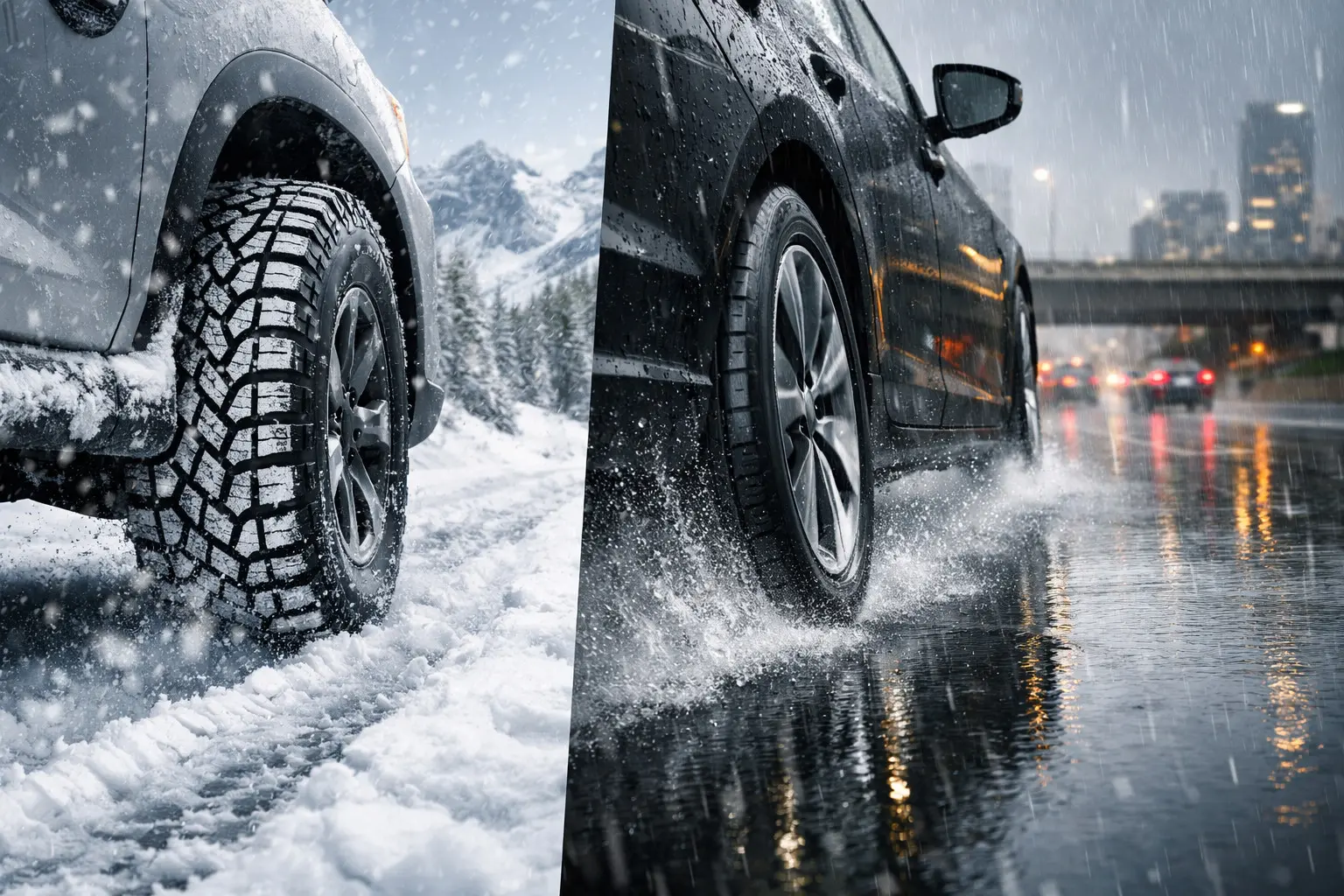
When it comes to driving in challenging weather, not all tires are created equal. Tire manufacturers invest significant research and engineering into designing tires that perform optimally in specific conditions. Snow and rain present unique challenges, and understanding how tires are tailored for each environment can help drivers make safer and more informed purchasing decisions.
Tire Design for Snow
Snow tires—also known as winter tires—are engineered to maintain traction in cold temperatures, snow, and ice. Their effectiveness comes from several specialized design features:
1. Rubber Compound
Winter tires use a softer rubber compound enriched with silica. This allows the tire to remain flexible even at temperatures below 7°C (45°F), ensuring better grip on icy and snowy surfaces. In contrast, standard tires harden in the cold, reducing traction.
2. Tread Pattern
Snow tires feature deeper and more aggressive tread patterns designed to bite into snow. These patterns help channel snow into the tread, creating snow-on-snow friction, which improves grip.
3. Sipes
A defining characteristic of winter tires is the presence of thousands of tiny slits, known as sipes. These increase the number of biting edges, enhancing traction on ice and packed snow while also aiding in water dispersion.
4. Stud Compatibility
Some winter tires are designed to accommodate metal studs, which provide additional traction on icy roads. While highly effective, their use depends on local regulations.
5. Three-Peak Mountain Snowflake (3PMSF) Certification
Many winter tires carry the 3PMSF symbol, indicating they meet rigorous industry standards for severe snow performance.
Tire Design for Rain
Rain tires, often categorized as all-season or summer tires, focus on maximizing grip and preventing hydroplaning on wet roads.
1. Water Evacuation Channels
Rain-optimized tires incorporate wide circumferential grooves and lateral channels that efficiently disperse water away from the contact patch, maintaining road contact and reducing the risk of hydroplaning.
2. Hydroplaning Resistance
The tread design is engineered to break through water layers. Directional or asymmetric patterns enhance stability and steering precision during heavy rainfall.
3. Rubber Compound
Wet-weather tires utilize a silica-rich compound that improves adhesion on slick surfaces. While still flexible, these compounds are optimized for moderate temperatures rather than extreme cold.
4. Tread Block Design
Smaller, strategically arranged tread blocks increase the tire’s contact with the road, improving braking and cornering performance on wet pavement.
Why Choosing the Right Tire Matters
Selecting the appropriate tire for the season significantly enhances safety, braking performance, and handling. Using winter tires in snowy conditions can reduce braking distances, while rain-optimized tires ensure better control during wet weather. For drivers in regions with varying climates, all-weather tires—which combine features of both—can offer a practical compromise.