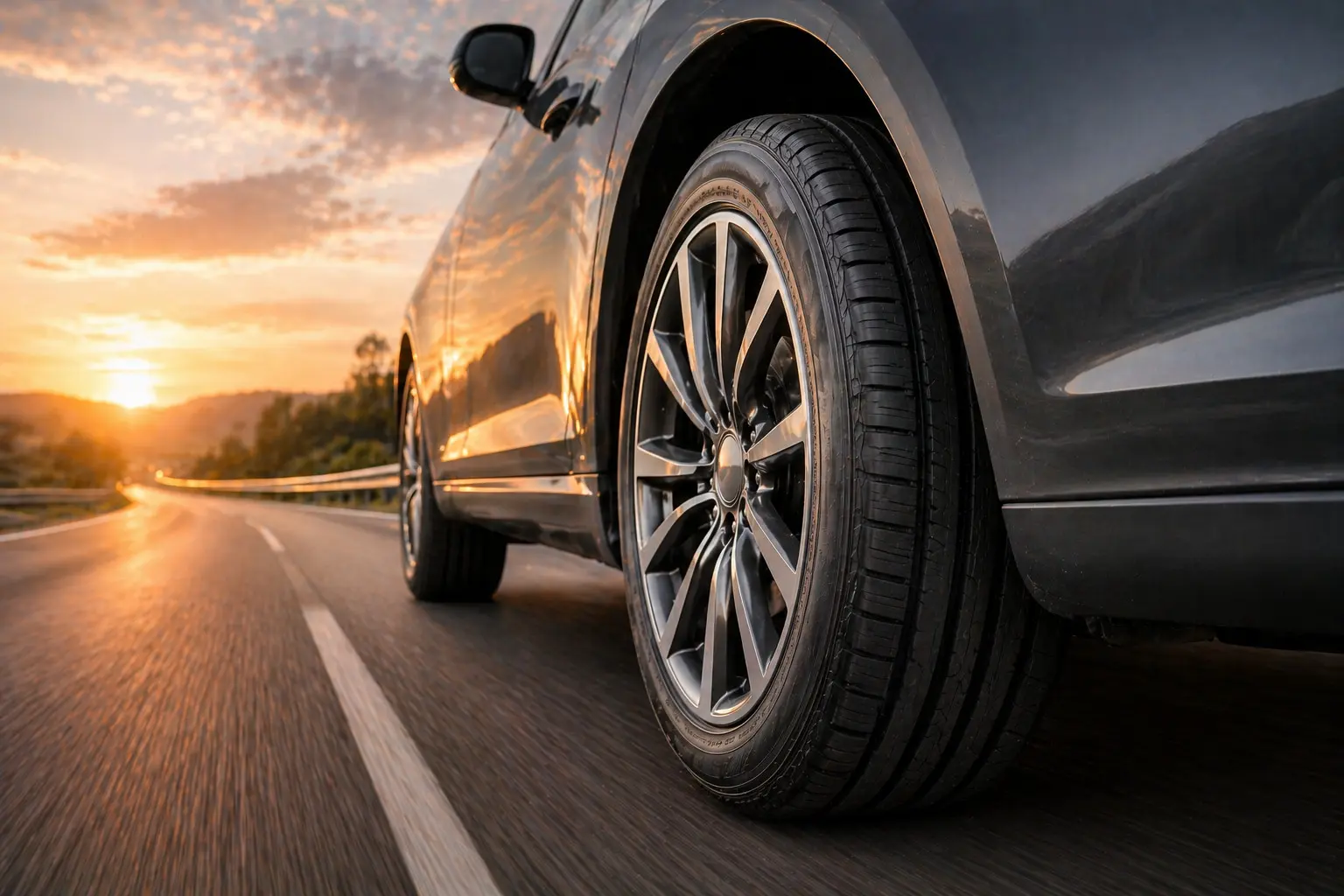
When you think about driving comfort, suspension and seats usually come to mind. But there’s a critical component that often goes unnoticed: tire construction. At TireWarehouse, we know that not all tires are built the same—and those differences are felt every time you hit the road.
Internal Structure: The Foundation of Comfort
Tires are made up of multiple layers, including the carcass, steel belts, rubber compounds, and tread.
- A flexible carcass helps absorb road imperfections, delivering a smoother ride.
- Steel belts provide stability and maintain shape without making the ride overly harsh.
The key is balance: too stiff and the ride feels rough; too soft and you lose control and responsiveness.
Radial vs. Bias-Ply Construction
Most modern vehicles use radial tires, and for good reason:
- Radial construction allows for better flexibility in the sidewall, improving comfort.
- It also enhances road contact, resulting in a smoother and more stable ride.
Bias-ply tires, while durable in certain applications, tend to transmit more vibration into the cabin, reducing comfort.
Rubber Compound: Softness vs. Longevity
The rubber compound plays a major role in ride quality:
- Softer compounds absorb impacts better and improve grip.
- Harder compounds last longer but can feel stiffer on the road.
Touring and all-season tires typically strike the best balance between comfort and durability for everyday driving.
Tread Design and Road Noise
Tread patterns don’t just affect traction—they also influence noise levels:
- Asymmetric and variable tread patterns help reduce road noise.
- Proper groove placement improves airflow and water dispersion, contributing to a quieter ride.
Less noise means a more comfortable and refined driving experience, especially on highways.
Tire Profile: More Important Than You Think
The tire’s profile (sidewall height) significantly affects comfort:
- Higher profile tires provide better shock absorption and a smoother ride.
- Low-profile tires offer sharper handling and aesthetics but reduce cushioning.
If comfort is your priority, a higher profile tire is generally the better choice.
Conclusion
Driving comfort isn’t just about your vehicle—it’s about what connects it to the road. The way a tire is built, from its internal structure to its tread and compound, can dramatically change how your car feels.
At TireWarehouse, we help you choose the right tire to balance comfort, performance, and durability—so every drive feels just right.