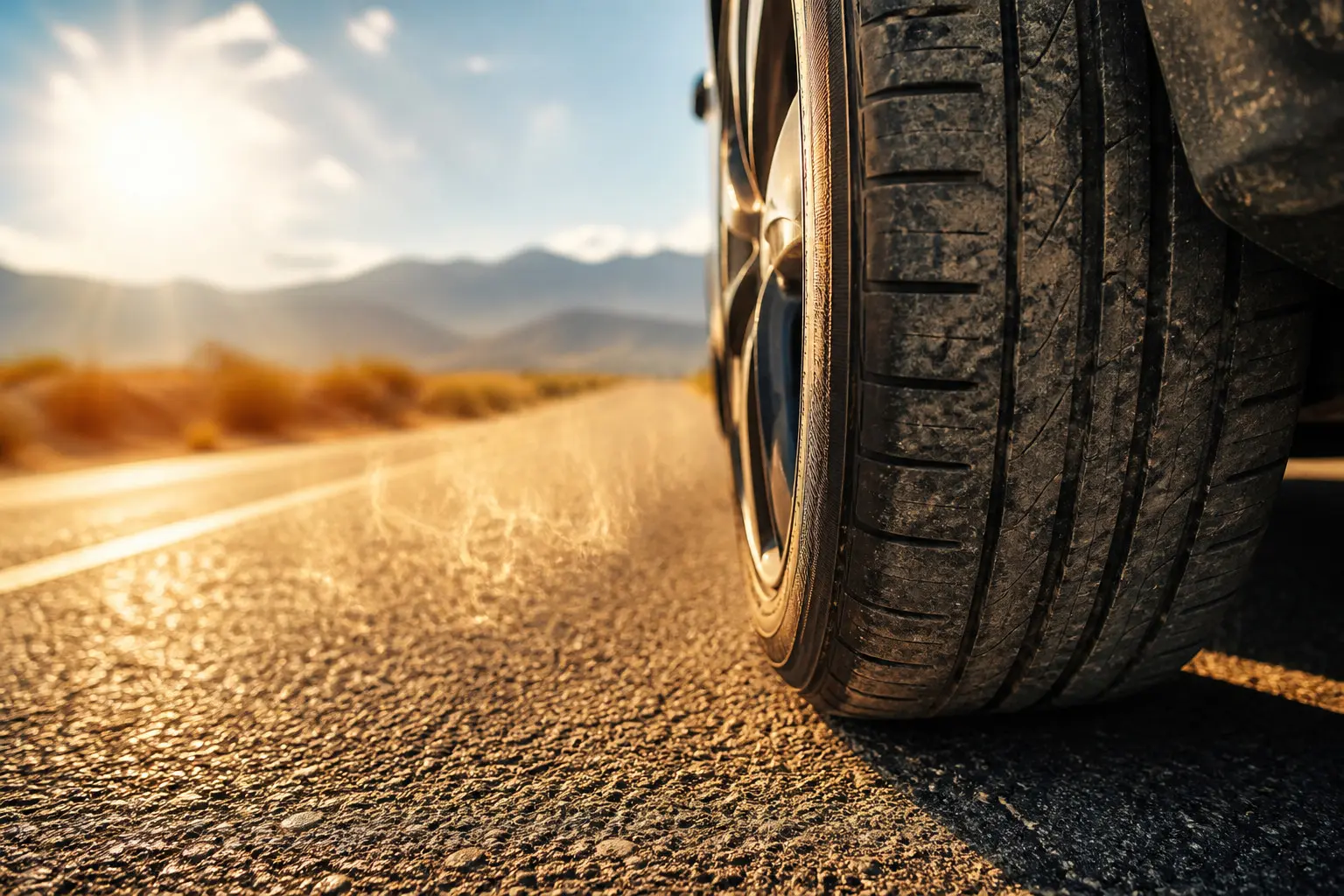
When temperatures rise, your tires work harder than you might think. Heat affects not only the road surface but also the internal structure of your tires, directly impacting performance, safety, and durability. Here’s how:
1. Increased Air Pressure
Hot weather causes the air inside your tires to expand, increasing internal pressure. This can lead to uneven wear and reduced contact with the road.
Tip: Always check tire pressure when tires are cold—preferably in the morning.
2. Faster Tread Wear
Hot pavement softens tire rubber, accelerating tread wear—especially if your tires are already partially worn.
Result: Reduced traction and compromised performance, particularly on wet roads.
3. Higher Risk of Blowouts
Extreme heat weakens the tire’s internal structure, increasing the likelihood of sudden failures—especially during long drives or at high speeds.
4. Reduced Fuel Efficiency
Improper tire pressure (too high or too low) can negatively affect fuel economy by altering rolling resistance and vehicle stability.
5. Loss of Grip in High Temperatures
Excessive heat can make tire compounds too soft, reducing braking performance and overall grip.
6. Increased Impact Damage
Summer heat can cause pavement to expand and deteriorate, leading to potholes and uneven surfaces that can damage your tires.
7. Accelerated Rubber Aging
Continuous exposure to heat and UV rays breaks down tire materials, shortening their lifespan.
How to Protect Your Tires in Summer
- Check tire pressure at least once a week
- Avoid overloading your vehicle
- Inspect tread depth regularly
- Rotate your tires every 5,000–6,000 miles
- Park in shaded areas whenever possible