
Understand load index, Load Range E, single and dual ratings, inflation pressure, and vehicle limits before hauling or towing with the Trail Climber HT03.
A practical look at how the Summit Trail Climber SUV2 combines a quieter highway ride, stable tread contact, wet-weather traction features, and everyday value for family travel.
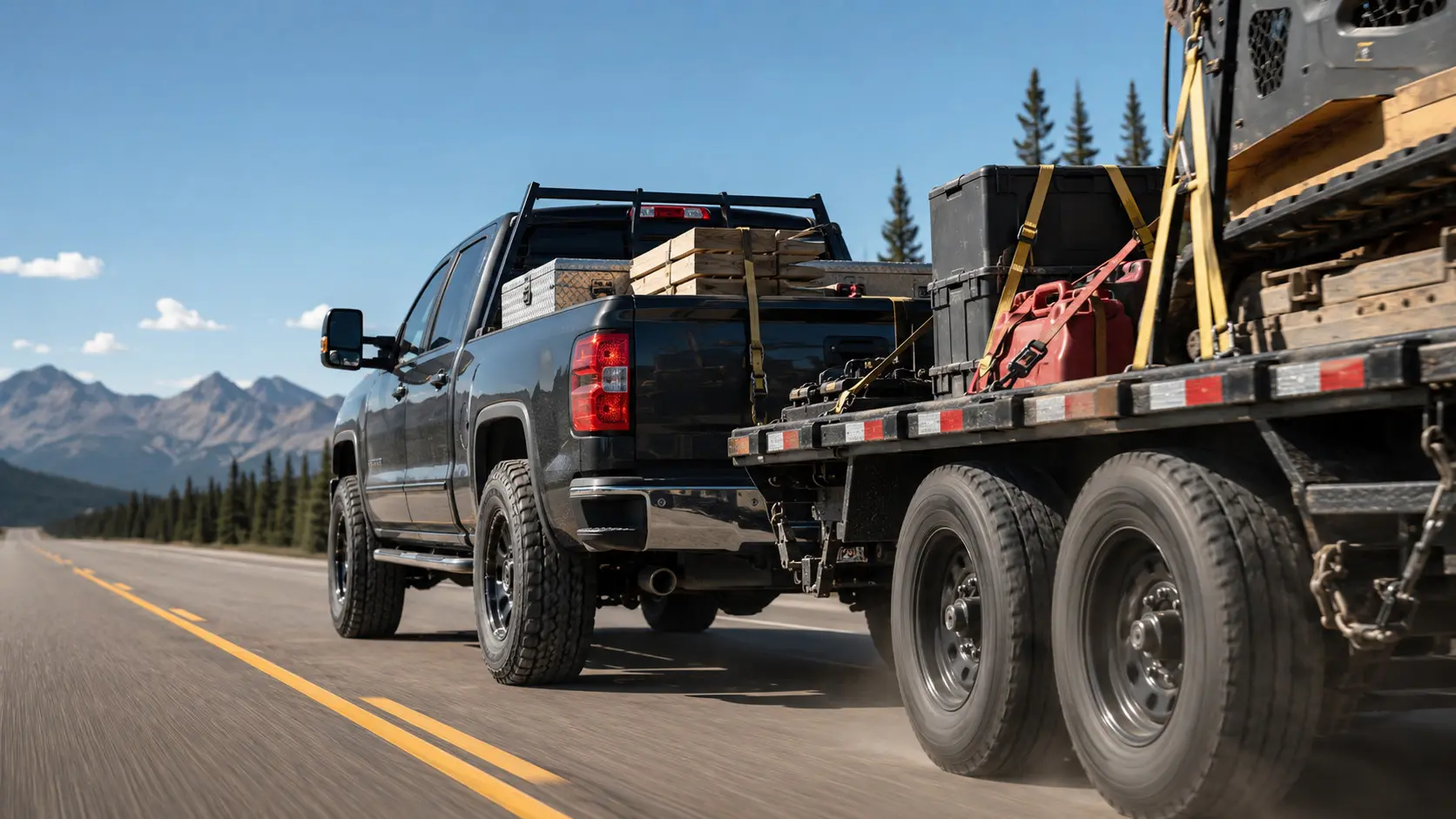
Hauling Heavy This Summer: Load Ratings Explained for Trucks Running the Trail Climber HT03
Summer hauling can place significant demands on a pickup truck’s tires. Campers, boats, landscaping materials, construction equipment, ATVs, and a fully loaded truck bed all add weight that must ultimately be supported through four relatively small tire contact patches.
For trucks running the Trail Climber HT03, choosing the correct size and load rating is more important than simply selecting a tire that fits the wheel. Drivers must also understand the tire’s load index, load range, inflation requirements, and whether the rating applies to a single-wheel or dual-wheel installation.
The essential rule is straightforward: your tires must meet or exceed the vehicle manufacturer’s required size and load capacity, but a higher tire rating never increases the truck’s legal or mechanical payload, axle, or towing limits. The truck’s certification label, owner’s manual, axle ratings, hitch rating, wheels, and suspension remain the controlling limits.
Why Tire Load Ratings Matter When Hauling
A tire’s load rating indicates how much weight it can support under specified operating conditions, including the correct inflation pressure. Exceeding that capacity—or operating a heavily loaded tire while underinflated—can create excessive sidewall flex, heat buildup, irregular wear, reduced stability, and an increased risk of tire damage.
Transport Canada advises drivers not to overload their vehicles and to use replacement tires with the same size, load capacity, and speed rating as the original equipment. It also warns that underinflation increases heat-generating sidewall flex and can contribute to sudden tire failure.
Summer hauling deserves particular attention because a loaded truck may travel for hours at highway speeds while carrying passengers, cargo, and trailer tongue weight. Hot pavement does not automatically make a properly inflated tire unsafe, but sustained speed, heavy loading, underinflation, and existing tire damage can combine to raise operating stress.
Expert tip: A tire with a high maximum load printed on its sidewall is not automatically suitable for every truck. The tire must be approved for the vehicle, mounted on a compatible wheel, operated at an appropriate cold pressure, and used without exceeding any vehicle or axle rating.
Start With the Truck’s Limits, Not the Tire’s Maximum
The truck’s certification and loading labels establish the limits you must respect before considering how much capacity the tires provide.
Look for the certification label and tire information label on the driver’s door, door jamb, or another location identified in the owner’s manual. Depending on the vehicle, these labels may show the original tire size, recommended cold inflation pressures, Gross Vehicle Weight Rating, and front and rear Gross Axle Weight Ratings.
| Term | What It Means | Why It Matters |
|---|---|---|
| GVWR | Gross Vehicle Weight Rating | The maximum permitted weight of the loaded truck, including passengers, cargo, accessories, fuel, and trailer tongue or pin weight. |
| GAWR | Gross Axle Weight Rating | The maximum permitted weight supported by a specific axle. The rear axle is often the first limit reached when towing or carrying bed cargo. |
| Payload | The weight added to the empty or curb-weight vehicle | Passengers, tools, cargo, aftermarket equipment, and trailer tongue weight all consume payload capacity. |
| GCWR | Gross Combined Weight Rating | The maximum allowable combined weight of the truck and trailer, where specified by the vehicle manufacturer. |
| Load index | A numerical tire capacity code | It corresponds to the maximum load assigned to that tire under defined conditions. |
| Load range | A tire construction and pressure category | On LT tires, it helps identify the tire’s intended service level and maximum inflation category, but it does not replace the exact load index. |
Do not calculate your truck’s allowable payload by multiplying the maximum sidewall load by four. Tire capacity is only one part of the system, and the vehicle’s GVWR or GAWR may be reached well before the combined theoretical maximum of all four tires.
Canadian technical requirements also recognize the relationship between tire capacity and axle ratings: the combined maximum ratings of the tires installed on an axle must be sufficient for the applicable axle rating.
How to Read a Trail Climber HT03 Tire Size
The letters and numbers following the tire size identify its service type, load capacity, speed rating, and—in LT applications—whether separate single and dual ratings apply.
Consider this Trail Climber HT03 example:
LT265/70R17 123/120S 10PR
LT Means Light Truck Service
The LT prefix identifies a light-truck tire. LT tires are designed for applications that may involve higher loads, towing, commercial use, or demanding pickup-truck service. They are not automatically required for every pickup, and they may affect ride comfort, weight, rolling resistance, and required pressure compared with a passenger-type tire.
265/70R17 Describes the Tire’s Dimensions
- 265 is the nominal section width in millimetres.
- 70 is the aspect ratio, meaning the sidewall height is approximately 70 per cent of the section width.
- R indicates radial construction.
- 17 is the wheel diameter in inches.
123/120 Is the Single and Dual Load Index
On this LT size, 123 is the single-wheel load index and 120 is the dual-wheel load index. The manufacturer’s current HT03 product sheet lists a maximum of 3,415 lb, approximately 1,549 kg, in single service and 3,085 lb, approximately 1,399 kg, per tire in dual service, both at the specified maximum pressure of 80 psi.
The dual rating is lower per tire because paired tires can be affected by road crown, load distribution, heat, spacing, and small differences in inflation or diameter. A dual-rear-wheel truck must use the dual capacity when assessing each rear tire—not the higher single-wheel number.
S Is the Speed Rating
The final letter is the speed symbol. It is a separate specification from the load index. A tire must satisfy the vehicle manufacturer’s speed-rating requirements even when the truck is normally driven well below the rating’s corresponding test speed.
Speed ratings should never be interpreted as permission to drive at that speed while towing, heavily loaded, on damaged roads, or in poor weather. Always follow posted limits, trailer restrictions, and vehicle-manufacturer guidance.
10PR Is a Ply-Rating Description
The 10PR marking is commonly associated with Load Range E service. It is a strength category derived from historical ply-rating terminology; it does not necessarily mean the modern tire contains ten physical cord plies.
The Trail Climber HT03 product sheet lists its LT sizes as 10PR, with their exact capacities determined by the size-specific load index and single or dual application.
Trail Climber HT03 Load Rating Examples
The Trail Climber HT03 is offered in passenger-type and LT sizes, so capacity varies substantially by size and service description.
The following examples are taken from the manufacturer’s current product information. They are useful for understanding the markings, but your actual replacement tire must match an approved fitment for your truck. Capacities are rounded to the nearest kilogram.
| HT03 Size | Load and Speed Rating | Service Type | Maximum Single Load | Maximum Dual Load |
|---|---|---|---|---|
| 235/75R15 | 105T | Passenger-type | 2,039 lb / approximately 925 kg at 44 psi | Not listed |
| 265/70R17 | 115T | Passenger-type | 2,679 lb / approximately 1,215 kg at 44 psi | Not listed |
| 275/55R20 | 117T XL | Extra load | 2,833 lb / approximately 1,285 kg at 50 psi | Not listed |
| LT245/75R17 | 121/118S | 10PR light truck | 3,195 lb / approximately 1,449 kg at 80 psi | 2,910 lb / approximately 1,320 kg at 80 psi |
| LT265/70R17 | 123/120S | 10PR light truck | 3,415 lb / approximately 1,549 kg at 80 psi | 3,085 lb / approximately 1,399 kg at 80 psi |
| LT265/70R18 | 124/121S | 10PR light truck | 3,525 lb / approximately 1,599 kg at 80 psi | 3,195 lb / approximately 1,449 kg at 80 psi |
| LT275/70R18 | 125/122S | 10PR light truck | 3,640 lb / approximately 1,651 kg at 80 psi | 3,305 lb / approximately 1,499 kg at 80 psi |
| LT275/65R20 | 126/123S | 10PR light truck | 3,750 lb / approximately 1,701 kg at 80 psi | 3,415 lb / approximately 1,549 kg at 80 psi |
Important: The pressure shown in the table is the pressure associated with the manufacturer’s listed maximum load. It is not a universal recommendation to inflate every truck to 80 psi, 50 psi, or 44 psi.
Maximum Sidewall Pressure Is Not Your Everyday Pressure
Use the vehicle manufacturer’s recommended cold pressure unless an approved load-inflation calculation or qualified professional specifies another value for the application.
Transport Canada explains that the maximum pressure marked on a tire relates to carrying the tire’s maximum load and is generally not the same as the vehicle manufacturer’s recommended pressure. The vehicle recommendation is normally shown on the driver’s-door tire label or in the owner’s manual.
This distinction is especially important when moving from a passenger-type tire to an LT tire. An LT tire may need a different pressure to support the same load, but simply inflating it to the sidewall maximum can produce an unnecessarily harsh ride and may affect traction, braking, tread contact, and wear.
Overinflation is not a harmless way to create extra hauling capacity. Transport Canada notes that excessive inflation can reduce the effective tread contact area and contribute to a harsh ride, handling concerns, and increased wear.
Check Pressure When the Tires Are Cold
Measure pressure before driving or after the vehicle has been parked long enough for the tires to return close to ambient temperature. Pressure naturally rises as a tire warms during driving, so do not release air from a normally inflated hot tire simply to return it to the cold-pressure number.
Do Not Rely Only on TPMS
A tire pressure monitoring system is a warning tool, not a replacement for manual inspections. Some systems warn only after pressure has fallen significantly. Transport Canada recommends checking tire pressure, including the spare, at least monthly and before a long trip.
Passenger-Type Versus LT Trail Climber HT03 Sizes
Passenger-type HT03 sizes generally prioritize everyday comfort and lighter-duty truck or SUV use, while LT versions offer specifications intended for more demanding load-carrying applications.
| Consideration | Passenger-Type or XL HT03 | LT 10PR HT03 |
|---|---|---|
| Typical priority | Comfort, everyday highway use, lighter vehicle requirements | Higher load capability and more demanding truck service |
| Load marking | Usually one load index | Often separate single and dual load indexes |
| Listed maximum pressure | Varies by size; HT03 examples include 44 or 50 psi | The current HT03 LT examples are listed at 80 psi maximum-load pressure |
| Ride characteristics | Generally more compliant when properly matched | May feel firmer and add tire weight |
| Best choice | When approved by the vehicle manufacturer and adequate for the intended load | When the truck requires LT specifications or regularly performs heavier-duty work |
A half-ton pickup does not automatically need an LT tire, and installing one does not increase its payload label. Conversely, a truck that originally requires LT tires should not be fitted with a lower-capacity passenger-type alternative without verified approval.
Canadian technical standards also apply an adjustment when certain passenger-car tires are installed on multipurpose passenger vehicles, trucks, buses, or trailers. This is another reason to rely on an approved fitment rather than comparing sidewall numbers alone.
How to Check Whether Your Tire Capacity Is Adequate
The safest assessment compares the truck’s actual loaded axle weights with the vehicle ratings and the capacity available from each tire at the operating pressure.
- Confirm the approved tire specification. Check the door label, owner’s manual, and any manufacturer guidance for optional wheel and tire packages.
- Calculate the real trip load. Include every passenger, bed cargo, tool box, cap, rack, auxiliary tank, hitch, and aftermarket accessory.
- Add trailer tongue or pin weight. This weight is carried by the truck and can place a large share of the added load on the rear axle.
- Weigh the loaded truck. A public vehicle scale provides more reliable information than estimating from brochure weights.
- Compare total weight with GVWR. The loaded truck must remain within the vehicle manufacturer’s rating.
- Compare each axle with its GAWR. A truck can be under GVWR while still exceeding its rear axle rating.
- Divide axle load among the tires. A single-rear-wheel axle normally has two tires; a dual-rear-wheel axle normally has four.
- Use the correct single or dual rating. Do not use the higher single rating for a tire operating as part of a dual pair.
- Verify capacity at the actual cold pressure. Maximum sidewall capacity is available only under its specified conditions. Use approved load-inflation information or professional guidance.
- Check the rest of the system. Wheels, valves, hubs, axles, suspension, hitch components, and the trailer also have limits.
A Simplified Single-Rear-Wheel Example
Imagine a loaded pickup with a measured rear axle weight of 2,500 kg. With two rear tires in single service, the static load averages 1,250 kg per rear tire.
An LT265/70R17 Trail Climber HT03 has a listed maximum single capacity of approximately 1,549 kg at the specified 80 psi maximum-load pressure. The maximum rating is above the simple 1,250 kg average, but that does not complete the assessment. The rear axle must also remain below its GAWR, and the selected cold pressure must provide enough capacity according to approved load-inflation information. The wheel and vehicle must also be compatible with the tire and pressure.
Real axle loading is not always distributed perfectly from side to side. Cargo placement, slide-in equipment, road crown, turns, and trailer forces can produce uneven or changing loads. Avoid planning a setup that depends on operating at the absolute limit.
A Simplified Dual-Rear-Wheel Example
For a dual-rear-wheel axle, divide the measured rear axle weight among four tires, then compare each tire with the second load index and dual-service capacity.
For example, the LT275/65R20 HT03 is marked 126/123S. The manufacturer lists approximately 1,701 kg in single service but approximately 1,549 kg per tire in dual service. A dually calculation must use the lower dual figure.
How Trailer Tongue Weight Affects Rear Tires
Trailer tongue or fifth-wheel pin weight becomes part of the truck’s carried load and often has its greatest effect on the rear axle.
A trailer may be within its own Gross Vehicle Weight Rating while the tow vehicle exceeds payload, rear GAWR, tire capacity, or hitch limits. This frequently happens when passengers, bed cargo, a tonneau cover, tools, and aftermarket accessories are added after the trailer calculation.
Do not assume that a weight-distribution hitch removes tongue weight from the truck. It redistributes some load among the tow vehicle’s axles and the trailer axles, but the loaded combination must still comply with every manufacturer rating.
The most reliable approach is to weigh the complete combination in travel-ready condition. Obtain separate figures for the truck’s front axle, rear axle, trailer axles, and total combination where scale procedures allow.
What the Trail Climber HT03 Is Designed to Do
The Trail Climber HT03 is a highway-terrain all-season tire intended for pickup trucks, larger SUVs, and four-wheel-drive vehicles, with an emphasis on road handling, ride comfort, water evacuation, and dependable load carrying.
Summit describes the HT03 as its premium highway all-season model. Its design includes multiple 3D sipes, four circumferential channels, a reinforced casing, and tread features intended to support traction, even wear, stability, and a smooth ride.
That highway-terrain focus can make the HT03 relevant for drivers who spend most of their time on paved Canadian roads while towing a boat, carrying work equipment, or taking a camper to provincial parks. It may also handle maintained gravel access roads when operated appropriately.
However, an HT tire should not be confused with a dedicated all-terrain or rugged-terrain product. Drivers who regularly encounter deep mud, sharp rock, forestry roads, severe off-road conditions, or other specialized terrain should select a tire based on those demands rather than load rating alone.
Summer Hauling Risks That Load Ratings Cannot Solve
A suitable load rating is essential, but it cannot compensate for poor loading, damaged tires, excessive speed, or inadequate vehicle maintenance.
Underinflation
Underinflation allows excessive flex and heat buildup. Transport Canada reports that operating with a tire underinflated by 56 kPa, or 8 psi, can shorten tire life and increase fuel consumption.
Uneven Cargo Placement
Heavy items placed behind the rear axle can add substantial rear-tire load and reduce weight on the steering axle. Position cargo according to the vehicle manufacturer’s instructions, secure it against movement, and avoid concentrating weight on one side.
Excessive Highway Speed
Higher speed increases tire cycles and heat generation. Slow down for heavy loads, trailer sway, construction zones, potholes, rough pavement, rain, and crosswinds—even when the tire’s speed symbol is higher than the posted limit.
Overlooking Wheel Capacity
A tire rated for a particular load and pressure must be mounted on a wheel rated for the same application. The wheel, valve stem, and related components must safely accommodate the operating pressure and load.
Ignoring Wet-Road Conditions
Summer thunderstorms can create standing water and hydroplaning risk. A heavily loaded truck also needs greater following distance because total stopping performance depends on tires, brakes, road surface, speed, vehicle condition, and trailer behaviour.
Pre-Trip Checklist for a Heavily Loaded Truck
A complete check should be performed before loading, after loading, and periodically throughout a long summer trip.
Before Loading
- Confirm the approved tire size, load index, and speed rating.
- Inspect tread for uneven wear, exposed cords, punctures, embedded objects, and damaged grooves.
- Check both sidewalls for cuts, cracking, bulges, abrasions, or impact damage.
- Measure cold pressure with a reliable gauge.
- Inspect the spare and confirm that the jack and tools are suitable for the loaded truck.
- Check wheel condition and wheel-nut torque according to the owner’s manual.
After Loading
- Confirm that GVWR, front GAWR, and rear GAWR are not exceeded.
- Verify trailer tongue or pin weight and hitch compatibility.
- Secure all cargo and prevent side-to-side movement.
- Check that dual tires have appropriate spacing and closely matched inflation and overall diameter.
- Recheck ride height, lighting, mirrors, trailer connection, and brake-controller operation.
- Use a scale when the load is close to a limit or difficult to estimate.
During the Trip
- Walk around the truck and trailer at fuel and rest stops.
- Look for visible pressure loss, bulges, cuts, unusual wear, or cargo movement.
- Investigate new vibration, pulling, steering changes, odour, or unusual heat.
- Do not bleed pressure from normally warmed tires.
- Reduce speed when road, weather, visibility, or trailer stability deteriorates.
Common Load-Rating Mistakes to Avoid
Most hauling errors come from confusing one rating with another or treating a maximum value as an everyday operating recommendation.
- Assuming Load Range E is identical across all sizes: Two Load Range E tires can have different load indexes and maximum capacities.
- Using the first index on a dually: The first number is for single service; use the second number for dual service.
- Inflating every LT tire to 80 psi: Maximum pressure is not automatically the correct vehicle pressure.
- Believing stronger tires increase payload: Tire upgrades do not change GVWR, GAWR, hitch ratings, or the door-label payload limit.
- Ignoring tongue weight: Trailer weight carried by the hitch consumes truck payload and often increases rear axle load.
- Calling 10PR a literal ten-ply construction: It is a service-strength designation, not necessarily a physical ply count.
- Comparing only maximum pounds: Size, fitment, load index, pressure, speed rating, wheel capacity, and vehicle approval all matter.
- Trusting TPMS instead of checking pressure: TPMS may not warn until a tire is already significantly underinflated.
Is the Trail Climber HT03 Appropriate for Your Hauling Needs?
The HT03 may be a practical option for highway-focused pickups and SUVs when the selected size meets the vehicle’s specifications and provides sufficient load capacity for the intended use.
Its current range includes passenger-type, extra-load, and LT 10PR sizes, allowing it to cover different levels of truck service. The correct choice depends on the exact vehicle, wheel package, axle ratings, pressure requirements, cargo, towing frequency, road conditions, and driver expectations.
Consider an LT HT03 fitment when the vehicle requires an LT tire or when a manufacturer-approved LT option is better aligned with frequent towing and hauling. A passenger-type version may remain the more suitable choice for a lighter-duty truck whose original specifications prioritize comfort and lower unsprung weight.
Before changing tire type or size, consult the vehicle manufacturer’s guidance or a qualified tire professional. A professional fitment review should confirm dimensions, load capacity, speed rating, wheel width, pressure, clearance, TPMS compatibility, and the effect on handling.
Final recommendation: Choose the Trail Climber HT03 by exact vehicle fitment and real loaded axle weight—not by the Load Range E label alone. Check cold pressure before departure, stay within every truck and trailer rating, and leave room for the dynamic forces created by highway travel, rough pavement, braking, and cornering.
Frequently Asked Questions About Trail Climber HT03 Load Ratings
These answers address the most common questions truck owners ask before towing or hauling with the Trail Climber HT03.
Can I tow a camper with Trail Climber HT03 tires?
Yes, an appropriately sized HT03 may be used for towing when it is approved for the tow vehicle and has sufficient capacity at the specified operating pressure. You must still remain within the truck’s GVWR, front and rear GAWR, payload, hitch, and combined-weight limits.
Are all Trail Climber HT03 tires Load Range E?
No. The HT03 range includes passenger-type and extra-load sizes as well as LT 10PR sizes. Check the complete service description on the tire and product specification rather than assuming every HT03 has the same construction or capacity.
What does 123/120 mean on an LT265/70R17 HT03?
The 123 index applies when the tire is installed in single-wheel service. The 120 index applies to each tire in a dual-wheel pair. Summit lists this size at a maximum of 3,415 lb in single service and 3,085 lb per tire in dual service at the specified 80 psi maximum-load pressure.
Do I need to inflate my Load Range E HT03 tires to 80 psi?
Not automatically. The 80 psi figure is associated with the tire’s listed maximum load. Use the vehicle manufacturer’s cold-pressure recommendation or an approved pressure determined for the vehicle and actual load. Never exceed the tire, wheel, or vehicle limits.
Does a higher load index increase my truck’s payload?
No. A higher-capacity tire may provide additional tire capability, but it does not change the truck manufacturer’s GVWR, GAWR, payload label, suspension capacity, brake capability, or hitch rating.
Is Load Range E the same as a 10-ply tire?
Load Range E is commonly described as 10-ply-rated or 10PR. The term indicates a service-strength category and does not necessarily mean the tire contains ten physical plies.
Why is the dual load rating lower than the single rating?
Each tire in a dual pair receives a lower assigned capacity to account for the operating conditions of dual-wheel service, including load distribution and the effects of paired tires. Always use the second load index when calculating dually capacity.
Can I replace a passenger-type HT03 with an LT HT03?
Possibly, but the change must be approved for the vehicle. LT tires can differ in dimensions, weight, ride characteristics, load-inflation requirements, and wheel-pressure needs. Confirm the full fitment with a qualified tire professional.
How does trailer tongue weight affect tire load?
Tongue or pin weight becomes carried weight on the tow vehicle. Much of it may be supported by the rear axle, reducing the capacity available for passengers and bed cargo. Weigh the loaded truck and trailer rather than relying only on the trailer’s advertised dry weight.
Should I lower tire pressure during very hot weather?
Do not reduce a normally warmed tire to its cold-pressure specification. Set pressure when the tires are cold. Pressure rises during driving as expected; investigate unusual pressure or heat changes rather than bleeding air without understanding the cause.
Can TPMS tell me whether my tires can support the load?
No. TPMS monitors pressure conditions but does not calculate payload, axle load, tire capacity, or wheel ratings. It also does not replace regular pressure checks and visual inspections.
How often should truck tires be inspected and rotated?
Inspect pressure and visible condition at least monthly and before long trips. Follow the vehicle manufacturer’s rotation interval and pattern. Transport Canada notes that rotation at approximately 10,000 km is common practice, but dually, directional, staggered, or commercial applications may require different procedures.
Can stronger tires compensate for an overloaded rear axle?
No. The rear axle must remain within its GAWR even when the tires have a higher combined rating. Axle, wheel, suspension, bearing, frame, brake, and vehicle limits still apply.
Recommended Related Reading
Continue preparing your truck and tires with these TireWarehouse.ca guides:
In stock & ready to ship
Find the tires you need, delivered from a warehouse near you