
The Science of Sipes: How Tiny Grooves Provide Maximum Grip on Icy Roads
Halloween brings darker commutes, unpredictable autumn weather, and more pedestrians onto Canadian roads. Discover practical visibility, tire traction, and vehicle safety tips to help you navigate wet leaves, cold pavement, early frost, and busy neighbourhoods with greater confidence.
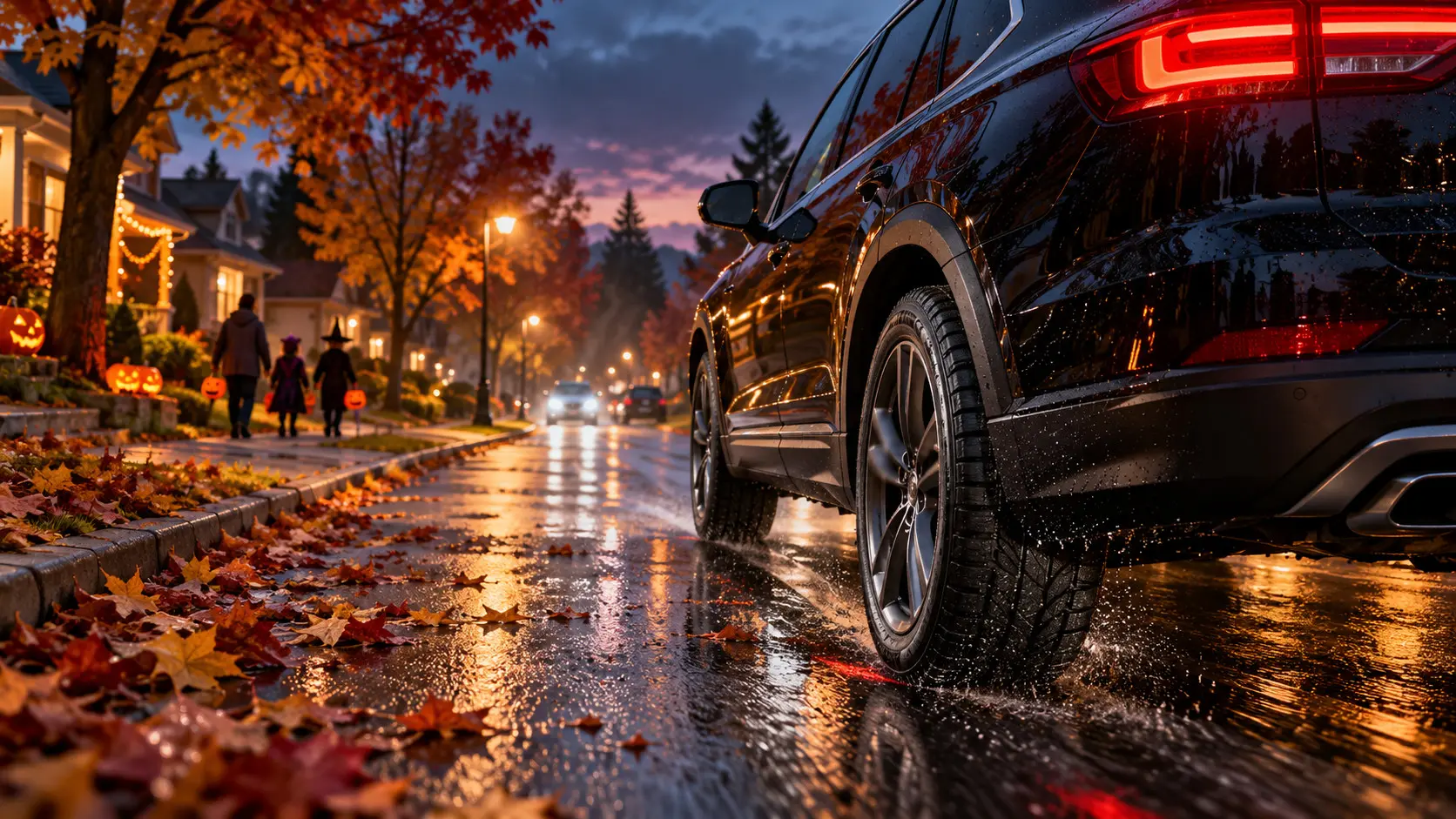
Halloween Commutes and Darker Evenings: Visibility and Traction Tips for Fall Driving
Halloween in Canada brings more than costumes, decorations, and neighbourhood celebrations. It also arrives during one of the most challenging periods of the year for drivers. Daylight hours are shrinking, temperatures are dropping, roads are becoming slippery, and pedestrians are spending more time outdoors after sunset.
Whether you’re commuting through Toronto, navigating residential streets in Vancouver, driving home from work in Calgary, or taking your children trick-or-treating in Montreal, fall driving safety deserves extra attention.
Autumn creates a combination of driving hazards that can be easy to underestimate. Wet leaves reduce traction, rain affects visibility, cold temperatures influence tire pressure, and early frost can make bridges and shaded roads unexpectedly slippery.
Halloween adds another challenge: increased pedestrian activity, particularly among children who may be wearing dark costumes or crossing streets unexpectedly.
The good news is that a few practical adjustments to your driving habits, tire maintenance, and vehicle preparation can make a meaningful difference.
In this guide, TireWarehouse explains how to improve visibility and tire traction during fall driving, prepare for darker evening commutes, and make safer decisions as Canadian roads transition toward winter conditions.
Why Is Driving More Dangerous During Halloween and Fall?
Fall driving can become more challenging because reduced daylight, changing weather, slippery road surfaces, and increased pedestrian activity often occur together.
Unlike summer, when road conditions are generally more predictable, autumn can bring several different driving environments within a single day.
A morning commute might begin with frost-covered pavement, transition into wet roads during the afternoon, and end with reduced visibility after sunset.
1. Shorter Days Mean More Driving in Darkness
As autumn progresses, sunrise occurs later and sunset arrives earlier across Canada. Many drivers who travelled home in daylight during September find themselves commuting in darkness by late October and November.
Reduced natural light makes it harder to identify pedestrians, cyclists, road debris, potholes, and changes in pavement conditions.
Drivers may also experience increased glare from oncoming headlights, particularly when windshields are dirty or wet.
2. Wet Leaves Can Reduce Tire Grip
Fallen leaves are a familiar feature of Canadian autumn roads, but they can create slippery driving conditions.
When leaves become wet, they can form a slick layer between the tires and pavement. This may reduce available traction during braking, acceleration, and cornering.
Leaf-covered roads can also conceal potholes, standing water, painted road markings, and other hazards.
3. Temperatures Can Change Quickly
Fall temperatures frequently fluctuate between mild afternoons and near-freezing nights.
These changes affect tire inflation pressure and can create unexpected frost or icy patches, particularly on bridges, overpasses, and shaded roads.
Drivers should remember that an air temperature above 0°C does not guarantee that every road surface is free of ice.
4. Halloween Increases Pedestrian Activity
Halloween evening brings additional pedestrians into residential neighbourhoods, including young children who may be excited, distracted, or difficult to see.
Dark costumes, masks that restrict peripheral vision, and parked vehicles can make pedestrian movements less predictable.
Drivers should be especially cautious near intersections, driveways, parked vehicles, schools, and neighbourhood gathering areas.
Fall Driving Hazards: What Canadian Drivers Should Watch For
The most important autumn driving hazards involve visibility, traction, temperature, and changing road conditions. Understanding how these risks affect vehicle control helps drivers respond appropriately.
| Fall Driving Hazard | Potential Safety Risk | Recommended Precaution |
|---|---|---|
| Early darkness | Reduced visibility of pedestrians and obstacles | Use appropriate headlights, reduce speed, and increase scanning distance. |
| Wet fallen leaves | Reduced traction during braking and turning | Slow down and avoid sudden steering or braking. |
| Heavy autumn rain | Hydroplaning and longer stopping distances | Check tire tread depth and increase following distance. |
| Cold mornings | Lower tire inflation pressure | Check cold tire pressure regularly. |
| Early frost | Unexpected slippery pavement | Use extra caution on bridges and shaded roads. |
| Fog | Limited forward visibility | Use low-beam headlights and adjust speed. |
| Halloween pedestrians | Unexpected crossings and limited pedestrian visibility | Drive slowly through residential areas and remain prepared to stop. |
| Standing water | Reduced tire contact with pavement | Avoid deep water and reduce speed before reaching puddles. |
How to Improve Visibility During Darker Fall Commutes
Improving visibility during autumn driving starts with properly functioning headlights, clean glass, effective windshield wipers, and driving speeds appropriate for available sight distance.
Being able to see hazards early is essential, but being visible to other road users is equally important.
Check Your Headlights Before Halloween
Headlights are one of the most important safety features during evening driving.
Before the Halloween season, inspect your vehicle’s exterior lighting system.
- Confirm that both low-beam headlights operate correctly.
- Check high beams and use them only when appropriate.
- Inspect brake lights, tail lights, and turn signals.
- Clean dirt, road film, and debris from headlight lenses.
- Replace failed bulbs or repair malfunctioning lighting systems.
- Have poorly aimed headlights inspected and adjusted.
Cloudy or yellowed headlight lenses can reduce useful light output. Professional restoration or replacement may improve illumination when lenses are significantly deteriorated.
Important: Daytime running lights do not necessarily activate your vehicle’s rear tail lights. Make sure the full lighting system is operating when driving in darkness or poor visibility.
Keep Your Windshield Clean Inside and Out
A dirty windshield can make night driving more difficult by scattering light from streetlights and oncoming vehicles.
Interior film, fingerprints, condensation, and exterior road grime may increase glare.
For better visibility:
- Clean both sides of the windshield regularly.
- Remove streaks from windows and mirrors.
- Use windshield washer fluid suitable for expected temperatures.
- Keep the windshield defogging and defrosting systems working properly.
- Replace worn windshield wiper blades that leave streaks or skip across the glass.
Autumn is also a good time to inspect the washer-fluid reservoir before temperatures drop below freezing.
Use Headlights Correctly in Rain and Fog
Low-beam headlights are generally the appropriate choice for driving in fog, heavy rain, or other conditions where high beams can create excessive reflected glare.
High beams may improve visibility on dark, unlit roads when there is no nearby traffic, but they should be dimmed when approaching other vehicles or following another driver.
Never rely exclusively on automatic headlights to determine whether visibility conditions require additional lighting.
TireWarehouse Safety Tip: If you cannot clearly see the road far enough ahead to stop safely, reduce your speed. Headlights improve visibility, but they cannot compensate for driving too quickly for the conditions.
Why Tire Traction Matters More During Fall Driving
Tire traction becomes especially important in autumn because wet pavement, fallen leaves, cooler temperatures, and occasional frost can reduce the grip available for braking, accelerating, and steering.
Your tires are the vehicle’s connection to the road. Even with advanced safety technologies, including anti-lock braking systems (ABS), electronic stability control, and traction control, the available grip ultimately depends on the tires and road surface.
How Tire Tread Helps on Wet Roads
Tire tread patterns are designed to manage water and maintain contact with the road surface.
Grooves help channel water away from the contact patch, reducing the likelihood that water will separate the tire from the pavement.
As tread wears down, a tire generally becomes less capable of managing standing water, especially at higher speeds.
This can increase the risk of hydroplaning and reduce wet-road braking performance.
What Is Hydroplaning?
Hydroplaning occurs when a layer of water separates part or all of a tire’s contact patch from the road surface, reducing available traction.
It can affect steering, braking, and vehicle stability.
Hydroplaning risk depends on several factors, including:
- Vehicle speed.
- Water depth.
- Tire tread depth and design.
- Tire inflation pressure.
- Road surface characteristics.
- Vehicle load and operating conditions.
Hydroplaning can occur even with relatively new tires when conditions are severe enough.
How to Respond if Your Vehicle Begins to Hydroplane
If your vehicle begins to lose traction on standing water, the priority is to avoid abrupt inputs that could further destabilize it.
- Remain calm and look toward your intended path.
- Ease off the accelerator smoothly.
- Avoid sudden steering movements.
- Do not brake abruptly unless necessary to avoid a collision.
- Allow the tires to regain traction while maintaining gentle steering control.
- Reduce your speed once control has been restored.
If emergency braking is necessary, follow your vehicle manufacturer’s guidance. Vehicles equipped with ABS are designed to help maintain steering control during hard braking, but ABS cannot create traction where little or none exists.
How to Check Tire Tread Depth Before Halloween
Checking tire tread depth before late October helps drivers identify worn tires before autumn rain, frost, and winter weather become more frequent.
Tread depth is particularly important for maintaining wet-weather performance.
Understanding Tire Tread Depth
Tread depth is the distance from the top of the tread blocks to the bottom of the main tread grooves.
In Canada, tread depth is commonly measured in millimetres.
Although minimum legal tread requirements vary by jurisdiction and vehicle category, tires should not be judged safe for autumn conditions based on legal minimums alone.
| Tread Depth | General Condition | Fall Driving Consideration |
|---|---|---|
| 6 mm or more | Substantial remaining tread | Generally offers more water-management capacity than an otherwise comparable worn tire. |
| 4–5 mm | Moderate tread wear | Monitor wet-weather performance and plan for seasonal tire needs. |
| 3–4 mm | Reduced tread reserve | Consider replacement planning, particularly before frequent rain or winter conditions. |
| Below 3 mm | Significantly worn for demanding wet conditions | Prompt professional assessment and replacement planning are advisable. |
| Approximately 1.6 mm | Common passenger-tire wear-bar depth | Do not treat this as a recommended safety target for wet or winter driving. |
These ranges are general maintenance guidance rather than universal legal thresholds. Actual tire performance depends on tire design, age, condition, and road conditions.
For winter tires, many manufacturers and tire specialists recommend considering replacement at approximately 4 mm of remaining tread because deep-snow and slush performance can deteriorate as tread wears.
How to Measure Tire Tread Depth
- Park on a level surface and secure the vehicle.
- Use a dedicated tire tread-depth gauge.
- Measure several locations across the main tread grooves.
- Repeat the measurements around the tire’s circumference.
- Compare readings between all four tires.
- Look for uneven wear, exposed cords, cuts, bulges, or other damage.
Uneven tread wear may indicate inflation problems, wheel alignment issues, worn suspension components, or other mechanical concerns.
If you notice unusual wear patterns, have the tires and vehicle inspected by a qualified technician.
Expert Tip: Don’t wait until the first snowfall to inspect your tires. Halloween is a useful reminder to evaluate tread depth, inflation pressure, and overall tire condition before winter tire appointment schedules become busier.
How Cold Fall Temperatures Affect Tire Pressure
As temperatures decrease, tire inflation pressure generally decreases as well. This makes regular tire pressure checks particularly important during autumn.
For a typical passenger-vehicle tire, inflation pressure may change by approximately 7 kPa (1 psi) for every 5–6°C change in ambient temperature, although the exact change varies.
A tire that was properly inflated during a warm September afternoon may therefore be underinflated during a cold November morning.
Why Correct Tire Pressure Matters
Incorrect tire pressure can affect several aspects of vehicle performance:
- Handling: Underinflation can change steering response and vehicle stability.
- Tire wear: Incorrect inflation may contribute to uneven or accelerated wear.
- Fuel efficiency: Underinflated tires can increase rolling resistance.
- Heat buildup: Significant underinflation can cause excessive tire flexing and heat generation.
- Braking and traction: Incorrect pressure may alter tire contact behaviour and handling.
How to Check Tire Pressure Correctly
- Find the recommended cold tire inflation pressure on the driver’s door-jamb placard or in the owner’s manual.
- Use a reliable tire pressure gauge.
- Measure pressure when the tires are cold, ideally before driving or after the vehicle has been parked for at least three hours.
- Inflate tires to the vehicle manufacturer’s recommended pressure.
- Check all four tires and the spare tire, if equipped.
- Reinstall valve caps securely.
Do not use the maximum pressure printed on the tire sidewall as the normal inflation target. That marking is not necessarily the correct operating pressure for your vehicle.
Check tire pressure at least monthly and whenever significant temperature changes occur.
What About the Tire Pressure Monitoring System?
A tire pressure monitoring system (TPMS) can alert drivers when inflation pressure falls below a specified threshold.
However, a TPMS warning light is not a substitute for routine manual pressure checks.
Some systems may not alert drivers until a tire is substantially underinflated.
If your TPMS warning light illuminates, check tire pressures and investigate any persistent pressure loss.
All-Season vs. All-Weather vs. Winter Tires for Canadian Fall Driving
The best tire choice for autumn depends on local temperatures, road conditions, expected winter weather, and provincial requirements.
Canadian drivers often face a seasonal transition where conventional all-season tires may become less suitable, but persistent snow has not yet arrived.
All-Season Tires
All-season tires are designed to provide balanced performance in a range of moderate driving conditions, including dry and wet pavement.
They are a common choice for spring, summer, and early autumn driving.
However, many conventional all-season tires become less effective as temperatures fall and winter conditions develop.
All-season tires marked M+S are not necessarily certified to meet the severe-snow performance standard associated with the Three-Peak Mountain Snowflake symbol.
All-Weather Tires
All-weather tires are designed to operate across a wider seasonal temperature range and typically carry the Three-Peak Mountain Snowflake (3PMSF) symbol.
They may be a practical year-round option for some Canadian drivers who experience moderate winter conditions and prefer not to change tires seasonally.
However, all-weather tire performance varies significantly between models.
In demanding winter conditions, a dedicated winter tire may provide better snow and ice performance than an all-weather alternative.
Winter Tires
Dedicated winter tires use tread designs and rubber compounds engineered for cold temperatures and winter road conditions.
They are designed to provide improved performance on snow and ice compared with many conventional all-season tires.
Winter tires are particularly relevant for drivers who regularly encounter freezing temperatures, snow-covered roads, slush, or icy conditions.
Fall Tire Comparison Table
| Feature | All-Season Tires | All-Weather Tires | Winter Tires |
|---|---|---|---|
| Primary use | Moderate seasonal conditions | Year-round use, including some winter conditions | Cold weather and winter driving |
| Wet autumn roads | Varies by model and tread condition | Varies by model and tread condition | Varies by model and temperature |
| Cold-weather suitability | Generally less specialized | Designed for broader seasonal use | Specifically designed for cold conditions |
| Snow traction | Generally limited compared with winter-focused tires | Designed to meet severe-snow requirements when 3PMSF marked | Designed for winter traction |
| Ice performance | Generally limited | Model-dependent | Typically better suited, depending on model and conditions |
| Seasonal changeover | Often required for winter climates | May not be required in suitable climates | Usually installed seasonally |
| Best suited for | Milder conditions without significant winter exposure | Drivers seeking a year-round compromise | Drivers facing regular snow, ice, and freezing temperatures |
What Does the 7°C Tire Changeover Guideline Mean?
A commonly used Canadian guideline is to consider installing winter tires when temperatures consistently approach or fall below 7°C.
This is a practical seasonal planning reference, not a precise temperature at which every all-season tire suddenly loses traction.
Tire performance changes progressively and depends on compound, tread design, pavement temperature, and road conditions.
Drivers should consider local forecasts, their usual driving routes, and provincial requirements rather than relying on one temperature alone.
For more information about selecting tires for Canadian conditions, explore the tire options available through TireWarehouse.ca.
Halloween Driving Safety: Protecting Pedestrians and Trick-or-Treaters
Halloween driving safety requires extra attention to pedestrians, especially children travelling between homes after sunset.
Costumes, excitement, poor lighting, and busy neighbourhood streets can make pedestrian behaviour less predictable.
Slow Down in Residential Neighbourhoods
Drive at a speed that allows you to respond safely to pedestrians, parked vehicles, and unexpected movements.
Always obey posted speed limits, but remember that a lower speed may be necessary when visibility is limited or pedestrian activity is heavy.
Be particularly cautious near:
- Residential intersections.
- Driveways and laneways.
- Vehicles parked along both sides of the street.
- Community centres and schools.
- Halloween parties and neighbourhood events.
- Areas with limited street lighting.
Expect Children to Cross Unexpectedly
Children may focus on friends, decorations, or candy rather than approaching vehicles.
Some costumes can also limit hearing, peripheral vision, or mobility.
Drivers should actively scan sidewalks and the spaces between parked vehicles.
Never assume a child has seen your vehicle or understands when it is safe to cross.
Avoid Distracted Driving
Halloween evening is not the time to check notifications, adjust navigation settings, or search for an address while moving.
Before leaving:
- Set your navigation destination.
- Secure your phone and use driving mode.
- Adjust climate controls and mirrors.
- Ensure passengers are properly restrained.
- Keep music and cabin distractions at manageable levels.
If you need to make adjustments, pull over somewhere safe and legal.
Be Extra Careful When Reversing
Driveways and parking areas can be particularly challenging when children are walking nearby.
Before reversing, check mirrors, cameras, blind spots, and the surrounding area.
Backup cameras and parking sensors are useful aids, but they do not replace direct observation.
Reverse slowly and stop immediately if visibility is obstructed.
How to Drive Safely on Wet Leaves and Slippery Autumn Roads
Driving safely on wet leaves requires smoother steering, gentler braking, reduced speed, and additional space between vehicles.
Wet leaves can reduce available friction, particularly when they accumulate in thick layers.
Reduce Speed Before Entering Leaf-Covered Areas
Approach leaf-covered corners and intersections cautiously.
Reducing speed before entering a slippery section is generally safer than attempting abrupt braking while already on it.
Avoid Sudden Steering Inputs
Sharp steering movements can demand more lateral grip than the tires can provide on slippery pavement.
Steer smoothly and avoid aggressive cornering.
Increase Your Following Distance
On dry roads with good visibility, a following interval of at least three seconds is a useful starting point for many passenger vehicles.
Increase that interval substantially when roads are wet, covered with leaves, icy, or difficult to see.
Longer following distances provide more time to recognize hazards and brake progressively.
Watch for Hidden Road Hazards
Leaves can conceal potholes, debris, and standing water.
Avoid driving through large accumulations when possible, particularly if you cannot determine what lies beneath them.
Fall Traction Tip: Treat thick layers of wet leaves as a potentially slippery surface. Reduce speed before reaching them, maintain gentle vehicle inputs, and leave additional room for braking.
How to Handle Rain, Fog, Frost, and Early Ice
Fall weather can change rapidly, so drivers should adapt their speed, following distance, lighting, and route decisions to the conditions they encounter.
Driving in Heavy Autumn Rain
Heavy rain reduces visibility and can increase the risk of hydroplaning.
To improve safety:
- Reduce speed when visibility or traction deteriorates.
- Increase following distance.
- Use low-beam headlights.
- Avoid sudden braking and steering.
- Stay out of deep standing water.
- Allow additional time to reach your destination.
Never drive through flooded roads when the water depth or road condition is uncertain.
Driving in Fog
Fog is common in some Canadian regions during autumn, especially near bodies of water and low-lying areas.
Use low-beam headlights and fog lights when appropriate.
Avoid high beams because reflected light can make visibility worse.
Slow down gradually and increase your following distance.
If visibility becomes too poor to continue safely, leave the roadway at a safe location rather than stopping in an active traffic lane.
Recognizing Early Frost and Black Ice
Black ice is a thin layer of ice that can be difficult to distinguish from wet pavement.
It may form when pavement temperatures fall to freezing, even if nearby air temperatures are slightly above 0°C.
Potential trouble spots include:
- Bridges and overpasses.
- Shaded sections of highways.
- Rural roads.
- Areas near lakes, rivers, and wetlands.
- Road sections where water drains or collects.
When frost or ice is possible, avoid abrupt acceleration, braking, and steering.
If your vehicle begins to slide, look toward your intended path, ease off unnecessary acceleration, and make smooth steering corrections appropriate to the situation.
Electronic stability control can help in some situations, but it cannot overcome severely limited tire grip.
When Should Canadian Drivers Install Winter Tires?
Canadian drivers should plan winter tire installation before persistent freezing temperatures and winter precipitation arrive, while also following applicable provincial rules.
The appropriate timing varies by region.
Quebec Winter Tire Requirements
Quebec generally requires most passenger vehicles registered in the province to use compliant winter tires from December 1 through March 15, subject to specific exemptions.
Drivers should verify the current requirements and accepted tire markings with the Société de l’assurance automobile du Québec (SAAQ).
Waiting until the legal deadline may not be ideal if winter conditions arrive earlier.
British Columbia Winter Tire Requirements
British Columbia requires winter tires or chains on many designated routes during specified periods.
Depending on the route, requirements commonly begin October 1 and extend to March 31 or April 30.
Qualifying winter tires may carry the Three-Peak Mountain Snowflake symbol or an M+S marking, subject to applicable tread-depth requirements.
Drivers should check current route signage and requirements through the Government of British Columbia.
Ontario, Alberta, and Other Provinces
Ontario and Alberta do not generally impose the same province-wide passenger-vehicle winter tire installation dates as Quebec.
However, winter tires are strongly worth considering wherever freezing temperatures, snow, or ice are common.
Some insurers also offer winter tire discounts under specific conditions.
Drivers should confirm eligibility directly with their insurance provider.
Regional Fall Tire Planning Guide
| Region | Typical Fall Concern | Practical Tire Preparation |
|---|---|---|
| British Columbia Coast | Heavy rain, wet pavement, occasional cold snaps | Prioritize wet traction and check winter tire rules for planned routes. |
| British Columbia Interior | Early snow, mountain temperatures, frost | Prepare winter-capable tires before travelling on designated routes. |
| Alberta | Rapid temperature changes, early snow, icy mornings | Plan winter tire installation before recurring freezing conditions. |
| Ontario | Rain, wet leaves, frost, early snowfall | Inspect tread and schedule winter tire changeover in advance. |
| Quebec | Cold temperatures and approaching mandatory winter tire season | Install compliant winter tires before the December 1 requirement. |
| Atlantic Canada | Rain, coastal fog, frost, variable winter onset | Check wet-weather traction and prepare for winter conditions. |
| Prairie Provinces | Strong winds, rapid cooling, early snow and ice | Monitor forecasts and prepare tires for cold-weather driving. |
Weather varies significantly within each province. Mountain elevation, coastal exposure, and local road maintenance can be more important than provincial boundaries alone.
Fall Vehicle Maintenance Checklist Before Halloween
A short vehicle inspection before Halloween can help identify problems that become more noticeable during cold, wet, and dark driving conditions.
Tires and Wheels
- Check cold tire inflation pressure.
- Measure tread depth on all four tires.
- Inspect sidewalls for cuts, bulges, and visible damage.
- Look for uneven tread wear.
- Confirm tire sizes and specifications match vehicle requirements.
- Schedule seasonal tire installation if appropriate.
- Have persistent vibration or steering pull investigated.
Visibility and Lighting
- Test headlights and tail lights.
- Inspect brake lights and turn signals.
- Clean windshield glass and mirrors.
- Replace worn wiper blades.
- Check washer-fluid level and temperature suitability.
- Confirm defogging and defrosting systems work.
Mechanical and Safety Systems
- Check for brake problems, including unusual noises or reduced responsiveness.
- Inspect the battery if starting performance is becoming inconsistent.
- Check engine coolant condition and freeze protection according to the manufacturer’s maintenance schedule.
- Confirm that dashboard warning lights are not indicating unresolved problems.
- Check that emergency equipment is accessible.
Useful Items to Keep in Your Vehicle
- Flashlight with working batteries.
- Reflective safety vest.
- Phone charging cable.
- First-aid kit.
- Warm clothing or blanket.
- Windshield scraper.
- Emergency contact information.
- Vehicle-specific emergency supplies recommended for your region.
For longer rural or highway trips, consider carrying additional supplies appropriate for the weather, route, and expected travel conditions.
How to Prepare for an Evening Commute During Halloween Week
A safer Halloween commute begins before you start the engine. Planning your route, checking weather conditions, and allowing extra travel time can reduce unnecessary pressure while driving.
Before Leaving Work
- Check local weather and road conditions.
- Clean your windshield if necessary.
- Make sure headlights and tail lights are operating.
- Choose a familiar route when practical.
- Allow additional travel time.
- Set navigation before driving.
While Driving
- Adjust speed to visibility and road conditions.
- Increase following distance.
- Scan sidewalks and intersections frequently.
- Watch for pedestrians between parked vehicles.
- Brake and steer smoothly.
- Remain alert for wet leaves, standing water, and frost.
When Arriving Home
- Slow down before entering residential streets.
- Check for pedestrians near your driveway.
- Use extra caution when parking or reversing.
- Avoid blocking sidewalks and pedestrian crossings.
- Turn off the engine before becoming distracted by passengers or belongings.
Common Fall Driving Mistakes to Avoid
Many autumn driving risks become more serious when drivers continue using summer driving habits despite reduced daylight and changing road conditions.
Waiting Until the First Snowstorm to Check Tires
By the time the first major snowfall arrives, tire installation appointments may be difficult to schedule.
Inspecting tires in October provides more time to address worn tread, pressure problems, and seasonal tire requirements.
Assuming All-Season Tires Perform Equally in Cold Weather
All-season tires vary considerably in construction and performance.
Not every all-season tire is designed for severe snow or ice conditions.
Review tire specifications and consider the climate where you drive most frequently.
Driving Too Quickly on Wet Pavement
Rain can reduce visibility and increase stopping distances.
Even tires with adequate tread may hydroplane when water depth and speed are sufficient.
Reduce speed before encountering standing water.
Ignoring Tire Pressure Changes
Cooler temperatures can lower inflation pressure.
Regular checks help maintain the manufacturer’s recommended operating pressure and can reveal slow leaks.
Relying Too Heavily on Driver-Assistance Technology
ABS, traction control, automatic emergency braking, and electronic stability control can support safer driving.
However, these systems have limitations, particularly when tire grip or visibility is severely reduced.
They should complement, not replace, attentive driving and appropriate tires.
Using High Beams in Fog
High beams can reflect off suspended water droplets and create additional glare.
Low beams are generally more appropriate in foggy conditions.
Does Tire Quality Make a Difference During Autumn Driving?
Tire quality and suitability can influence wet braking, handling, resistance to hydroplaning, and overall driving confidence during autumn.
However, tire performance should be evaluated using more than brand reputation or price.
Important considerations include:
- Wet braking performance: How effectively the tire slows the vehicle on wet pavement.
- Hydroplaning resistance: How well the tread design manages water under tested conditions.
- Cold-weather performance: Whether the compound and design are suitable for expected temperatures.
- Tread life: Expected wear characteristics under appropriate use and maintenance.
- Vehicle compatibility: Correct size, load index, speed rating, and manufacturer requirements.
- Winter certification: Whether the tire carries the 3PMSF symbol when winter capability is needed.
Independent tire tests can help drivers compare performance, but results should be interpreted in the context of the specific tire model, size, vehicle, and testing conditions.
A premium tire that is badly worn, damaged, or incorrectly inflated may perform worse than expected.
Similarly, a properly maintained tire must still be suitable for the weather and road conditions.
Frequently Asked Questions About Halloween and Fall Driving Safety
1. Why is driving at night more dangerous during fall?
Autumn brings shorter daylight hours, meaning more drivers travel during darkness. Reduced visibility makes it harder to detect pedestrians, cyclists, animals, road debris, and slippery surfaces. Rain, fog, and headlight glare can make nighttime driving even more challenging.
2. Are wet leaves really dangerous for car tires?
Yes. Wet leaves can create a slippery layer between tires and pavement, reducing traction during braking and cornering. Drivers should slow down, avoid sudden steering movements, and increase following distance when travelling over leaf-covered roads.
3. What tires are best for fall driving in Canada?
The best tires depend on regional weather and driving conditions. All-season tires may be suitable for mild autumn weather, while all-weather tires provide broader seasonal capability. Dedicated winter tires are generally the stronger choice for regular freezing temperatures, snow, and ice.
4. When should I switch to winter tires in Canada?
A practical guideline is to consider winter tire installation when temperatures consistently approach 7°C or below. Drivers should also consider local weather forecasts and provincial requirements. Quebec has a mandatory winter tire period for most registered passenger vehicles, while British Columbia has requirements on designated routes.
5. Does cold weather lower tire pressure?
Yes. Tire pressure generally decreases as ambient temperature falls. For many passenger-vehicle tires, pressure changes by approximately 1 psi for every 5–6°C temperature change. Check tire pressure when cold and use the vehicle manufacturer’s recommended inflation pressure.
6. How much tire tread is needed for safe fall driving?
There is no single tread depth that guarantees safe driving in every condition. However, wet-road performance generally becomes more concerning as tread wears. Drivers should monitor tread depth regularly and consider replacement before reaching minimum legal wear limits, especially when frequent rain or winter conditions are expected.
7. Can all-season tires handle early frost?
All-season tires may provide some traction on lightly frosted pavement, but their performance can be limited on ice. Drivers who frequently encounter freezing conditions should consider winter-rated tires appropriate for their region.
8. What should I do if my car hydroplanes?
Ease off the accelerator smoothly, avoid sudden steering movements, and allow the tires to regain traction. Avoid abrupt braking unless needed to prevent a collision. Once control returns, reduce speed and avoid standing water where possible.
9. How can I reduce headlight glare during nighttime driving?
Keep your windshield clean inside and out, maintain your headlights, and ensure they are correctly aimed. Avoid staring directly into oncoming headlights. Instead, use lane markings and the right side of the roadway as visual references while maintaining awareness of surrounding traffic.
10. Why are Halloween neighbourhoods especially risky for drivers?
Halloween brings increased pedestrian activity, including children wearing costumes that may reduce visibility or restrict movement. Drivers should reduce speed, scan sidewalks and intersections carefully, and expect unexpected pedestrian crossings.
11. Should I use high beams when driving in fog?
No. High beams generally create additional glare in fog because light reflects from water droplets. Low-beam headlights are usually the better choice. Reduce speed and increase following distance when visibility is poor.
12. Can worn tires increase braking distance on wet roads?
Yes. Worn tread can reduce a tire’s ability to manage water, potentially increasing wet braking distances and hydroplaning risk. Actual performance depends on the tire model, pavement, water depth, speed, and other factors.
13. Are all-weather tires good enough for Canadian winters?
All-weather tires carrying the 3PMSF symbol may be suitable for some Canadian winter driving conditions. However, dedicated winter tires often provide stronger performance in demanding snow and ice conditions. The best choice depends on local climate, driving habits, vehicle requirements, and tire model.
14. What is the most important vehicle maintenance task before Halloween?
There is no single inspection that covers every safety risk. Checking tire tread and inflation pressure, confirming headlights work, cleaning the windshield, and inspecting wiper blades are all valuable steps before darker autumn commutes.
15. How can I make my Halloween evening commute safer?
Allow extra travel time, reduce speed in residential areas, maintain a generous following distance, use appropriate headlights, and watch carefully for pedestrians. Make sure your tires are properly inflated and suitable for the weather conditions.
Final Recommendations: Prepare Your Vehicle Before the Darkest Days of Fall
Halloween is a useful seasonal reminder that Canadian driving conditions are changing.
Shorter daylight hours, colder temperatures, wet pavement, fallen leaves, and increased pedestrian activity can create challenging situations even for experienced drivers.
The most effective preparation combines good visibility, appropriate tire traction, regular maintenance, and defensive driving habits.
Before your next evening commute, focus on five priorities:
- Improve visibility: Check headlights, clean your windshield, and replace worn wipers.
- Inspect your tires: Measure tread depth, check inflation pressure, and look for damage.
- Adapt to road conditions: Slow down on wet leaves, standing water, frost, and poorly lit roads.
- Protect pedestrians: Be especially alert in residential neighbourhoods during Halloween activities.
- Prepare for winter: Review seasonal tire requirements and schedule your changeover before winter weather arrives.
Remember that no tire or vehicle technology can eliminate the risks associated with poor visibility, slippery roads, or unpredictable pedestrian movements.
Choosing appropriate tires and maintaining them correctly gives your vehicle a better foundation for responding to changing conditions.
At TireWarehouse.ca, Canadian drivers can explore tire options suited to their vehicles, driving habits, and seasonal needs.
Drive carefully this Halloween, stay alert during darker commutes, and prepare your vehicle before autumn turns into winter.
Recommended Related Reading
Continue preparing for Canada’s changing driving conditions with these related tire safety topics:
- All-Weather vs. All-Season Tires in Canada: Understand the differences between year-round tire options and how to choose for Canadian weather.
- When Should You Install Winter Tires in Canada? Learn how temperature, snowfall, and provincial requirements affect seasonal tire changeover decisions.
- How to Check Tire Tread Depth: Discover how to measure tread wear and recognize when replacement may be necessary.
- How Cold Weather Affects Tire Pressure: Understand why inflation pressure changes during autumn and winter.
- Winter Tire Buying Guide for Canadian Drivers: Compare important tire features before purchasing winter tires.
- How to Prevent Hydroplaning on Wet Roads: Learn how tread depth, speed, and water depth influence traction.
Explore available tire options and additional driving resources at TireWarehouse.ca.
In stock & ready to ship
Find the tires you need, delivered from a warehouse near you