
Fuel Economy on Long Drives: How the Right Summit Tire Saves You Money at the Pump
Learn how tire type, pressure, tread design, vehicle fit, and maintenance can reduce unnecessary fuel consumption—and which Summit tire best matches your long-distance driving needs.
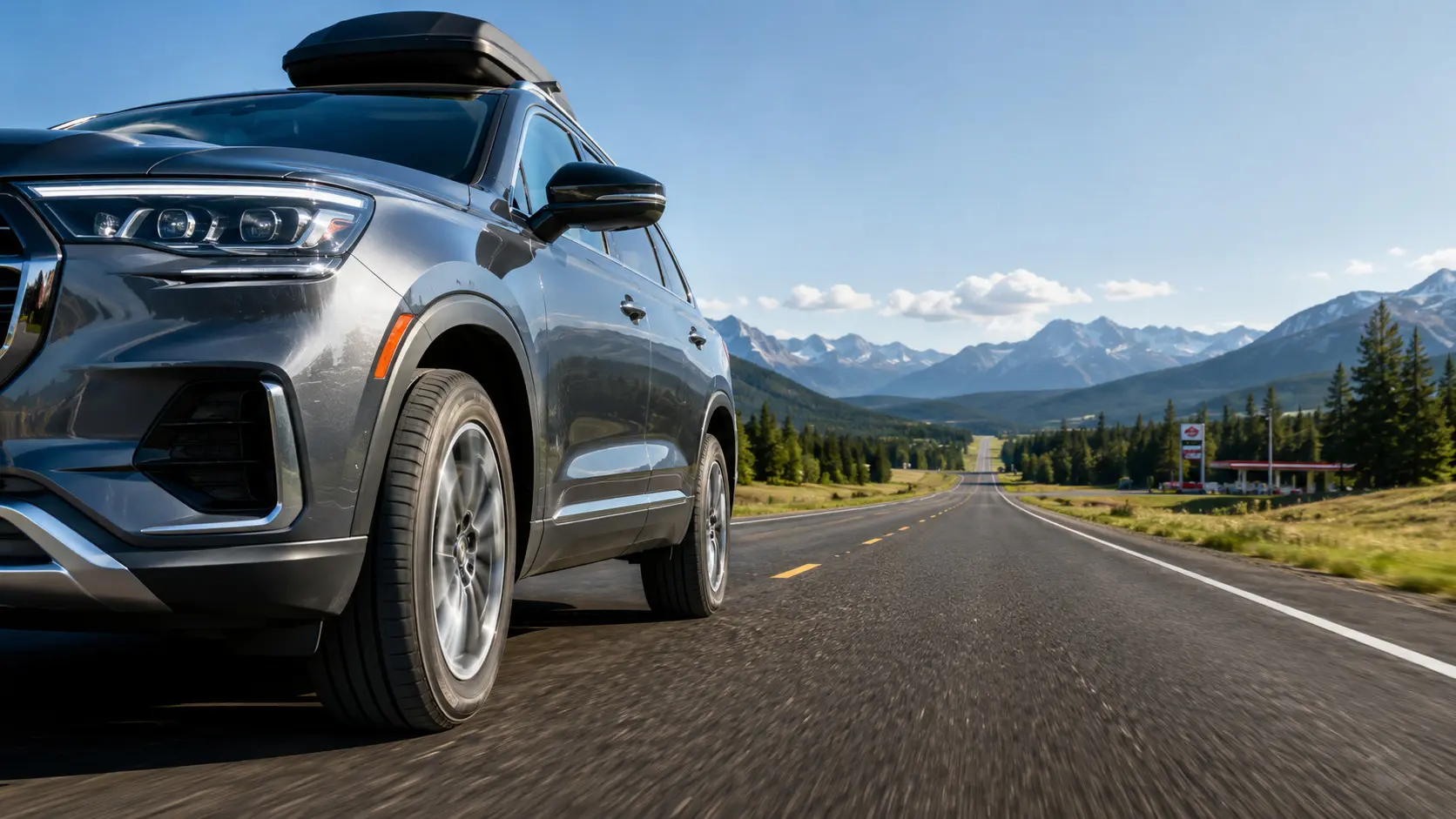
Fuel Economy on Long Drives: How the Right Summit Tire Saves You Money at the Pump
The right Summit tire can help control fuel costs on long drives by reducing avoidable rolling resistance, maintaining stable highway performance, and matching the tire design to the way your vehicle is actually used. The biggest savings, however, come from combining the correct tire with proper inflation, wheel alignment, sensible loading, and efficient driving habits.
A passenger car travelling mostly on paved highways has different needs from a pickup that regularly leaves the pavement. Choosing an aggressive all-terrain tire for highway-only driving may add capabilities you rarely use, while selecting a highway-oriented tire for frequent off-road travel may sacrifice the durability and traction your route requires.
This guide explains how tires affect fuel consumption, compares Summit tire options for Canadian drivers, and provides a practical road-trip checklist that can help you spend less time—and potentially less money—at the pump.
Can the Right Summit Tire Really Improve Fuel Economy?
Yes, the right tire can support better fuel economy, but no tire can guarantee a fixed fuel-saving percentage in every vehicle or driving condition.
Tires consume energy as they flex against the road. This energy loss is known as rolling resistance. A tire with an appropriate road-focused design, correct dimensions, proper air pressure, and even tread wear generally requires less unnecessary energy to keep moving than a tire that is underinflated, damaged, misaligned, overloaded, or poorly matched to the route.
Transport Canada testing has found meaningful variation in rolling resistance among tire models and has reported results supporting the fuel-saving potential of low-rolling-resistance technology. In its preliminary sample, the agency did not identify an obvious relationship between lower rolling resistance and poorer braking, traction ratings, treadwear, or price. Results still depend on the individual tire, vehicle, test conditions, and application. :contentReference[oaicite:0]{index=0}
Summit’s public product information emphasizes intended use, handling, wet traction, ride comfort, tread design, and treadwear coverage rather than publishing a model-by-model Canadian fuel-efficiency grade. For that reason, the best approach is to select the Summit model that most closely matches your vehicle and driving environment instead of assuming that every model produces the same mileage result. :contentReference[oaicite:1]{index=1}
Expert tip: Think of fuel economy as the result of a complete tire system. Tire design matters, but inflation pressure, alignment, load, speed, temperature, and driving behaviour can matter just as much—or more.
How Tires Affect Fuel Consumption on Long Drives
Tires influence fuel consumption through rolling resistance, inflation pressure, weight, tread design, contact with the road, and mechanical condition.
Rolling Resistance
As a tire rolls, the tread and sidewall continuously deform where they meet the pavement. The engine must supply energy to overcome that deformation. On a short city trip, the difference may be difficult to notice. Over thousands of highway kilometres, small efficiency losses can accumulate.
Rolling resistance is affected by several interacting factors:
- Tire construction and rubber compound
- Tread depth and tread-block movement
- Tire width and overall dimensions
- Vehicle weight and cargo load
- Inflation pressure
- Road surface and temperature
- Wheel alignment and mechanical drag
- Driving speed and acceleration
This does not mean that the lowest possible rolling resistance should override every other consideration. Canadian drivers still need adequate wet braking, hydroplaning resistance, winter traction, load capacity, durability, and handling stability.
Inflation Pressure
Underinflation allows the sidewall to flex more than intended, increasing heat and rolling resistance. Transport Canada states that operating a vehicle with one tire underinflated by 56 kPa, or 8 psi, can increase fuel consumption by 4% and reduce tire life by as much as 15,000 kilometres. :contentReference[oaicite:2]{index=2}
That figure should not be interpreted as a guaranteed saving from adding air. It illustrates the potential penalty of significant underinflation. The correct target is the vehicle manufacturer’s recommended cold inflation pressure, normally listed on the driver’s door placard or in the owner’s manual—not the maximum pressure moulded into the tire sidewall.
Transport Canada recommends measuring pressure when the tires are cold, meaning the vehicle has been parked for at least three hours or driven no more than approximately 2 kilometres. The agency also notes that pressure can fall by about 7 kPa, or 1 psi, for every 5°C decrease in temperature. :contentReference[oaicite:3]{index=3}
Tread Design
A highway tire normally uses a tread pattern developed for paved-road stability, controlled water evacuation, comfort, and even wear. An all-terrain tire generally uses deeper grooves, larger tread blocks, reinforced shoulders, or additional biting edges to provide traction on gravel, mud, loose surfaces, and snow.
Those off-road features can be valuable when they match your route. When nearly all your driving is on asphalt, however, a road-focused design is usually the more logical efficiency-oriented choice. This is a practical use-case comparison rather than a published fuel-economy test between specific Summit models.
Tire Size and Load Capacity
A replacement tire should match an approved vehicle size and meet or exceed the required load index and speed rating. Installing unnecessarily wide, tall, or heavy tires may change rolling resistance, aerodynamics, gearing, steering response, and speedometer accuracy.
Never downsize the load rating or select a tire based only on appearance or price. A tire carrying more weight than it was designed to support can overheat and fail, especially during sustained highway driving in warm weather.
Which Summit Tire Is Best for Long-Distance Driving?
The best Summit tire is the model that matches your vehicle, season, road surface, and load—not simply the tire with the most aggressive tread.
| Summit Tire | Best Suited To | Long-Drive Strengths | Fuel-Economy Consideration |
|---|---|---|---|
| Ultramax A/S 2.0 | Passenger cars and crossovers travelling mainly on paved roads | Quiet-road design, straight-line stability, wet-weather channels, broad size range | A sensible road-focused option when the vehicle, size, season, and pressure are correct |
| Ultramax 4S | Drivers seeking an all-weather-style option for changing seasonal conditions | Asymmetric tread, year-round comfort, wet-road capability, even-wear features | Convenience may reduce seasonal changeover costs, but verify winter certification and local requirements for the exact tire |
| Trail Climber HT03 | Pickups, SUVs, and 4x4s used mainly on highways and paved roads | Highway-oriented handling, water evacuation, ride comfort, stability, load capability | Generally the more logical Summit choice for pavement-focused truck or SUV travel |
| Trail Climber AT02 | Trucks and SUVs regularly travelling on gravel, trails, snow, and mixed surfaces | Deeper tread, reinforced shoulders, all-terrain traction, 3PMSF certification | Choose it when its off-road and winter capability is genuinely needed, rather than for highway appearance alone |
| Ultramax Winter Pro | Cold-weather travel on snow, slush, and ice | Cold-weather compound, directional tread, 3D siping, winter control | Safety and cold-weather grip take priority over obtaining the lowest possible rolling resistance |
Summit Ultramax A/S 2.0 for Passenger Cars
The Ultramax A/S 2.0 is positioned as a passenger all-season tire balancing comfort and performance. Summit lists four circumferential grooves for wet traction, a wide footprint for stability, a notched centre rib, and a variable-pitch tread intended to reduce road noise. The manufacturer also lists a 60,000-mile limited treadwear warranty, subject to applicable terms and regional availability. :contentReference[oaicite:4]{index=4}
For a sedan or crossover covering long distances on paved highways during appropriate seasonal conditions, this road-oriented design is likely to make more sense than an aggressive truck tire. Drivers should still confirm that the chosen size, load index, speed rating, and seasonal capability match the vehicle placard and planned route.
Summit Ultramax 4S for Seasonal Flexibility
Summit describes the Ultramax 4S as an all-weather tire developed for dry pavement, wet roads, and light snow. Its asymmetric tread, interlocked 3D siping, and purpose-built compound are intended to support handling, comfort, and even wear. :contentReference[oaicite:5]{index=5}
An all-weather tire can be attractive to drivers who want to avoid storing and changing two sets. However, verify the required winter pictogram on the exact tire size before relying on it for regulated routes or provincial compliance. Product naming alone should never replace a sidewall check.
Summit Trail Climber HT03 for Highway-Driven Trucks and SUVs
The Trail Climber HT03 is Summit’s highway all-season option for pickups, larger SUVs, and 4x4s. The manufacturer highlights circumferential channels, 3D siping, reinforced casing construction, handling stability, and a smooth ride. Summit lists different limited treadwear coverage for P-metric and LT sizes, so buyers should review the warranty that applies to their specific fitment. :contentReference[oaicite:6]{index=6}
For a pickup used for commuting, family road trips, and highway towing within the approved load limits, an H/T design is generally a more appropriate starting point than an A/T or R/T tire. It provides truck-compatible construction without adding off-road features that may not be necessary for a pavement-focused vehicle.
Summit Trail Climber AT02 for Mixed-Surface Travel
The Trail Climber AT02 is designed for trucks and SUVs that travel both on and off the highway. Summit lists reinforced shoulders, deep tread, sidewall traction features, water-evacuation channels, and the Three-Peak Mountain Snowflake certification. :contentReference[oaicite:7]{index=7}
The AT02 may be the right value when your trips include logging roads, cottages, worksites, gravel highways, snow-covered access roads, or recreational trails. A driver who stays almost entirely on divided highways, however, may receive more practical benefit from the HT03’s pavement-focused design.
Summit Ultramax Winter Pro for Cold-Weather Highway Travel
The Ultramax Winter Pro uses a directional V-shaped tread, 3D siping, and a cold-weather compound developed for snow, slush, ice, and low temperatures. :contentReference[oaicite:8]{index=8}
Transport Canada advises that all-season and summer tire compounds begin losing elasticity below approximately 7°C, while winter tires remain flexible at lower temperatures. The agency recommends winter tires on all four wheels and regular pressure checks, especially before highway driving and longer trips. :contentReference[oaicite:9]{index=9}
A winter tire may not be selected primarily for minimum fuel consumption, but using the correct seasonal tire can provide the traction and braking control needed to travel safely. Saving a small amount of fuel is never worth using a tire that is unsuitable for ice, packed snow, or severe cold.
How Much Money Can Correct Tire Pressure Save?
The potential dollar impact depends on your distance, vehicle consumption, fuel price, and degree of underinflation.
Consider a vehicle averaging 8.5 L/100 km over a 5,000-kilometre road-trip season:
- Fuel used: 5,000 ÷ 100 × 8.5 = 425 litres
- A 4% fuel penalty: 425 × 0.04 = 17 litres
- At an illustrative price of C$1.70 per litre: 17 × C$1.70 = C$28.90
Over 20,000 kilometres at the same consumption rate, the potential 4% penalty would equal approximately 68 litres, or C$115.60 at the same illustrative fuel price.
| Distance | Vehicle Consumption | Total Fuel Used | Illustrative 4% Penalty | Cost at C$1.70/L |
|---|---|---|---|---|
| 5,000 km | 8.5 L/100 km | 425 L | 17 L | C$28.90 |
| 10,000 km | 8.5 L/100 km | 850 L | 34 L | C$57.80 |
| 20,000 km | 8.5 L/100 km | 1,700 L | 68 L | C$115.60 |
These examples illustrate a possible underinflation cost based on Transport Canada’s 4% figure for a tire underinflated by 56 kPa. They are not a promise that purchasing a particular Summit model will improve fuel economy by 4%. Actual consumption varies with the vehicle, weather, road grade, wind, traffic, speed, load, tire condition, and driving style. :contentReference[oaicite:10]{index=10}
How to Prepare Your Summit Tires for a Long Drive
A complete inspection before departure can prevent wasted fuel, irregular wear, roadside delays, and avoidable tire damage.
1. Confirm the Correct Tire Size
Compare the tire sidewall with the size listed on the vehicle placard or approved fitment information. Confirm the width, aspect ratio, wheel diameter, load index, and speed rating.
2. Measure Cold Inflation Pressure
Use a reliable pressure gauge before the vehicle has been driven. Adjust the front and rear tires to the vehicle manufacturer’s recommendations, which may differ by axle. Do not use the maximum sidewall pressure as your routine target.
3. Check the Spare Tire
A compact spare or full-size spare can slowly lose pressure while stored. A flat spare provides little help during a highway puncture.
4. Inspect Tread Depth
Measure several points across each tire. Uneven readings can reveal alignment problems, incorrect inflation, worn suspension components, or delayed rotation.
5. Look for Physical Damage
Inspect for cuts, bulges, cracking, exposed cords, embedded objects, damaged valve stems, or tread separation. A visible bulge or exposed internal material requires professional attention before the trip.
6. Review the DOT Date Code
The date code helps identify when the tire was manufactured. Age should be considered together with storage history, cracking, tread condition, service history, and the tire manufacturer’s inspection or replacement guidance.
7. Correct Wheel Alignment
A vehicle that pulls to one side, has an off-centre steering wheel, or shows feathered and one-sided tire wear may need an alignment inspection. Misalignment can cause the tires to scrub against the road instead of rolling cleanly.
8. Rotate and Balance When Required
Regular rotation promotes more consistent tread wear, while correct balancing helps reduce vibration. Follow the vehicle and tire manufacturer’s recommended interval and pattern.
9. Check the Planned Load
Passengers, luggage, camping equipment, tools, bicycles, roof boxes, trailers, and hitch-mounted cargo all add weight or aerodynamic drag. Stay within the vehicle’s gross vehicle weight rating, axle limits, towing limits, and tire load capacity.
Road-trip rule: Check pressure before leaving, again when outside temperatures change significantly, and at least monthly. Do not release air from a warm tire simply because the reading is higher than the cold specification.
Driving Habits Can Outweigh Small Tire-Efficiency Differences
Even a well-matched and properly inflated Summit tire cannot compensate for consistently aggressive or inefficient driving.
Natural Resources Canada recommends gentle acceleration, steady speed, anticipation of traffic, controlled deceleration, and reduced unnecessary idling. Its guidance suggests taking approximately five seconds to accelerate from a stop to 20 km/h under normal conditions. :contentReference[oaicite:11]{index=11}
On long drives, use the following habits:
- Accelerate smoothly instead of using sudden throttle inputs.
- Maintain a steady, legal speed when road and weather conditions allow.
- Leave enough following distance to avoid repeated braking and acceleration.
- Use cruise control where appropriate, but disengage it on slippery roads or when conditions require active speed control.
- Remove unnecessary cargo after the trip.
- Take off unused roof racks and cargo boxes when practical.
- Combine stops instead of making repeated cold-start trips.
- Avoid extended idling during rest or pickup stops.
Natural Resources Canada states that fuel-efficient driving techniques can reduce consumption and emissions substantially, although the result depends on the vehicle and how inefficiently it was previously driven. :contentReference[oaicite:12]{index=12}
Canadian Seasons Can Change the Best Tire Choice
The most economical tire is still the tire that provides suitable traction and legal compliance for the conditions you will encounter.
A summer trip from Toronto to Halifax, a winter drive through Northern Ontario, and a mountain journey between Alberta and British Columbia place very different demands on a tire. Review the full route rather than choosing tires for the weather at your departure point alone.
Quebec Winter Requirements
Most motor vehicles registered in Quebec must be equipped with compliant winter tires from December 1 through March 15. The province requires the recognized winter pictogram or an eligible studded tire, subject to applicable exceptions. :contentReference[oaicite:13]{index=13}
Drivers considering an all-weather Summit tire should confirm that the exact product and size carries the legally required pictogram. A product category or marketing description is not sufficient on its own.
British Columbia Winter Routes
British Columbia requires winter tires or chains on most designated routes from October 1 through April 30, although some routes end their seasonal requirement on March 31. Posted signs and route-specific requirements apply, particularly through mountain passes and higher-snowfall regions. :contentReference[oaicite:14]{index=14}
A Trail Climber AT02 with 3PMSF certification may suit some mixed-surface trips, while the Ultramax Winter Pro is the more winter-specialized Summit option. The final decision should account for the exact route, forecast, road reports, vehicle, tread depth, and provincial rules.
Common Tire Mistakes That Increase Fuel Costs
Most tire-related efficiency losses come from incorrect maintenance or poor fitment decisions rather than the brand name printed on the sidewall.
- Inflating to the sidewall maximum: The sidewall figure is not the normal vehicle operating target.
- Checking pressure after highway driving: Heat raises pressure and can produce a misleading comparison with the cold specification.
- Ignoring a slow leak: Repeatedly adding air without locating the cause can allow puncture or valve damage to worsen.
- Buying an aggressive tread for appearance: Off-road capability provides little value when the vehicle rarely leaves pavement.
- Using the wrong load rating: A lower-rated tire can be unsafe, while an unnecessarily heavy construction may alter ride and efficiency.
- Skipping alignment checks: Irregular wear wastes usable tread and may increase drag.
- Mixing incompatible tires: Different sizes, construction types, tread patterns, or wear levels can affect stability and vehicle-system operation.
- Running winter tires through hot weather: Cold-weather compounds may wear more quickly in sustained warm conditions.
- Assuming the TPMS replaces pressure checks: A tire-pressure warning system is an alert system, not a precision maintenance schedule.
Transport Canada explains that tire-pressure monitoring systems warn drivers when pressure has dropped below a defined level. Drivers should still use a gauge to verify pressure against the vehicle placard. :contentReference[oaicite:15]{index=15}
Final Recommendation for Long-Distance Drivers
Choose the least aggressive Summit tire that safely meets your real driving requirements, then maintain it consistently.
For a passenger vehicle travelling primarily on paved roads, the Ultramax A/S 2.0 may offer an appropriate balance of comfort, stability, and wet-road performance during suitable seasonal conditions.
For a pickup or SUV that spends most of its time on highways, the Trail Climber HT03 is the more road-focused option. Drivers who genuinely need gravel-road, trail, snow, and mixed-surface traction should consider the Trail Climber AT02 rather than choosing it solely for appearance.
For winter highway travel, the Ultramax Winter Pro provides a dedicated cold-weather design. Drivers seeking one set for changing conditions may investigate the Ultramax 4S, but they should verify the winter pictogram, exact size availability, vehicle fitment, and provincial requirements before purchasing.
Whichever model you choose, check cold inflation pressure, inspect tread and damage, maintain alignment, rotate at the recommended interval, control vehicle load, and drive smoothly. Those steps are what turn a suitable tire purchase into meaningful long-term value.
Frequently Asked Questions About Summit Tires and Fuel Economy
These answers address the most common questions Canadian drivers have when choosing and maintaining tires for long highway trips.
Do Summit tires improve fuel economy?
A correctly selected and properly maintained Summit tire can help prevent unnecessary fuel consumption. Summit does not publish a guaranteed fuel-saving percentage across its lineup, so results depend on the model, size, pressure, vehicle, load, route, weather, and driving style.
Which Summit tire is best for highway fuel economy?
For passenger cars, the road-focused Ultramax A/S 2.0 may be an appropriate option. For pickups and SUVs used mainly on pavement, the Trail Climber HT03 is generally the more logical highway-oriented choice. Fitment and seasonal suitability must be confirmed for the individual vehicle.
Does tire pressure really affect gas mileage?
Yes. Underinflation increases sidewall flex and rolling resistance. Transport Canada reports that one tire underinflated by 56 kPa can increase fuel consumption by 4%. :contentReference[oaicite:16]{index=16}
Should I inflate my Summit tires to the pressure on the sidewall?
No. Use the vehicle manufacturer’s recommended cold inflation pressure on the driver’s door placard or in the owner’s manual. The sidewall normally shows a maximum tire pressure associated with the tire’s rated load, not the routine pressure for every vehicle.
How often should I check tire pressure on a long trip?
Check all tires, including the spare, before departure and at least once a month. Recheck when temperatures change significantly or before another extended highway segment. Measure when the tires are cold.
Do all-terrain tires use more fuel than highway tires?
All-terrain tires may use deeper tread, larger blocks, and heavier construction to provide off-road capability. These features can affect rolling resistance, noise, and weight. Actual differences depend on the specific tire and vehicle, so there is no universal percentage.
Is the Trail Climber AT02 a good road-trip tire?
It can be a good choice when the trip includes highways, gravel roads, snow, trails, or worksite access. For pavement-only travel, the Trail Climber HT03 may be a more appropriate road-focused match.
Can winter tires reduce fuel economy?
Fuel consumption can change because winter tires use cold-weather compounds and tread designs developed for traction rather than maximum warm-weather efficiency. Cold temperatures, winter fuel blends, snow, wind, and warm-up time can also affect consumption. Winter safety should take priority over a small mileage difference.
Does the 3PMSF symbol indicate fuel efficiency?
No. The Three-Peak Mountain Snowflake symbol indicates that a tire has met a defined snow-traction performance requirement. It is not a rolling-resistance or fuel-economy grade.
Can poor wheel alignment increase fuel consumption?
Misalignment can cause the tires to scrub, drag, and wear unevenly. While the exact fuel penalty varies, correcting alignment can protect tread life, improve handling, and eliminate avoidable resistance.
Will installing wider tires reduce fuel economy?
Wider or heavier tires can affect rolling resistance, aerodynamic drag, steering effort, gearing, and rotating mass. Only use alternative sizes approved for the vehicle and confirm their load capacity, clearance, wheel compatibility, and effect on vehicle systems.
Why did my fuel economy change after installing new tires?
New tires have full tread depth and may differ in construction, weight, dimensions, compound, or pressure from the worn tires they replaced. Weather, seasonal fuel, alignment, driving conditions, and odometer accuracy can also influence the comparison. Evaluate consumption over several full tanks rather than one short trip.
Does the TPMS warning light mean my tires are only slightly low?
Not necessarily. TPMS systems typically warn after pressure has fallen below a defined threshold. Check the pressure with a reliable gauge as soon as it is safe, inspect for damage, and compare the readings with the vehicle placard.
Recommended Related Reading
These guides can help Canadian drivers improve tire safety, seasonal performance, and long-term ownership costs.
- How to Check Tire Pressure Correctly Before a Road Trip
- All-Weather vs. All-Season Tires: What Canadian Drivers Need to Know
- How to Read Tire Size, Load Index, and Speed Rating
- The Complete Canadian Road-Trip Tire Safety Checklist
- When Tire Rotation, Balancing, and Wheel Alignment Are Needed
- Choosing Highway, All-Terrain, or Rugged-Terrain Tires for Your Truck
In stock & ready to ship
Find the tires you need, delivered from a warehouse near you