
End-of-Summer Tread Depth Check: Are Your Tires Ready for Fall Rain?
A quick end-of-summer tread depth inspection can reveal whether your tires still have enough traction to handle wet pavement, cooler temperatures, standing water, and the changing road conditions of a Canadian fall.
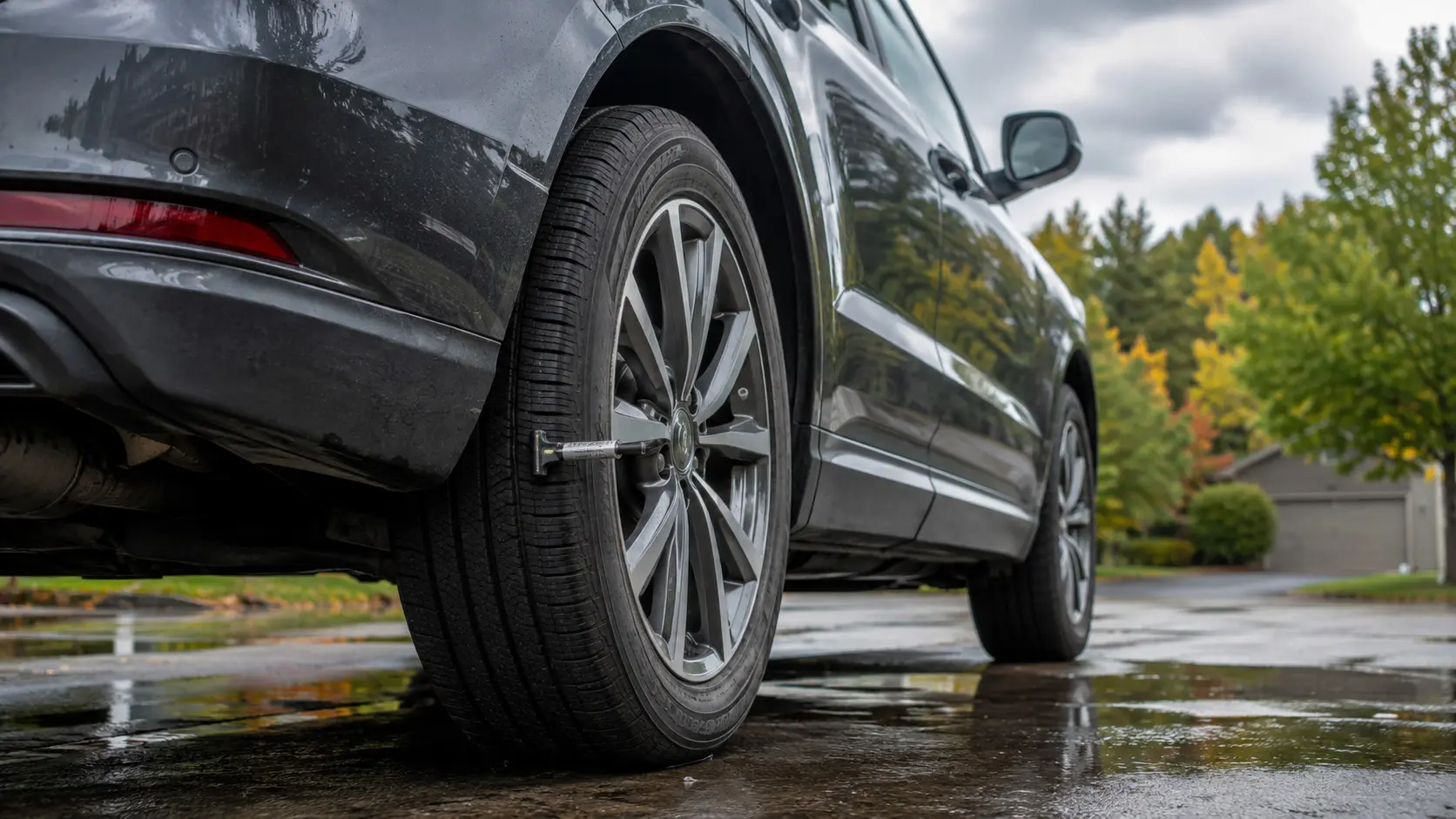
End-of-Summer Tread Depth Check: Are Your Tires Ready for Fall Rain?
Late summer is an ideal time to check your tire tread depth. After months of hot pavement, highway kilometres, road trips, construction zones, and daily commuting, your tires may have considerably less usable tread than they did at the beginning of the season.
That matters as Canadian driving conditions shift toward fall. More frequent rain, cooler pavement, wet leaves, standing water, and shorter daylight hours can make traction increasingly important. Tires that seemed acceptable on dry August pavement may feel very different during a heavy September or October rainstorm.
A tread depth check takes only a few minutes, but the number alone does not tell the whole story. Drivers should also look for uneven wear, damaged tread blocks, incorrect tire pressure, and other signs that could affect wet-weather performance.
Why Should You Check Tire Tread Depth Before Fall?
Tread depth helps a tire maintain contact with wet pavement by providing channels through which water can move. As those grooves become shallower through normal tire wear, the tire has less tread available to manage water between the contact patch and the road.
This makes an end-of-summer inspection particularly useful. You can identify potential problems before regular fall rain arrives and before temperatures begin moving toward winter-tire season in many parts of Canada.
A fall tire inspection should consider:
- remaining tread depth;
- uneven or irregular tread wear;
- tire pressure;
- cuts, cracking, bulges, or other visible damage;
- the age and overall condition of the tires;
- whether your current tire type is appropriate for upcoming temperatures and conditions; and
- whether alignment or rotation may need attention.
Expert tip: Do not inspect only the easiest tread groove to reach. Measure several locations across each tire because wear can differ between the inner shoulder, centre, and outer shoulder.
How Does Tread Depth Affect Driving in Fall Rain?
Deeper, properly designed tread grooves generally provide more capacity to manage water than heavily worn tread. This is important because a tire needs to maintain contact with the road to provide steering, braking, and acceleration traction.
Wet braking
Wet pavement already provides a more challenging traction environment than dry pavement. As tires wear, their wet-weather performance can deteriorate, although the amount varies by tire design, vehicle, road surface, speed, temperature, and other conditions.
Drivers should therefore avoid assuming that a tire is suitable for heavy rain simply because it still appears to have visible tread.
Hydroplaning
Hydroplaning can occur when a tire is unable to displace water effectively enough to maintain normal contact with the pavement. Vehicle speed, water depth, tire design, tread condition, tire pressure, vehicle characteristics, and road conditions can all influence the risk.
Worn tread is especially relevant because shallower grooves have less capacity to manage water.
Steering and handling
Wet-weather safety is not only about stopping distance. Tires also contribute to steering response and vehicle stability. When traction is reduced, abrupt braking, acceleration, or steering inputs can become more difficult to manage.
What Is a Good Tire Tread Depth for Fall Rain?
There is an important difference between a tire’s legal minimum tread depth and the tread depth at which its wet-weather performance may already have declined. Drivers should not treat the legal minimum as a performance target.
| Tread Condition | What It Means | Recommended Action |
|---|---|---|
| Deep, even tread | The tire has substantial tread remaining, assuming the tire is otherwise in good condition. | Continue regular pressure and wear inspections. |
| Moderately worn tread | Wet-weather capability may be reduced compared with when the tire was new. | Measure accurately and monitor wear more frequently. |
| Approaching wear indicators | Available tread is becoming limited and wet-weather performance may be significantly reduced. | Plan replacement rather than waiting for challenging weather. |
| At the tread-wear indicators | The tread has reached the built-in wear-bar level. | Replacement is needed; confirm applicable provincial or territorial requirements. |
| Uneven wear | One part of the tire may have substantially less tread than another. | Have the tires and possible alignment, inflation, or suspension causes inspected. |
Many passenger tires use tread-wear indicators positioned at approximately 1.6 mm (2/32 in.) of remaining tread. These bars are useful for identifying a heavily worn tire, but they should not be interpreted as a guarantee of adequate wet-weather performance up to that point.
Requirements can vary by jurisdiction and vehicle type, so Canadian drivers should consult the regulations applicable in their province or territory when determining legal compliance.
How Do You Measure Tire Tread Depth?
The most useful way to check tread depth is with an inexpensive tread-depth gauge and measurements from several locations on every tire. A gauge provides a clearer measurement than relying only on a visual inspection.
Step 1: Park safely
Park on a flat, safe surface, switch off the vehicle, and ensure you can access the tires without exposing yourself to traffic.
Step 2: Inspect the tread first
Before measuring, look for obvious damage, foreign objects, unusual wear patterns, exposed cords, or sections that appear significantly more worn than the rest.
Step 3: Measure a main tread groove
Insert the tread-depth gauge into a main groove and position its base flat against the surrounding tread blocks. Read the measurement according to the gauge manufacturer’s instructions.
Step 4: Repeat across the tire
Measure the inner, centre, and outer portions of the tread. Then repeat the process at multiple points around the tire.
Step 5: Check all four tires
Do not assume that matching tires wear at exactly the same rate. Front and rear tires may experience different loads and forces depending on the vehicle’s drivetrain, alignment, suspension, rotation history, and driving conditions.
Step 6: Record the lowest measurement
The most worn section deserves attention. An excellent measurement on the outer groove does not compensate for an inner shoulder that is approaching its wear indicators.
Can You Check Tread Without a Tread-Depth Gauge?
A visual inspection and the tire’s built-in tread-wear indicators can help identify severe wear, but a tread-depth gauge provides a much more useful measurement.
Wear indicators appear as small raised bars running across the bottom of selected tread grooves. As the surrounding tread wears down to the same height as these bars, the tire has reached the indicator level.
Coin tests are also commonly discussed online. While they can provide a rough reference, Canadian coin designs can change and a coin is not a calibrated tire-measuring instrument. A dedicated tread-depth gauge is inexpensive, repeatable, and easier to use when monitoring wear over time.
Why Is Uneven Tire Wear Important Before Fall?
Uneven wear can leave one portion of a tire with considerably less usable tread than another, even when the tire initially looks acceptable. It can also point to an underlying maintenance issue.
| Wear Pattern | Possible Contributors | What to Do |
|---|---|---|
| Centre wear | Inflation, vehicle use, tire characteristics, or other factors | Check cold tire pressure and have unusual wear assessed. |
| Wear on both shoulders | Underinflation or other operating factors | Verify pressure and inspect the tire condition. |
| Wear primarily on one shoulder | Alignment, suspension, or other mechanical factors | Consider a professional alignment and suspension inspection. |
| Cupping or scalloped wear | Possible suspension, balance, alignment, or tire-related issues | Have the vehicle and tires professionally inspected. |
| Different wear front to rear | Drivetrain, load, rotation history, alignment, or normal vehicle characteristics | Review the vehicle manufacturer’s tire-rotation recommendations. |
Wear patterns are clues rather than definitive diagnoses. If you notice unusual tread wear, a qualified tire or automotive technician can help determine the underlying cause.
Does Tire Pressure Matter in Fall Rain?
Yes. Correct tire pressure is essential for proper tire operation, and seasonal temperature changes make fall an important time to monitor inflation.
Air pressure inside a tire changes with ambient temperature. As Canadian temperatures begin falling from summer highs into cooler autumn mornings, tire pressure can decrease.
Check pressure when the tires are cold and inflate them according to the vehicle manufacturer’s specified cold inflation pressure. This information is normally found on the tire-information placard inside the driver’s door or door jamb and in the owner’s manual.
Do not automatically use the maximum pressure moulded into the tire sidewall as your vehicle’s recommended inflation pressure. The sidewall information and the vehicle manufacturer’s recommended cold pressure serve different purposes.
If your vehicle has a tire pressure monitoring system (TPMS), remember that it is a warning system rather than a replacement for routine pressure checks.
What Else Should You Inspect at the End of Summer?
Tread depth should be part of a broader tire inspection rather than a stand-alone measurement. A tire can have adequate tread depth and still require professional attention because of damage, age, or abnormal wear.
Use this end-of-summer tire checklist:
- Tread depth: Measure several grooves on every tire.
- Wear pattern: Compare the inner, centre, and outer tread.
- Tire pressure: Check all tires when cold.
- Sidewalls: Look for cuts, bulges, cracking, abrasions, or other damage.
- Tread area: Look for embedded objects or visible damage.
- Valve stems: Check for obvious damage and ensure caps are fitted.
- TPMS: Investigate warning lights rather than simply resetting them.
- Rotation: Check your vehicle or tire manufacturer’s recommended interval.
- Alignment: Consider an inspection if you see irregular wear or experience unusual vehicle behaviour.
- Spare tire: If your vehicle has one, inspect its pressure and condition as well.
Expert tip: Photograph or record your tread measurements. Comparing them during future inspections can help you spot an unusual change in wear rather than relying on memory.
Can Worn Tires Increase Hydroplaning Risk?
Worn tread can contribute to hydroplaning risk because the tire has less groove depth available to manage water. However, tread depth is only one factor.
Hydroplaning risk can also be affected by:
- vehicle speed;
- depth of standing water;
- tire pressure;
- tire tread design and condition;
- road surface;
- vehicle load; and
- driving inputs.
During heavy rain, reducing speed and increasing following distance can give you more time to respond to changing traction conditions. Avoid cruise control when conditions make maintaining consistent traction difficult, and make steering, braking, and acceleration inputs progressively.
If the vehicle begins to hydroplane, avoid sudden steering or braking inputs. Ease off the accelerator smoothly and concentrate on maintaining control while the tires regain normal contact with the road.
Are All-Season Tires Good for Canadian Fall Rain?
All-season tires can be appropriate for fall rain when they have adequate tread, correct pressure, and are used within conditions suited to their design. Their suitability changes as autumn progresses and temperatures approach winter conditions.
The term all-season should not be interpreted as meaning optimal performance in every Canadian season. Conventional all-season tires are primarily intended for warmer conditions and light seasonal variation rather than severe winter conditions.
All-weather tires are different. Many carry the Three-Peak Mountain Snowflake (3PMSF) symbol and are designed to provide year-round use while meeting a defined snow-traction performance requirement.
Dedicated winter tires use tread designs and rubber compounds developed specifically for cold temperatures, snow, slush, and winter conditions.
When Should You Start Thinking About Winter Tires?
Fall tread inspection is also a convenient time to plan your winter tire change before cold weather becomes established. Waiting for the first major snowfall can leave little time to address worn tires, book installation, or select replacements.
A commonly used guideline is to consider switching to winter tires as temperatures consistently approach approximately 7°C, rather than waiting exclusively for snow.
Local rules also matter. Quebec has specific winter-tire requirements for many registered passenger vehicles, while designated routes in British Columbia have seasonal winter tire and chain requirements. Requirements can change, so drivers should confirm current provincial regulations and applicable dates before travelling.
If you drive between provinces, through mountain corridors, or on rural highways, check the rules for your entire route rather than only your home province.
Should You Replace Tires Before They Reach the Wear Bars?
Depending on your driving conditions and the tire’s remaining wet-weather capability, replacement may make sense before a tire reaches its wear indicators. Wear bars should not be viewed as a promise that wet traction remains unchanged until the final millimetre of usable tread.
Consider the complete picture:
- remaining tread depth;
- how evenly the tires are wearing;
- frequency of heavy rain or standing water;
- highway versus city driving;
- typical speeds and distances;
- upcoming seasonal conditions;
- tire age and physical condition; and
- whether you will soon install a separate winter tire set.
For example, a driver covering substantial highway distances during a rainy coastal fall may evaluate remaining tread differently from someone who drives relatively few kilometres before switching to dedicated winter tires.
Fall Tire Check: A Five-Minute Routine
A short inspection can help identify obvious tire concerns before your next rainy drive. Use this routine at the end of summer and continue checking your tires regularly throughout fall.
- Walk around the vehicle and visually inspect all four tires.
- Measure tread depth across several locations on each tire.
- Compare the measurements for signs of uneven wear.
- Check cold tire pressure against the vehicle manufacturer’s specification.
- Look closely for cuts, cracks, bulges, embedded objects, or unusual damage.
- Review when the tires were last rotated and whether alignment has been checked.
- Consider whether your current tires suit the temperatures and conditions expected over the next several weeks.
- Make a winter tire plan before temperatures consistently fall toward winter-driving conditions.
Common Tire Tread Mistakes to Avoid
The biggest tread-check mistakes involve relying on appearance alone or assuming that legal compliance automatically means strong wet-weather performance.
- Checking only one tire: Wear can differ considerably from wheel to wheel.
- Measuring only one groove: Inner-edge wear can remain difficult to see.
- Waiting for a TPMS warning: TPMS does not measure tread depth or identify every tire problem.
- Ignoring irregular wear: Uneven tread may indicate a maintenance issue that should be investigated.
- Using sidewall maximum pressure as the target: Follow the vehicle manufacturer’s cold inflation specification.
- Assuming visible tread means good wet traction: Performance can decline progressively as a tire wears.
- Waiting for the first snowfall to think about winter tires: Temperature and local regulations matter too.
Final Recommendation: Check Your Tires Before the Weather Changes
An end-of-summer tread depth check is one of the simplest ways to prepare your vehicle for wetter fall roads. Measure every tire, check several tread locations, verify cold inflation pressure, and investigate unusual wear or visible damage.
Most importantly, do not evaluate tires using tread depth alone. Wet traction depends on tire design, remaining tread, inflation, vehicle condition, road surface, speed, water depth, and weather conditions.
If your tires are approaching their wear indicators, show significant uneven wear, or leave you uncertain about their condition, having them inspected before fall rain becomes routine can help you make a more informed replacement decision.
Frequently Asked Questions About Tire Tread Depth and Fall Rain
How often should I check my tire tread depth?
Check tread condition regularly and before major seasonal changes or long trips. If your tires are already significantly worn, more frequent measurements can help you monitor how quickly they are approaching replacement.
What is the easiest way to measure tire tread depth?
A dedicated tread-depth gauge is one of the easiest and most useful options. Measure several main grooves across every tire rather than taking a single reading.
Are tire wear bars enough to check tread depth?
Wear bars are useful indicators of advanced tread wear, but they do not show exactly how much tread remains before you reach them. A tread-depth gauge gives you more information for monitoring wear.
Can a tire have enough tread but still be unsafe?
Yes. A tire may have substantial tread remaining but still have cuts, bulges, cracking, impact damage, irregular wear, or other issues requiring professional inspection. Tread depth is only one part of evaluating tire condition.
Why do tires hydroplane more easily when worn?
As tread grooves become shallower, the tire has less capacity to manage water beneath its contact patch. Speed, water depth, pressure, tread design, road conditions, and other factors also influence hydroplaning.
Should I replace my tires before reaching 1.6 mm?
Replacement can be appropriate before reaching the wear indicators, particularly when wet-weather performance is important. Consider tread depth alongside tire condition, driving environment, seasonal plans, and professional inspection advice.
Why is the inside of my tire more worn than the outside?
Inner-edge wear can be associated with alignment, suspension geometry, inflation, vehicle characteristics, or other factors. Because several causes are possible, unusual wear should be professionally assessed rather than diagnosed from tread appearance alone.
Does cooler fall weather reduce tire pressure?
Tire pressure generally decreases as ambient temperature falls. Check pressure when the tires are cold and use the vehicle manufacturer’s recommended cold inflation pressure.
Can I rely on my TPMS to tell me when my tires need attention?
No. TPMS is designed to monitor tire pressure conditions, not tread depth, alignment, tread damage, or overall tire condition. Manual inspections remain important.
Are all-season tires suitable for heavy fall rain?
They can be, depending on the tire model, remaining tread, pressure, road conditions, vehicle, and driving behaviour. A heavily worn all-season tire should not be assumed to provide the same wet traction it offered when new.
When should Canadians install winter tires?
A common guideline is to consider the change as temperatures consistently approach approximately 7°C. Drivers must also account for provincial requirements, local climate, travel routes, and the recommendations applicable to their vehicle and tires.
Should I rotate my tires before fall?
If rotation is due according to your vehicle or tire manufacturer’s recommended schedule, the end of summer can be a convenient time. Rotation can help manage differences in wear, although it cannot correct an underlying alignment or mechanical problem.
Recommended Related Reading
- How to Check Tire Tread Depth and Recognize Worn Tires
- Tire Pressure Guide: How to Check and Maintain Proper Inflation
- Hydroplaning and Tire Safety: What Canadian Drivers Should Know
- All-Weather vs. All-Season Tires: Which Is Better for Canadian Driving?
- When Should You Install Winter Tires in Canada?
- What Causes Uneven Tire Wear?
In stock & ready to ship
Find the tires you need, delivered from a warehouse near you