
Deep Snow Traction: How the Tread Pattern of the Ultramax Winter Pro Bites into Pack
Discover how the Ultramax Winter Pro tread pattern helps generate traction in deep and packed snow, why tread design matters on Canadian winter roads, and how to get the most from your winter tires.
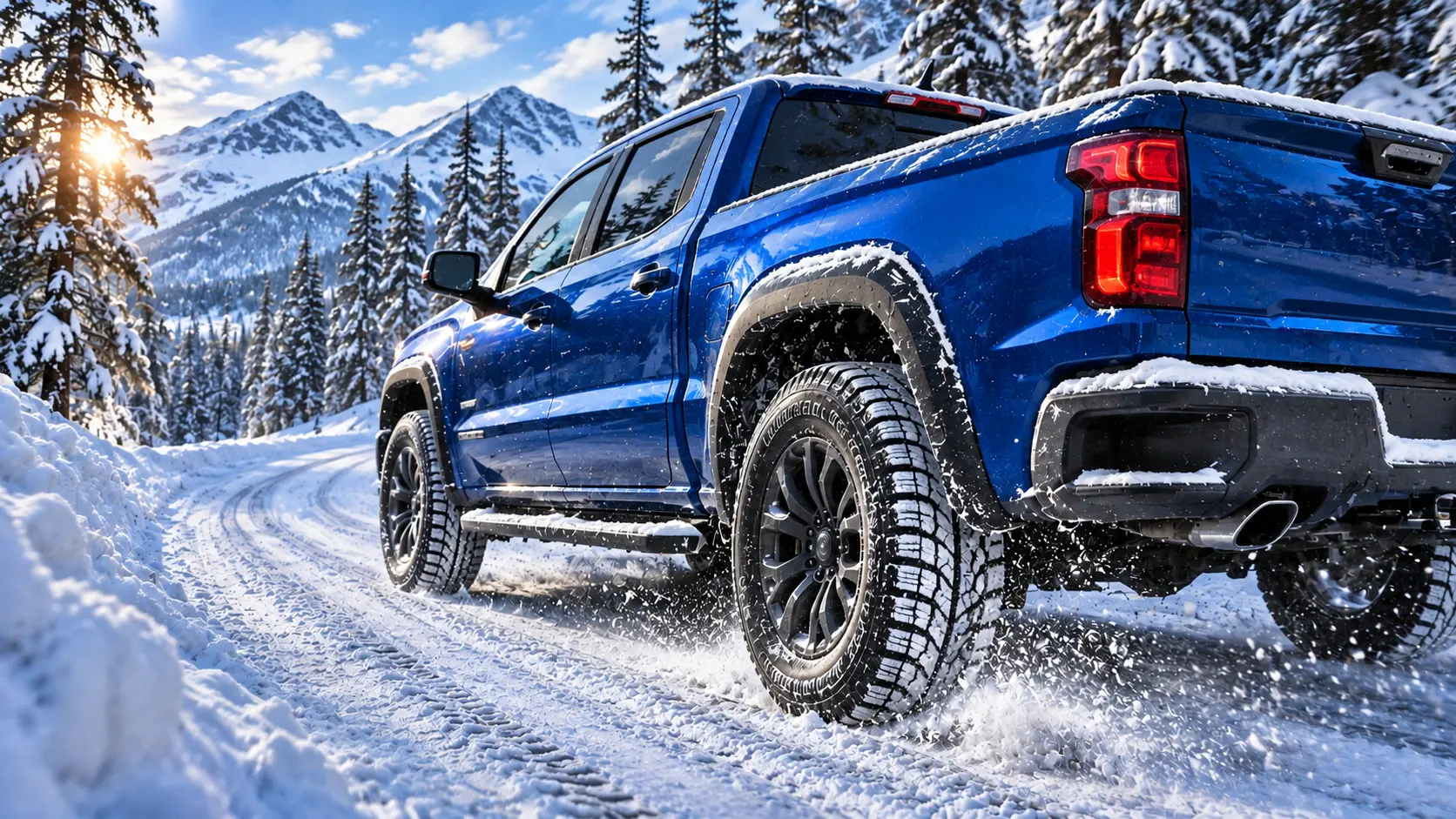
Deep Snow Traction: How the Tread Pattern of the Ultramax Winter Pro Bites into Pack
When a Canadian winter storm leaves roads covered in deep, packed snow, your tires become one of the most important factors in maintaining control. Whether you are navigating an unplowed residential street in Ontario, climbing a snowy hill in Quebec, or travelling through a mountain pass in British Columbia, your winter tires must do more than simply roll over snow. They need to generate traction, maintain directional stability, and help your vehicle accelerate, steer, and brake predictably.
The Ultramax Winter Pro is a winter tire option for drivers looking to understand how specialized tread design can contribute to snow performance. Its suitability for a particular vehicle and driving environment should be assessed using the manufacturer’s published specifications, tire markings, and available performance information.
But what actually allows a winter tire to bite into deep snow? The answer involves several interacting elements: tread blocks, grooves, sipes, tread depth, rubber flexibility, and the way snow behaves under pressure.
In this guide, we explore the science of deep snow traction, the tread characteristics worth examining on the Ultramax Winter Pro, and the practical steps Canadian drivers can take to improve winter tire performance.
What Makes Deep Snow Traction Different from Regular Winter Grip?
Deep snow traction depends on how effectively a tire can penetrate, compress, and interact with snow while maintaining forward movement and steering control. Unlike dry pavement, snow is a deformable surface that changes under the weight and rotation of a tire.
When a tire rolls through deep snow, several things happen simultaneously:
- The leading tread blocks push into the snow.
- Snow enters the spaces between tread blocks.
- The tread pattern compresses and shears snow to generate traction.
- Grooves provide space for displaced snow and slush.
- The tire must continue rotating without excessive wheelspin or loss of directional control.
This is why a tire that performs adequately on cleared winter pavement may behave differently on an unplowed road.
Loose Snow Versus Packed Snow
Not all snow creates the same traction conditions.
Loose snow is relatively uncompacted and can accumulate in front of the tire. A suitable tread pattern needs enough open space to penetrate the surface and manage displaced snow.
Packed snow has already been compressed by vehicles, pedestrians, or snow-clearing equipment. It can offer a more consistent surface than loose snow, but its density and smoothness can make traction challenging.
Polished snow can become particularly slippery after repeated traffic compresses and smooths the surface. In these conditions, the available biting edges and rubber characteristics become increasingly important.
Understanding these differences helps explain why winter tire performance cannot be judged by tread appearance alone.
How the Ultramax Winter Pro Tread Pattern Helps Create Snow Traction
The snow-gripping ability of a winter tire comes from the combined action of its tread blocks, grooves, and smaller tread features. When evaluating the Ultramax Winter Pro, these are the primary design elements to examine.
Specific claims about the Ultramax Winter Pro’s groove orientation, sipe density, tread compound, and certified performance should be confirmed against the exact tire size and current manufacturer’s technical documentation.
1. Tread Blocks: Creating Mechanical Grip
Tread blocks are the raised sections of rubber that contact the road. In snow, their edges can engage the surface and contribute to the mechanical forces that help a tire move forward.
When the tire rotates, these blocks press into the snow. The resulting interaction between rubber, compacted snow, and the surrounding surface helps generate traction.
Several tread-block characteristics influence winter performance:
- Block shape: Influences how the tread contacts and deforms snow.
- Block spacing: Determines how much room is available for snow to enter and leave the tread.
- Edge orientation: Influences traction forces during acceleration, braking, and cornering.
- Block stiffness: Affects tread stability and deformation under load.
A well-engineered winter tread balances snow engagement with predictable handling. Excessively flexible tread blocks can reduce steering precision, while an overly rigid tread may not provide the desired interaction with irregular winter surfaces.
2. Tread Grooves: Managing Snow and Slush
Grooves are the channels separating larger tread blocks. They provide space for snow and slush to move as the tire travels through the contact patch.
In deep snow, the available groove volume can be especially important because the tire must accommodate displaced material without losing its ability to engage the underlying surface.
Depending on the tire’s actual design, winter tread patterns may incorporate:
- Longitudinal grooves: Channels that run around the tire circumference and can assist with water and slush management.
- Lateral grooves: Channels that cross the tread and can contribute to traction and material displacement.
- Angled grooves: Channels that create additional tread edges and influence how snow moves through the contact patch.
- Open shoulder areas: Spaces near the tread edges that may assist with snow evacuation and lateral grip.
The arrangement of these features matters as much as their size. A groove layout must balance deep snow traction with braking, cornering stability, noise, and performance on cleared pavement.
3. Sipes: Small Cuts with an Important Role
Sipes are narrow cuts within tread blocks that create additional edges and allow controlled tread deformation. They are a common feature of dedicated winter tires.
When a sipe opens slightly under load, its edges can interact with the road surface and contribute to grip on snow and ice.
Sipes can also affect how tread blocks flex, which influences the distribution of pressure across the contact patch.
However, more sipes do not automatically mean better performance. Their depth, shape, orientation, and relationship with the surrounding rubber all influence the result.
Tire Specialist Insight: When evaluating a winter tire such as the Ultramax Winter Pro, consider the entire tread design rather than counting grooves or sipes. Snow traction depends on how these features work together under real driving loads.
The Science of Snow-on-Snow Traction
Snow can sometimes grip other snow more effectively than rubber grips a smooth snow surface. This principle helps explain why the ability to retain and compress snow within tread grooves can contribute to winter traction.
As a tire enters the contact patch, snow may become compacted inside the tread pattern. The compacted snow can interact with the snow-covered road and generate useful shear resistance.
Three physical mechanisms are particularly relevant:
- Mechanical interlocking: Tread edges and compacted snow interact with irregularities in the surface.
- Snow shear resistance: Snow within the tread resists movement against the surrounding snowpack.
- Rubber-surface friction: The tread compound contributes to grip wherever rubber contacts the road.
These mechanisms operate together, but their relative importance changes with snow temperature, density, moisture content, vehicle load, and wheel speed.
Why Excessive Wheelspin Reduces Progress
When a driver applies too much throttle, the driven wheels may spin faster than the vehicle moves.
Excessive wheelspin can disturb the snow beneath the tire, dig a rut, and reduce the vehicle’s ability to move forward.
Even with dedicated winter tires, smooth throttle application is generally more effective than aggressive acceleration on a slippery surface.
If your vehicle becomes stuck, consult the owner’s manual for the recommended recovery procedure. Avoid prolonged wheelspin, which can damage tires or vehicle components.
Why Winter Rubber Compounds Matter in Deep Snow
A winter tire’s rubber compound influences how well its tread remains flexible in cold temperatures. Tread design alone cannot determine winter performance.
As temperatures fall, many conventional all-season tire compounds become less flexible. Dedicated winter tires are engineered with compounds intended to maintain useful performance in colder conditions.
This flexibility helps the tread adapt to small surface irregularities and allows tread features to function as intended.
The Importance of the 7°C Guideline
Canadian drivers often use approximately 7°C as a practical reference point for planning the seasonal switch to winter tires.
This is not a universal temperature at which every all-season tire suddenly loses grip. Actual performance depends on tire design, compound, road conditions, and temperature.
However, when temperatures consistently approach or fall below 7°C, it is sensible to prepare for winter tire installation rather than waiting for the first major snowfall.
For the Ultramax Winter Pro, consult the manufacturer’s published information to understand the intended temperature range and winter performance characteristics of the specific product.
Ultramax Winter Pro: Key Tread Features to Evaluate
The most useful way to assess the Ultramax Winter Pro is to connect each visible or documented tread feature with its intended winter-driving function.
| Tread Feature | Function in Snow | What to Check |
|---|---|---|
| Major tread grooves | Provide space for snow and slush displacement | Groove layout and remaining depth |
| Tread blocks | Generate mechanical interaction with the snow surface | Block arrangement and wear condition |
| Sipes | Create additional edges and influence tread flexibility | Sipe placement and condition |
| Shoulder tread | Contributes to lateral grip and handling | Shoulder wear and tread geometry |
| Winter rubber compound | Supports cold-weather tread flexibility | Manufacturer’s compound specifications |
| 3PMSF marking | Identifies a tire meeting an applicable severe-snow traction test requirement | Actual sidewall marking on the tire |
These are general winter tire engineering principles, not a verified list of proprietary Ultramax Winter Pro technologies. Confirm the exact model specifications before making a purchase decision.
Deep Snow, Packed Snow, Slush, and Ice: Understanding the Differences
Different winter surfaces demand different combinations of tread grip, rubber friction, and snow management. A tire that performs well in one condition may not provide identical performance in another.
| Winter Surface | Main Traction Challenge | Important Tire Characteristics |
|---|---|---|
| Deep loose snow | Penetrating snow without excessive wheelspin | Groove volume, tread edges, suitable tread depth |
| Packed snow | Maintaining grip on compressed snow | Effective biting edges and compound flexibility |
| Wet snow | Managing heavy, moisture-rich snow | Groove design and slush displacement |
| Slush | Reducing loss of contact with the road | Drainage channels and adequate tread depth |
| Black ice | Generating friction on a very slippery surface | Specialized winter compound and tread design |
| Cold dry pavement | Balancing grip, stability, and wear | Compound properties and tread-block stability |
No winter tire can eliminate the risks associated with black ice or extremely slippery conditions. Drivers must still reduce speed, increase following distance, and avoid abrupt steering or braking inputs.
How the Ultramax Winter Pro Compares with Other Tire Categories
A dedicated winter tire is designed specifically for cold-weather driving, while all-weather and all-season tires must balance performance across a wider range of conditions.
The following comparison describes general tire categories. It does not represent independent comparative testing of the Ultramax Winter Pro.
| Tire Category | Deep Snow Suitability | Cold-Weather Focus | Typical Application |
|---|---|---|---|
| Ultramax Winter Pro | Model-specific testing required | Winter tire category; verify specifications | Seasonal winter use where approved for the vehicle |
| Other dedicated winter tires | Generally designed for snowy conditions; performance varies | High | Cold climates with regular snow and ice |
| 3PMSF-rated all-weather tires | Varies significantly by model | Year-round compromise | Drivers seeking one set for multiple seasons |
| Conventional all-season tires | Often less suitable for severe snow | Moderate | Milder conditions and cleared roads |
| Summer tires | Not suitable | Warm-weather performance | Warm temperatures and appropriate road conditions |
Winter Tires Versus All-Weather Tires
All-weather tires can be a practical solution for some Canadian drivers, especially where winter conditions are relatively moderate or roads are frequently cleared.
However, drivers who regularly encounter substantial snowfall, steep hills, remote roads, or prolonged freezing temperatures may benefit from considering a dedicated winter tire.
The best choice depends on the actual products being compared. Tire category alone does not establish the stopping distance or snow traction of two specific models.
Why Tread Depth Is Critical for Deep Snow Performance
As winter tire tread wears down, the available groove volume and the ability to manage snow and slush generally decrease. This can reduce winter traction even when a tire remains above the legal minimum tread depth.
In Canada, many tire specialists recommend considering winter tire replacement when remaining tread depth approaches approximately 4 mm, particularly for drivers who regularly encounter significant snow and slush.
This is a practical winter-performance guideline rather than a universal legal replacement threshold.
Winter Tread Depth Guide
| Remaining Tread Depth | Winter Driving Consideration |
|---|---|
| 8 mm or more | Substantial remaining tread depth; assess age and condition as well |
| 6–7 mm | Monitor wear and maintain proper inflation |
| 4–5 mm | Plan replacement based on winter driving demands |
| Below 4 mm | Replacement is strongly advisable for demanding snow and slush conditions |
| At or below applicable legal limits | Replace the tire; it may no longer be road-legal |
Measure tread depth at several points across each tire. Uneven readings may indicate inflation problems, wheel alignment issues, or suspension-related wear.
Do not rely solely on the appearance of the tread. A tire may look aggressive while having insufficient remaining depth for demanding winter conditions.
Where Deep Snow Traction Matters Most in Canada
Deep snow traction becomes particularly important on roads where snow accumulates faster than maintenance crews can remove it. Canadian drivers encounter these conditions in different ways depending on geography and local weather patterns.
Ontario: Lake-Effect Snow and Residential Streets
Parts of southern and central Ontario can experience intense lake-effect snowfall. Roads may accumulate substantial snow within a short period, especially away from major highways.
Winter tire tread depth and traction are important when leaving an unplowed driveway, navigating residential streets, or travelling through areas affected by snow squalls.
Quebec: Persistent Snow and Winter Tire Requirements
Quebec drivers often experience extended periods of snow-covered roads and freezing temperatures.
For most passenger vehicles registered in Quebec, winter tires are required from December 1 through March 15, subject to applicable exemptions and regulations.
Drivers should verify that their tires carry the legally accepted winter tire markings and meet current provincial requirements.
British Columbia: Mountain Passes and Variable Conditions
British Columbia presents a different winter challenge. Drivers may encounter rain at lower elevations, heavy snowfall at higher elevations, and icy conditions on mountain highways.
Many designated routes have seasonal winter tire or chain requirements, with dates and restrictions varying by route.
Drivers should check current provincial requirements before travelling, particularly when crossing mountain passes.
Prairie Provinces: Cold Temperatures and Blowing Snow
Alberta, Saskatchewan, and Manitoba can experience prolonged freezing temperatures, strong winds, and blowing snow.
Even roads that have been plowed may develop drifting snow or polished surfaces.
Appropriate winter tires, adequate tread depth, and conservative driving techniques are important in these environments.
How to Get the Best Snow Traction from Your Ultramax Winter Pro Tires
Correct installation and regular maintenance help winter tires deliver the performance their design is intended to provide. Even a well-designed tread cannot compensate for incorrect tire pressure, excessive wear, or an unsuitable tire size.
1. Install Four Matching Winter Tires
For balanced winter handling, install four compatible winter tires of the appropriate size, load rating, and specification.
Using winter tires on only one axle can create significant differences in available traction between the front and rear of the vehicle.
Follow the vehicle manufacturer’s recommendations, especially for all-wheel-drive vehicles and vehicles with staggered tire sizes.
2. Maintain Correct Cold Inflation Pressure
Tire pressure changes as temperature changes. As a general approximation, tire pressure may decrease by about 7 kPa (1 psi) for every 5–6°C drop in temperature.
Check inflation pressure when the tires are cold, using the value specified on the vehicle’s tire information placard or in the owner’s manual.
Do not automatically use the maximum pressure printed on the tire sidewall.
Unless your vehicle manufacturer specifically recommends otherwise, do not deliberately reduce tire pressure to improve snow traction on public roads.
3. Rotate Tires as Recommended
Regular rotation can help promote more even tread wear, provided the tires and vehicle configuration permit rotation.
Consult the vehicle and tire manufacturers for the correct rotation pattern and interval.
If the Ultramax Winter Pro version you purchase has a directional tread pattern, the rotation procedure must respect its required rolling direction.
4. Check Wheel Alignment
Incorrect wheel alignment can cause uneven tread wear and reduce the useful life of winter tires.
Have alignment inspected if you notice unusual wear, persistent pulling, or steering behaviour that differs from normal.
5. Drive Smoothly
Winter tires improve the vehicle’s ability to interact with cold and snowy surfaces, but driving technique remains essential.
- Accelerate progressively to limit wheelspin.
- Brake early and smoothly.
- Reduce speed before entering corners.
- Increase following distance.
- Avoid unnecessary sudden steering inputs.
- Allow additional travel time during heavy snowfall.
Expert Tip: If your vehicle is struggling to move through deep snow, more throttle is not always the solution. Excessive wheelspin can dig the tires deeper into the snow. Use gentle inputs and follow your vehicle manufacturer’s guidance for traction control and recovery procedures.
Can the Ultramax Winter Pro Handle Ice as Well as Deep Snow?
Snow traction and ice traction are related but distinct performance characteristics. A tread design that generates useful mechanical grip in deep snow does not necessarily deliver the same relative advantage on smooth ice.
On ice, traction depends heavily on the rubber compound, tread design, surface temperature, and whether a thin film of water is present.
Dedicated winter tires are generally engineered to address both snow and cold-weather grip, but individual products can differ significantly in their performance balance.
Before assuming that the Ultramax Winter Pro provides a particular level of ice braking or cornering performance, consult independent testing or manufacturer-supported technical data.
The Three-Peak Mountain Snowflake symbol, when present, indicates that a tire meets an applicable severe-snow traction requirement. It is not a guarantee of superior ice traction.
What Does the 3PMSF Symbol Mean for Canadian Drivers?
The Three-Peak Mountain Snowflake (3PMSF) symbol identifies tires that satisfy an established severe-snow traction performance criterion. It is an important marking for winter tire selection.
The symbol depicts a mountain with three peaks and a snowflake inside.
It is different from the M+S marking, which stands for Mud and Snow.
3PMSF Versus M+S
| Marking | Meaning | Important Distinction |
|---|---|---|
| 3PMSF | Three-Peak Mountain Snowflake | Indicates compliance with an applicable severe-snow traction test criterion |
| M+S | Mud and Snow | Primarily describes tread characteristics; does not by itself establish the same tested severe-snow performance |
For the Ultramax Winter Pro, verify the actual sidewall markings on the tire you intend to purchase. Do not assume that a product name containing the word “winter” establishes regulatory compliance.
Provincial winter tire rules can differ, so drivers should consult the applicable transportation authority.
Common Mistakes That Reduce Winter Tire Traction
Many winter traction problems are caused by maintenance or driving errors rather than tread design alone. Avoiding the following mistakes helps preserve available grip.
- Waiting too long to install winter tires: An early cold snap can arrive before significant snowfall.
- Driving on heavily worn tread: Reduced groove depth limits snow and slush management.
- Ignoring tire pressure: Underinflation or overinflation can affect handling, wear, and contact behaviour.
- Mixing incompatible tires: Different tire constructions or traction characteristics can upset vehicle balance.
- Using the wrong tire size: Incorrect sizing may affect clearance, load capacity, and vehicle systems.
- Assuming AWD guarantees traction: All-wheel drive can help distribute driving torque but does not eliminate braking or cornering limitations.
- Driving too quickly for conditions: No tread pattern can overcome the physical limits of available road friction.
- Ignoring tire age or damage: Cracking, bulges, cuts, and other defects require professional assessment.
Winter Tire Readiness Checklist
Before the first major snowfall, inspect your tires and confirm that your vehicle is properly prepared for winter driving.
- Confirm all four tires are compatible with your vehicle.
- Verify the tire size, load index, and speed rating.
- Check the sidewall for applicable winter tire markings.
- Measure tread depth across each tire.
- Inspect for cracking, cuts, bulges, or unusual wear.
- Set cold inflation pressure to the vehicle manufacturer’s recommendation.
- Check that the TPMS is functioning correctly, if equipped.
- Confirm correct mounting direction if the tread is directional.
- Inspect wheel alignment if uneven wear is present.
- Check current provincial winter tire requirements before travelling.
- Keep an appropriate winter emergency kit in the vehicle.
Frequently Asked Questions About Ultramax Winter Pro Snow Traction
These answers address common questions about winter tire tread patterns, deep snow performance, and the Ultramax Winter Pro.
1. Is the Ultramax Winter Pro a good tire for deep snow?
The Ultramax Winter Pro is a winter tire option to evaluate for snowy driving conditions. Its actual deep snow performance should be assessed using verified product specifications, appropriate tire markings, and independent testing where available. Tread depth, vehicle characteristics, and driving conditions also influence the result.
2. What makes a winter tire tread pattern effective in deep snow?
Effective deep snow traction generally requires suitable groove volume, tread-block geometry, available biting edges, and a rubber compound designed for cold temperatures. These features help the tire engage snow and manage material within the contact patch.
3. Does the Ultramax Winter Pro have a directional tread pattern?
Confirm the tread configuration using the current manufacturer’s product documentation and the markings on the specific tire. If the tire is directional, it must be mounted according to the indicated rotation direction.
4. Does the Ultramax Winter Pro have the 3PMSF symbol?
Check the sidewall and current product specifications for the exact size being purchased. The 3PMSF marking should be verified directly rather than assumed from the product’s name.
5. Are deep tread grooves better for snow?
Deeper grooves generally provide more space for snow and slush, but depth alone does not determine traction. Groove arrangement, tread-block stability, rubber compound, and the type of snow all affect performance.
6. What tread depth is recommended for winter driving in Canada?
Many tire specialists recommend considering replacement at approximately 4 mm of remaining tread depth for demanding winter conditions. This is a performance-oriented recommendation, not a universal legal minimum. Always follow applicable provincial regulations.
7. Are winter tires better than all-season tires in deep snow?
Dedicated winter tires are generally engineered for more demanding cold-weather and snow conditions than conventional all-season tires. However, performance varies by model, and the strongest comparison comes from controlled tests of the specific tires involved.
8. Can winter tires prevent a vehicle from getting stuck?
No. Winter tires can improve available traction, but deep snow, inadequate ground clearance, steep gradients, and poor driving technique can still cause a vehicle to become stuck.
9. Do I need four Ultramax Winter Pro tires?
For balanced handling, four matching, vehicle-compatible winter tires are generally recommended. Avoid mixing tire types or substantially different tread conditions unless the vehicle manufacturer specifically permits the configuration.
10. Can I use the Ultramax Winter Pro all year?
Dedicated winter tires are generally not ideal for prolonged warm-weather use. Warmer temperatures can increase tread wear and affect handling characteristics. Follow the manufacturer’s seasonal-use recommendations.
11. Does AWD improve deep snow traction without winter tires?
All-wheel drive can improve the distribution of driving torque, particularly when accelerating, but it does not create additional tire-road friction. Suitable winter tires remain important for braking, steering, and overall vehicle control.
12. How does tire pressure affect snow traction?
Incorrect inflation pressure can change the contact patch, tread behaviour, and handling response. Maintain the cold inflation pressure recommended by the vehicle manufacturer rather than deliberately underinflating the tires for winter driving.
13. Are winter tires effective on black ice?
Winter tires can provide advantages over tires not designed for freezing conditions, but black ice remains extremely hazardous. Even high-performing winter tires have limited traction on smooth ice, so speed reduction and increased following distance are essential.
14. When should Canadian drivers install winter tires?
Plan installation when temperatures are consistently approaching or falling below approximately 7°C, taking local weather forecasts into account. Quebec drivers must also comply with the province’s mandatory winter tire period, and drivers elsewhere should check applicable route requirements.
15. How can I tell whether my winter tires are worn out?
Measure tread depth, inspect the tire for physical damage, and check for uneven wear. Tire age, rubber condition, and the manufacturer’s recommendations also matter. Have a qualified tire professional inspect any tire whose condition is uncertain.
Final Recommendation: Choose Winter Traction Based on More Than Tread Appearance
The most important lesson about deep snow traction is that winter tire performance comes from a complete engineering system, not a single aggressive-looking tread feature.
Tread blocks engage the snow, grooves provide space for displaced material, sipes add useful edges, and cold-weather rubber characteristics help the tire interact with slippery surfaces.
For Canadian drivers considering the Ultramax Winter Pro, the next step is to verify its exact specifications, winter tire markings, available sizes, and suitability for the vehicle and typical driving conditions.
Pay particular attention to remaining tread depth, proper inflation pressure, and the condition of all four tires. These practical factors can make a meaningful difference during heavy snowfall.
At TireWarehouse.ca, our goal is to help Canadian drivers make informed tire decisions by understanding how tire design, maintenance, and road conditions affect real-world driving.
Whether you regularly encounter deep snow, packed winter roads, or changing highway conditions, selecting suitable winter tires and maintaining them correctly are important parts of preparing for the Canadian winter season.
Recommended Related Reading
Continue exploring winter tire performance, maintenance, and safety with these related topics:
- Winter Tires in Canada: How to Choose the Right Tires for Your Vehicle
- Winter Tire Tread Depth: How Much Do You Really Need?
- All-Weather vs. Winter Tires: Which Is Better for Canadian Drivers?
- 3PMSF vs. M+S: Understanding Winter Tire Symbols
- How Cold Weather Affects Tire Pressure and Winter Traction
- Winter Driving Safety Tips for Snow, Slush, and Ice
In stock & ready to ship
Find the tires you need, delivered from a warehouse near you