
Brake Pads vs. Brake Rotors: How to Know When to Replace Each One
Learn the key differences between brake pads and brake rotors, the warning signs of wear, and the right time to replace them. Improve your vehicle’s safety and performance with this complete guide.
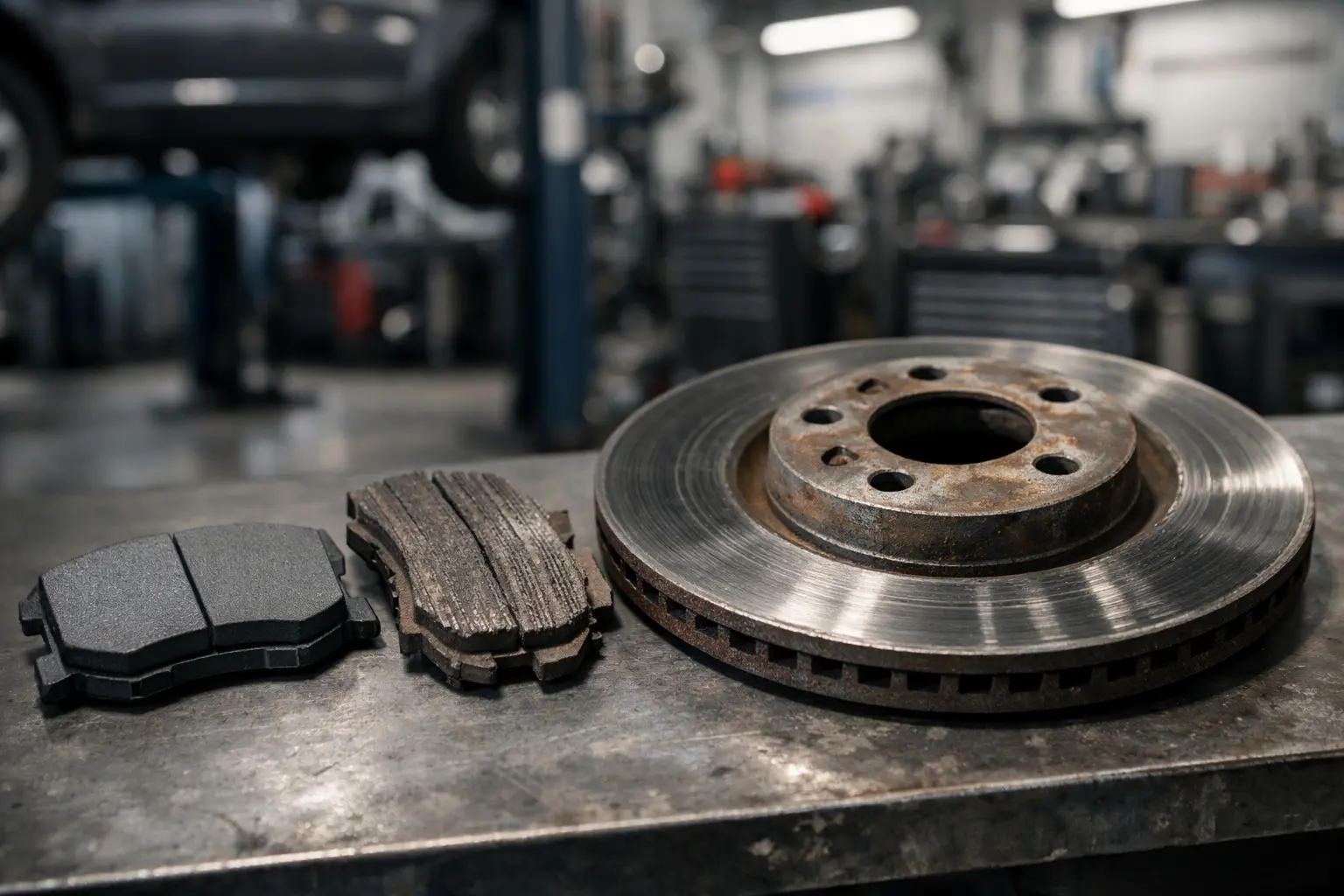
Your braking system is one of the most important safety components of your vehicle. However, many drivers are unsure about the difference between brake pads and brake rotors, and when each one should be replaced.
In this guide, we explain how they work, how long they last, and the signs that indicate it’s time for a replacement.
What Are Brake Pads?
Key Characteristics:
-
They are the fastest-wearing brake component.
-
Designed to withstand high temperatures.
-
Replaced more frequently than rotors.
When Should You Replace Brake Pads?
Typically, brake pads should be replaced between 30,000 and 70,000 km (20,000–45,000 miles) depending on:
-
Driving habits (city vs. highway)
-
Vehicle weight
-
Brake pad quality
-
Weather and road conditions
Signs of Worn Brake Pads:
-
Squealing or grinding noise when braking
-
Slight vibration in the brake pedal
-
Increased stopping distance
-
Pad thickness below 3 mm
What Are Brake Rotors?
Key Characteristics:
-
Usually made from cast iron or steel.
-
Designed to dissipate heat efficiently.
-
More durable than brake pads.
When Should You Replace Brake Rotors?
Brake rotors are typically replaced every 60,000 to 120,000 km (40,000–75,000 miles), although they may last longer with proper maintenance.
Signs of Worn Brake Rotors:
-
Strong vibration when braking
-
Deep grooves or scoring on the surface
-
Warped rotors (pulsation while braking)
-
Thickness below manufacturer’s minimum specification
Not always — but in many cases, it’s recommended.
-
If rotors are heavily grooved or warped, installing new pads alone may cause uneven wear.
-
If you replace rotors, it’s best practice to install new pads for optimal performance.
-
Preventive inspections reduce long-term repair costs.
Professional Tip
A great time to inspect your braking system is during seasonal tire changes. Keeping your brakes in top condition improves not only safety but also vehicle stability and overall driving performance.
At TireWarehouse.ca, we provide expert guidance and high-quality automotive products to keep your vehicle performing safely all year long.
In stock & ready to ship
Find the tires you need, delivered from a warehouse near you