
All-Weather vs. Dedicated Winter Tires: Real Scenarios for Canadian Drivers
Choosing between all-weather and winter tires isn’t just about budget—it’s about real-life Canadian conditions. Here’s how to know which one truly fits your daily driving reality.
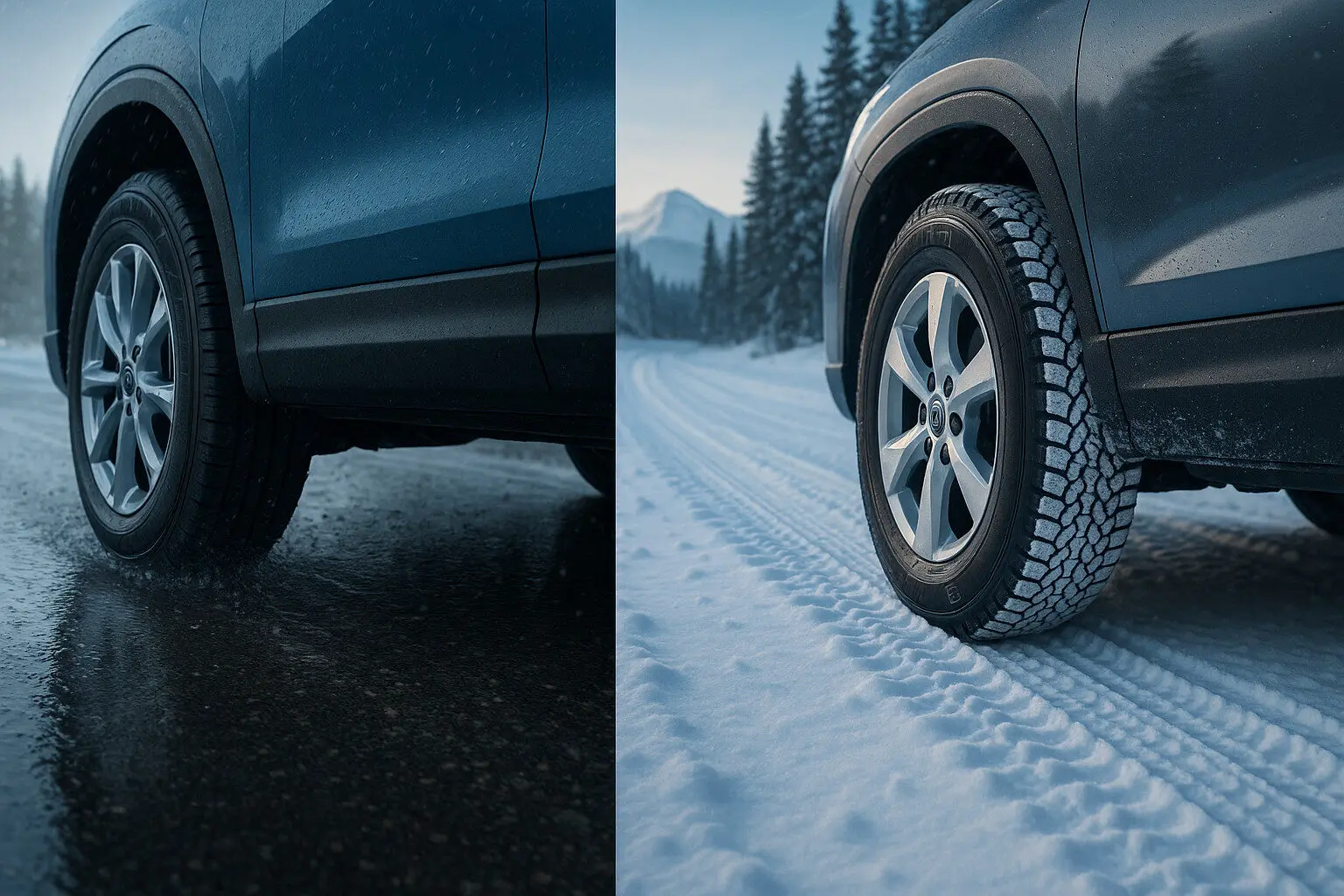
All-Weather vs Dedicated Winter Tires: Real Scenarios for Canadian Drivers
Choosing between all-weather and dedicated winter tires is one of the most important decisions Canadian drivers make each year. While both options carry the 3PMSF (Three-Peak Mountain Snowflake) certification for winter performance, they are designed for very different real-world scenarios. Understanding how each tire behaves in typical Canadian conditions can help drivers make a choice that maximizes both safety and value.
Scenario 1: Mixed Weather and City Commuting (Ontario, Lower Mainland BC)
Drivers in metropolitan areas like Toronto, Mississauga, Vancouver or Burnaby deal with winters that constantly shift between rain, slush, and light snow. Roads rarely stay frozen for long periods, and temperatures frequently move above and below freezing.
In these situations, all-weather tires perform exceptionally well. They offer dependable grip in wet and slushy conditions, maintain predictable handling during sudden temperature swings, and eliminate the need to swap tires seasonally. For drivers who prioritize convenience and drive mostly on cleared, urban roads, all-weather tires provide year-round functionality without compromising moderate winter safety.
Scenario 2: Heavy Snow and Long Winters (Quebec, Northern Ontario, Interior BC)
Regions such as Quebec City, Sudbury, Thunder Bay, Kelowna and Kamloops experience sustained winter conditions with regular snowfall, icy surfaces, and long stretches of subzero temperatures.
In these environments, dedicated winter tires are the clear choice. Their rubber compounds remain flexible in temperatures below -10°C, offering superior braking, traction, and control on snow-packed and icy roads. Their aggressive tread patterns evacuate snow efficiently and bite into rough winter surfaces with far more confidence than all-weather options. For drivers navigating steep hills, rural roads, or mountain passes, winter tires deliver the highest level of safety.
Scenario 3: SUV and Truck Drivers Towing or Carrying Heavy Loads
Drivers in the Prairies or rural areas of BC and Alberta often tow trailers or haul heavy loads through winter. In these cases, stability, control, and braking distance under load become critical.
Dedicated winter LT tires (Light Truck winter tires) are engineered to handle the additional weight. They provide reinforced sidewalls, optimized tread blocks, and rubber compounds capable of maintaining traction even under stress. While all-weather LT options exist, they cannot match the cold-weather elasticity and stopping power of a true winter LT tire during extreme conditions.
Scenario 4: Low-Mileage Drivers Who Want One Set of Tires
Some drivers cover fewer kilometres and primarily use their vehicle for short trips or city errands. For them, switching to a dedicated winter set every year may feel unnecessary.
All-weather tires can be an excellent solution for low-mileage drivers who encounter moderate snowfall but do not regularly face deep snow or extended icy conditions. They allow for year-round use and reduce long-term costs related to storage and tire changes.
Scenario 5: Quebec Winter Tire Regulations
Quebec enforces strict winter tire regulations from December 1 to March 15. In this period, only approved winter tires that meet the province’s standards are allowed, which generally excludes most all-weather tires despite their 3PMSF certification.
Drivers in Quebec should select dedicated winter tires to ensure both compliance and maximum safety during the province’s long winter season.
Final Thoughts
The decision between all-weather and dedicated winter tires comes down to where—and how—you drive.
If your winter includes heavy snowfall, subzero temperatures, or mountainous terrain, dedicated winter tires offer unmatched safety.
If your winter is milder, with frequent temperature changes and mostly wet or slushy roads, all-weather tires provide convenience and reliable winter-ready performance.
Both options are safe when chosen for the right conditions, but understanding your local climate and driving habits is the key to making the best choice for Canadian roads.
In stock & ready to ship
Find the tires you need, delivered from a warehouse near you